Explore by goal

Yoga Poses for Strength

Build strength through yoga poses that ask your muscles to support, stabilise and control your body. Browse poses for the core, legs, arms and upper body, and choose variations that suit your current level of practice.

Build a practice around this goal

The poses below share this goal classification, but a useful practice still needs an appropriate order, level and pace. Use the pose guides for modifications and safety notes, or let the Practice Builder arrange a complete sequence.

Build a practice Browse routines

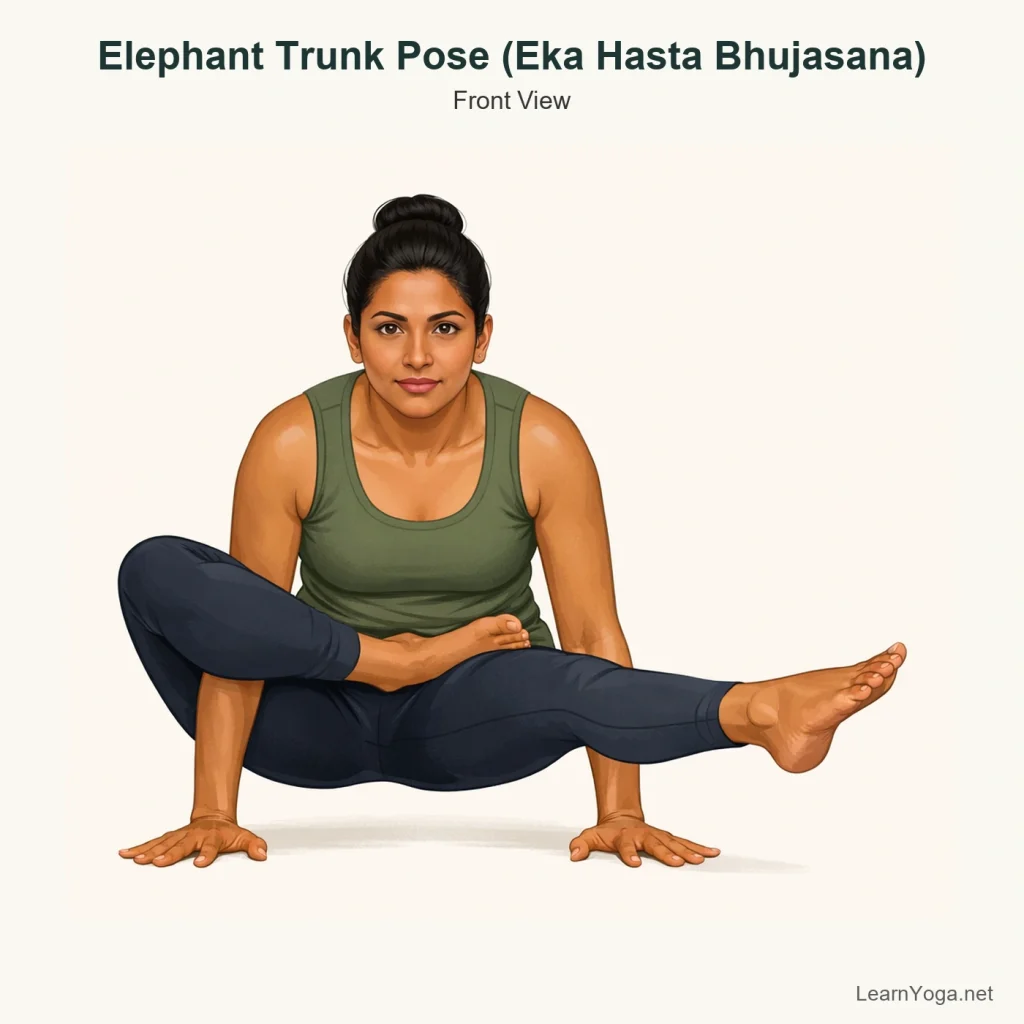
Yogi practising Elephant Trunk Pose seated on the floor with one leg lifted high over the shoulder and hands pressing into the mat.

Elephant Trunk Pose

Eka Hasta Bhujasana

Elephant Trunk Pose is a compact seated balance where one leg comes high over the shoulder and the hands press into the floor. It asks for hip flexion, hamstring length, core support and enough spinal lift to stop the shape collapsing.

Person practising Extended Side Angle Pose in side view with front knee bent, back leg straight and top arm reaching overhead.

Extended Side Angle Pose

Utthita Parsvakonasana

Extended Side Angle Pose builds a clear connection from the feet up through the legs, waist and top arm. It can feel spacious and strong at the same time, but the shape does not need to be deep to be useful.

Person practising Eagle Pose from the front with legs crossed, arms wrapped, and knees softly bent.

Eagle Pose

Garudasana

Eagle Pose is a standing balance with the legs crossed and the arms wrapped. It asks for steady attention through the feet, hips and shoulders without needing a big range of motion.

Side view of Downward-Facing Dog with hands grounded, hips lifted and knees softly bent.

Downward-Facing Dog

Adho Mukha Svanasana

Downward-Facing Dog is a whole-body pose that asks the hands to press, the hips to lift and the spine to lengthen. It does not need straight legs or heels on the floor to be useful.

Side view of Dancer Pose with one hand holding the lifted foot behind the body while the standing leg balances steadily.

Dancer Pose

Natarajasana

Dancer Pose is a standing balance with one foot held behind you as the chest lifts and the free arm reaches forward or up. It asks for steadiness in the standing ankle and leg, space through the front of the hip and thigh of the lifted leg, and enough control that the backbend does not spill into the lower back.

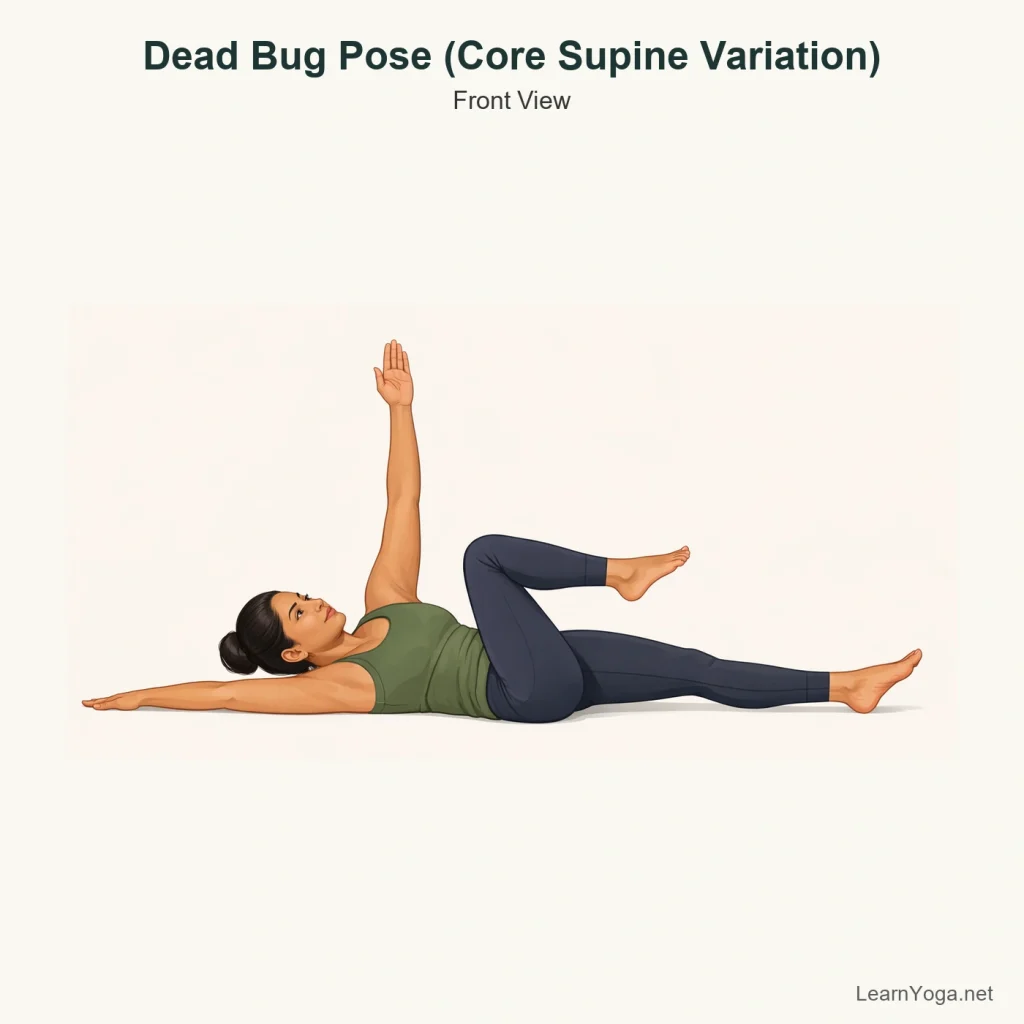
Person lying on the back in Dead Bug Pose with one leg lowered and the opposite arm reaching overhead.

Dead Bug Pose

Core Supine Variation

Dead Bug Pose is a simple supine core exercise that teaches you to move the arms and legs while keeping the trunk steady. It is useful for building coordination and noticing how to support the lower back without gripping the neck or shoulders.

Side view of Dolphin Pose with forearms on the mat, hips lifted and knees slightly bent.

Dolphin Pose

Ardha Pincha Mayurasana

Dolphin Pose is a forearm version of an inverted V shape. It builds shoulder and upper-back strength, asks the core to stay organised, and can prepare the body for stronger overhead work without as much wrist extension as Downward-Facing Dog.

Side view of Crane Pose with knees resting high on the upper arms and both feet lifted.

Crane Pose

Bakasana Variation

Crane Pose is a compact arm balance that asks for rounded upper back strength, deep hip flexion and a clear forward shift over the hands. It is less about jumping and more about placing the body carefully so the feet can become light.

Side view of Crow Pose with the knees resting on the upper arms and both feet lifted from the floor.

Crow Pose

Bakasana

Crow Pose is a compact arm balance that asks for a rounded upper back, steady hand pressure and a clear forward shift. It is less about jumping up and more about placing your weight carefully over your hands.

Person practising Chair Pose from the side with knees bent, hips back and arms lifted.

Chair Pose

Utkatasana

Chair Pose is a strong standing bend that builds heat in the legs and asks the trunk to stay organised while the hips move back. It can be quite intense quickly, so a smaller bend is often the better starting point.

Continue learning

Learn how pose order changes a complete session in How Yoga Sequencing Works. If you are learning a particular pose, use the Pose Progression Explorer to find preparation and possible next steps.