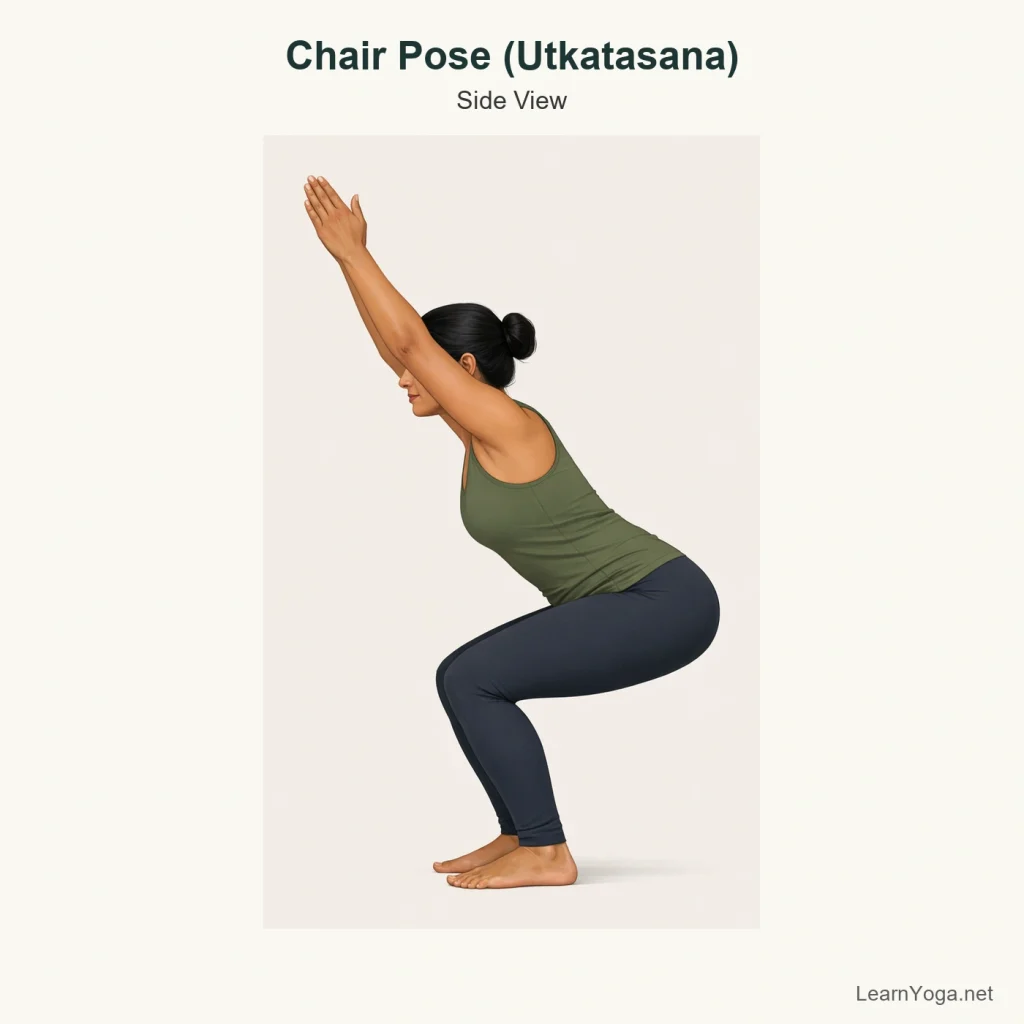
Chair Pose is a strong standing bend that builds heat in the legs and asks the trunk to stay organised while the hips move back. It can be quite intense quickly, so a smaller bend is often the better starting point.
Chair Pose looks simple, but it asks for clear coordination. The ankles, knees and hips bend together while the chest stays broad and the spine keeps its length. You do not need to sink very low for the pose to work well. For many bodies, a moderate bend with steady breathing feels stronger and more balanced than a deep squat shape.
How to do Chair Pose
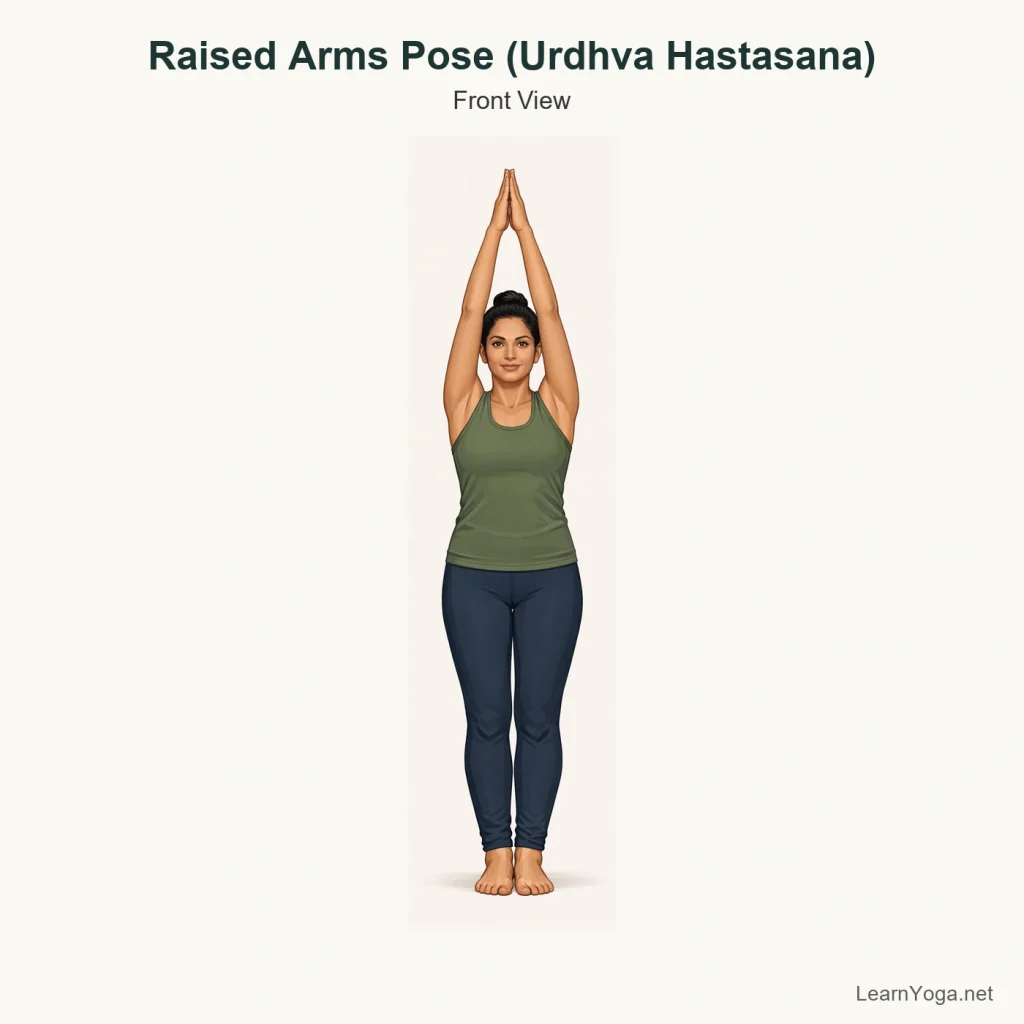
Start in Mountain Pose with your feet hip-width apart or together if that feels steady.
Spread your toes and feel weight across the heels, balls of the feet and outer edges.
Inhale and sweep the arms up, or keep your hands at your hips or in prayer if your shoulders prefer that.
Exhale and bend your knees, sending your hips back as though you are about to sit on a chair behind you.
Keep the chest gently lifted without flaring the ribs, and let the front of the body stay long rather than collapsing onto the thighs.
Look forward or slightly down so the back of the neck stays easy.
Press into your feet and keep the knees tracking in the same direction as the toes.
Stay for 3 to 6 breaths, then inhale to stand back up and exhale to release the arms.
Yogita's tip
If your toes start gripping hard, shift a little more weight into the heels and lift the toes for a moment, then place them back down softly. That usually helps the legs work without turning the pose into a wobble at the front of the feet.
Benefits
Strengthens the thighs, hips and ankles in a familiar standing pattern.
Practises sitting back into the hips while keeping the trunk lifted.
Builds awareness of knee tracking and foot pressure.
Can warm the body quickly in short holds or repeated rounds.
Encourages steady attention because the pose asks for both effort and balance.
Common mistakes
Letting the knees drift far forward while the hips stay underneath the body.
Collapsing the chest onto the thighs instead of keeping some lift through the spine.
Overarching the lower back to get the arms higher.
Shifting too much weight into the toes and gripping the floor.
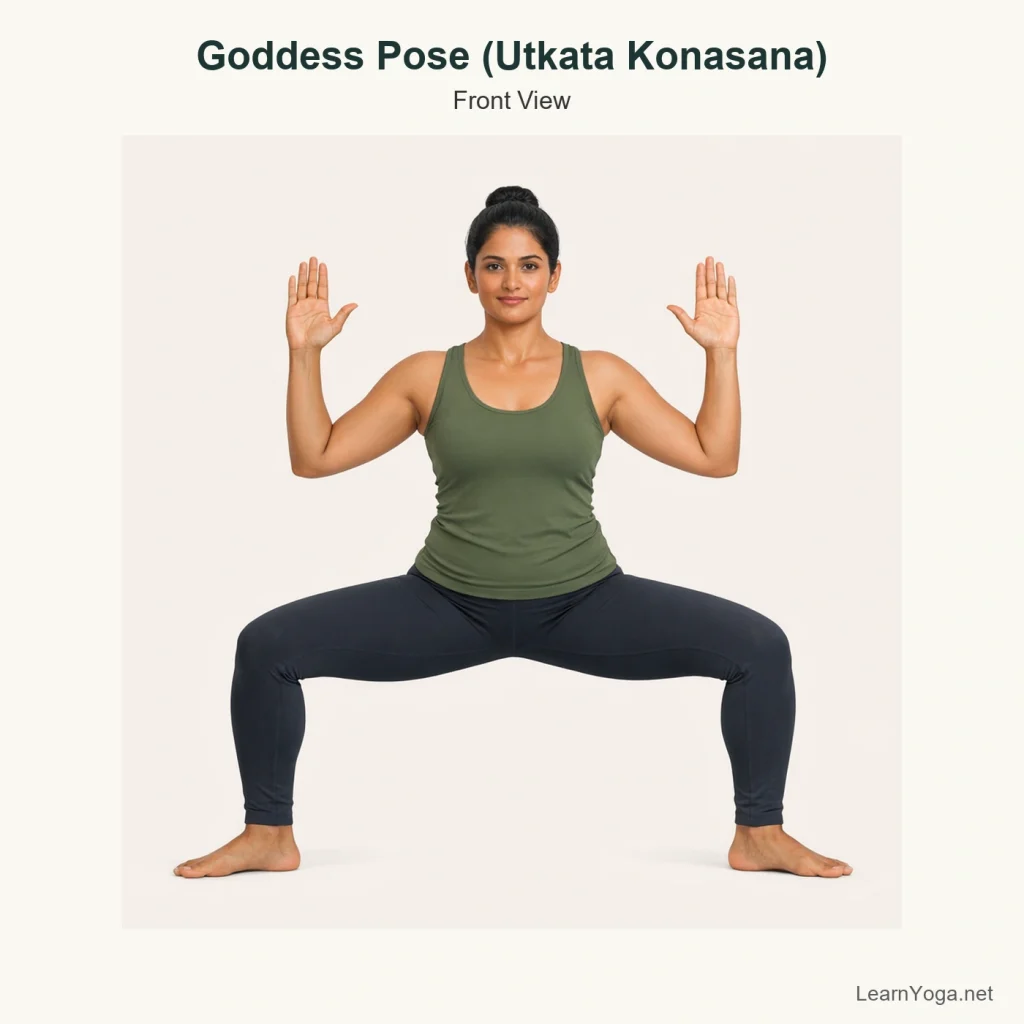
Forcing the feet together when a wider stance would feel more stable.
Make it work for you
Hands in prayer
Bring the palms together at the chest instead of reaching the arms overhead if the shoulders or neck feel crowded.
Shorter bend
Bend the knees less and keep the hips a little higher. A smaller range still gives you the shape without as much load in the knees.
Wall support
Stand with your back a short distance from a wall and lightly touch the wall with the pelvis as you sit back to learn the hip action.
Alternatives
Mountain Pose
Stand upright with steady feet and practise raising and lowering the arms with the breath.
Use this if bending the knees is uncomfortable today or you want a much lighter version.
Wall sit variation
Stand with your back against a wall and slide down only a little, keeping the knees comfortable and the head upright.
Use this if balance is the main challenge and you want support while the legs work.
Supported sit-to-stand from a chair
Sit on a chair and practise standing up and sitting down slowly, using the hands for help if needed.
Use this if getting into a freestanding bent-knee position feels too demanding.
Common variations
Chair Pose with feet hip-width apart
A steadier version that gives more space for the pelvis and can make balance easier.
Prayer Chair Pose
The hands stay at the chest rather than overhead, which reduces shoulder effort and often helps the ribs stay quieter.
Chair Pose with heels grounded focus
A moderate bend with the hips sitting back more clearly, often used to emphasise leg strength and foot stability rather than depth.
Safety and contraindications
When to avoid or get individual guidance
Recent flare-up of knee or ankle pain that makes bending and weight-bearing uncomfortable.
Shoulder irritation if reaching overhead increases discomfort.
Keep the bend in a comfortable range for your knees and ankles.
If the lower back feels pinched, sit a little less deeply and lengthen upward through the sides of the waist.
Use a wider stance or keep the hands at the chest if balance feels unsteady.
Stop and come out of Chair Pose if the knee catches, there is sharp pain in the knee, or the squat feels so wobbly that staying upright is hard. Choose a smaller bend or get individual guidance before practising longer holds.
Accessibility and limited mobility
Practising near a wall can make the pose feel more secure if balance is uncertain.
Feet hip-width apart are often more comfortable than touching feet, especially for older adults or anyone with less hip or ankle mobility.
If lowering and rising are tiring, use a real chair behind you as a target so you can lightly sit and stand with control.
If getting down to the floor is difficult, Chair Pose can still be part of a fully standing practice.
Easier options
Use these related poses when you want a more accessible way to practise a similar movement or prepare for this pose.
Not very low. The pose still works well with a modest knee bend. If you can keep your feet grounded, your breath smooth and your chest lifted, that is usually a better guide than depth.
Why do my knees feel more strain than my hips?
Often the weight has shifted too far into the toes, or the hips have not moved back enough. Try sitting the hips back a little more and keeping the shins less angled forward. A smaller bend can also help.
Do my arms have to stay overhead?
No. You can keep the hands in prayer at the chest or even place them on the hips. The main work of the pose is in the legs, feet and trunk organisation, not in forcing an overhead reach.
Is it better to keep my feet together or apart?
Either can work. Feet together can feel more compact and demanding for balance, while hip-width feet often give more space and stability. Choose the version that lets you bend the knees comfortably and keep steady footing.
Why do I feel this mostly in my toes and calves?
That usually means your weight has tipped forward. Shift slightly back into the heels without lifting the toes off the floor for long, and let the hips move back more clearly. The work often spreads into the thighs and hips after that.
Reviewed for yoga instruction
Yogita
Certified Yoga Instructor with 5+ years of Teaching and Consistent Practice