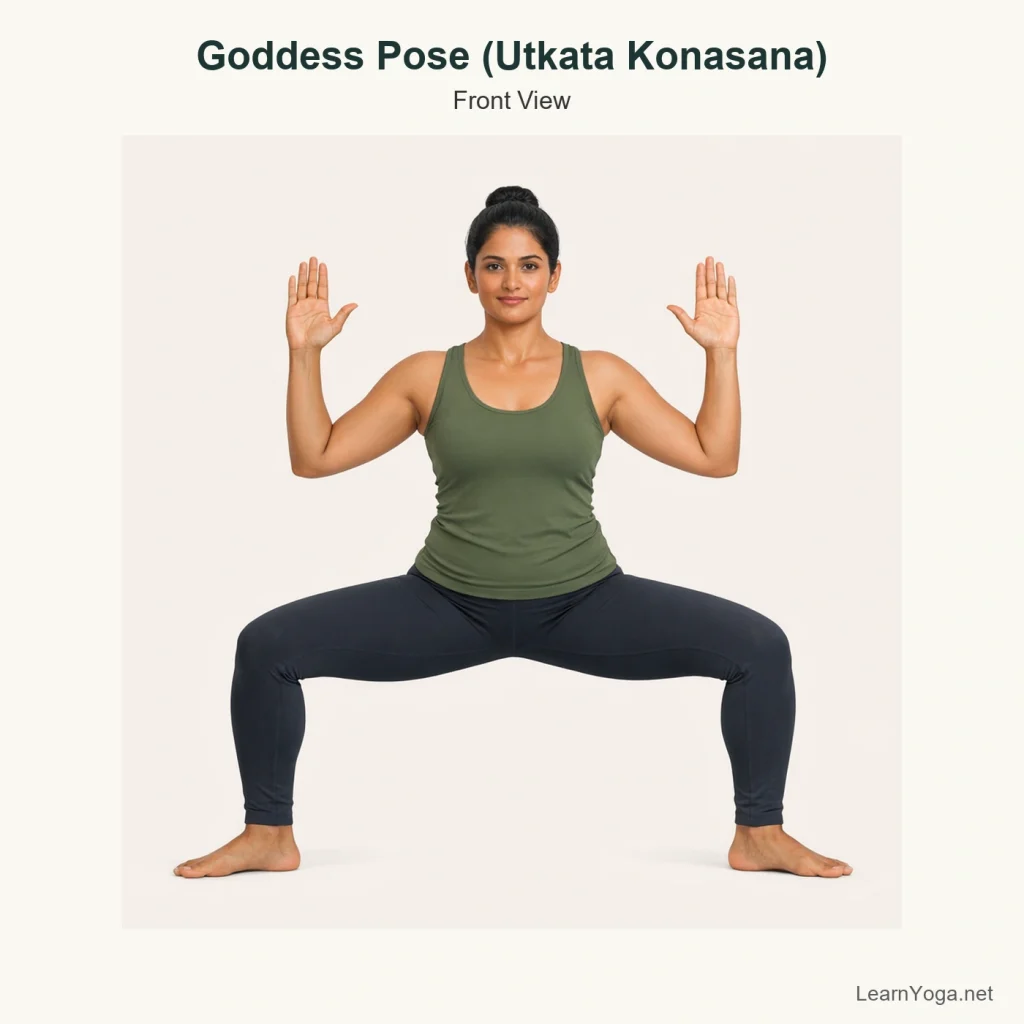
Goddess Pose is a wide-legged standing squat with the feet turned out and the knees bending over the toes. It strengthens the legs, asks the hips to open in a workable range, and helps you practise staying upright while the lower body does more of the effort.
Goddess Pose looks simple, but it teaches quite a lot at once. You are balancing a wide stance, organising the knees and feet, and keeping the spine tall while the legs work. For many people it feels better when the stance is a little narrower and the bend is a little higher than expected. There is no need to chase a deep squat. A steady shape with easy breathing is usually more useful.
How to do Goddess Pose
Stand with your feet wide apart, a little wider than your hips and often not as wide as your mat.
Turn your toes out on a diagonal. Let the angle be moderate rather than extreme so the knees have room to track comfortably.
Bring your hands to your hips or bend your elbows into a goalpost shape with the chest broad.
Inhale and lengthen up through the crown of the head.
Exhale and bend both knees, lowering into a wide squat only as far as you can keep the feet grounded.
Aim the knees in the same direction as the toes, without forcing them wider than feels natural for your hips.
Keep some weight through the heels, but do not let the toes lift. Spread the pressure across the whole foot.
Gently draw the lower belly in so the ribs stay stacked over the pelvis instead of tipping forward.
Stay for 3 to 8 breaths, or move in and out of the bend with the breath if holding feels too intense.
To come out, press firmly through both feet, straighten the legs on an inhale, and bring the feet back in.
Yogita's tip
If your knees keep drifting inward, make the pose a touch higher and press the outer edges of the feet down more clearly. That usually helps the hips and outer glutes join the work without turning the toes out farther.
Benefits
Builds strength in the thighs and glutes.
Practises hip opening in a supported standing position.
Helps you organise knee tracking over the feet.
Challenges upright posture while the lower body is working.
Can warm the legs and hips before wider standing poses.
Common mistakes
Taking the feet so wide that the pelvis drops forward and the legs feel disconnected.
Turning the toes out too much, which can make the knees harder to track comfortably.
Letting the knees collapse inward as you bend.
Pushing into a very deep squat even when the heels or toes lose contact with the floor.
Gripping the lower back instead of keeping the spine tall and the front ribs quiet.
Holding the breath while trying to stay low.
Make it work for you
Higher Goddess
Keep the same shape but bend the knees less. This often makes it easier to keep the knees and feet lined up and to stay for several breaths.
Hands on Hips
Place your hands on your hips instead of lifting the arms. This reduces shoulder effort and helps you feel whether the pelvis is tipping forward.
Wall Support
Stand with your back lightly near a wall, or touch a wall with one hand for balance as you bend the knees. Use just enough support to stay steady.
Alternatives
Chair Pose
Practise Chair Pose with the feet hip-width apart and the knees bending straight ahead.
Use this if turning the legs out bothers your knees or hips.
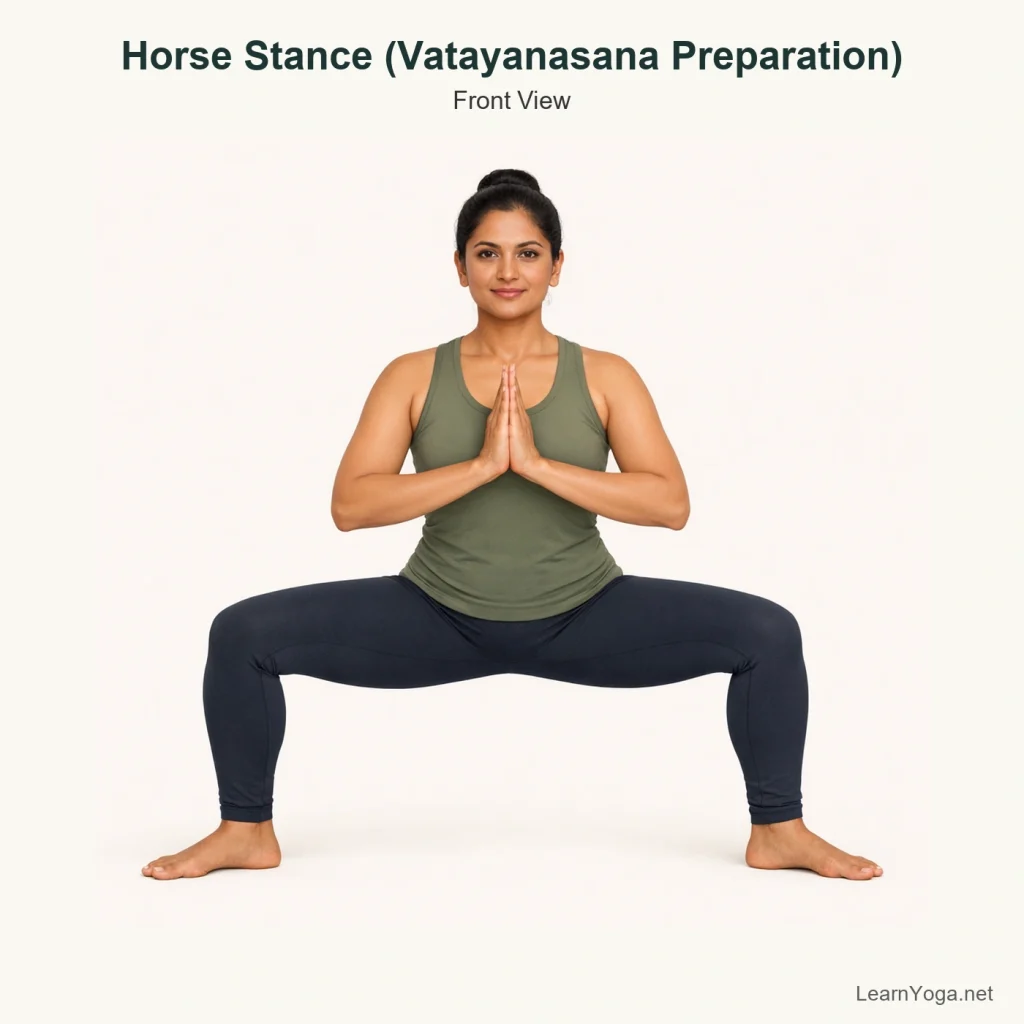
Horse Stance
Take a wide stance and stay higher, with the hands on the hips and only a small bend in the knees.
Use this if full Goddess feels too demanding in the thighs.
Garland Pose
Come into Garland Pose only if your hips and ankles are comfortable there and you can keep the feet grounded.
Use this if you want a lower squat and getting down is comfortable for you.
Common variations
Goddess with Goalpost Arms
The classic arm position with elbows bent and upper arms wide, which adds some shoulder and upper-back work.
Dynamic Goddess
Move in and out of the knee bend with the breath instead of holding still, which can make the pose more manageable and warming.
Prayer Goddess
Bring the palms together at the chest to give the shoulders a break and make the torso easier to organise.
Safety and contraindications
When to avoid or get individual guidance
Recent or irritated knee pain may be aggravated by a deep bend.
Hip irritation can make the turned-out stance uncomfortable.
If balance feels unreliable, use wall or chair support.
Keep the knees moving in roughly the same direction as the toes.
Choose a stance width and turnout that let both feet stay grounded.
Come higher if you feel pinching in the front of the hips or strain around the knees.
Pause Goddess Pose and shorten the bend when the knees, groin, or hips give sharp pain, or a knee feels wobbly as you lower and rise. Get individual guidance before continuing with the pose.
Accessibility and limited mobility
A shorter stance and a higher bend usually make this pose more accessible for older adults or anyone building leg strength gradually.
If getting low feels hard on the knees, practise with a wall nearby or keep the movement dynamic instead of holding.
If balance is uncertain, stand close to a chair or wall so one hand can assist without changing the basic shape.
If turning the feet out is limited, use a smaller turnout and a shallower bend rather than forcing the hips open.
Easier options
Use these related poses when you want a more accessible way to practise a similar movement or prepare for this pose.
Wide enough that you can bend both knees and still keep the feet firmly on the floor. If you feel pulled too low or the pelvis tips forward, bring the feet a little closer together.
Do my thighs need to come parallel to the floor?
No. That depth suits some bodies and not others. A higher version is often better organised, especially if you are working on knee tracking, foot pressure or steady breathing.
Why do I feel this mostly in my thighs?
That is common. Goddess is a leg-strength pose as much as a hip-opening pose. If the thighs burn quickly, reduce the depth, shorten the hold, or move in and out with the breath instead of staying low.
What should I do if my knees feel awkward when they bend out?
First, turn the toes out a little less and come up higher. Then check that the knees are moving in the same general direction as the toes. If it still feels wrong, switch to Chair Pose or use wall support.
Reviewed for yoga instruction
Yogita
Certified Yoga Instructor with 5+ years of Teaching and Consistent Practice