Side Lunge Pose is a wide-legged lateral squat that works into the hips, inner thighs and ankles while asking the bent leg to carry some clear strength. It is often more manageable when you treat it as a moderate side shift rather than trying to drop to the floor.
Timing: Hold for 3 slow breaths on each side · Move side to side with 1 breath per side for 4 to 8 rounds · Stay 20 to 30 seconds per side if the shape remains steady
Skandasana brings weight into one leg while the other leg lengthens out to the side. The pose can feel strong in the bent thigh and opening along the inner leg of the extended side. Depth is not the main goal here. What matters more is that the bent foot stays well planted, the knee tracks in a workable direction, and the spine has enough length that you are not collapsing to get lower.
How to do Side Lunge Pose
Start in a wide stance with both feet turned out slightly or with the toes mostly forward if that feels steadier in your knees.
Shift your weight into one leg and begin bending that knee, sending the hips back as though you are starting a squat to one side.
Keep the bent foot fully grounded, especially the heel and the base of the big toe, and let the knee point generally in the same direction as the toes.
Straighten the other leg as much as is comfortable and keep that foot active, either with the toes pointing up or the sole lightly grounded, depending on your range.
Bring your hands to the floor, to blocks, or to prayer at the chest if your balance allows.
Lengthen the spine on an inhale and soften the hips only as much as you can without the bent heel lifting or the chest dropping heavily.
Stay for 3 to 5 breaths, then press through the bent foot to come back toward centre.
Repeat on the second side.
Yogita's tip
If the bent heel keeps lifting, come a little higher and shift the hips farther back. Most people do better when they prioritise the squat action in that leg before asking for a deeper inner-thigh stretch.
Benefits
Builds strength and control in the bent leg.
Explores lateral hip mobility and adductor length in a clear, practical way.
Gives the ankles and feet a chance to work through a wider range than in a standard squat.
Can prepare the legs and hips for wider standing poses and side-to-side transitions.
Common mistakes
Forcing the hips low even though the bent heel lifts off the floor.
Letting the bent knee collapse inward instead of tracking with the foot.
Rounding the spine and hanging heavily forward rather than using support under the hands.
Locking the straight leg aggressively instead of keeping it active and responsive.
Taking the stance so wide that there is no control getting in or out of the pose.
Make it work for you
Hands on blocks
Place one block under each hand so you can keep more length in the spine and avoid dropping your weight forward.
Higher side lunge
Do not aim for full depth. Bend the knee only part way and keep the hips higher while you work on foot grounding and knee tracking.
Heel support
If the bent heel does not comfortably stay down, place a folded blanket under it and reduce the depth.
Alternatives
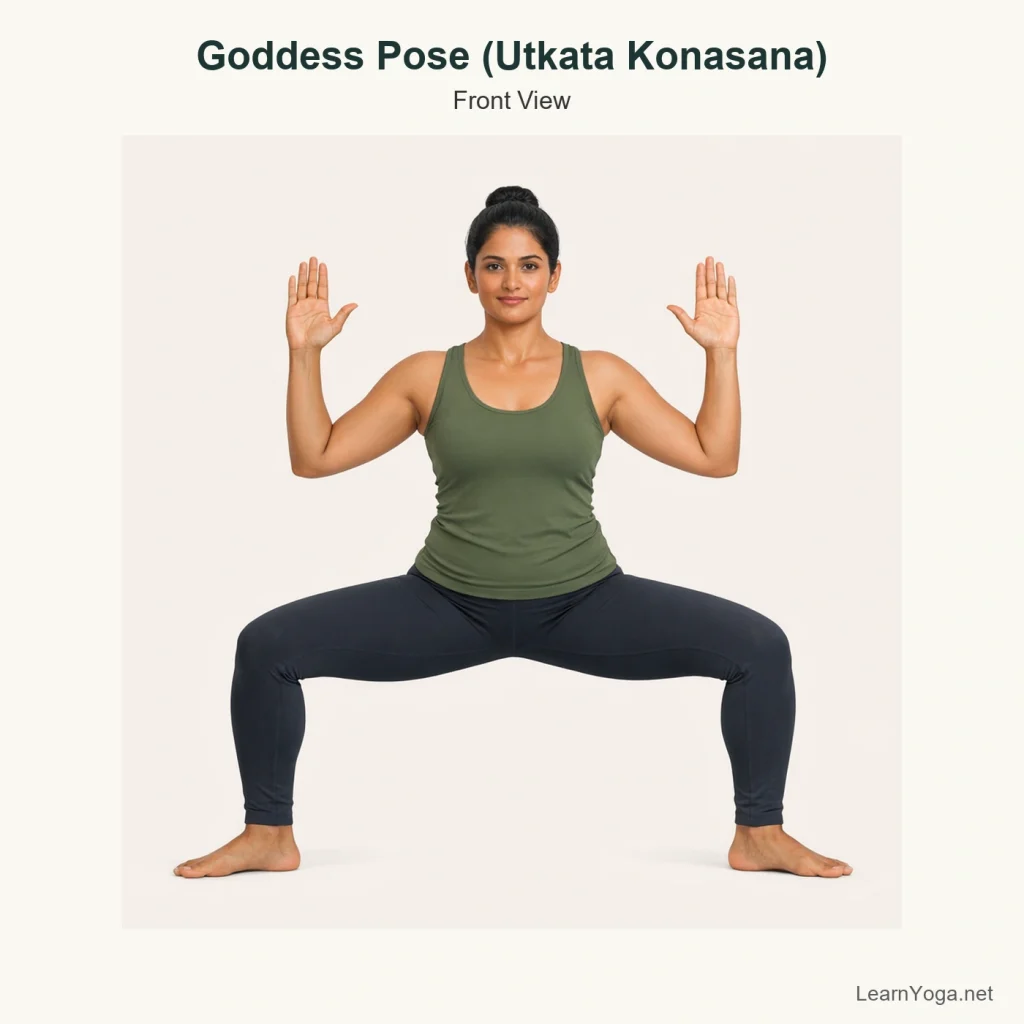
Goddess Pose
Use a more even wide squat with both knees bent and the torso upright.
Helpful if the side shift of Skandasana feels too demanding on one knee or ankle.
Garland Pose
Work in a central squat rather than moving all the way into one side.
Useful if you want hip and ankle work without the strong lateral transfer of weight.
Wide-Legged Forward Fold
Take the legs wide and hinge forward with both legs sharing the load.
A good choice if you want inner-thigh length with much less knee bend.
Common variations
Dynamic side-to-side Skandasana
Move from one side lunge to the other with the hands on the floor or blocks, using the breath to guide the shift.
Prayer Skandasana
Keep the hands at the chest instead of on the floor to add a stronger balance challenge and a more upright torso.
Toes-up variation
On the straight leg side, lift the forefoot or point the toes upward to increase the inner-leg and hamstring demand.
Safety and contraindications
When to avoid or get individual guidance
Use caution with current knee, groin, ankle or hip irritation, especially if deep bending or a wide stance already feels uncomfortable.
Skip the full version on days when squatting deeply is not well tolerated.
This pose places meaningful load through the bent knee, ankle and hip, so keep the range moderate enough that the foot stays steady.
Use blocks or take a higher version if you feel yourself collapsing forward to reach the floor.
If the straight leg position creates pulling at the inner thigh, shorten the stance and reduce depth.
Back out of Skandasana when sharp pain shows up in the knee, groin, or ankle, or when the bent leg does not feel steady enough to bear weight safely. Use a higher variation and get individual guidance before going deeper into side lunges.
Accessibility and limited mobility
Blocks under the hands make this pose much more workable for many people, especially if reaching the floor changes your balance or rounds your back.
If getting very low is not comfortable, stay in a high version with a smaller knee bend. You can still practise the side shift and foot action.
For older adults or anyone who finds deep squatting difficult, a wide stance with a gentle bend into each side can be enough. There is no need to reach the floor.
Easier options
Use these related poses when you want a more accessible way to practise a similar movement or prepare for this pose.
Does the extended leg need to be completely straight?
No. It can have a small bend, especially if that helps you keep the pelvis more level and avoids pulling at the inner thigh. A useful version is one where both legs still feel active rather than forced into shape.
What should I do if my bent heel lifts off the floor?
Come up higher and shift the hips back more clearly. You can also place a folded blanket under the heel. Keeping the heel grounded usually matters more than trying to sit lower.
Should my torso stay upright or lean forward?
Either can be appropriate. Many people need some forward lean at first, especially with the hands on blocks or the floor. The key is to keep length through the spine rather than collapsing onto the thigh.
Why does this feel very different from one side to the other?
That is common. Side lunges ask for a mix of ankle bend, hip range and leg strength, and those do not always match from side to side. Work each side according to what it can do today instead of forcing symmetry.
Reviewed for yoga instruction
Yogita
Certified Yoga Instructor with 5+ years of Teaching and Consistent Practice