Yoga pose

Tadasana

Mountain Pose

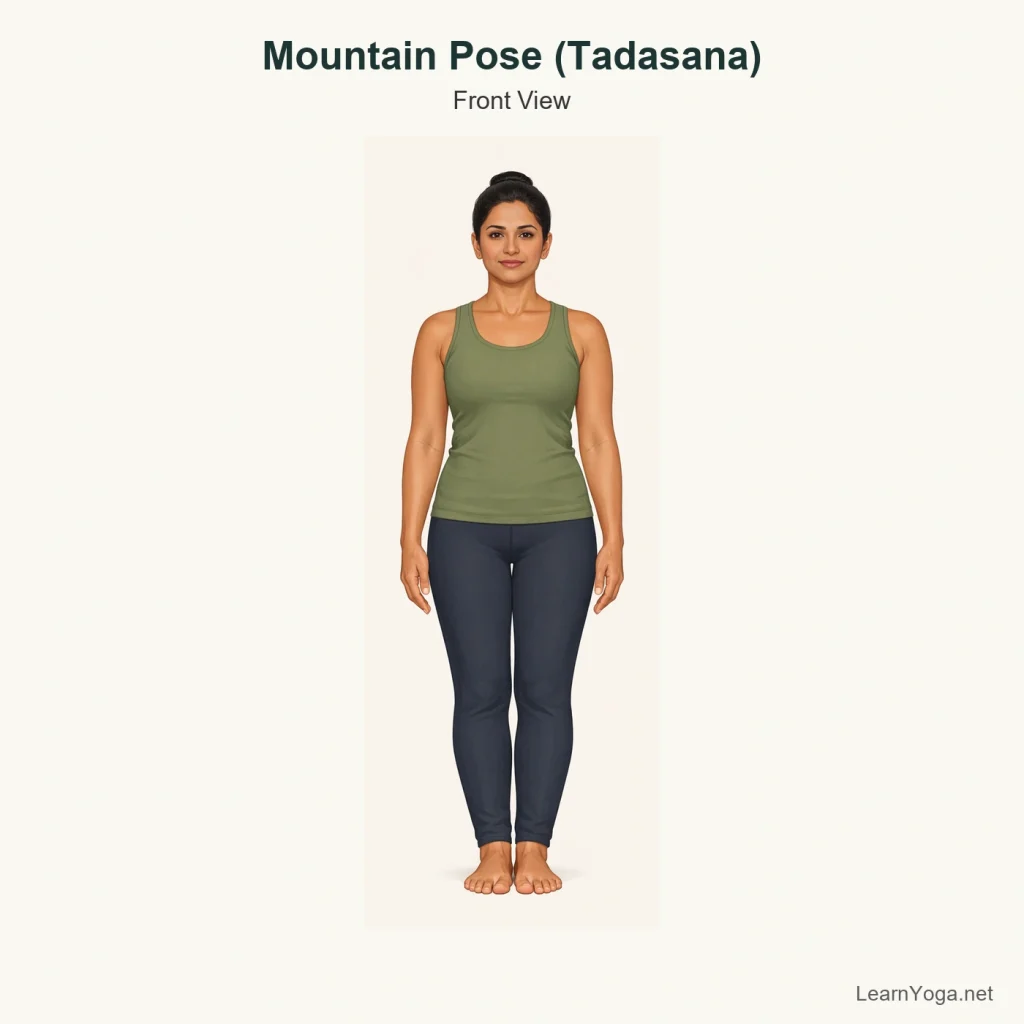
Mountain Pose is a simple standing shape that teaches how to organise your weight, legs, pelvis and spine with attention. It often looks easy from the outside, but small changes in the feet and ribs can make the whole pose feel steadier and lighter.

BeginnerstandinganklescalvescoregluteshipskneesspineNeutral

Typical hold: 3 to 8 breaths

Timing: 3 slow breaths · 5 even breaths · 30 to 60 seconds of quiet standing

Build a routine with this pose

Tadasana is often used at the start of practice and between stronger standing poses. It is not about standing stiffly. Instead, you are learning how to be upright without slumping or bracing. For some bodies, feet together feels clear. For others, standing with the feet hip-width apart is more comfortable and more stable.

How to do Mountain Pose

  1. Stand with your feet either together or about hip-width apart, depending on what lets you balance without gripping.
  2. Spread the toes, place them back down and feel the weight land through the heels, the base of the big toes and the base of the little toes.
  3. Keep the knees soft rather than locked, and let the thigh muscles wake up just enough to support the legs.
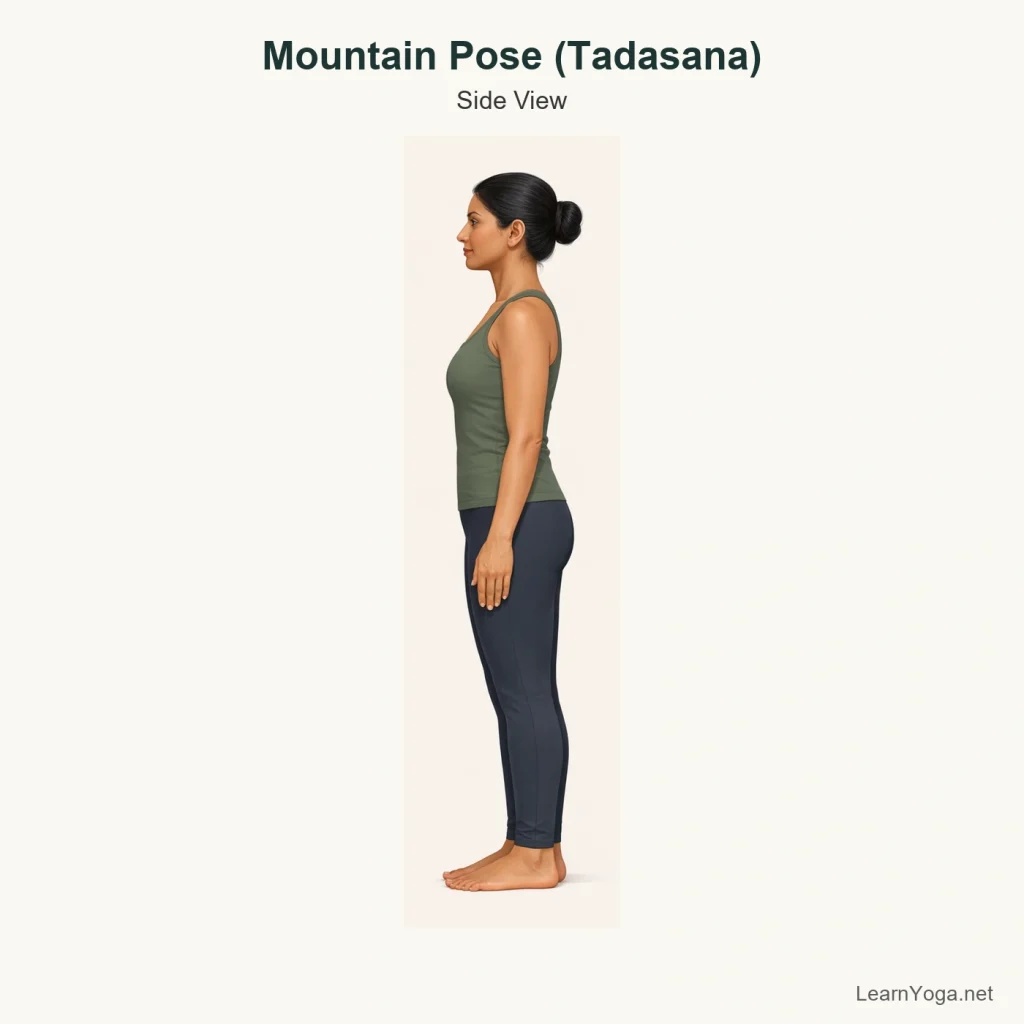
  4. Bring the pelvis to a neutral place as best you can, so you are not tipping the tail strongly back or forward.
  5. Lengthen up through the spine and allow the lower ribs to settle instead of pushing forward.
  6. Let the arms rest by your sides with the palms facing in or slightly forward, and soften the shoulders away from the ears.
  7. Keep the chin level and the back of the neck easy, with the gaze steady at eye level.
  8. Stay for 3 to 8 breaths, noticing the ground under you and the gentle lift upward through the crown of the head.
Yogita's tip

If you are unsure where your weight is, gently rock a little toward the toes and then toward the heels, then pause in the middle. That usually shows you a more natural standing line than trying to force perfect posture.

Benefits

  • Builds awareness of how your feet and legs support the rest of the body.
  • Practises upright posture without relying on stiffness.
  • Can improve steadiness for other standing poses and transitions.
  • Helps you notice and reduce extra tension in the jaw, shoulders and lower back.
  • Offers a simple place to return to between stronger movements.

Common mistakes

  • Locking the knees and leaning back into the heels.
  • Gripping the toes instead of spreading the weight across the feet.
  • Pushing the ribs forward and over-arching the lower back.
  • Pulling the shoulders up toward the ears.
  • Trying to make the shape rigid instead of steady and breathable.

Make it work for you

Feet hip-width apart

Stand with the feet separated about hip-width if balancing with the feet together makes you wobble or grip.

Wall feedback

Stand with your back lightly near a wall, letting the back of the head and shoulder blades sense the wall without flattening yourself hard against it.

Alternatives

Chair-seated upright posture

Sit toward the front of a sturdy chair with both feet grounded, spine tall and hands resting on the thighs. Practise the same balance of grounded feet and easy lift through the crown.

Use this if standing for even a short time feels tiring, unsteady or uncomfortable.

Constructive Rest on the floor

Lie on your back with knees bent and feet on the floor, then feel the back ribs settle and the spine lengthen without effort.

Use this if you want to explore neutral alignment without the demand of weight-bearing.

Common variations

Feet together Mountain Pose

Standing with the inner feet touching creates a narrower base and asks for a little more balance control.

Hip-width Mountain Pose

Standing with the feet under the hips gives many people a more stable base and more space through the pelvis and lower back.

Prayer hands in Mountain Pose

The hands come together at the chest in Prayer Pose while the rest of the body keeps the same grounded standing shape.

Safety and contraindications

When to avoid or get individual guidance

  • Use extra support if you are prone to dizziness while standing.
  • Reduce the hold or sit down if weight-bearing in the feet or legs is painful.
  • If standing with the feet together feels unsteady, widen the feet.
  • Keep a soft bend in the knees if locking them makes you feel strained or pulled backward.
  • Use a wall or chair for support if balance is inconsistent.

If quiet standing causes marked dizziness, repeated loss of balance, or significant pain in weight-bearing, get individual advice before practising longer holds.

Accessibility and limited mobility

  • Practising near a wall, chair or countertop can make the pose feel more secure if balance is uncertain.
  • If getting to and from the floor is difficult, this pose is a useful standing option because it needs very little setup.
  • Older adults or anyone with reduced stamina may prefer shorter holds with the feet hip-width apart.

Try next

When this pose feels steady and controlled, these related poses may provide a logical next step.

Practise this pose in a routine

See how this pose fits into a complete practice rather than using it in isolation.

Related poses

Frequently asked questions

Should my feet be together or apart?

Either can be correct. Feet together gives a narrower base and can sharpen attention, while hip-width often feels steadier and more natural. Choose the version that lets you stand without gripping the toes or holding your breath.

Why do I feel myself leaning back in this pose?

Many people shift more weight into the heels without noticing. Try rocking slightly forward and back, then stop in the middle so the front and back of the feet share the load more evenly. Usually the legs and centre feel more awake straight away.

Do I need to tuck my tailbone?

Usually no strong tuck is needed. Think more about bringing the pelvis to a middle place. If you tuck hard, the pose can become stiff. If you tip the pelvis forward too much, the lower ribs and lower back often push out.

What should I do with my arms and hands?

Let the arms hang naturally by your sides with the fingers soft. The palms can face inward or slightly forward. The main thing is that the shoulders stay easy and the chest does not puff forward to create the shape.

Can Mountain Pose still be useful if it feels too simple?

Yes. This pose teaches the organisation that supports many other standing postures. If you pay attention to the feet, knees, ribs, neck and breath, it becomes a clear practice of balance and posture rather than just waiting between poses.

Reviewed for yoga instruction

Yogita

Certified Yoga Instructor with 5+ years of Teaching and Consistent Practice

Last reviewed: 2026-08-08