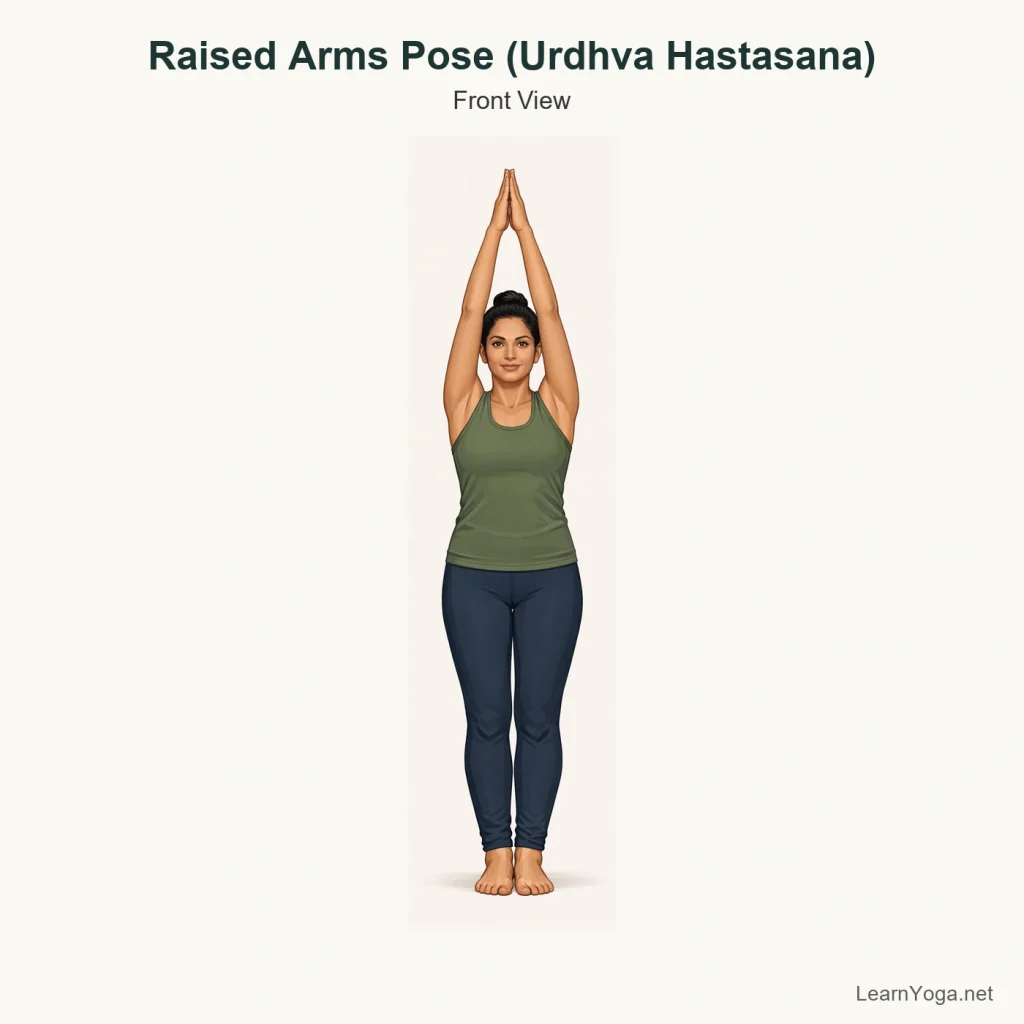
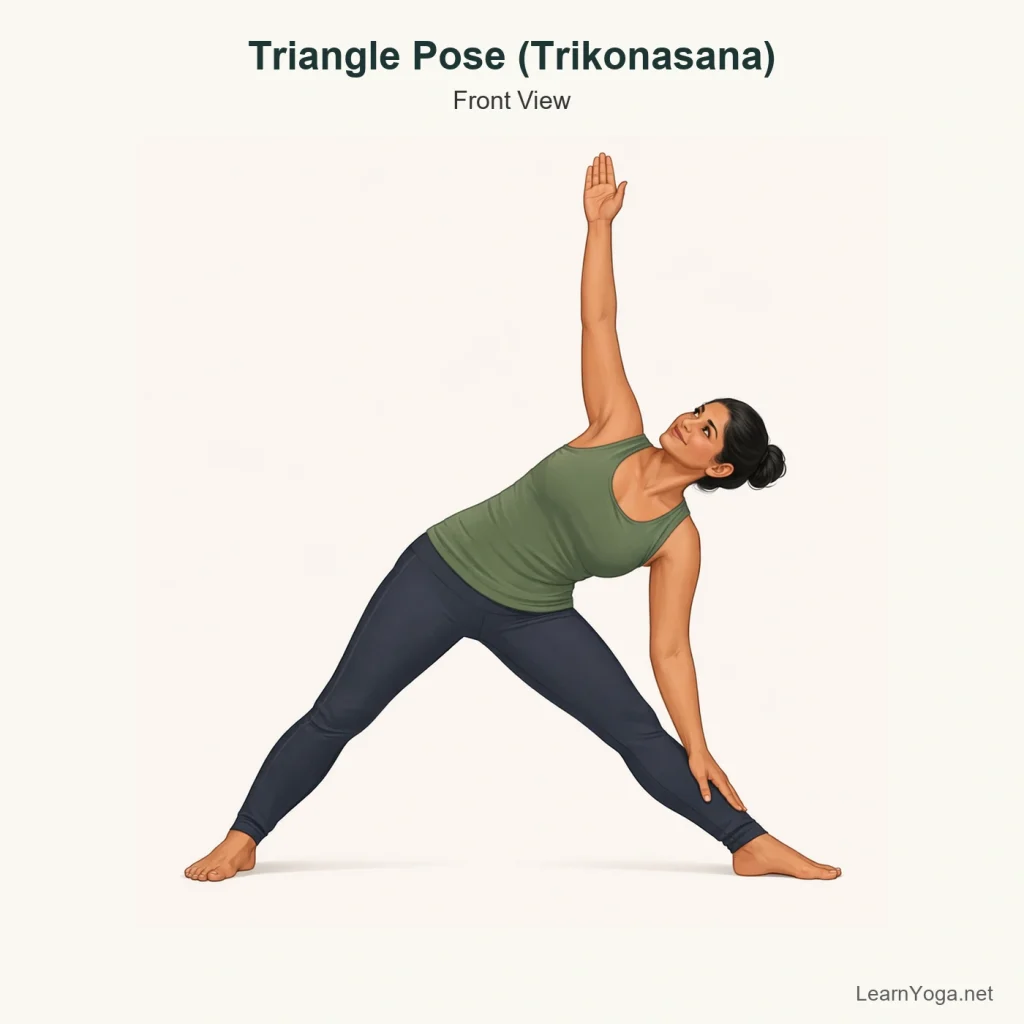
Standing Side Stretch is a simple upright side bend that helps you create length through the sides of the body while keeping the feet grounded and the breath easy.
BeginnerstandingchesthipsshouldersspineEnergising
Typical hold: 3 to 5 breaths on each side
Timing: Hold for 3 slow breaths each side · Hold for 5 steady breaths each side · Move side to side with 1 breath per side for 4 to 8 rounds
This pose is often used near the start of practice because it wakes up the ribs, shoulders and side waist without asking for much from the knees or wrists. The main idea is not to bend as far as possible. It is to keep both feet rooted, both sides of the chest open and the breath smooth while the body arcs to one side. Some people prefer the palms together overhead, while others need the hands wider or the arms lower to stay comfortable.
How to do Standing Side Stretch
Stand in Mountain Pose with your feet hip-width apart or a little wider if that feels steadier.
Spread your weight evenly through both feet and let your legs stay active without hardening the knees.
Inhale and sweep your arms overhead. Bring the palms together, keep them shoulder-width apart, or hold opposite elbows if that suits your shoulders better.
Lift up through both sides of the waist before you move sideways.
Exhale and lean to the right from the ribcage and waist, keeping both feet grounded and the chest facing forward.
Let the left side body lengthen, but do not force the shape. Keep the lower ribs from jutting forward.
Take 3 to 5 easy breaths here. With each inhale, find a little more length. With each exhale, soften unnecessary gripping in the shoulders and neck.
Inhale to come back to centre.
Pause for a breath in the middle, then repeat on the other side.
Yogita's tip
Most people side-bend farther when the top arm reaches over, but the pose usually feels cleaner when you first lift straight up and keep some space between the lower ribs and top hip.
Benefits
Creates gentle mobility through the side waist and ribcage.
Encourages overhead reach with support from the feet and legs.
Can help you notice if one side of the body feels shorter or less responsive than the other.
Works well as a simple warm-up before standing poses or backbends.
Offers a mild opening across the chest when the sternum stays broad.
Common mistakes
Leaning forward or backward instead of bending cleanly to the side.
Locking the knees and losing contact through parts of the feet.
Shrugging the shoulders up toward the ears.
Collapsing into the lower side of the waist rather than lengthening both sides first.
Forcing the arms together overhead when the shoulders would be more comfortable with space between the hands.
Make it work for you
Hands apart overhead
Keep your arms parallel instead of pressing the palms together. This usually gives the shoulders and neck more room.
Hands on hips
Place both hands on your hips and practise a smaller side bend. Focus on keeping the chest forward and both feet evenly grounded.
Back to wall
Stand with your back lightly against a wall as you side-bend. The wall can help you notice if you are turning or arching away from the movement.
Alternatives
Seated side bend in a chair
Sit upright on a chair with both feet flat. Raise one arm and lean gently to the opposite side without pressing into the seat back.
Use this if balance is limited or standing for long feels tiring.
Supine crescent stretch
Lie on your back and walk your feet and arms slightly to one side to make a banana shape, then repeat on the other side.
Use this if overhead standing work feels too effortful or you want a quieter version.
One hand to hip, one arm overhead
Keep the lower hand on the hip and lift only the top arm as you bend sideways.
Use this if both arms overhead creates strain in the shoulders or upper back.
Common variations
Palms together overhead
A more traditional arm position that can make the stretch feel stronger through the side body, provided the shoulders stay easy.
Holding one wrist
One hand lightly holds the opposite wrist overhead as you lean. This can give a clearer sense of length through the top side, but it should not pull the shoulders out of line.
Dynamic side-to-side flow
Move from centre to one side on an exhale, inhale back to centre, then repeat to the other side. Useful as part of a warm-up.
Safety and contraindications
When to avoid or get individual guidance
Recent shoulder irritation may make the overhead arm position uncomfortable.
If standing balance feels unreliable today, use a wall or a chair version.
Keep the movement modest if overhead reaching bothers your shoulders or neck.
If you feel pinching in the lower back, come up a little and think more about lifting before bending sideways.
Use a wider stance or practise near a wall if you feel wobbly.
If this simple side bend repeatedly causes sharp pain in the shoulder, side ribs or lower back, pause and get individual advice before continuing.
Accessibility and limited mobility
A slightly wider stance can make the pose feel steadier.
If lifting both arms overhead is limited, keep one hand on the hip or place both hands behind the head with the elbows comfortably wide.
A chair version is often more workable for older adults or anyone who finds standing balance or long periods on the feet difficult.
If getting to and from the floor is not comfortable, this standing pose or the chair version is more practical than a supine alternative.
Easier options
Use these related poses when you want a more accessible way to practise a similar movement or prepare for this pose.
They do not need to be perfectly still, but it helps if both feet keep steady pressure into the floor and the pelvis does not swing far out to one side. Think of the bend starting through the waist and ribs rather than pushing the hips away dramatically.
What if my shoulders feel tight with the arms overhead?
Separate your hands, keep one hand on a hip, or bend the elbows and hold opposite elbows. The stretch through the side body does not depend on having straight arms. Choose the arm shape that lets your neck stay relaxed.
Should I bend as far as I can to feel the stretch?
Usually no. A smaller bend with more length through both sides of the waist is often more useful than dropping deeply into the lower side. If your breath shortens or the chest starts turning, come back a little.
Why do I feel this more on one side than the other?
That is common. Many people have one side of the ribcage, shoulder line or waist that moves more easily. Rather than forcing the tighter side to match, take a steady breath and work within a comfortable range on each side.
Reviewed for yoga instruction
Yogita
Certified Yoga Instructor with 5+ years of Teaching and Consistent Practice