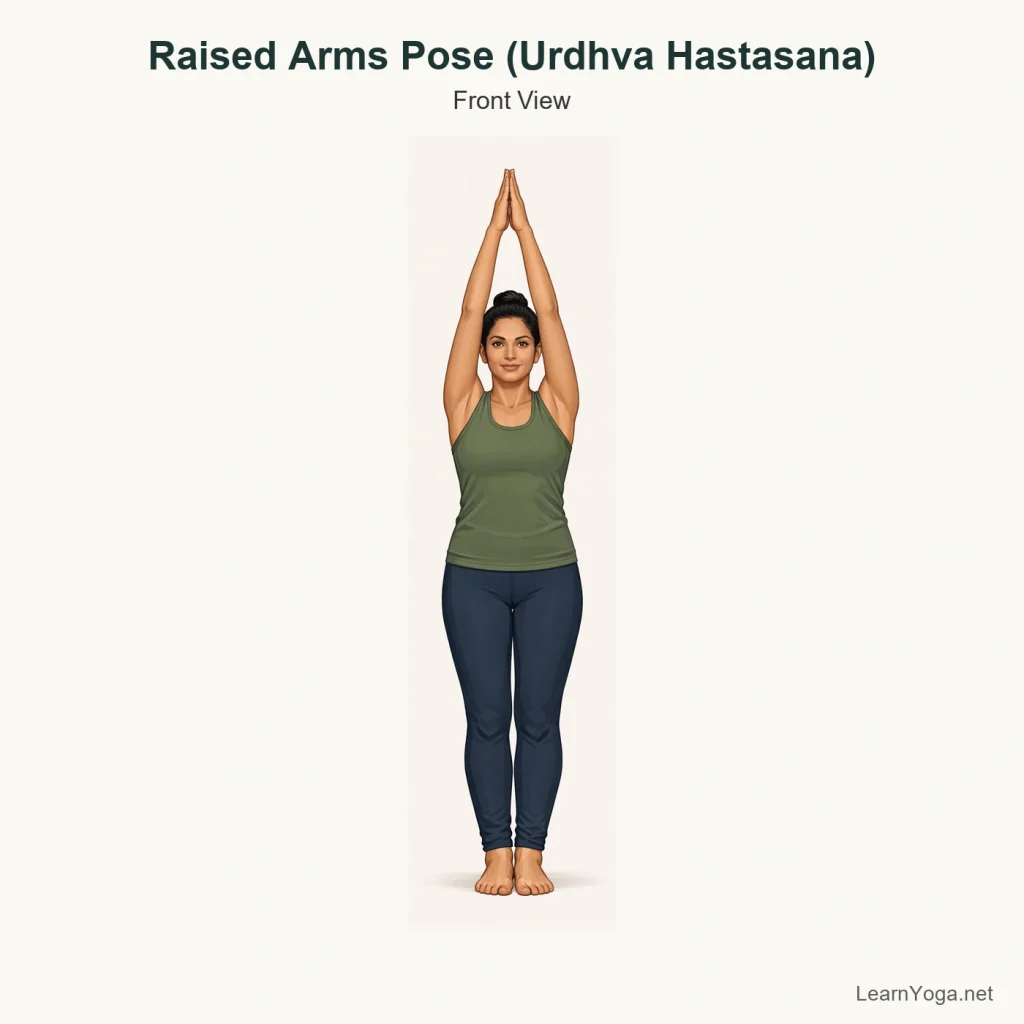
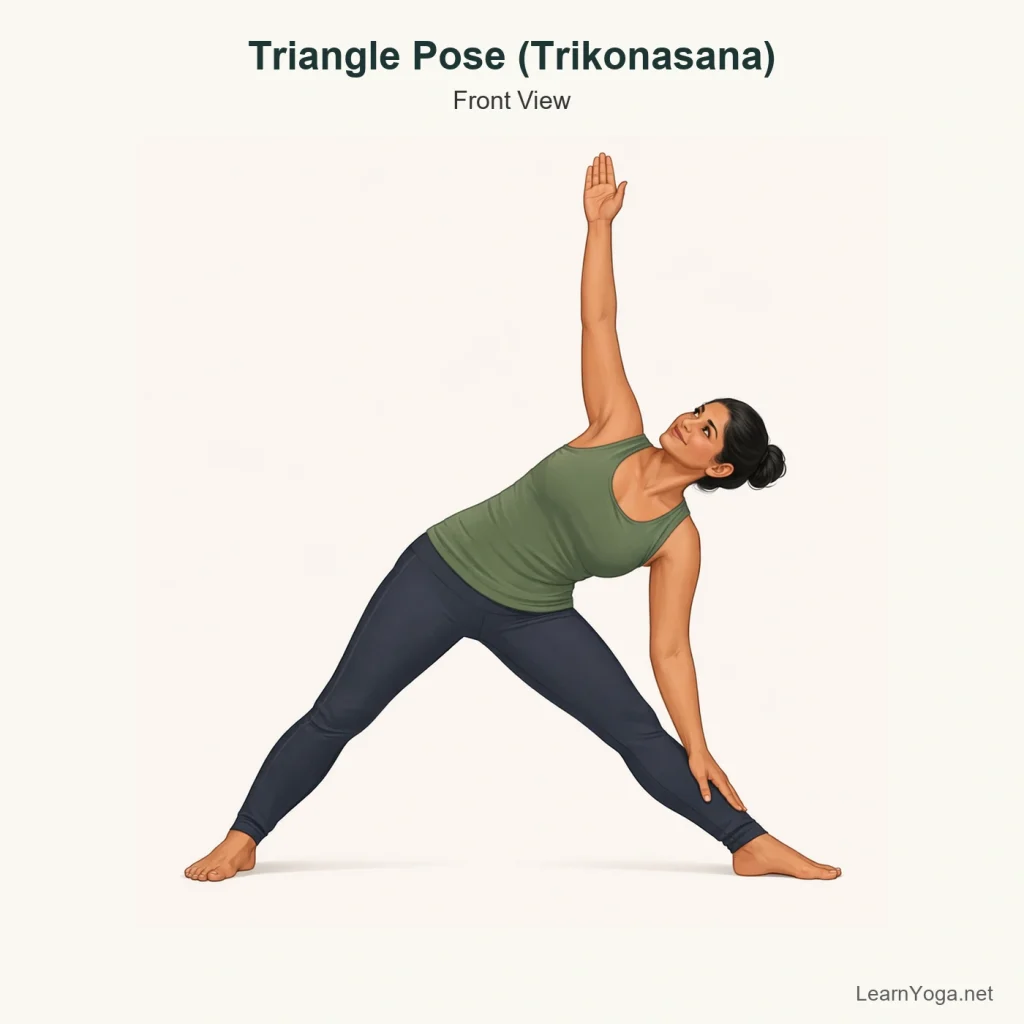
Swaying Palm Tree Pose is a simple standing side bend that lengthens the sides of the body and wakes up the shoulders, ribs and spine. It works best when the feet stay grounded and the bend stays long rather than deep.
This is a straightforward standing stretch, but the shape is cleaner when you think of lifting first and bending second. Instead of pushing the hips far out, keep both feet steady and let the whole side body arc evenly. Your range may be small, and that is completely fine.
How to do Swaying Palm Tree Pose
Stand with your feet about hip-width apart and spread your weight evenly across both feet.
Interlace your fingers and turn the palms up, or keep the hands shoulder-width apart if your shoulders prefer more space.
Inhale and reach your arms up without hardening the lower ribs. Let the spine feel tall.
Exhale and lean gently to the right. Keep both feet grounded and avoid rolling more weight into one foot.
Take 3 to 5 slow breaths here, or stay for 20 to 30 seconds. With each inhale, create more length from the outer hip to the fingertips.
Inhale back to centre and pause for a breath with the spine upright.
Exhale and lean to the left, keeping the chest open and the head in line with the arms or upright if that feels better on your neck.
Inhale back to centre, release the arms, and stand quietly for a moment before moving on.
Yogita's tip
If the lower side of your waist starts to crease sharply, come a little less far over and reach more through the top arm. The pose usually feels clearer when both sides of the torso stay long.
Benefits
Lengthens the side body, including the ribs and outer waist
Gently mobilises the shoulders and upper back when the arms are overhead
Helps you practise bending sideways without twisting the chest
Can improve awareness of even weight through both feet while standing
Works well as a simple warm-up before stronger standing poses
Common mistakes
Pushing the hips far to the side instead of lengthening through the whole torso
Collapsing the chest or turning the bend into a twist
Locking the knees and gripping the thighs
Letting one foot get much lighter than the other
Forcing the arms overhead when the shoulders feel pinched
Make it work for you
Hands apart overhead
Instead of interlacing the fingers, keep the arms parallel or place the hands on the hips. This reduces shoulder demand while keeping the side bend.
Soft knees
Keep a small bend in both knees if your legs or lower back feel braced. This often makes the side bend easier to spread through the whole body.
Alternatives
Standing Side Stretch
Practise a gentler upright side reach without holding the shape as long.
Use this if the full sway feels too intense in the shoulders or side waist.
Chair-supported side bend
Stand beside a chair and rest one hand lightly on the chair seat while the other arm reaches up and over.
Use this if balance feels unsteady or if you want less effort through the legs.
Seated side bend
Sit on a chair or on the floor and reach one arm up as you lean gently to the side.
Use this if standing for long is tiring or getting weight evenly through the feet is difficult.
Common variations
Dynamic side-to-side sway
Move from one side to the other with one breath each way, staying light and rhythmic rather than holding.
Feet together variation
Practise with the inner feet touching for a narrower base if balance is comfortable and you want more midline control.
Wider stance variation
Take the feet slightly wider than hips for a steadier base and easier grounding through both legs.
Safety and contraindications
When to avoid or get individual guidance
Recent or irritated shoulder strain may make the overhead arm position uncomfortable.
If side bending increases sharp pain in the lower back, keep the movement smaller or skip it for now.
Keep the bend comfortable and even rather than pushing for the deepest range.
If your shoulders feel crowded overhead, separate the hands or lower the arms.
If you feel wobbly, shorten the range or stand near a wall or chair.
If this simple side bend repeatedly causes sharp pain, dizziness, or pain that lingers in the shoulder or lower back afterwards, stop and get individual advice before practising it again.
Accessibility and limited mobility
A wall nearby can help if standing balance feels uncertain.
If lifting both arms overhead is uncomfortable, keep one hand on your hip or place the hands lower.
For older adults or anyone who tires easily in standing, a seated version on a chair gives a similar side-body stretch without the balance demand.
If getting to and from the floor is difficult, this pose is useful because it can be practised fully in standing.
Easier options
Use these related poses when you want a more accessible way to practise a similar movement or prepare for this pose.
Not really. A small shift will happen naturally, but if you push the hips far out, the pose often compresses into the lower waist. It usually feels better to keep both feet rooted and think more about making a long arc through the whole side body.
What should I do if my shoulders do not like the arms overhead?
You can keep the hands apart, bend the elbows a little, or place one hand on your hip. The side bend still works. The overhead shape is optional, especially if it makes the neck or shoulders tighten.
Should this feel strong in my lower back?
Usually no. You may feel mild work from standing upright, but the main sensation is often along the outer waist, ribs and shoulders. If your lower back starts gripping, make the bend smaller, soften the knees and lift more before leaning.
Is it better to hold the pose or move side to side?
Both can be useful. Holding for 3 to 5 breaths gives you time to organise the shape and breathe into the side ribs. Moving side to side with one breath each way can feel good as a warm-up when you want a lighter, more flowing version.
Reviewed for yoga instruction
Yogita
Certified Yoga Instructor with 5+ years of Teaching and Consistent Practice