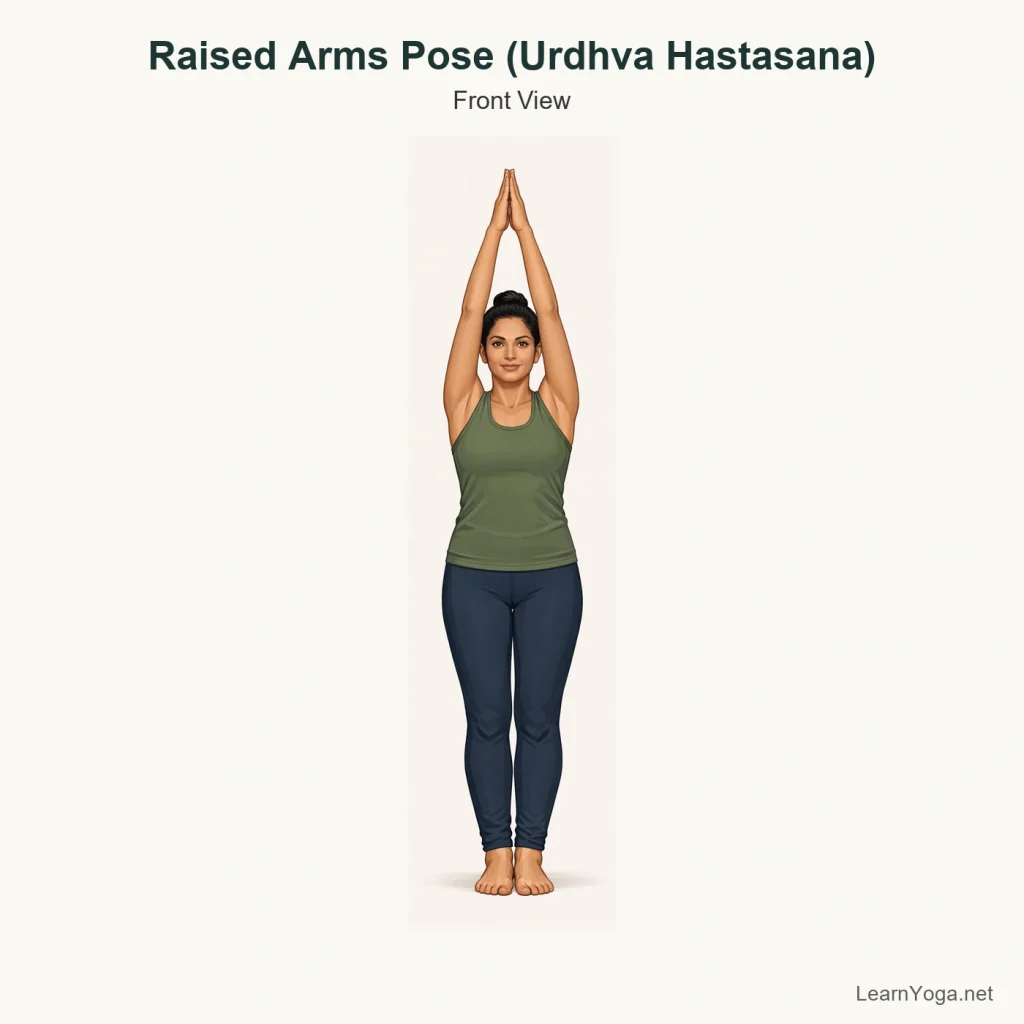
Palm Tree Pose is a simple standing stretch that reaches the arms overhead and lengthens the whole body upward. It is often used near the start of practice to wake up the feet, spine and shoulders without a lot of load.
This pose looks straightforward, but it works best when the stretch rises from a steady base rather than from pushing the ribs forward. You are not trying to make the body rigid. Think of growing taller through the legs, waist and fingertips while keeping the face and breath easy. Some people keep the hands parallel, while others prefer the palms together if that feels natural in the shoulders.
How to do Palm Tree Pose
Stand with your feet hip-width apart or together, whichever lets you feel steady.
Spread your toes lightly and balance your weight across the heels, the base of the big toes and the base of the little toes.
Let your arms rest by your sides and take one easy breath to lengthen through the spine.
On an inhale, sweep both arms overhead. Keep the shoulders away from the ears as much as comfortable.
Reach upward through the fingertips without hardening the lower ribs or locking the knees.
Stay for 3 to 5 breaths. Keep pressing the feet down as the waist and arms lengthen up.
If you like, lift the heels slightly for an extra balance challenge, but only if you can stay calm and steady.
To come out, exhale and lower the arms slowly back to your sides.
Yogita's tip
If your lower ribs pop forward as soon as the arms lift, keep a tiny bend in the elbows and reach up from the outer waist first. That usually gives the shoulders more space without turning the pose into a backbend.
Benefits
Encourages upright standing and clearer awareness of how the feet support the body.
Gives a gentle overhead stretch through the sides of the waist, chest and shoulders.
Can help warm the ankles and core for standing practice.
Builds simple balance and attention, especially if you choose to lift the heels.
Works well as a short reset after sitting for a while.
Common mistakes
Pushing the ribs forward instead of lengthening evenly upward.
Shrugging the shoulders up into the ears.
Locking the knees and leaning the weight back into the heels.
Forcing the palms together when the shoulders would be more comfortable with the hands apart.
Lifting the heels before the body feels steady over the feet.
Make it work for you
Hands Shoulder-Width Apart
Keep the arms parallel instead of pressing the palms together. This often feels easier on tight shoulders.
Back to Wall
Stand with your back lightly touching a wall so you can feel the back of the ribs and pelvis staying more neutral as the arms lift.
Low Arm Version
Lift the arms only as high as you can without strain in the neck or shoulders, even if that means stopping at shoulder height.
Alternatives
Mountain Pose
Stand tall with the arms by your sides and focus on grounding the feet and lengthening the spine.
Use this if overhead reaching is uncomfortable or you want the simplest version.
Raised Arms Seated on a Chair
Sit upright near the front of a chair with both feet flat, then lift the arms overhead on an inhale and lower them on an exhale.
Useful if standing balance is tiring or getting up and down from the floor is not practical.
Palm Tree at the Wall
Stand facing a wall and place fingertips on it at about head height, then lengthen through the sides of the body without fully taking the arms overhead.
Helpful if you want support for balance or less shoulder demand.
Common variations
Heels Lifted Palm Tree
The arms reach overhead while the heels lift, adding balance work through the feet and ankles.
Palms Together Overhead
The hands meet above the head if the shoulders allow it comfortably.
Arms Parallel Overhead
The arms stay shoulder-width apart, which often feels more spacious across the shoulders and neck.
Safety and contraindications
When to avoid or get individual guidance
Recent shoulder irritation may be a reason to keep the arms lower or choose a simpler version.
If standing balance feels unreliable today, practise with wall or chair support.
Move the arms only within a comfortable shoulder range.
If lifting the heels makes you wobble, keep them down or stand near a wall.
Keep the neck easy and look straight ahead rather than throwing the head back.
If even this gentle stretch repeatedly causes sharp pain or dizziness, stop and get individual advice before practising it again.
Accessibility and limited mobility
A chair or wall nearby can make the standing version feel more secure for older adults or anyone unsteady on their feet.
If shoulder range is limited, keep the arms wider or lower rather than forcing them overhead.
A seated version on a sturdy chair can give a similar upward stretch without the balance demand of standing.
Easier options
Use these related poses when you want a more accessible way to practise a similar movement or prepare for this pose.
No. Many people feel more comfortable with the hands shoulder-width apart. If bringing the palms together makes the shoulders tense or the ribs push forward, keep some space between the hands.
Should I lift my heels in Palm Tree Pose?
You can, but it is optional. Keeping the heels down lets you focus on length and alignment. Lifting the heels adds balance work, so try it only if you can stay steady and breathe normally.
Why does this pose make my lower back feel pinched?
That often happens when the ribs thrust forward and the pose turns into a small backbend. Soften the front ribs, keep the tail heavy, and think of growing upward through the sides of the waist rather than leaning back.
What if my shoulders feel tight overhead?
Take the arms wider, bend the elbows slightly, or stop at a lower height. You will still get the benefit of standing tall and reaching upward without forcing the range.
Is Palm Tree Pose the same as Raised Arms Pose?
They are very close. In some settings Palm Tree is taught as a simple preparation for overhead reaching, sometimes with the option of lifting the heels. Naming can vary a little, so it is fine to focus more on the shape and action than on the label.
Reviewed for yoga instruction
Yogita
Certified Yoga Instructor with 5+ years of Teaching and Consistent Practice