
Ready-made practice
Beginner Yoga Routine
A simple 15-minute practice using poses from the LearnYoga.net library.
Move at a comfortable pace and use the individual pose guides whenever you need setup, modification or safety details. The suggested timing is flexible. Pause, shorten or skip a pose when that serves your practice better.
What this routine is for
This sequence is organised as mobility practice at a beginner level. The listed duration is a guide rather than a target. Pause longer, shorten a hold or stop the session when that makes the practice more appropriate for you.
Areas involved across the sequence: hips, knees, lower-back, spine, core, shoulders, wrists, chest.
How to approach the sequence
Move through the poses in order instead of treating them as an isolated checklist. Let the earlier movements establish your pace and range, use the middle of the routine for its main work, then allow the final poses to reduce intensity where the sequence provides that transition.
If a transition feels abrupt, pause in a comfortable neutral position before moving on. Read How Yoga Sequencing Works to understand why pose order matters.
Your sequence
- Step 1 of 8Easy Pose112 sec
Easy Pose is a simple cross-legged seat used for breathing, meditation and quiet pauses in practice. The shape is straightforward, but it is usually more comfortable when the pelvis is slightly elevated and the knees are allowed to settle in their own range.
Transition: Move comfortably into the next pose.
- Step 2 of 8Cat Pose112 sec
Cat Pose is a simple spinal rounding done from hands and knees. It is often used with Cow Pose to warm the back, wake up the abdominal wall and help you feel the movement of the spine more clearly.
Transition: Move comfortably into the next pose.
- Step 3 of 8Cow Pose112 sec
Cow Pose is a gentle spinal extension from hands and knees. It can help you explore chest opening, shoulder position and the feeling of the front body lengthening without forcing a deep backbend.
Transition: Move comfortably into the next pose.
- Step 4 of 8Child's Pose112 sec
Child's Pose is a simple kneeling rest with the hips moving back toward the heels and the torso folding forward. It is often used between stronger poses, but it can also be a practice on its own when you want a quieter shape.
Transition: Move comfortably into the next pose.
- Step 5 of 8Downward-Facing Dog112 sec
Downward-Facing Dog is a whole-body pose that asks the hands to press, the hips to lift and the spine to lengthen. It does not need straight legs or heels on the floor to be useful.
Transition: Move comfortably into the next pose.
- Step 6 of 8Low Lunge112 sec
Low Lunge is a simple kneeling lunge that opens the front of the back hip while asking the front leg to steady the shape. It is often used to prepare for standing poses, lunges and backbends.
Transition: Move comfortably into the next pose.
- Step 7 of 8Mountain Pose112 sec
Mountain Pose is a simple standing shape that teaches how to organise your weight, legs, pelvis and spine with attention. It often looks easy from the outside, but small changes in the feet and ribs can make the whole pose feel steadier and lighter.
Transition: Move comfortably into the next pose.
- Step 8 of 8Corpse Pose112 sec
Corpse Pose is a quiet resting position done lying on your back. It gives your practice a clear ending and lets the body settle after effort without asking for a big stretch or shape.
Transition: Move comfortably into the next pose.
Adjusting the routine
You do not need to complete every pose exactly as listed. Open a pose guide when you need a modification, prop option, contraindication note or a clearer explanation of the setup. If one pose is not suitable today, use a related easier option where the relationship data provides one, or skip it and continue when the next transition makes sense.
Easier related options found in this sequence
 Constructive Rest Pose
 Child's Pose
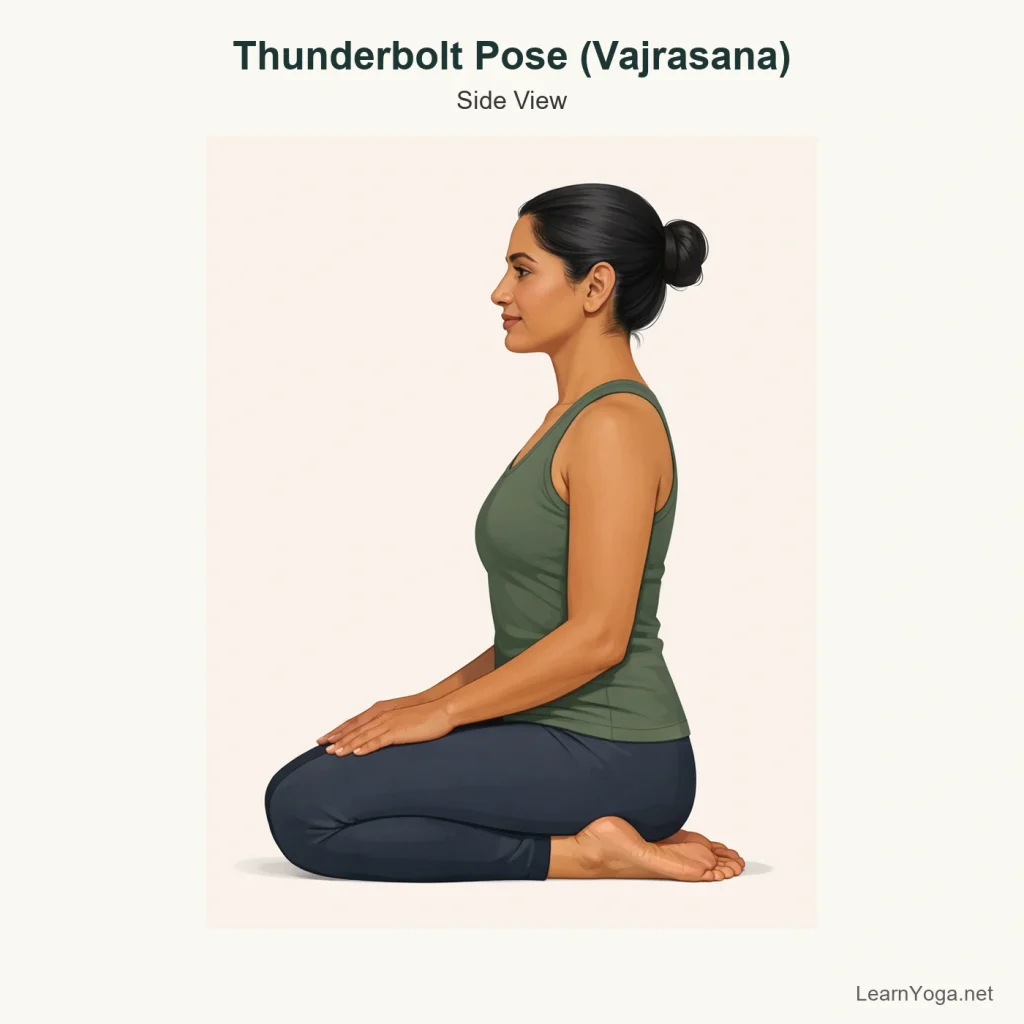 Thunderbolt Pose
 Supported Child's Pose
 Extended Puppy Pose
 Kneeling Crescent Pose
For a wider view, use the Pose Progression Explorer or build a different practice around your available time and goal.
Guided practice
Follow the pose on screen while the timer counts down. Move at your own pace, pause whenever you need to, or add another 30 seconds to the current pose.
Continue from this routine
After practising, use the individual pose guides to revisit any movement that felt unfamiliar. You can compare similar poses in the Pose Comparison tool, explore the areas involved through the Body Area Explorer, or test what you remember in the Yoga Learning Lab.