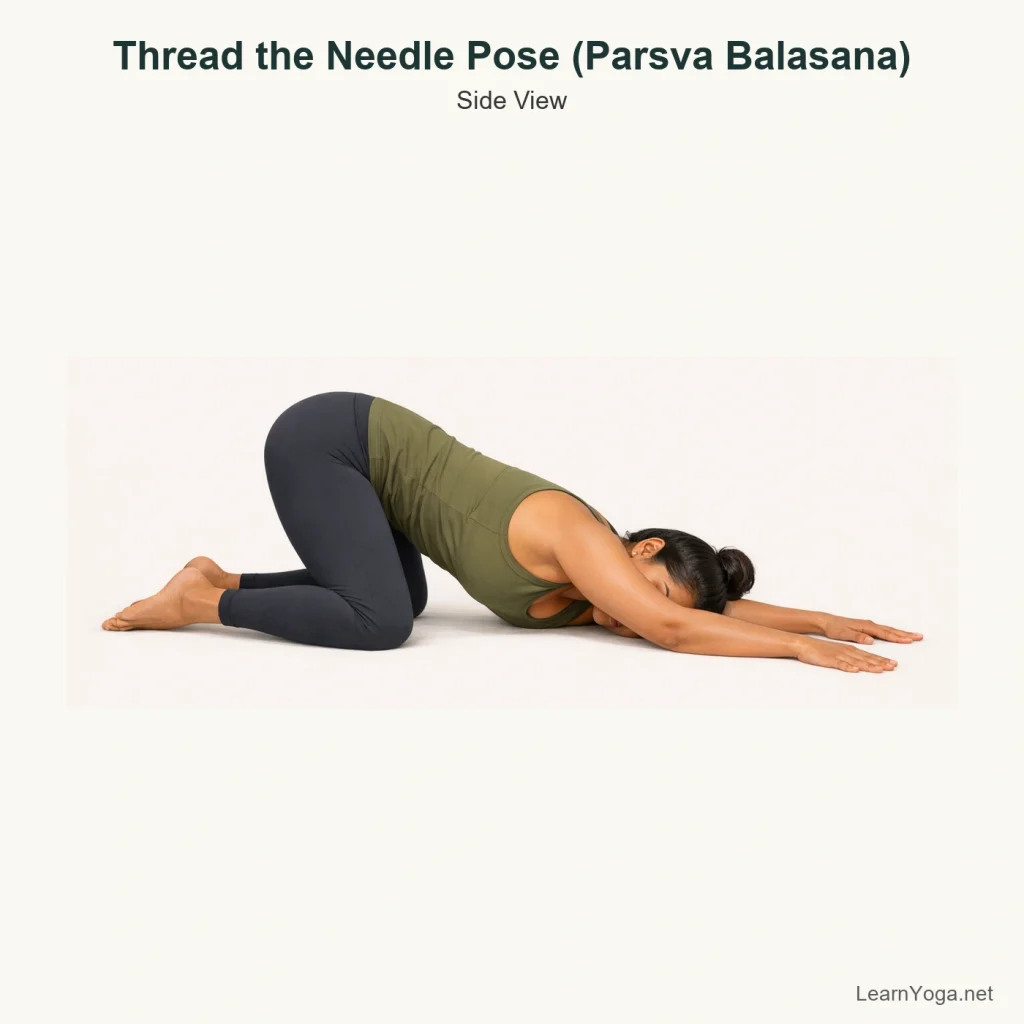
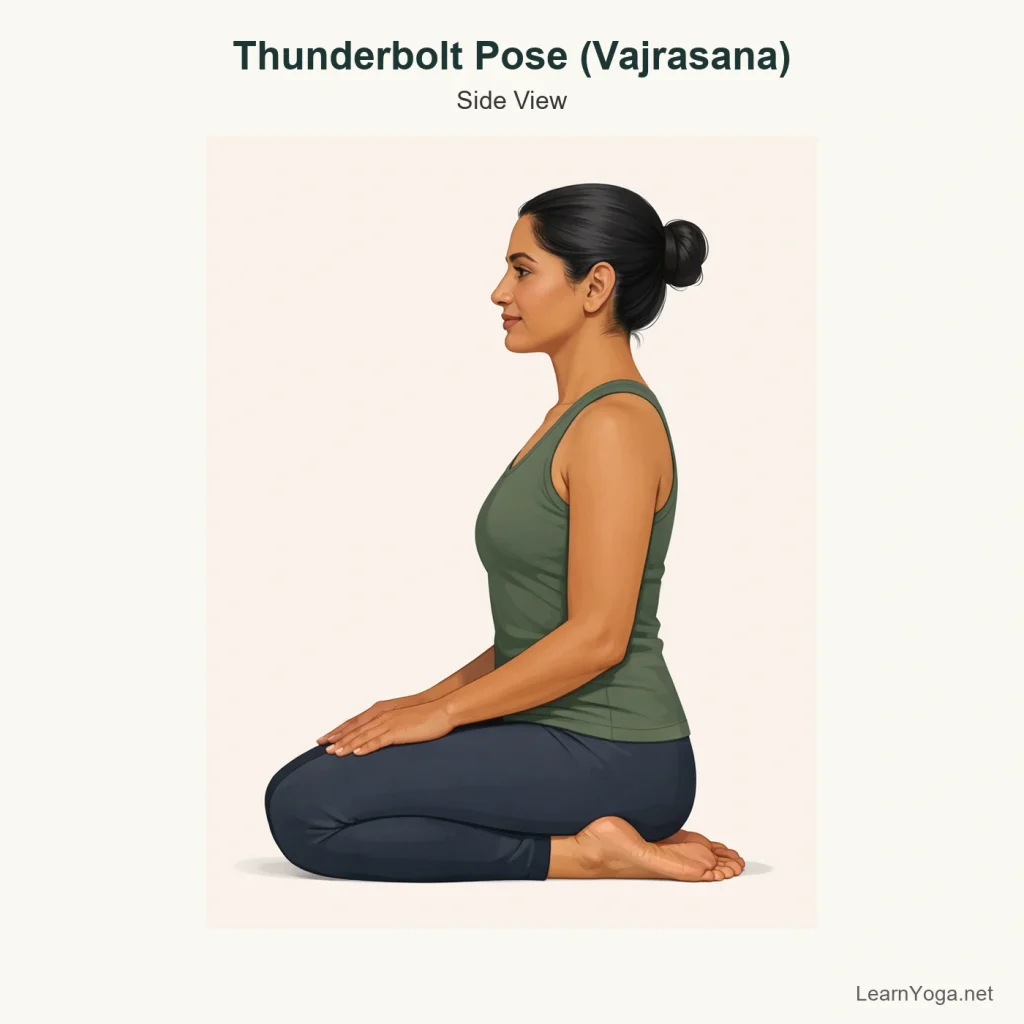
Child's Pose is a simple kneeling rest with the hips moving back toward the heels and the torso folding forward. It is often used between stronger poses, but it can also be a practice on its own when you want a quieter shape.
This pose looks straightforward, yet the most comfortable version can vary quite a lot from body to body. Some people prefer the knees together. Others need more space across the belly, chest or hips and do better with the knees wider. You can rest the arms forward, by your sides, or support the head to make the shape easier to stay in.
How to do Child’s Pose
Start on your hands and knees with your knees hip-width apart or wider if that feels better.
Bring your big toes toward each other if comfortable, then begin to send your hips back toward your heels.
Lower your torso toward your thighs and let your forehead rest on the floor if it reaches easily.
Stretch your arms forward with the palms down, or bring the arms back alongside your legs if that feels quieter in the shoulders.
Soften your jaw, neck and belly. Let the back body widen as you breathe.
Stay for 5 slow breaths or longer if the shape remains easy and steady.
Yogita's tip
If your forehead does not quite reach the floor, place a folded blanket or block under it. Having something to rest into often helps the neck and shoulders soften much more quickly.
Benefits
Gives you a clear resting position between stronger poses.
Gently bends the hips and knees through a smaller, supported range.
Can help the back body feel broader and less effortful.
Offers a simple way to bring attention to slower breathing.
Common mistakes
Forcing the hips all the way to the heels even when the knees or ankles feel crowded.
Keeping the arms reaching so strongly that the neck and shoulders stay tense.
Holding the breath instead of letting it settle into an easy rhythm.
Using the same knee position every time instead of adjusting the width to suit the body in front of you.
Make it work for you
Blanket behind knees
Place a folded blanket behind the knees before you sit back. This reduces how much the knees need to bend.
Support under seat
Rest your hips on a block, cushion or folded blankets between the heels and seat if your hips do not comfortably reach back.
Forehead support
Put a block or folded blanket under the forehead so the head can fully rest.
Alternatives
Supported Child's Pose
Rest your torso on a bolster or stacked pillows with the head turned to one side, then change sides halfway through.
Use this if folding all the way down feels too intense or if you want a more restful version.
Constructive Rest
Lie on your back with knees bent and feet on the floor, letting the spine rest in a neutral position.
Use this if kneeling is uncomfortable or getting to the floor front-down is not practical.
Wide-Knee Child's Pose
Take the knees wider apart and let the torso rest between the thighs.
Use this if the belly, chest or front hips feel crowded with the knees closer together.
Common variations
Wide-Knee Child's Pose
The knees open wider while the big toes may stay closer together, giving the torso more room between the thighs.
Arms-Back Child's Pose
The arms rest alongside the legs with the palms turning up or down, which can make the shoulders feel quieter.
Supported Child's Pose
The torso and head rest on props for a softer, longer hold.
Safety and contraindications
When to avoid or get individual guidance
Use care with a recent knee or ankle irritation that makes kneeling uncomfortable.
If the hips resting back strongly aggravates your knees, choose a supported version or a non-kneeling alternative.
Ease out or widen the knees if you feel pinching in the front of the knees or compression at the ankles.
Support the head if it hangs in space, rather than straining the neck to reach the floor.
There is no need to force the hips to the heels. A smaller version still counts.
Sharp pain at the knees, ankles, or hips during Child’s Pose that keeps returning even with props is a good reason to pause kneeling work and get individual guidance before continuing.
Accessibility and limited mobility
If deep knee bending is difficult, place support between the hips and heels or choose Constructive Rest instead.
If lowering the forehead to the floor is not available, bring the floor up with a block or folded blankets.
For older adults or anyone who finds floor transitions slow, set props up before coming down so you do not need to adjust much once in the pose.
Easier options
Use these related poses when you want a more accessible way to practise a similar movement or prepare for this pose.
No. Many people do not sit fully back in this pose, especially if the knees, ankles or front hips feel tight. Put a folded blanket, block or cushion between the hips and heels so the body has somewhere to rest.
Is it better to keep the knees together or apart?
Either can work. Knees together can feel more compact through the front body. Knees wider usually give more space for the torso and can be more comfortable for the belly, chest or hips. Choose the version that lets you breathe more easily.
What should I do with my arms?
If you want a little more length through the sides of the body, reach the arms forward. If the shoulders feel tired or busy, bring the arms back by your sides. Neither option is more correct.
Why does Child's Pose bother my knees?
Usually it is because the knees are bending more deeply than they want to that day, or there is not enough support behind the legs. Try a blanket behind the knees, place height between the hips and heels, or switch to Constructive Rest if kneeling still feels uncomfortable.
Can I stay here for several minutes?
Yes, if your knees, ankles and neck stay comfortable and your breathing remains easy. Use props so you can rest rather than hold yourself up. If you start fidgeting or feel pressure building, come out sooner.
Reviewed for yoga instruction
Yogita
Certified Yoga Instructor with 5+ years of Teaching and Consistent Practice