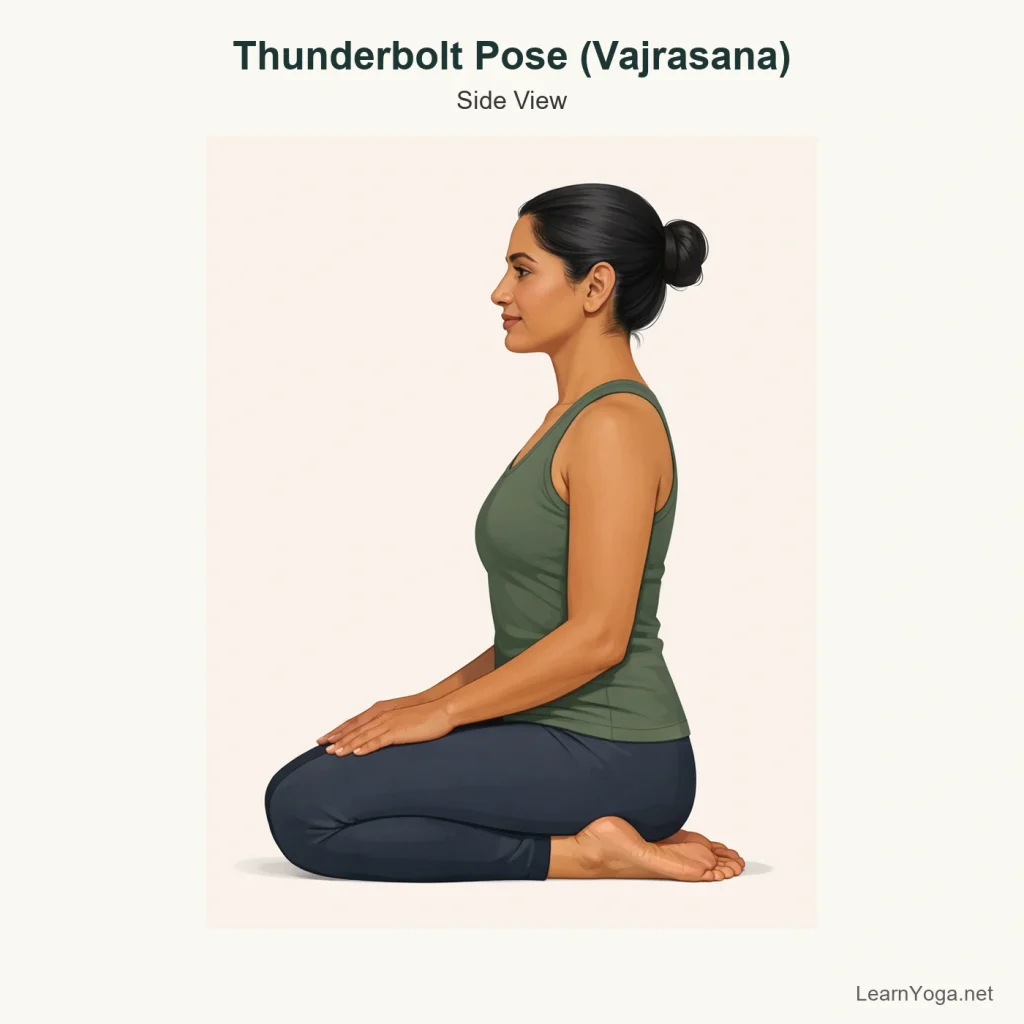
Thunderbolt Pose is a simple kneeling seat with the shins on the floor and the pelvis resting on the heels or on support. It can be a steady place for breathing, pausing between poses or sitting upright without crossing the legs.
Thunderbolt Pose is often used as a quiet seat, but it is not automatically comfortable for everyone. The shape asks the knees to bend fully and the fronts of the ankles to lengthen, so props can make a big difference. If the joints feel settled, it can be a clear, grounded position for breath awareness and upright posture.
How to do Thunderbolt Pose
Come to kneeling with your knees together or hip-width apart, whichever feels more natural in your body.
Point your feet straight back and let the tops of the feet rest on the floor.
Slowly sit your pelvis back toward your heels. If that is too much, place a folded blanket or block between your heels and sitting bones and sit on the support.
Let your hands rest on your thighs and stack your shoulders over your hips.
Lengthen gently through the back of the neck and allow the front ribs to stay soft rather than pushed forward.
Stay for 5 slow breaths or longer if the position remains easy and steady.
To come out, lean forward, lift your hips away from your heels and uncurl the legs slowly.
Yogita's tip
If your feet start turning in or out unevenly, look back for a moment and line the second toes more or less straight behind you. That small adjustment often makes the ankles feel much clearer.
Benefits
Gives you a stable kneeling seat for breath practice, pausing or short meditation.
Encourages an upright spine without needing to cross the legs.
Gently lengthens the fronts of the ankles and feet.
Can help you notice how much effort you are using in the jaw, shoulders and lower ribs while sitting.
Common mistakes
Forcing the pelvis all the way to the heels even when the knees or ankles feel pinched.
Letting the feet splay wide apart without meaning to, which can make the ankles feel awkward.
Leaning the chest forward instead of stacking the torso over the hips.
Holding the buttocks tightly, which usually makes the seat feel less comfortable.
Make it work for you
Seat on a block or folded blanket
Place a yoga block, bolster or folded blanket between your heels and sitting bones. This reduces how deeply the knees have to bend and often eases pressure across the fronts of the ankles.
Blanket under the shins or ankles
If the floor feels hard, place a folded blanket under the shins or under the ankles and tops of the feet for a little cushioning.
Alternatives
Easy Pose
Sit in Easy Pose with support under the hips if kneeling is not comfortable today.
Use this when full knee bending or pressure on the ankles does not feel workable.
Hero Pose
If sitting on the heels feels cramped, try Hero Pose with a block between the feet and the sitting bones.
Use this if your knees tolerate kneeling but your feet and ankles need a different arrangement.
Supported Child's Pose
For a more restful shape, fold forward over a bolster in Supported Child's Pose instead of staying upright.
Use this when you want less demand on upright sitting or need a quieter resting option.
Common variations
Knees hip-width apart
Keeping the knees slightly apart can give the thighs and belly a little more room and may feel more natural for some bodies.
Supported Vajrasana
Sitting on a block, cushion or folded blanket is a very common variation and often makes the pose much more sustainable.
Prayer hands in Vajrasana
Bringing the hands to prayer at the chest can turn the pose into a simple seat for centring and breath awareness.
Safety and contraindications
When to avoid or get individual guidance
Recent or irritated knee pain may make this pose unsuitable without support.
Strong discomfort across the fronts of the ankles or tops of the feet is a reason to modify or choose another seat.
This pose places the knees in deep bending and lengthens the fronts of the ankles, so use support if either area feels compressed.
Come out if you feel sharp pain, pinching or tingling rather than a mild stretch or steady pressure.
Keep the hold fairly short at first and build up only if the pose stays comfortable.
If kneeling repeatedly causes sharp knee pain, notable swelling, or tingling in the feet that does not ease after you come out, pause and get individual advice before continuing with kneeling poses.
Accessibility and limited mobility
A higher seat usually helps if getting the pelvis all the way to the heels is difficult.
If getting down to the floor is not practical, choose an upright seated position on a chair instead of kneeling.
Older adults or anyone with limited knee range may prefer short holds with support rather than staying for several minutes.
Easier options
Use these related poses when you want a more accessible way to practise a similar movement or prepare for this pose.
No. Some people find the pose steadier with the knees together, while others need a little space between them. If the knees feel crowded or the thighs press uncomfortably into the belly, try hip-width apart.
What if I cannot sit all the way on my heels?
That is very common. Place a block, bolster or folded blanket between your heels and sitting bones. A small lift often changes the pose from strained to workable without losing the basic shape.
Why do the fronts of my ankles feel intense here?
Thunderbolt Pose lengthens the fronts of the ankles and puts weight through the tops of the feet. Try a shorter hold, extra padding under the ankles or a higher seat. If the feeling is sharp rather than simply strong, come out.
Is this a good pose for breathing practice?
Yes, if the legs are comfortable enough that you are not bracing. Start with 5 slow breaths. If your face, jaw and shoulders stay relaxed, you can remain a little longer.
Reviewed for yoga instruction
Yogita
Certified Yoga Instructor with 5+ years of Teaching and Consistent Practice