Camel Pose is a kneeling backbend that asks for length through the front body as well as support from the legs. It can help you explore chest opening and spinal extension without dropping straight into the lower back.
Camel Pose can feel intense quite quickly, especially if you reach for the heels before the rest of the shape is organised. It usually goes better when you set the legs firmly, lift the chest first, and only then decide whether your hands need to go all the way back. Some bodies are comfortable with toes tucked, some with feet flat, and some prefer to keep the hands on the pelvis throughout.
How to do Camel Pose
Kneel with your knees about hip-width apart and your thighs upright. You can keep the tops of the feet down or tuck the toes under to bring the heels closer.
Place your hands on the back of the pelvis with the fingers pointing down or slightly outward. Let the elbows draw a little toward each other without forcing them.
Press the shins and the tops of the feet, or the tucked toes, into the floor. Feel the front of the hips gently move forward over the knees.
On an inhale, lift your breastbone up and slightly forward. Lengthen through the sides of the waist so the backbend starts as an upward lift, not a collapse.
Keep that lift as you begin to lean back. If it feels steady, reach one hand at a time to the heels. If not, stay with the hands on the pelvis.
Once in the pose, keep the thighs roughly vertical and press the hips forward enough that they do not drift back behind the knees. Let the chest arc upward.
Allow the head to stay neutral or only drop it back if the neck feels comfortable. A soft gaze forward or slightly up is completely fine.
Breathe for 3 to 5 slow breaths. To come out, bring your hands back to your pelvis if needed, lead with the chest, and rise on an inhale.
Yogita's tip
If reaching the heels makes the pose suddenly feel heavy in the lower back, keep your hands on the pelvis and think of lifting the sternum up away from the navel first. That upward action usually gives you a truer Camel shape than touching the heels does.
Benefits
Builds awareness of how to spread a backbend through the chest, upper back and hips instead of pushing only into the lower back.
Strengthens the legs and the back body to support an upright kneeling backbend.
Lengthens the front of the thighs and the front body for many practitioners.
Can improve coordination between steady lower-body support and an open, lifted chest.
Offers a strong focus point because the shape asks for careful pacing and clear breath.
Common mistakes
Reaching for the heels before lifting the chest, which can turn the pose into a drop into the lower back.
Letting the hips drift back behind the knees instead of keeping the thighs more upright.
Squeezing the buttocks hard and jamming the front ribs upward rather than creating length through the whole front body.
Throwing the head back even when the neck does not feel comfortable there.
Forcing flat feet when tucked toes would make the pose more accessible.
Make it work for you
Hands on pelvis Camel
Keep both hands on the back of the pelvis and stay in a smaller backbend. Press the shins down, lift the chest, and breathe there without reaching for the heels.
Toes tucked
Tuck the toes under so the heels sit higher. This shortens the reach and often helps you keep more lift through the chest.
Block between thighs
Place a yoga block between the upper thighs and gently squeeze it as you lift into the pose. This can help some people keep the legs steady and reduce the tendency for the knees to slide apart.
Alternatives
Half Camel
From kneeling, keep one hand on the pelvis and reach the other hand toward the heel or keep it on the ribs. This reduces the depth and makes the backbend easier to organise.
Use if full Camel feels too strong in the thighs, lower back or neck.
Bridge Pose
Lie on your back with knees bent and feet on the floor. Lift the hips and chest on an inhale, then lower slowly.
Use if kneeling is uncomfortable or getting to a deep upright backbend feels too demanding.
Sphinx Pose
Lie on your belly with forearms on the floor and gently draw the chest forward. Keep the backbend low and steady.
Use if you want a milder spinal extension with much less load on the knees and less intensity through the thighs.
Common variations
Camel with toes tucked
A practical variation that brings the heels closer and often makes the pose easier to reach without losing chest lift.
Hands-on-pelvis Camel
A reduced version where the hands stay on the pelvis for support, helping you work on lift and leg action without the full reach back.
Half Camel
One hand reaches back while the other stays on the pelvis or ribs. This gives you asymmetrical support and a smaller range.
Safety and contraindications
When to avoid or get individual guidance
Avoid or modify if kneeling is painful for your knees.
Use care with current neck pain, shoulder irritation, or a back issue that is aggravated by backbending.
If you are pregnant, a gentler upright or supported backbend may be more comfortable than a deeper version, depending on your stage and comfort.
Camel loads the knees in kneeling and asks for a fairly strong backbend through the spine, shoulders and front thighs, so it helps to enter gradually.
If your lower back feels pinched, reduce the depth, keep your hands on your pelvis, or choose Half Camel, Sphinx or Bridge instead.
Keep the head neutral if dropping it back strains the neck or makes the breath feel tight.
Use padding under the knees if the surface is hard.
Sharp pain in the knees, lower back, or neck, or dizziness that does not settle after you come out and lessen the backbend, is a sign to pause Camel and choose a gentler option such as Half Camel. Get individual guidance before continuing.
Accessibility and limited mobility
If kneeling on the floor is uncomfortable, place a folded blanket under the knees.
For practitioners with limited spinal extension or tighter thighs, keeping the toes tucked and the hands on the pelvis is often more workable than trying to touch the heels.
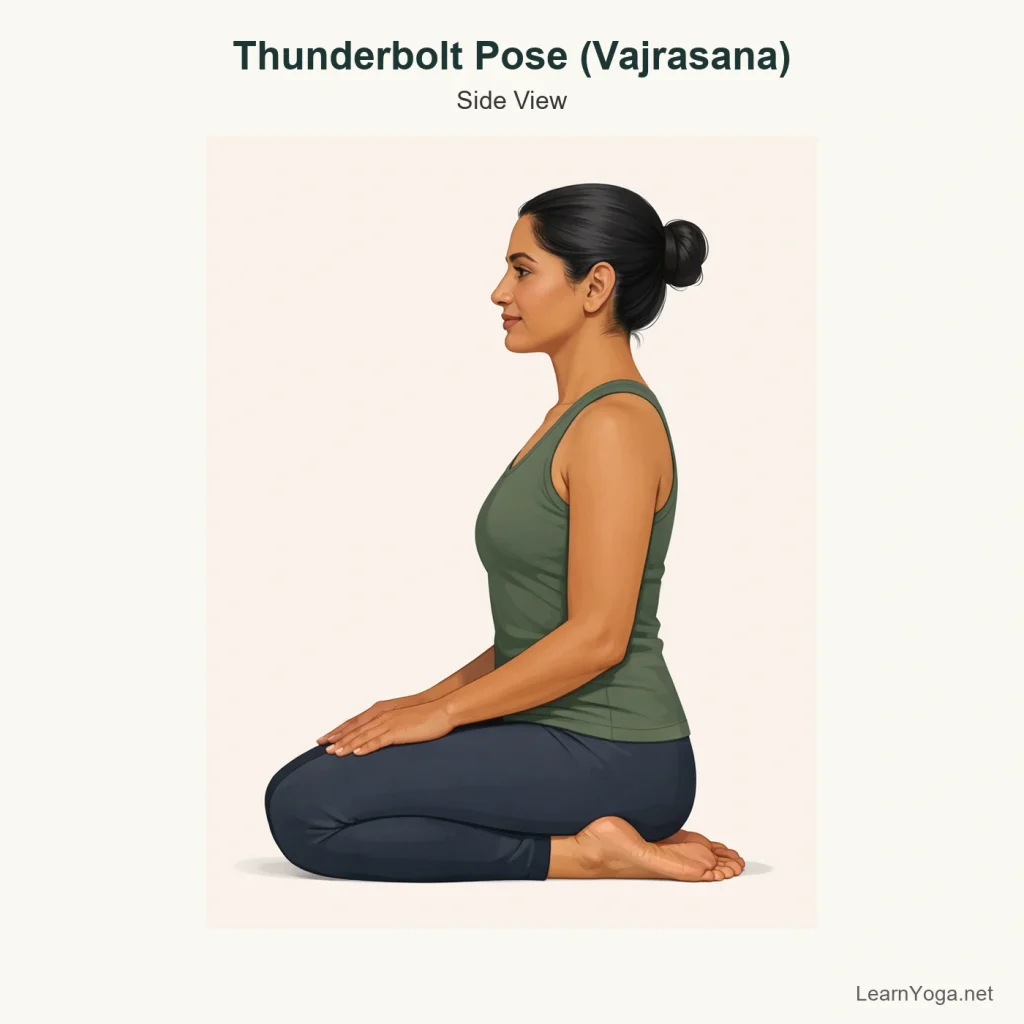
Older adults or anyone who feels unsteady coming upright from backbends may prefer to practise near a wall, pausing after the pose in Thunderbolt Pose or Child's Pose before standing.
If getting down to the floor is difficult, Bridge Pose or Supported Fish may offer a similar front-body opening with easier setup.
Easier options
Use these related poses when you want a more accessible way to practise a similar movement or prepare for this pose.
Do I need to touch my heels for this to count as Camel Pose?
No. For many people, the more useful version is with the hands on the pelvis and the chest lifting strongly. Touching the heels is only helpful if you can keep length in the front body and avoid compressing the lower back.
Should my feet be flat or my toes tucked?
Either can work. Tucked toes bring the heels closer and often make the pose easier to reach. Feet flat can feel more traditional in some classes, but it is not automatically better if it makes you lose height in the chest.
Why do I feel this mostly in my lower back?
That often happens when the hips drift back or the chest drops instead of lifting. Try a smaller version with hands on the pelvis, press the shins down, and think of the breastbone rising before you lean back.
What should I do with my head and neck?
Keep the neck in a position where the breath stays easy. Some people are comfortable letting the head move back, but many do better keeping the chin slightly in and the gaze forward or upward. A neutral neck is a perfectly valid choice.
How long should I stay in Camel Pose?
A short hold is usually enough. Try 3 slow breaths at first. If the pose stays smooth and steady, you might stay for 5 breaths, or repeat a shorter version two or three times instead of forcing one long hold.
Reviewed for yoga instruction
Yogita
Certified Yoga Instructor with 5+ years of Teaching and Consistent Practice