King Pigeon Pose is a deep backbend and hip-opening variation of pigeon that asks for a lot from the front hip, back thigh, shoulders and spine. It works best after a thorough warm-up and with less range than the full shape often suggests.
King Pigeon is one of those poses where the final picture can pull you further than your body is ready to go. The front leg is already in a strong hip-opening position, and then the back leg, chest and shoulders add a deep bend on top of that. For many people, the most useful version is not the full bind. A strap, an upright torso, or staying in Pigeon Pose is often the clearer practice.
How to do King Pigeon Pose
Begin in Pigeon Pose with your front leg bent and your back leg extended straight behind you. Place a folded blanket under the front hip if that side is hovering well above the floor.
Press your fingertips into the floor and lift your chest upright. Before reaching back, steady the pelvis as much as you can and let the back leg point straight behind you.
Bend the back knee and draw the heel toward you. Reach the same-side hand back first to hold the foot or a strap looped around the ankle.
If that feels stable, add the second hand. Either hold the foot directly or walk your hands up the strap so the elbows can point more upward rather than out to the sides.
Lift through the breastbone and allow the upper back to join the bend. Keep the back thigh moving long behind you so the lower back does not take all the work.
Stay for 3 to 5 slow breaths. If your breath becomes choppy, or the front knee or lower back starts to complain, ease out slightly or return to an earlier version.
Release the foot carefully, place your hands down, straighten the back leg fully again, and pause before changing sides.
Yogita's tip
If the pose collapses into your lower back as soon as you catch the foot, think of lifting your chest first and drawing the back shin toward you second. That small change usually spreads the bend more evenly.
Benefits
Opens the front of the back thigh and hip in a stronger way than standard Pigeon Pose.
Brings more movement into the chest and shoulders when the bind is approached gradually.
Challenges spinal extension and helps you practise distributing a backbend through more than one area.
Builds concentration because the pose asks for steady breath, careful setup and clear pacing.
Common mistakes
Forcing the back foot toward the head before the chest has lifted.
Letting the front hip tip heavily to one side so the shape becomes unstable.
Taking the whole backbend into the lower back instead of including the upper back and shoulders.
Pulling directly on the back foot and twisting the knee.
Ignoring strain in the front knee because the stretch in the hips feels strong.
Make it work for you
Strap around the back foot
Loop a strap around the back ankle or foot and hold the strap with one or both hands. This lets you keep more length through the spine instead of yanking yourself into the bind.
Support under the front hip
Place a folded blanket or block under the front sitting side if the pelvis is tilting sharply. A little support often makes the front leg feel steadier and reduces wobbling in the pose.
One-hand catch
Hold the back foot with the same-side hand only and keep the other fingertips on the floor. This reduces the shoulder demand and gives you more control.
Alternatives
Pigeon Pose
Stay in an upright or folded version of Pigeon Pose without bending the back knee.
Use this if the front hip is already giving you plenty of work or if the bind feels too strong.
Reclining Pigeon
Lie on your back and cross one ankle over the opposite thigh, then draw the legs in only as far as the knee stays comfortable.
Use this if floor-based hip opening is fine but the deep backbend or knee bend of King Pigeon is too much.
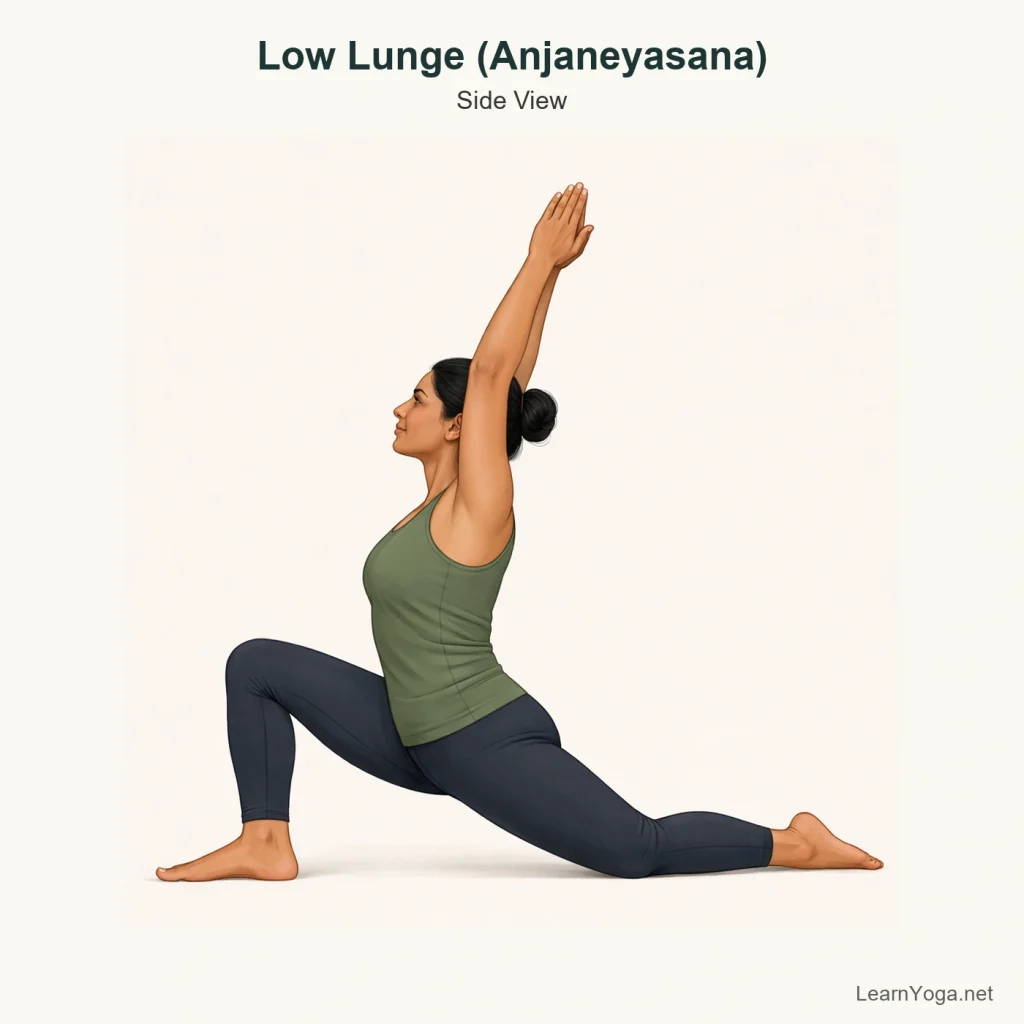
Low Lunge with quad stretch
From a low lunge, bend the back knee and hold the foot with one hand or use a strap, keeping the torso more upright and the front leg simpler.
Use this if you want the back-thigh opening with less pressure on the front knee and outer hip.
Common variations
Mermaid variation
From Pigeon Pose, bend the back knee and hold the foot or strap with one hand, then work toward bringing the foot into the elbow crease. This keeps the backbend smaller than the full overhead bind.
One-arm King Pigeon
Catch the back foot with one hand while the other hand stays on the floor for support. This is often a more workable step before the full pose.
Supported upright King Pigeon prep
Practise with the front hip supported and a strap on the back foot, keeping the chest lifted but not trying to bring the head toward the foot.
Safety and contraindications
When to avoid or get individual guidance
Avoid or modify if you have current knee pain, a recent knee strain, or pain with deep knee bending.
Skip the full pose if deep backbends aggravate your lower back or if shoulder overhead range is limited and painful.
Use a simpler variation if front-hip compression or pinching appears as soon as you set up.
This pose places meaningful load on the front knee, the back knee in deep flexion, the front hip and the lower back if you force the range.
Warm up thoroughly with hip opening, backbends and shoulder work before trying it.
Keep the front foot active and the front knee comfortable. If the sensation moves sharply into the knee, come out.
Use a strap or stay in Pigeon Pose rather than pulling hard on the back foot.
A blanket under the front hip can reduce strain and help the pelvis stay more level.
Stop if you feel sharp pain in either knee, strong pinching in the front hip, or back pain that does not ease when you reduce the depth. Get individual guidance before trying the pose again.
Accessibility and limited mobility
This pose is usually not the best entry point for older adults, anyone with limited spinal extension, or anyone who finds getting up and down from the floor difficult. Upright Pigeon Pose, Reclining Pigeon, or a low lunge quad stretch are often more workable choices.
If kneeling on the floor bothers the back knee, add extra padding or choose a supine hip opener instead.
If shoulder range is limited, a strap gives more space than trying to hold the foot directly.
Easier options
Use these related poses when you want a more accessible way to practise a similar movement or prepare for this pose.
No. That is not required. The pose can be useful long before the foot comes close to the head. If you can keep the chest lifted, breath steady and knees comfortable, you are already doing meaningful work.
Why do I feel this so much in my lower back?
That usually means the backbend is happening faster than the shoulders, chest or back thigh are opening. Use a strap, keep more lift through the breastbone, and do not pull the foot in so strongly. Often a slightly smaller shape feels much clearer.
What if I cannot hold my back foot?
Use a strap around the back ankle or foot. Hold the strap high enough that your elbows do not have to flare and your chest can stay broad. If that still feels strained, stay with upright Pigeon or a low lunge quad stretch.
Should my front shin be parallel to the front of the mat?
Not necessarily. For many bodies, keeping the front shin on a diagonal is more comfortable and more stable. Pulling the shin too far forward can increase stress at the front knee and make the pose less useful.
Can I practise this if Pigeon Pose already feels intense?
Usually it is better to stay with regular Pigeon Pose for now. King Pigeon adds a deep back-knee bend, shoulder opening and a stronger backbend. If the base pose is already close to your edge, the full variation is likely to be too much.
Reviewed for yoga instruction
Yogita
Certified Yoga Instructor with 5+ years of Teaching and Consistent Practice