Pigeon Pose is a deep hip-opening shape that asks for care in the front hip and knee. Done with support and a moderate range, it can be a useful way to explore outer-hip and glute stretch without forcing the position.
Pigeon can feel very different from one body to another. For some people it is a clear outer-hip stretch. For others it quickly becomes a knee or low-back strain if they try to copy a picture. The useful version is the one where the front leg feels steady, the pelvis has enough support, and the breath stays even.
How to do Pigeon Pose
Start in Downward-Facing Dog and bring your right knee forward toward your right wrist.
Place your right shin on the mat at an angle that suits your range. Your front heel does not need to come parallel to the top of the mat.
Slide your left leg straight back behind you, with the top of the foot resting on the floor.
Square yourself as much as is comfortable by drawing the right hip slightly back and the left hip slightly forward, but do not force the pelvis to become perfectly even.
If your right sitting bone or outer hip is hanging in space, place a folded blanket or block under that side so the pelvis feels supported.
Stay upright on your hands for a few breaths and check the front knee. If there is pressure in the knee, reduce the bend in the front leg or come out.
If the hip feels steady, walk your hands forward and lower to your forearms, stacked fists, or a bolster.
Let the back leg stay long and quiet. Keep a gentle lift through the lower belly so you do not collapse heavily into the lower back.
Breathe for 5 to 10 slow breaths, or about 30 to 60 seconds, then press your hands down and lift your chest.
Tuck the back toes, step back through Downward-Facing Dog, and repeat on the second side.
Yogita's tip
Most people do better here when the front shin stays on a diagonal. If you pull the shin too far forward before the hip is ready, the stretch often leaves the hip and lands in the knee.
Benefits
Lengthens the outer hip and glute area of the front leg.
Opens the front of the back hip when the back leg extends comfortably.
Can help you practise settling into a held stretch with steady breathing.
Builds awareness of pelvic position and how much range is actually useful for your body.
Common mistakes
Forcing the front shin to become parallel to the front of the mat when the hip is not ready.
Letting the front-side pelvis hang unsupported, which can make the pose feel unstable or too intense.
Collapsing into the lower back instead of keeping some length through the spine.
Ignoring pressure in the front knee and trying to breathe through it.
Dropping straight into the folded version before checking whether the upright setup feels steady.
Make it work for you
Support under the front hip
Place a folded blanket, cushion, or yoga block under the outer hip and sitting bone of the front leg so the pelvis is not dangling.
Upright Pigeon
Keep your hands on the floor or on blocks and stay lifted through the chest instead of folding forward. This reduces the load of the forward bend and gives you more control.
Smaller front-leg angle
Bring the front heel closer toward the groin so the knee bend is less intense. This often makes the pose more workable for tight hips.
Alternatives
Reclining Pigeon Pose
Lie on your back, cross one ankle over the opposite thigh, and draw the legs toward you until you feel a steady outer-hip stretch.
Use this if floor pressure on the front knee feels too strong or if you want a more controlled hip opener.
Figure Four Stretch
Lie on your back with one ankle crossed over the other thigh and keep the supporting foot on the floor, or lift the legs if that feels appropriate.
Useful when getting down into prone shapes is awkward or when you want a gentler version.
Sleeping Pigeon Pose
From Pigeon, fold farther forward and rest the head on stacked hands or a bolster.
Choose this only if the upright version feels stable and the front knee stays comfortable.
Common variations
Supported Pigeon
The pelvis is propped on a blanket or block to reduce strain and make the shape more even.
Folded Pigeon
The torso comes forward over the front shin, with the head supported if needed.
King Pigeon preparation
The torso stays more upright and the back knee bends, adding a stronger front-thigh and backbend element.
Safety and contraindications
When to avoid or get individual guidance
Recent or irritated knee injury on the front-leg side
Hip irritation that worsens with external rotation
Lower-back sensitivity if the pose causes you to collapse into extension
The main areas to watch are the front knee and front hip.
Keep the front shin at a smaller angle if needed; a bigger shape is not automatically better.
Use support under the pelvis if one side is lifted away from the floor.
Back off if you feel pinching in the front hip or pressure in the knee.
Stop if you feel sharp pain in the front knee, strong pinching deep in the hip, or discomfort that lingers after you come out. Get individual guidance before repeating the pose.
Accessibility and limited mobility
If getting into a prone floor pose is difficult, Reclining Pigeon Pose or Figure Four Stretch may be more practical.
Support under the front hip can make a big difference for older adults or anyone with limited hip range.
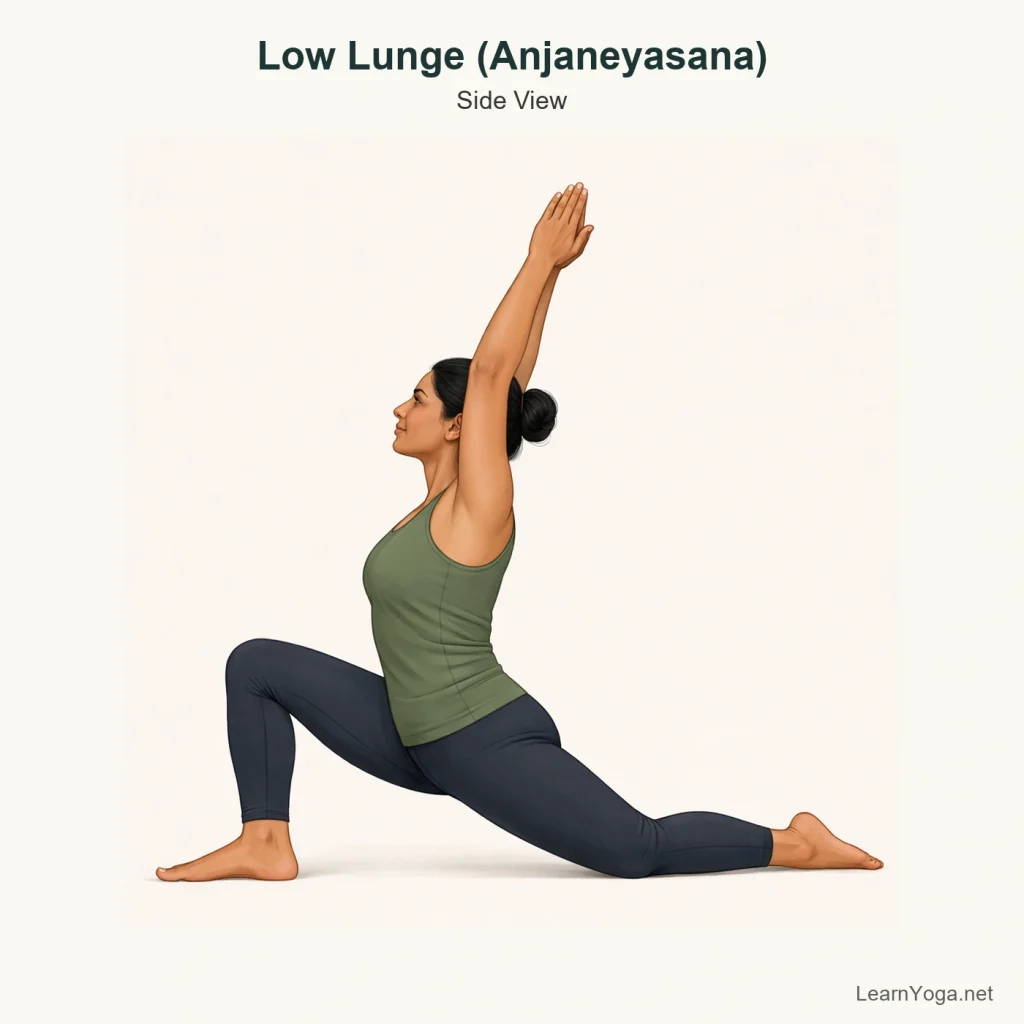
If kneeling and moving weight through the hands to enter the pose is uncomfortable, set up from a low lunge more slowly or choose a supine alternative.
Easier options
Use these related poses when you want a more accessible way to practise a similar movement or prepare for this pose.
Does my front shin need to be parallel to the mat?
No. That version asks for a lot of hip range and is not necessary. Many people are more comfortable with the front heel closer in toward the pelvis. What matters more is that the stretch stays in a workable range and the knee feels clear.
Why do I feel this in my knee instead of my hip?
Usually the front leg is being asked to do more rotation than the hip can comfortably give. Try bringing the front heel closer in, supporting the outer hip, or switching to Reclining Pigeon Pose. Knee pressure is a sign to change the setup, not to push through.
Should my hips be perfectly square?
Not necessarily. A little effort toward level hips can help organise the pose, but forcing the pelvis flat can create strain. A supported, slightly uneven pelvis is often better than a perfectly square shape that makes the knee or back complain.
Is it better to stay upright or fold forward?
Start upright. That gives you a chance to check whether the front hip and knee feel steady. If they do, you can lean forward gradually. If folding makes the sensation sharp, compressed, or hard to breathe with, stay higher.
How long should I hold Pigeon Pose?
For most home practice, 5 to 10 slow breaths per side is enough. If you are well supported and the pose stays comfortable, you might stay for up to a minute. Longer is only useful if you can keep the breath easy and the joints quiet.
Reviewed for yoga instruction
Yogita
Certified Yoga Instructor with 5+ years of Teaching and Consistent Practice