Downward-Facing Dog is a whole-body pose that asks the hands to press, the hips to lift and the spine to lengthen. It does not need straight legs or heels on the floor to be useful.
Downward-Facing Dog is often taught as a resting point, but for many people it feels more like organised work. The hands, shoulders, spine, hips and legs all have a part to play. If you are new to it, bending the knees a little usually helps more than forcing the heels down. The pose is less about making a sharp upside-down V shape and more about creating long, steady lines through the arms and torso while keeping your weight shared between hands and feet.
How to do Downward-Facing Dog
Start on hands and knees with your wrists under your shoulders and knees under your hips. Spread your fingers and press evenly through the palms, especially the base of the index finger and thumb.
Tuck your toes under. On an exhale, lift your knees a few centimetres, then send your hips up and back.
Bend your knees enough so you can lengthen your spine. Think of your sitting bones reaching up while your hands press the floor away.
Keep your head in line with your arms and let your neck stay easy. Your gaze can rest toward your feet or between your ankles.
Gradually work your legs toward straighter if that happens without rounding your back. Your heels can stay lifted, lightly lower, or hover well off the floor depending on your range.
Stay for 3 to 8 breaths. With each inhale, make space across the side ribs and back body. With each exhale, press more clearly through your hands and lift through your hips.
To come out, lower your knees to the mat and return to hands and knees or rest in Child's Pose.
Yogita's tip
If the pose feels crowded in your shoulders, try making it a little shorter in the knees-bent version first. Many people keep walking the feet too far back, which shifts the work into the shoulders and makes the spine harder to lengthen.
Benefits
Builds steady weight-bearing strength through the hands, wrists, arms and shoulders.
Lengthens the back of the body, especially through the spine, calves and hamstrings, within your comfortable range.
Helps you practise moving the hips back while keeping the arms active.
Can sharpen awareness of how to share effort between upper and lower body.
Works well in flowing practice because it links the breath with a clear full-body shape.
Common mistakes
Trying to straighten the legs before the spine has room to lengthen.
Dumping most of the weight into the wrists instead of pressing through the whole hand and lifting through the hips.
Letting the shoulders collapse toward the ears.
Forcing the heels toward the floor even when that rounds the back or pulls the pelvis under.
Looking forward and compressing the neck.
Make it work for you
Bent-Knee Downward Dog
Keep both knees clearly bent and prioritise a long spine. Lift the hips high and let the heels stay lifted.
Hands on Blocks
Place a block under each hand on the lowest or middle height to reduce the amount of ankle and hamstring length needed and give the chest a bit more space.
Shorter Hold
Come into the pose for 1 to 2 breaths, lower the knees, and repeat a few times instead of staying for a long hold.
Alternatives
Extended Puppy Pose
Keep your hips above your knees and walk your hands forward, resting your forehead or chin comfortably if that suits your neck.
Useful if full Downward Dog feels too strong for the wrists or hamstrings.
Child's Pose
Bring the hips back toward the heels and rest your torso over your thighs, with knees together or apart.
Useful if you need a simpler floor option between weight-bearing poses.
Standing Forward Fold
Fold from standing with knees bent as needed and let the head relax.
Useful if getting to the floor is not practical today.
Common variations
Pedalling the Feet
Alternate bending one knee and then the other to explore the calves and the backs of the legs without holding still.
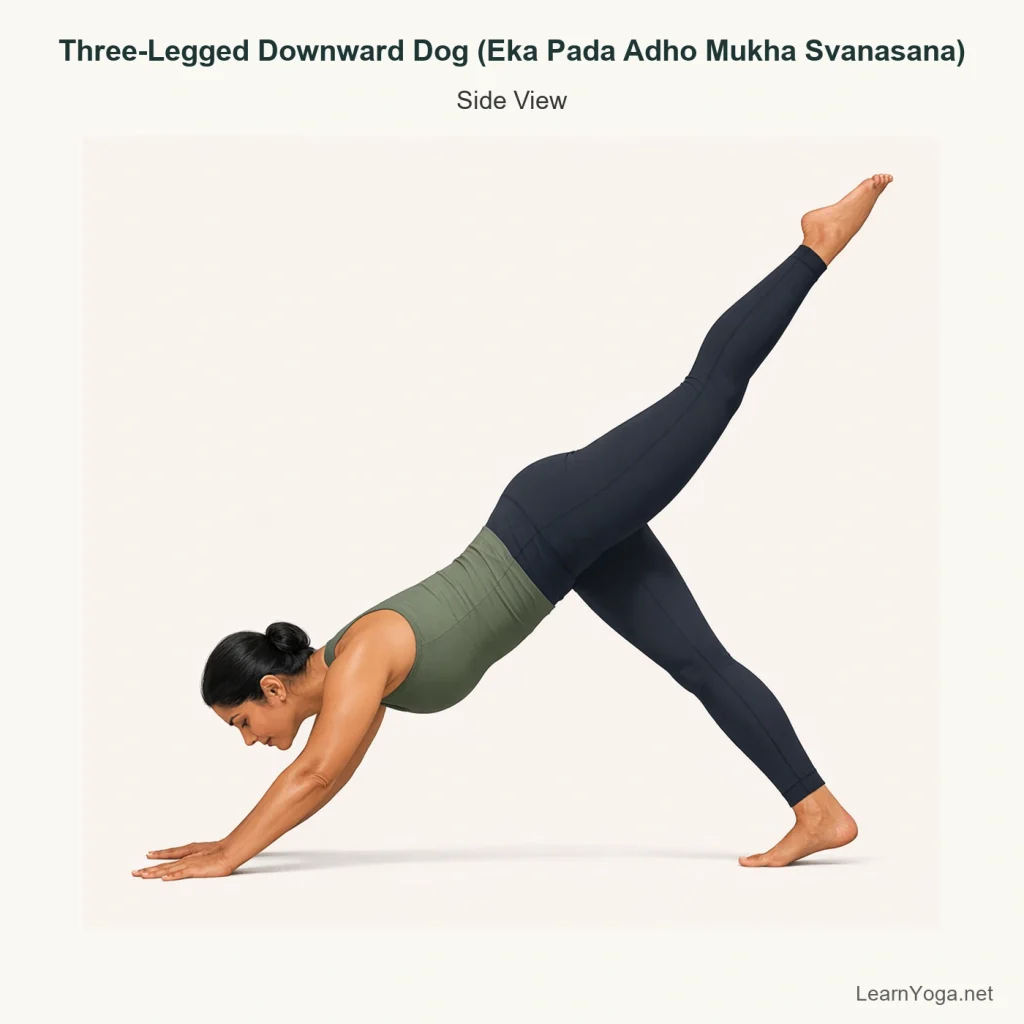
Three-Legged Downward Dog
From the base pose, lift one leg back and up while keeping both hands grounded and the shoulders steady.
Heels Lifted Variation
Keep both heels high and focus on length through the spine and strong arm support.
Safety and contraindications
When to avoid or get individual guidance
Use care with active wrist, shoulder or hamstring irritation.
This pose may not be the best choice if bearing weight through the hands is not comfortable today.
Keep a soft bend in the knees if that helps your spine stay long.
If your wrists feel pinched, press through the whole hand and shorten the hold or come down to rest.
If your shoulders feel jammed, bend the knees and reduce how far you push the heels down.
Come out of Downward-Facing Dog and get individual guidance when weight through the hands brings on sharp wrist or shoulder pain, the backs of the legs repeatedly feel strained, or your hands start going numb.
Accessibility and limited mobility
If getting down to the floor is difficult, Standing Forward Fold can give a related back-body stretch without kneeling and rising again.
Tight hamstrings or calves often make this pose feel much harder than it looks. A generous bend in the knees is a valid version, not a beginner mistake.
For older adults or anyone with reduced shoulder tolerance, shorter holds with rest in between are often more manageable than one long stay.
Easier options
Use these related poses when you want a more accessible way to practise a similar movement or prepare for this pose.
No. For many bodies they do not, especially if the calves or hamstrings are tight. It is usually more useful to keep some lift in the heels and make the spine longer.
Should I keep my knees straight or bent?
Either can work, but a small bend is often the better starting point. If straightening the legs rounds your back or drags your chest toward the floor, bend the knees again and organise the upper body first.
Why does this feel so hard on my arms and shoulders?
Often the feet are too far back, the shoulders are collapsing, or too much weight has shifted into the hands. Try a slightly shorter stance, bend the knees, and press the floor away so the hips lift more clearly.
Where should I feel the pose most clearly?
Usually you will notice steady work in the shoulders and arms, plus length through the sides of the waist, spine, calves or hamstrings. You should not need to chase one intense stretch for the pose to be doing its job.
Reviewed for yoga instruction
Yogita
Certified Yoga Instructor with 5+ years of Teaching and Consistent Practice