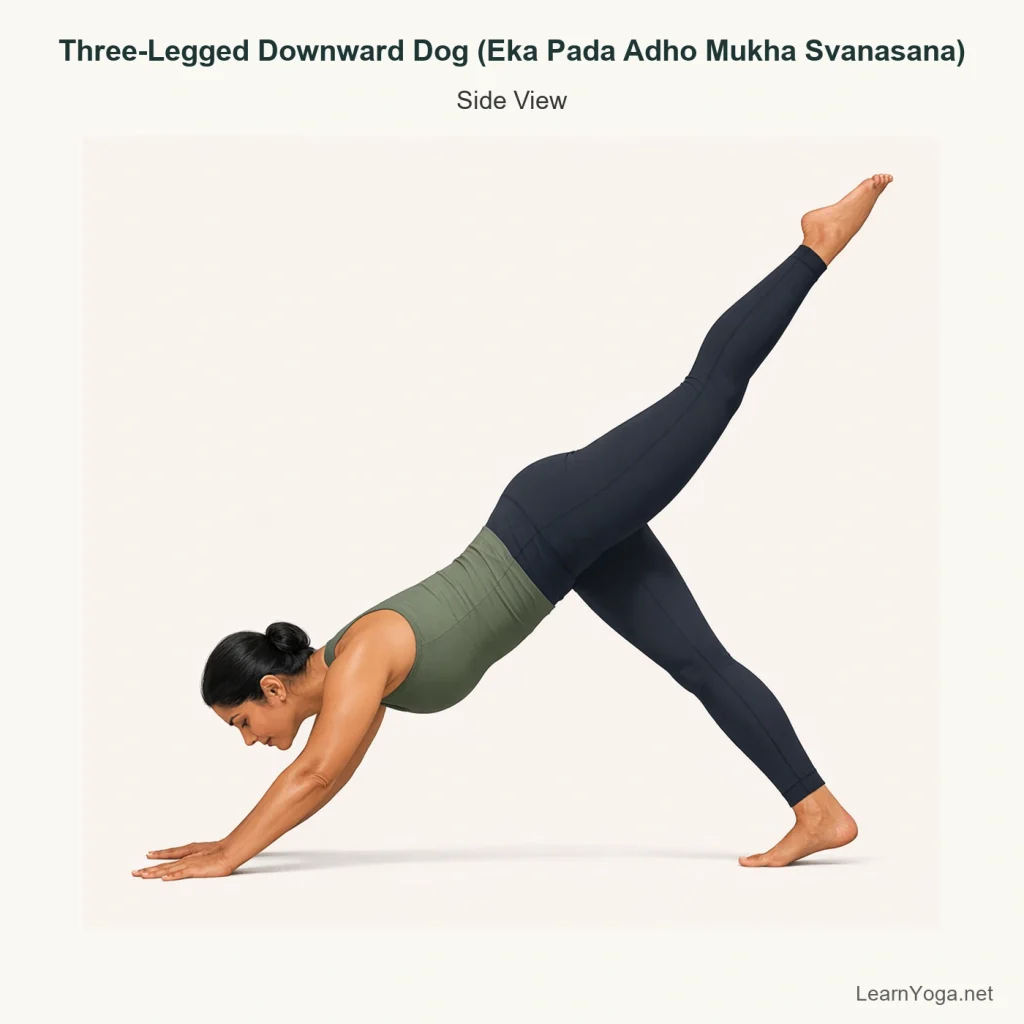
Three-Legged Downward Dog builds on Downward-Facing Dog by asking one leg to lift without losing length through the sides of the waist, shoulders and standing leg. It can be a useful way to wake up the back body and hips, but the pose usually feels better when the lifted leg is not the main priority.
This variation adds a little more balance and a little more strength to an already active shape. Many people try to make it dramatic by throwing the leg high, but the pose is often cleaner when you first keep the pelvis fairly level and the standing heel reaching back. A smaller lift can give you more useful feedback than a bigger one.
How to do Three-Legged Downward Dog
Start in Downward-Facing Dog with your hands spread evenly and your feet about hip-width apart.
Press down through the base of the fingers and lift through the hips so the spine feels long, even if your knees stay slightly bent.
Shift a little more weight into your left foot without collapsing into the shoulders.
On an inhale, lift your right leg back and up. Keep the toes pointing mostly down at first and reach through the ball of the foot.
Press the floor away firmly with both hands and keep the front ribs gently drawing in so the lower back does not dump forward.
Stay for 3 to 5 breaths, or lower and lift the leg with the rhythm of your breath for a few rounds.
Exhale to place the right foot back down into Downward-Facing Dog.
Pause for a breath, then repeat on the second side.
Yogita's tip
If the lifted hip keeps rolling open straight away, lift the leg a little lower and imagine the inner thigh turning slightly toward the floor. That often makes the pose feel longer and steadier through the waist.
Benefits
Strengthens the shoulders and arms while you support more weight through the upper body.
Gives the standing hamstring and calf a clear lengthening action.
Asks the core and side waist to organise the pelvis as one leg lifts.
Mobilises the hip of the lifted leg without needing a very large range.
Can prepare the body for lunges, standing balances and transition work in flowing practice.
Common mistakes
Throwing the lifted leg high and shortening the lower back.
Letting the chest sink toward the floor instead of pressing evenly through both hands.
Locking the standing knee so hard that the pelvis tips and the spine loses length.
Turning the toes of the lifted leg out immediately and opening the hip more than you can control.
Holding the breath while trying to balance.
Make it work for you
Bent-knee Down Dog base
Keep the standing knee slightly bent so you can lengthen the spine and press the floor away more clearly.
Low leg lift
Lift the leg only a small amount, just until it leaves the floor, and keep the pelvis more level. This reduces the pull on the standing hamstring and makes it easier to keep the trunk steady.
Hands on blocks
Place each hand on a block at the wall or on the mat if your shoulders or hamstrings feel cramped in the full version.
Alternatives
Downward-Facing Dog
Stay with both feet on the floor and work on an even push through the hands and a long spine.
Use this if lifting one leg makes the pose feel unstable or too intense in the wrists or shoulders.
Bird Dog at the wall or floor
From hands and knees, extend one leg back without lifting the hips. You can also keep the toes on the floor for extra support.
Use this to practise hip control with much less load on the standing leg and less height than the full pose.
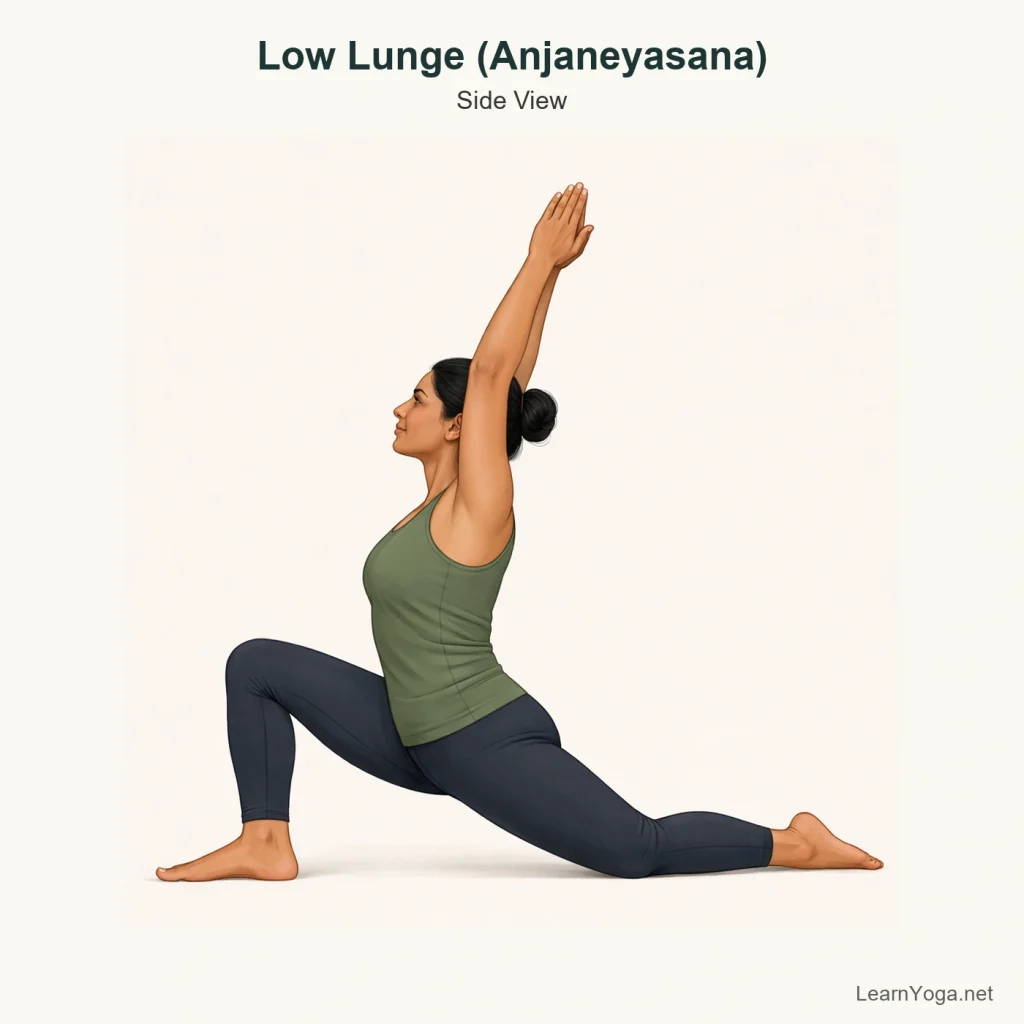
Low Lunge
Step one foot forward and keep the back knee down to work the hips without bearing as much weight through the hands.
Useful if wrists do not enjoy staying in Downward Dog.
Common variations
Hip-opened Three-Legged Dog
The lifted knee bends and the hip opens, creating more space across the front of the hip and side body. Keep pressing evenly through both hands so the shoulders stay broad.
Dynamic lift and lower
The leg lifts on an inhale and returns on an exhale for several rounds, making the pose feel more rhythmic and less like a hold.
Three-Legged Dog to knee-to-nose
From the lifted leg variation, the knee draws in toward the chest on the exhale, adding more core work and shoulder loading.
Safety and contraindications
When to avoid or get individual guidance
Recent or aggravated wrist or shoulder pain may make this variation uncomfortable.
If strong hamstring tension in the standing leg changes how you bear weight, use a bent-knee version or stay with regular Downward-Facing Dog.
Keep the lifted leg lower if your lower back starts to pinch or your ribs push forward.
If your wrists or shoulders feel overloaded, shorten the hold or return both feet to the floor.
A soft bend in the standing knee is fine if that helps you keep length through the spine.
Pause Three-Legged Downward Dog and return to regular Downward-Facing Dog when sharp pain shows up in the wrists, shoulders, or lower back, or bearing weight through the hands keeps making symptoms worse. Get individual guidance before trying the variation again.
Accessibility and limited mobility
If getting down to the floor is awkward, choose a standing alternative such as a wall-supported leg reach rather than forcing the full shape.
Older adults or anyone with tight calves and hamstrings may find a shorter stance and bent knees more workable than trying to straighten everything.
If your wrists tire quickly, reduce the hold time and rest in Child's Pose or switch to a lower-load option such as Bird Dog.
Easier options
Use these related poses when you want a more accessible way to practise a similar movement or prepare for this pose.
Not very high. The leg only needs to lift enough that you can keep length through both sides of the waist and stay steady through the hands. For many bodies, a lower leg lift gives a better pose than the highest possible one.
Should I keep my hips square or open them?
Both versions exist, but starting with the hips more level is usually the clearest way to learn the pose. It helps you feel the standing leg, the side waist and the push of the floor. Once that feels organised, you can explore opening the hip if you want to.
Why do my shoulders feel heavier in this pose than in regular Downward Dog?
One foot has left the floor, so the arms and shoulders naturally do more work. Try shortening the hold, lifting the leg less, and pressing more evenly through both hands. If the chest is dropping, the shoulders will usually feel much heavier.
What if I cannot straighten the standing leg?
You do not need to. A small bend in the standing knee often helps the spine stay long and stops the pose turning into a strain through the back of the leg. Straightness matters less than keeping the shape supported and breathable.
Reviewed for yoga instruction
Yogita
Certified Yoga Instructor with 5+ years of Teaching and Consistent Practice