Half Splits is a kneeling hamstring stretch with one leg extended forward and the hips moving back. It can be quite direct, so a smaller range often feels clearer and steadier than trying to fold deeply.
Half Splits asks for length through the back of the front leg, but the pose usually works better when you organise the pelvis and spine first. Many people get more from it by keeping a soft bend in the front knee or placing hands on blocks. There is no need to pull yourself down. A measured shape with easy breathing is enough.
How to do Half Splits Pose
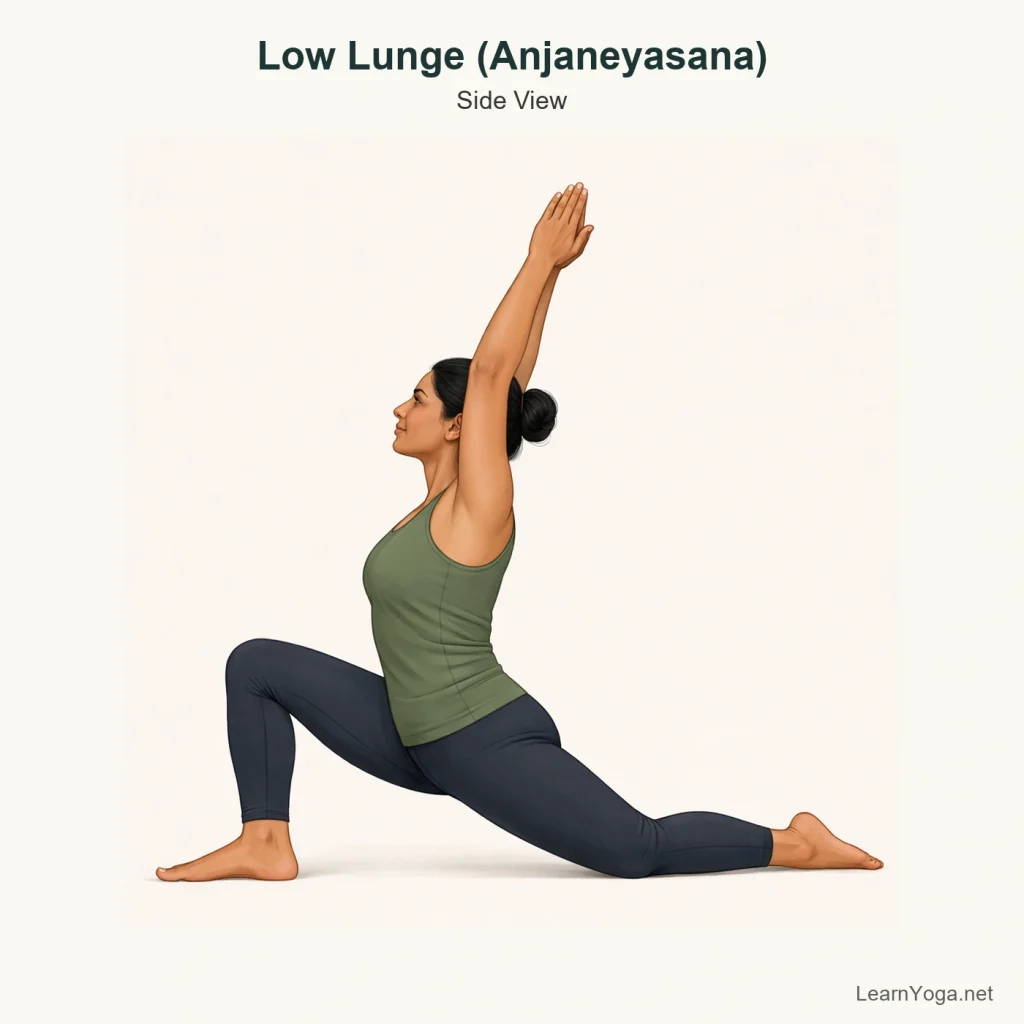
Start in Low Lunge with your right foot forward and your hands on the floor or on blocks beside the front foot.
Shift your hips back until they come over the left knee, and begin to straighten the right leg to a comfortable range.
Flex the right foot so the toes point up, and press the heel down without locking the knee.
Keep your hands supported and lengthen your spine forward on an inhale, as if the chest is reaching ahead of you.
As you exhale, hinge slightly from the hips without rounding heavily through the lower back.
If the stretch feels too strong, bend the front knee a little or keep the hips a bit farther forward.
Stay for 3 to 6 slow breaths, then lean forward, re-bend the front knee, and return to Low Lunge before changing sides.
Yogita's tip
If the front heel keeps drifting forward, drag it back gently without actually moving it. That small pulling action often wakes up the back of the leg and helps the pelvis stop sliding off to one side.
Benefits
Lengthens the back of the front thigh and can also bring sensation into the calf.
Practises shifting between a lunge and a hamstring stretch with more control.
Helps you notice pelvic position so the fold comes more from the hips than from the lower back.
Can prepare the legs for deeper poses such as Pyramid Pose or full Splits.
Common mistakes
Forcing the front leg completely straight and jamming the knee.
Rounding the spine strongly to get lower.
Letting most of the weight drop into the kneeling knee without extra support.
Turning the hips far off centre instead of keeping the front of the pelvis broadly facing forward.
Pulling the toes back so hard that the front of the ankle feels strained.
Make it work for you
Hands on blocks
Place one block under each hand so you do not need to drop your chest or round your back to reach the floor.
Soft bend in the front knee
Keep a small bend in the extended leg if the hamstrings feel sharp or the pelvis tucks strongly under.
Blanket under the back knee
Fold a blanket under the kneeling knee for cushioning, especially on a hard floor.
Alternatives
Reclining Hand-to-Big-Toe Pose with bent knee
Lie on your back and hold behind the thigh or use a strap around the foot, keeping the raised leg partly bent.
Use this if kneeling bothers the back knee or if getting down to the floor and balancing the lunge setup feels awkward.
Seated hamstring stretch in Staff Pose
Sit on a folded blanket with one leg extended and keep your hands on the floor or on blocks beside you as you tip the pelvis slightly forward.
Use this if you want a gentler hamstring stretch without load on the kneeling knee.
Common variations
Half Splits with toes tucked
The back toes stay tucked under to make the base feel a little steadier for some bodies.
Folded Half Splits
From an upright spine, the torso folds a little farther over the front leg while the hands stay supported.
Dynamic Half Splits
The body moves back into Half Splits on the exhale and forward into Low Lunge on the inhale for several rounds.
Safety and contraindications
When to avoid or get individual guidance
Use care with a recent hamstring strain or calf strain.
Modify or avoid if kneeling is painful for the back knee.
Take a smaller range if straightening the front leg aggravates lower back discomfort.
Keep the sensation in the back of the front leg broad and workable rather than sharp or electric.
If the kneeling knee is sensitive, add padding or choose a reclined alternative.
A slight bend in the front knee is completely fine and often better for the hamstrings and lower back.
Do not force the fold if you start losing the natural length of the spine.
Back out of half splits and reduce the leg straightening when you get sharp pain high at the hamstring, behind the front knee, or in the kneeling knee. Choose a gentler variation, and get individual guidance before continuing if that keeps happening.
Accessibility and limited mobility
A blanket under the back knee can make a big difference on hard surfaces.
Blocks under the hands are useful for limited hamstring length, shorter arms, or anyone who cannot comfortably reach the floor.
If kneeling and rising from the floor is difficult, a reclined hamstring stretch is often a more manageable option than forcing this shape.
Older adults or anyone with balance concerns may prefer to practise near a wall for extra orientation while moving in and out of the pose.
Easier options
Use these related poses when you want a more accessible way to practise a similar movement or prepare for this pose.
Not completely straight for everyone. If straightening the leg makes the knee lock, the pelvis tuck hard, or the back round, keep a small bend. You are looking for a clear hamstring stretch and steady breathing, not the deepest shape.
Why do I feel this more behind my knee than in my hamstring?
That often means the range is a bit too strong or the knee is being pushed flat. Try bending the front knee slightly, easing off the fold, and pressing the heel down more than pulling the toes back. The sensation usually spreads more evenly through the back of the thigh.
Should my hips move all the way back over the kneeling knee?
They often move in that direction, but not as a rigid rule. Go only as far back as you can keep the front foot grounded and the spine reasonably long. Some bodies need a slightly more forward position to keep the stretch clean.
Is it better to stay still or move in and out of the pose?
Both can be useful. Slow movement between Low Lunge and Half Splits works well as a warm-up. A steadier hold of 3 to 6 breaths can be useful later in practice when the legs are already warm.
What if I cannot reach the floor with my hands?
Use blocks under both hands. That usually gives you enough height to keep the chest broad and the fold more organised. Reaching the floor is not the goal here.
Reviewed for yoga instruction
Yogita
Certified Yoga Instructor with 5+ years of Teaching and Consistent Practice