Warrior III is a standing balance where the body reaches into one long line from heel to head. It asks the standing foot, hip and core to organise clearly while the back leg stays active.
Warrior III is often more manageable when you think of it as a long reach rather than a high leg lift. The standing leg supports you, the torso tips forward, and the lifted leg reaches back. For some bodies the hips feel best more or less level; for others a small opening is the more comfortable range. The aim is steadiness and length, not a perfect shape.
How to do Warrior III
Begin in Mountain Pose with your weight even through both feet.
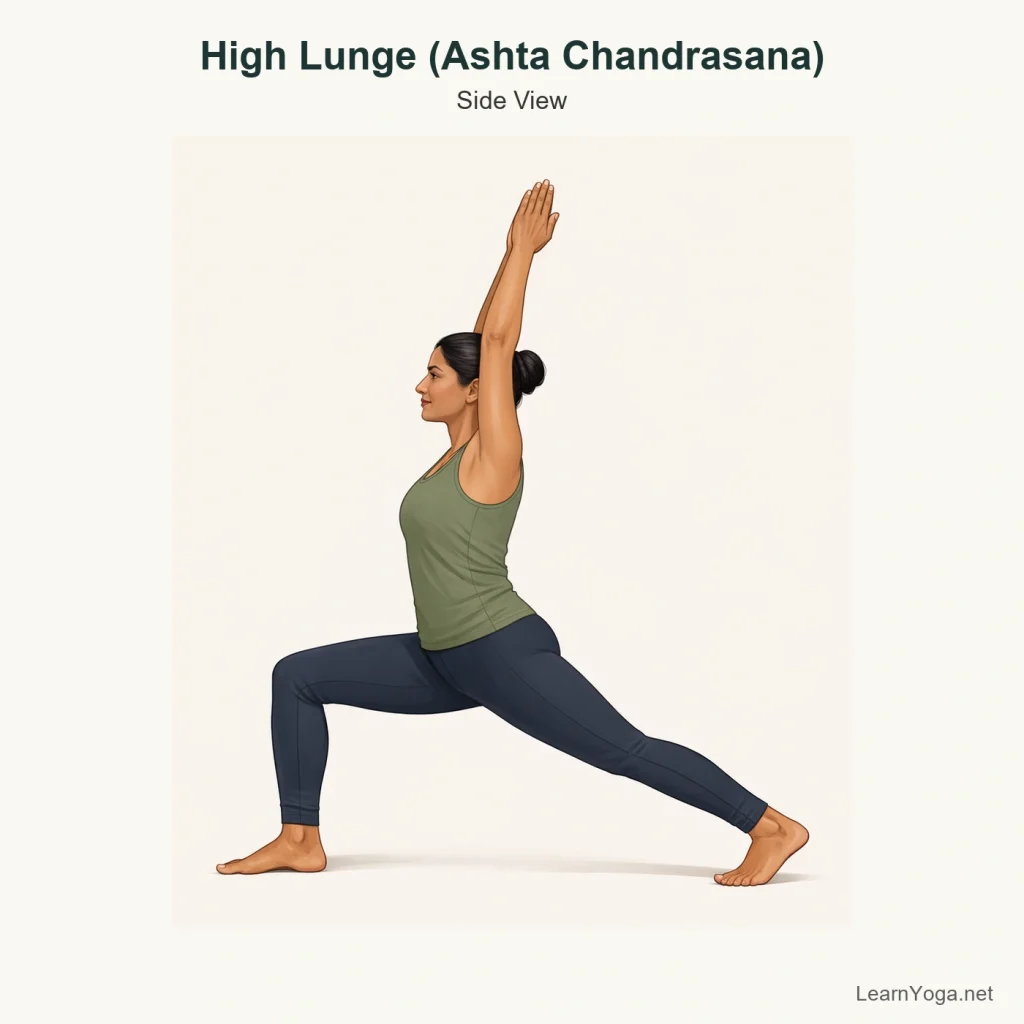
Step into a short High Lunge with the right foot forward and the left foot back, or shift forward from standing if that feels familiar.
Bring your hands to your hips, your heart, or reach the arms forward if you can keep the neck easy.
Lean your chest forward over the right leg and start to lift the left heel away from the floor.
Straighten the right leg only as much as you can without locking the knee or losing the footing of the standing foot.
Reach strongly back through the left heel as the chest lengthens forward, creating one long line through the body.
Let the right hip crease draw slightly back and keep the front ribs gently contained so the lower back does not do all the work.
Keep a soft gaze down to the floor and breathe steadily for 3 to 5 breaths.
To come out, bend the standing knee a little, lower the back foot with control, and return to standing before repeating on the second side.
Yogita's tip
If the lifted leg keeps drifting higher but the chest drops, make the back heel reach away more than up. That usually helps the front of the body stay long and keeps the pose from turning into a wobble with a kicked-up leg.
Benefits
Builds balance through the standing foot and ankle.
Strengthens the standing leg, hip and backside of the lifted leg.
Trains the body to organise a hip hinge while staying long through the spine.
Improves awareness of pelvic position and whole-body coordination.
Can help develop steadier focus because the pose asks for clear, simple attention.
Common mistakes
Throwing the lifted leg up and losing length through the torso.
Locking the standing knee instead of keeping the leg active and responsive.
Rolling the pelvis open so far that balance becomes harder to control.
Letting the chest collapse and the lower back grip.
Looking forward too soon, which often makes the body less steady.
Make it work for you
Hands on a wall
Stand facing a wall and place both hands on it at about shoulder height. Step back enough to tip forward and lift one leg behind you. This reduces the balance demand and lets you work on the long line of the pose.
Fingertips on blocks
Place two blocks under your hands at their tallest or middle height. As you hinge forward, rest your fingertips lightly on the blocks for extra feedback and support.
Small hover variation
Keep the back toes a few inches off the floor rather than lifting the leg to hip height. Practise finding steadiness in the standing leg before making the shape bigger.
Alternatives
High Lunge
Stay upright in High Lunge and work on pressing through the front foot and reaching back through the rear heel.
Use this if balancing on one leg feels too unsteady today.
Half Standing Forward Fold
Place hands on blocks or thighs and lengthen the spine forward with both feet on the floor.
Use this if the hamstrings or lower back need less load while you practise the hinge pattern.
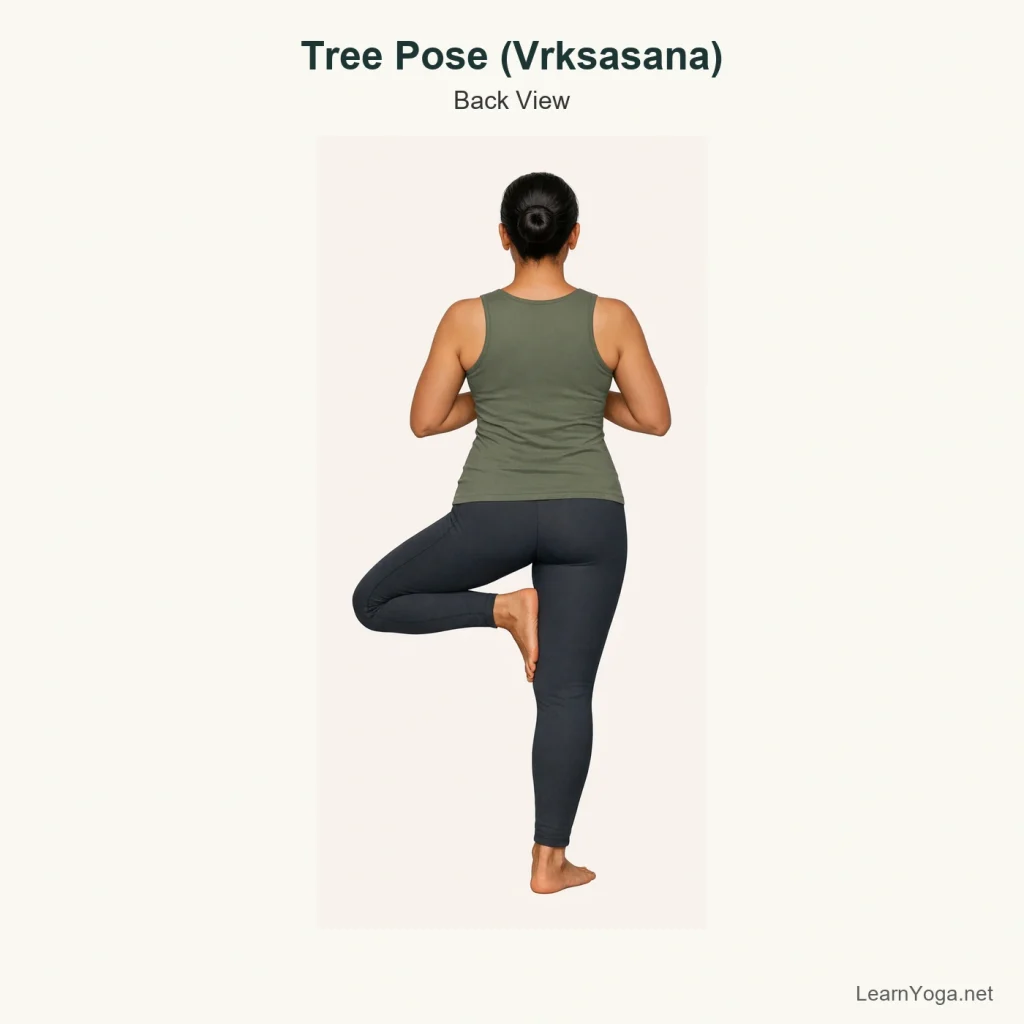
Tree Pose
Practise balancing upright with one foot grounded and the other foot placed lightly against the standing leg.
Use this if you want a simpler one-leg balance before adding the forward tilt.
Common variations
Hands at heart
A compact version that can make balance easier than reaching the arms forward.
Arms alongside ears
A longer lever variation that increases the challenge for balance, shoulders and trunk control.
Airplane arms
Arms reach out to the sides, which can help some people feel wider and steadier across the chest.
Safety and contraindications
When to avoid or get individual guidance
Recent ankle, hamstring or hip injury may make this pose unsuitable without modification.
If balance is unreliable today, practise with wall support or choose a two-footed alternative.
This pose places clear demand on the standing ankle, hip and hamstrings, so make the shape smaller if you feel strain rather than steady work.
Use a wall or blocks if balance is inconsistent or you feel likely to tip forward.
Keep the standing knee softly responsive rather than locked, and stop if you feel sharp pain in the standing leg, hip or lower back.
Pause Warrior III and use wall support or a lower-demand balance variation when sharp pain shows up in the standing ankle, hamstrings, hip, or low back, or balance feels too unsteady to hold safely. Get individual guidance before continuing if that keeps happening.
Accessibility and limited mobility
Practising with hands on a wall is often the most useful option for older adults or anyone who feels unsure with one-leg balance.
If getting down to the floor is difficult, this pose works well as a fully standing practice with wall support and does not require floor transitions.
If hamstring range is limited, keep the torso higher and the lifted leg lower. A smaller shape is still valid.
Easier options
Use these related poses when you want a more accessible way to practise a similar movement or prepare for this pose.
Does my lifted leg need to come all the way to hip height?
No. Hip height is a common reference point, but it is not the goal if it makes you twist, grip the lower back or lose balance. A lower leg with a longer spine is usually the better version.
Should my hips stay completely level to the floor?
Many people work toward mostly level hips, but not every body will look exactly the same. Try drawing the lifted-side hip slightly down first. If forcing that creates strain or throws you off balance, allow a small amount of opening.
Why do I feel this more in my standing foot than anywhere else?
That is quite common. The standing foot is doing a lot to organise balance. Spread the toes, root through the base of the big toe and outer heel, and keep the standing knee softly active. Using a wall can also reduce the load while you learn the pattern.
Where should I look in Warrior III?
A soft gaze down to the floor usually helps most people balance better. Looking forward tends to lift the head and can make the lower back and standing ankle work harder.
Is it better to enter from standing or from a lunge?
From a lunge is often easier because it gives you a clear push from the back leg and helps you find the line of the pose gradually. Entering from standing can feel smoother later, once the balance and hinge are more familiar.
Reviewed for yoga instruction
Yogita
Certified Yoga Instructor with 5+ years of Teaching and Consistent Practice