Dancer Pose is a standing balance with one foot held behind you as the chest lifts and the free arm reaches forward or up. It asks for steadiness in the standing ankle and leg, space through the front of the hip and thigh of the lifted leg, and enough control that the backbend does not spill into the lower back.
Dancer Pose can feel light when it is organised well, but it is more stable than it first looks. The standing leg needs to be clear and steady, and the lifted leg needs to press back rather than simply pulling the foot high. For many people, a smaller shape with the hand holding the inner foot is the most useful place to learn it. Comfortable range differs from body to body, so the pose does not need to become very deep to be worth practising.
How to do Dancer Pose
Begin in Mountain Pose with your weight even through both feet and your gaze steady at eye level.
Shift into your left foot and bend your right knee so the heel comes toward your seat.
Reach your right hand back and hold the inside of the right foot or ankle. Keep the knees initially close together.
Place your left hand on your hip or reach it forward. Stand tall first before you try to lift the leg higher.
Press the right foot into the right hand as if you are kicking back. Let that action help lift your chest.
Allow your torso to tip slightly forward only as much as you can keep the standing leg steady and the lower back comfortable.
Keep the standing knee softly unlocked, the front ribs contained, and the breath smooth.
Hold for 3 to 5 breaths, then slowly reduce the kick, release the foot with control, and return to Mountain Pose before changing sides.
Yogita's tip
Think less about pulling the foot up and more about kicking the foot back into the hand. That usually gives the chest room to lift and stops the pose from bunching into the lower back.
Benefits
Builds balance and attention through the standing foot, ankle and leg.
Opens the front of the lifted hip and thigh while strengthening the standing side.
Encourages chest lift and shoulder extension in a clear, active shape.
Helps coordinate backbend and balance without needing a very long hold.
Common mistakes
Pulling the foot up with the hand instead of pressing the foot back into the hand.
Locking the standing knee and losing responsiveness in the ankle.
Letting the lifted knee swing wide out to the side before the pelvis is organised.
Collapsing into the lower back instead of lifting the chest and lengthening through the front body.
Looking around the room, which often makes balance less steady.
Make it work for you
Wall support with free hand
Stand beside a wall and place your free hand lightly on it while you hold the lifted foot with the other hand. Keep the pose smaller and use the wall to steady the standing leg.
Low dancer hold
Hold the ankle or pant leg and keep the torso more upright. Focus on the foot pressing back and the chest broadening rather than trying to lift the leg high.
Strap around the foot
Loop a strap around the lifted foot if reaching the foot directly rounds the shoulder or twists the body. Hold the strap with one hand and keep the elbow soft.
Alternatives
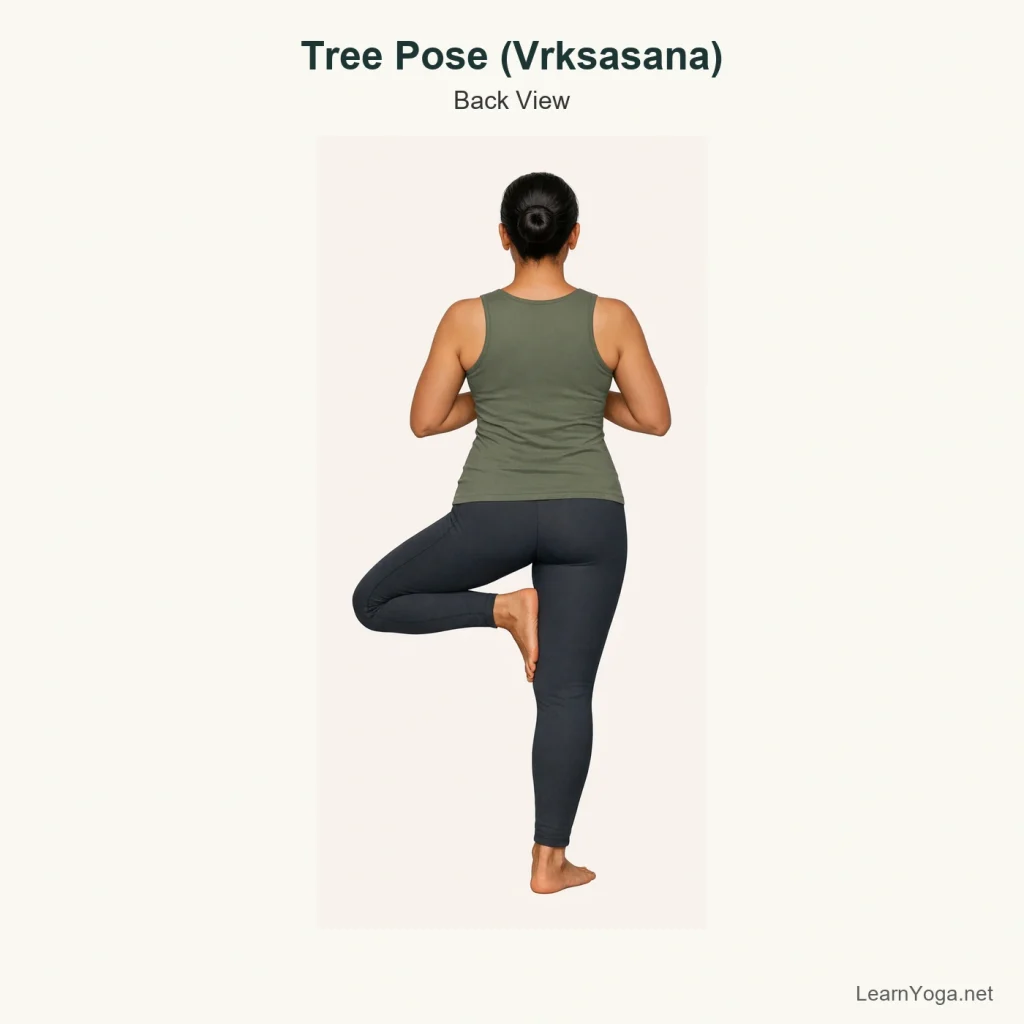
Tree Pose
Practise Tree Pose to work on standing balance with less backbend and less demand on the lifted thigh.
Use this if balance is the main challenge.
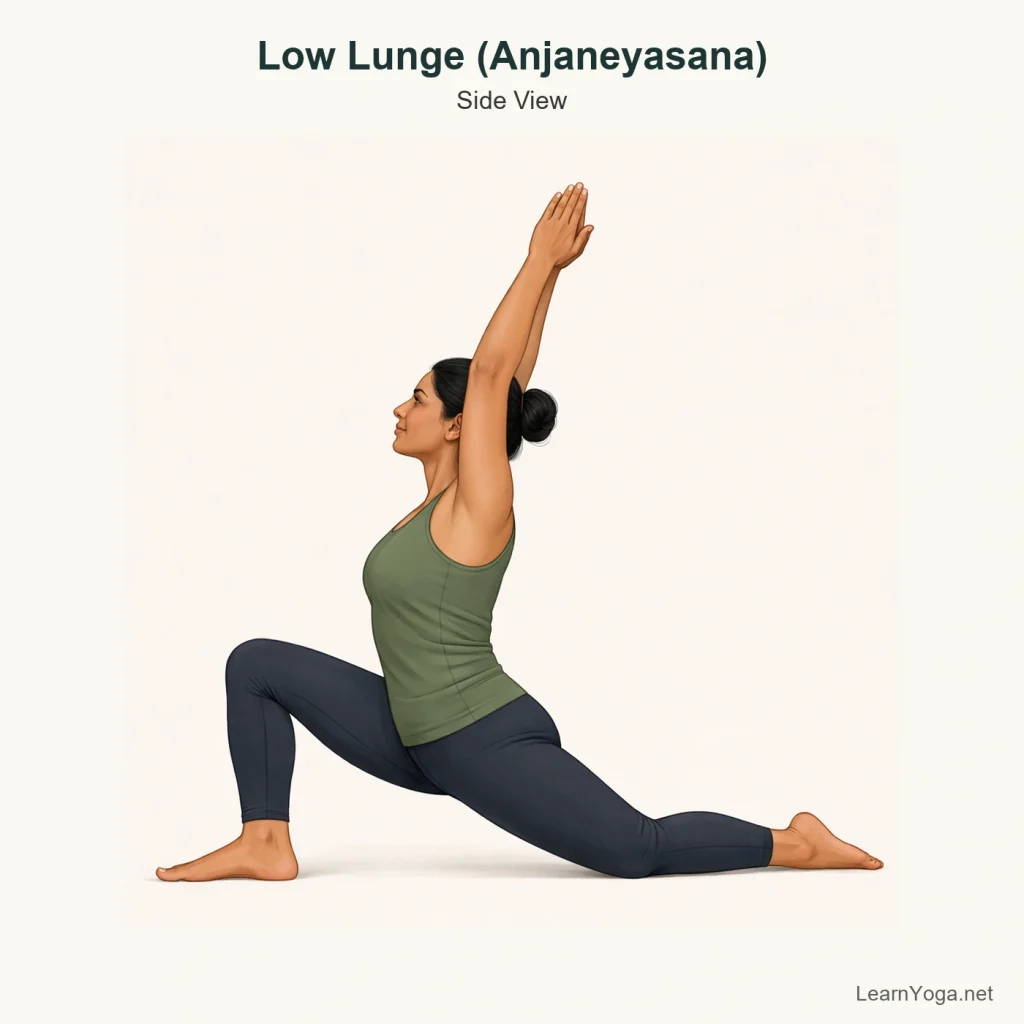
Low Lunge
Take Low Lunge and gently shift the pelvis forward while lifting the chest to explore hip extension without balancing on one leg.
Use this if the front of the hip or thigh feels too restricted in Dancer Pose.
Standing Hand-to-Big-Toe Pose
Practise Standing Hand-to-Big-Toe Pose with a bent lifted knee or with support to work on single-leg stability in a different leg pathway.
Use this if you want balance practice without the backbend emphasis.
Common variations
Free arm forward
The non-holding arm reaches forward, which can help counterbalance the body as the chest moves ahead.
Free arm overhead
The non-holding arm reaches up, adding more lift through the side body and a slightly stronger balance demand.
Strap-assisted Dancer Pose
A strap around the lifted foot gives more space for the shoulder and chest when the hand cannot comfortably reach the foot.
Safety and contraindications
When to avoid or get individual guidance
Recent ankle sprain or difficulty balancing safely on one leg
Pain at the front of the knee or strong pulling in the lifted thigh when the knee bends deeply
Shoulder irritation that makes reaching back to hold the foot uncomfortable
This pose places meaningful demand on balance, the standing ankle, and the front thigh and hip of the lifted leg.
Keep the standing knee soft rather than locked, and make the shape smaller if you feel wobbling or gripping in the lower back.
Use a wall or chair for support if balance is inconsistent.
If holding the foot strains the shoulder or twists the pelvis sharply, use a strap or choose a simpler alternative.
Pause Dancer Pose and make it smaller or use support when the standing ankle feels unstable, the front of the bent knee hurts, or your lower back pinches. Repeated sharp pain or feeling close to falling even with a wall or chair is a good reason to get individual guidance before going deeper.
Accessibility and limited mobility
Practise near a wall, countertop or sturdy chair if balance feels uncertain.
If getting the foot behind you is hard on the shoulder, use a strap or stay with a smaller standing quad stretch shape.
Older adults or anyone who is uneasy on one leg may prefer Tree Pose or Low Lunge instead of forcing this shape.
If standing from the floor is tiring, this pose works well in a standing sequence and does not require getting down and up.
Easier options
Use these related poses when you want a more accessible way to practise a similar movement or prepare for this pose.
Usually the foot is being pulled up without enough kick back into the hand, or the chest is not lifting enough. Make the pose smaller, draw the front ribs in softly, and think of lengthening forward and up before you deepen the backbend.
Do my knees need to stay together?
They do not need to touch, but starting with them closer together often helps keep the pelvis more even and the stretch more in the front of the thigh. If the lifted knee opens far to the side straight away, the pose often becomes less stable.
What if I cannot reach my foot comfortably?
Use a strap around the foot or take a low version with the torso upright. You can also work on Low Lunge or Half Camel to prepare the front thigh and shoulder position without balancing at the same time.
Should I lean forward a lot in this pose?
Not necessarily. A small forward tilt is enough for many people. Go only as far as you can keep the standing foot steady, the breath even, and the lower back comfortable.
Reviewed for yoga instruction
Yogita
Certified Yoga Instructor with 5+ years of Teaching and Consistent Practice