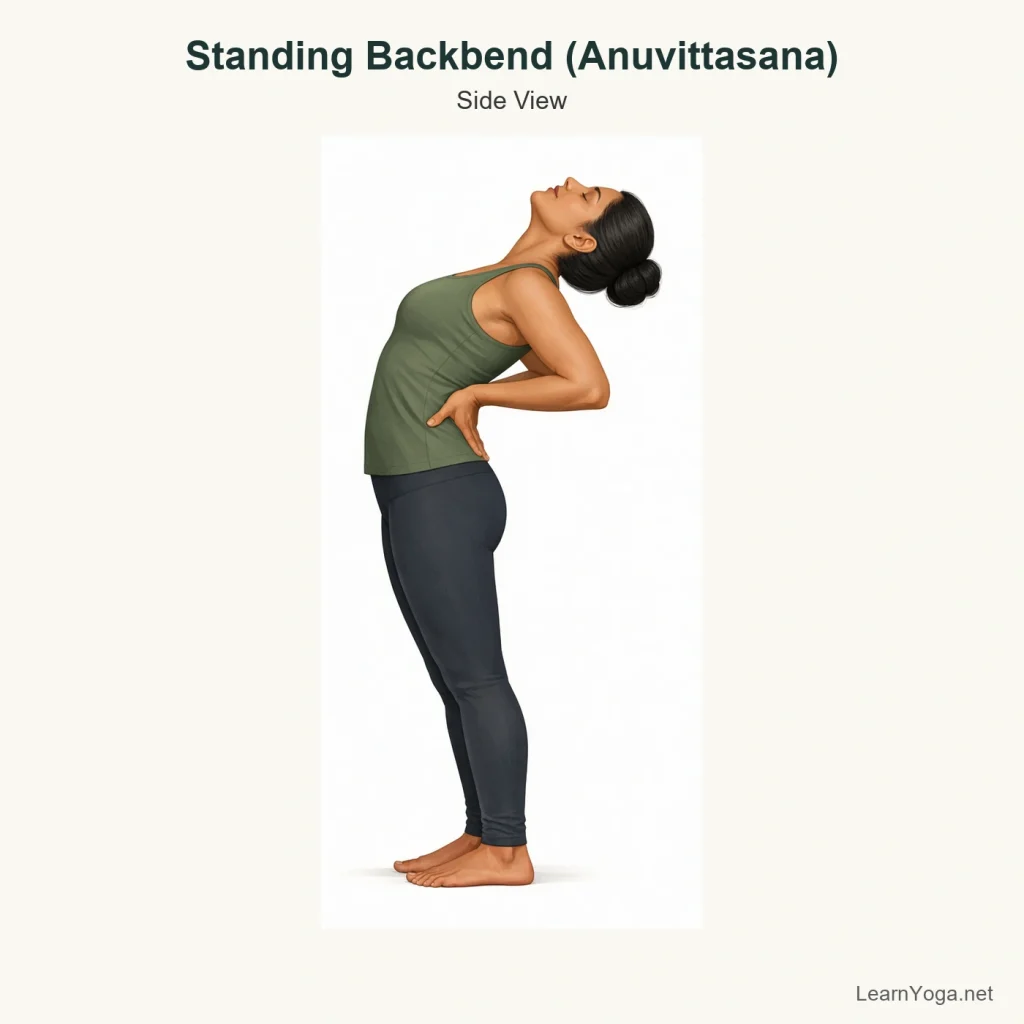
Standing Backbend is a simple upright backbend that opens the front of the body while teaching you to lengthen upward before you lean back. It works best as a small, organised movement rather than the deepest shape you can make.
This pose is often used in warm-ups, sun-salutation style practice, or as a brief counter movement after folding forward. The main job is not to throw the head back. Instead, root through the feet, lift the breastbone, and spread the curve through the whole spine as much as your body comfortably allows. For many people, a modest backbend feels clearer and steadier than a dramatic one.
How to do Standing Backbend
Stand in Mountain Pose with your feet hip-width or together, whichever helps you feel steady.
Press down through the feet and lightly tone the legs so the knees do not lock back.
Bring your hands to your hips or raise your arms overhead if your shoulders allow that without strain.
On an inhale, lengthen up through the crown of the head and lift the front of the chest.
Keep that upward lift as you gently lean into a backbend from the upper back and chest, allowing the hips to stay roughly over the heels rather than pushing far forward.
Let the gaze stay forward or slightly upward. Only take the head back if the neck feels easy.
Stay for 1 to 3 breaths, keeping the belly lightly supportive and the breath smooth.
To come out, inhale to rise back to vertical with control, then return to Mountain Pose and pause for a breath.
Yogita's tip
If the backbend feels like it lands in one small spot in the lower back, make the pose smaller and think of lifting the sternum up before you go back. That usually spreads the curve more usefully.
Benefits
Encourages extension through the spine in a simple upright position.
Gives the chest and front shoulders a gentle opening after rounded sitting or forward bending.
Builds awareness of how to support a backbend with the legs and lower belly.
Can prepare the body for larger backbends such as Camel or Wheel.
Common mistakes
Dropping straight into the lower back without first lengthening upward.
Locking the knees and hanging into the joints.
Throwing the head back even when the neck feels compressed.
Pushing the hips far forward and losing balance in the feet.
Holding the breath in an effort to go deeper.
Make it work for you
Hands on hips support
Keep both hands on the back of the pelvis or hips and use your hands as a reminder to lengthen up before leaning back. This often gives more control than taking the arms overhead.
Small chest lift only
Instead of aiming for a visible backbend, inhale to lift the sternum and upper chest with only a slight lean back. This is useful if full extension feels crowded in the lower back.
Wall feedback
Stand with your upper back a short distance from a wall and take only a small backbend, keeping the legs grounded. The wall can help you judge range without tipping backward.
Alternatives
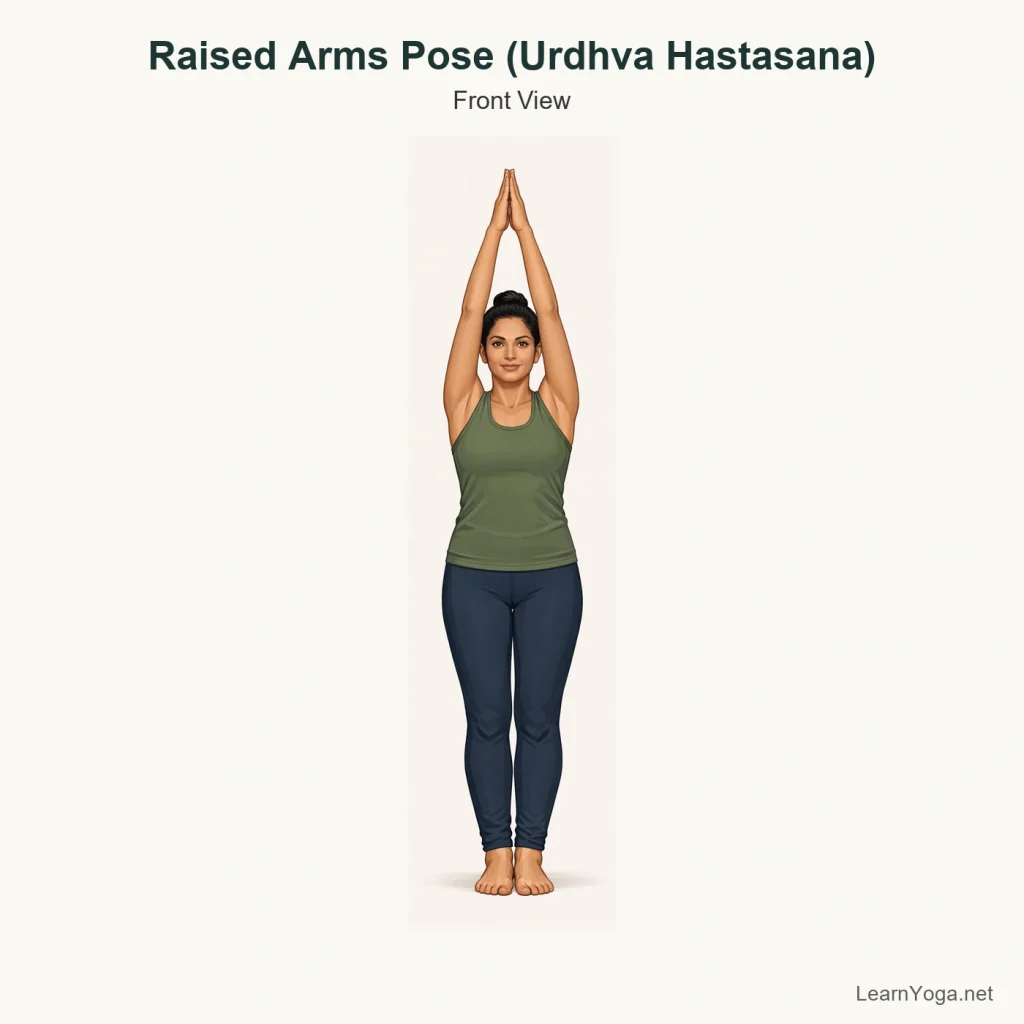
Raised Arms Pose
Stay upright with the arms lifted and focus on length through the sides of the waist and chest.
Use this if leaning back feels unsteady or you want a gentler option.
Sphinx Pose
Come onto your belly and prop yourself on your forearms for a mild backbend with less balance demand.
Use this if standing backbends bother your balance or you want the floor to support you.
Supported Fish Pose
Rest back over a bolster or firm cushions so the chest opens without needing to hold yourself upright.
Use this if you want front-body opening with minimal effort through the legs and balance.
Common variations
Hands at heart then lift
Begin with Prayer Pose at the chest, then sweep the arms up and into a small backbend. This can make the movement feel more organised.
Arms overhead backbend
Take the arms alongside the ears as you lean back. This increases the shoulder and upper-back demand.
Hands on sacrum backbend
Place the hands on the back of the pelvis with fingers pointing down or sideways and use that contact for support.
Safety and contraindications
When to avoid or get individual guidance
Use care or keep the pose very small if you are prone to dizziness when looking up or back.
Reduce the range or choose a gentler option if backbends usually aggravate your lower back or neck.
Keep the movement even and moderate, especially through the lower back and neck.
Bend from a grounded stance with steady legs rather than pushing the pelvis far forward.
If raising the arms makes the backbend feel pinched, keep your hands on your hips.
Come out of Standing Backbend and get individual guidance when sharp pain shows up again in the low back, neck, or shoulders, or when the lift of the chest and gaze leaves you lightheaded or unable to stay in control of the bend.
Accessibility and limited mobility
A chair placed in front of you can help if balance feels uncertain, even if you only lightly touch it.
For older adults or anyone who gets dizzy changing head position, keep the gaze forward and make the backbend very small.
If lifting the arms overhead is limited, keep the hands on the hips or at the chest and work with the chest lift instead.
Easier options
Use these related poses when you want a more accessible way to practise a similar movement or prepare for this pose.
Only as far as you can keep the breath steady and the weight even in your feet. For many people, a small chest-led curve is enough. The pose does not need to be deep to be useful.
Should my hips move forward in this pose?
A tiny shift may happen, but try not to thrust the hips far forward. It usually feels more stable when the legs stay grounded and the chest lifts up before the body leans back.
What if I feel it only in my lower back?
Come up a little, soften the knees slightly if needed, and make the shape smaller. Think of lifting through the breastbone and widening across the collarbones so the bend is not all collected in one place.
Do I need to take my head all the way back?
No. You can keep the gaze forward or slightly up. Taking the head back is optional and should only happen if your neck feels comfortable and the rest of the pose stays steady.
Is it better to hold the pose or repeat it a few times?
Both can work, but many people prefer 2 to 4 smaller repetitions with one breath each. That can feel easier to organise than a long hold, especially during warm-up.
Reviewed for yoga instruction
Yogita
Certified Yoga Instructor with 5+ years of Teaching and Consistent Practice