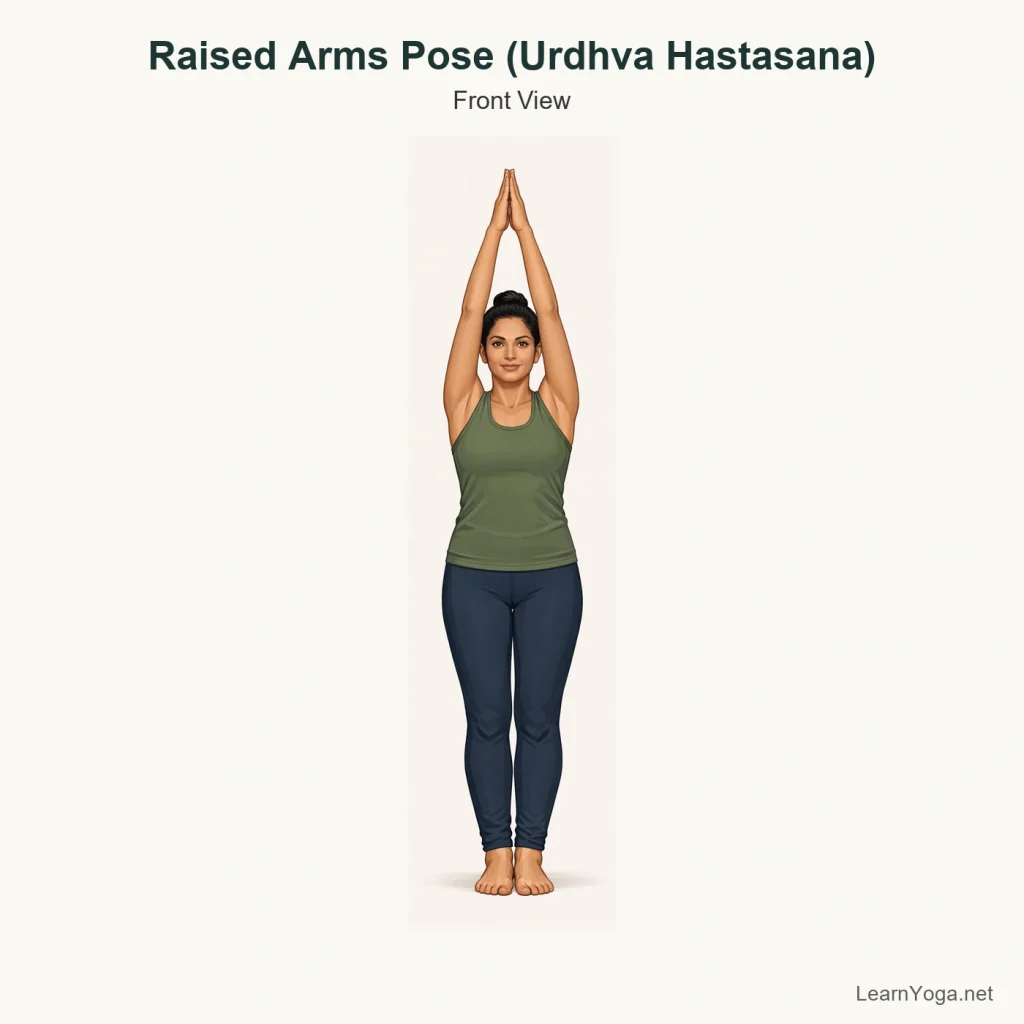
Reverse Prayer Pose is a standing shoulder and wrist opening where the palms meet behind the back. The work is usually less about pushing the hands together and more about arranging the shoulders, chest and upper back so the shape feels clear and steady.
This pose asks for internal rotation at the shoulders, extension at the wrists and some space across the front of the chest. For some bodies the palms will meet easily. For others, fingertips, knuckles or the backs of the hands may be the sensible version for now. Stand quietly, keep the ribs from jutting forward, and let the opening build over a few breaths rather than trying to win the shape in one go.
How to do Reverse Prayer Pose
Stand in Mountain Pose with your feet about hip-width apart and your knees soft rather than locked.
Bring your arms behind you and turn the hands so the fingers point upward along the spine.
Start with the backs of the hands or fingertips touching if the full palm-to-palm shape is not there yet.
Slide the hands toward each other and, if available, press the palms together behind the chest in a reverse prayer position.
Let the thumbs move toward the spine and the fingers point upward, but do not force the wrists deeper than they comfortably go.
Lift the breastbone slightly as you inhale and keep the front ribs quiet so the chest opens without the lower back gripping.
Broaden across the collarbones and draw the shoulder heads gently back while the shoulder blades settle down.
Stay for 3 to 5 breaths, then release the hands slowly and shake out the wrists if needed.
Yogita's tip
If the palms almost meet but keep sliding apart, move the hands a little lower down the back first. The lower placement often gives the wrists and shoulders enough space to organise before you try a higher version.
Benefits
Opens the front of the shoulders and chest in a clear, contained way.
Builds awareness of rib position so the chest can lift without simply leaning into the lower back.
Gives a steady stretch to the wrists and palms.
Can help you notice the difference between shoulder movement and compensation through the neck or spine.
Works well as a brief pause in standing practice when you want a focused upper-body opening.
Common mistakes
Pushing the ribs forward to fake more shoulder opening.
Locking the knees and leaning the whole body back.
Forcing the palms flat when the wrists or shoulders are not ready for that range.
Lifting the shoulders toward the ears instead of widening the collarbones.
Holding the breath while trying to arrange the hands.
Make it work for you
Fingertips together behind the back
Instead of pressing the full palms together, touch the fingertips or knuckles behind the back and keep the elbows slightly wider. This reduces wrist demand while keeping the shoulder action.
Lower hand placement
Set the hands lower along the mid-back rather than trying to lift them high. Keep the fingers pointing upward and work on steady breathing and an even chest.
Hands in prayer with a wall assist
Stand with your back near a wall and lightly touch the forearms or elbows to the wall as you arrange the hands. Use the wall to help you stay upright instead of thrusting the ribs forward.
Alternatives
Prayer Pose
Bring the palms together in front of the chest and lengthen through the crown of the head while keeping the shoulders relaxed.
Use this if the behind-the-back position aggravates the wrists or feels too restricted in the shoulders.
Eagle Arms Stretch
Wrap one arm under the other in front of the body and lift the elbows to shoulder height, breathing into the upper back.
Use this if you want shoulder work with less wrist extension.
Cow Face Arms
Take one arm up and one arm down behind the back, holding a strap if needed to connect the hands.
Use this if reverse prayer feels inaccessible but you still want a focused shoulder opening.
Common variations
Reverse prayer in Mountain Pose
The standard standing version with the palms or fingertips behind the back and the spine upright.
Reverse prayer in Chair Pose
The same hand position added to a bent-knee Chair Pose, which increases the balance and postural challenge.
Reverse prayer in Pyramid Pose
A stronger variation where the hands stay in reverse prayer as the body folds over the front leg.
Safety and contraindications
When to avoid or get individual guidance
Recent wrist, hand or shoulder irritation may make this pose uncomfortable.
Skip the full palm-to-palm version if it causes pinching, tingling or sharp joint pain.
Move in and out slowly if your wrists are stiff or sensitive.
If the shoulders pinch at the front, lower the hands or switch to a lighter variation instead of pressing deeper.
Keep the neck easy and avoid jutting the ribs forward to create the shape.
Pause Reverse Prayer Pose and switch to a gentler hand position when the wrists, hands, or front of the shoulders feel sharp, pinchy, or strained. Repeated symptoms or discomfort that lingers afterward are a good reason to get individual guidance before trying the full shape again.
Accessibility and limited mobility
This pose can be practised standing without getting down to the floor, which may suit people who prefer to avoid floor transitions.
If balance feels unsteady, stand with your back close to a wall or lightly touch a wall with one elbow while setting the hands.
For older adults or anyone with limited shoulder or wrist range, a partial version with fingertips or knuckles touching is often more workable than forcing the palms flat.
Easier options
Use these related poses when you want a more accessible way to practise a similar movement or prepare for this pose.
That is very common. Use the backs of the hands, knuckles or fingertips touching instead. You are still working the pose. The useful part is the organised shoulder and chest position, not forcing the palms flat.
Why do my wrists feel stronger than my shoulders in this pose?
Reverse prayer asks a lot from wrist extension, so the wrists often speak first. Try placing the hands lower on the back or using a partial version. If the sensation becomes sharp rather than stretchy, come out.
Should my elbows stay close together?
Only as much as your shoulders allow without strain. If pulling the elbows inward makes the chest collapse or the wrists complain, let the elbows widen a little and focus on an upright spine and steady breath.
Can I practise this while sitting instead of standing?
Yes. Sitting on a chair or in an easy seated position can make it easier to focus on the arms and chest without worrying about balance. Keep both sitting bones or both feet grounded and use the same gentle hand setup.
How high should my hands be on my back?
High is not automatically better. A lower placement often gives a cleaner shape. Choose the height where you can breathe normally, keep the neck relaxed and avoid pushing the ribs forward.
Reviewed for yoga instruction
Yogita
Certified Yoga Instructor with 5+ years of Teaching and Consistent Practice