This bound version of Pyramid Pose adds a clear shoulder and chest opening to the usual hamstring-focused forward fold. The shape asks for steady footing, an organised pelvis and enough shoulder range to place the hands behind the back comfortably.
Pyramid Pose with Reverse Prayer is less about folding as far as possible and more about keeping the whole shape tidy. The feet stay grounded, the front hip draws back, and the spine lengthens forward rather than collapsing down. The reverse prayer bind can make the chest feel broad, but it is optional. If your shoulders or wrists do not enjoy that position, a simpler arm variation often works better.
How to do Pyramid Pose with Reverse Prayer
Begin in Mountain Pose, then step one foot back into a short, narrow stance as you would for Pyramid Pose. Keep both feet pointing generally forward, with the back heel grounded if that feels stable.
Place your hands behind your back in reverse prayer if available, bringing the palms toward each other between the shoulder blades. If that is not comfortable, hold opposite elbows or place your hands on your hips.
On an inhale, lift through the centre of your chest and lengthen both sides of your waist. Firm the legs without locking the knees.
Square your pelvis as much as is comfortable by drawing the front hip back and the back hip slightly forward. Let the weight spread through the front heel and the outer edge of the back foot.
Exhale and hinge forward from the hips, keeping the spine long for as long as you can. Stop when you can still breathe evenly and keep the chest broad.
Stay for 3 to 5 breaths. With each inhale, reach the breastbone slightly forward; with each exhale, soften into the fold only if the hamstrings allow it without pulling the back round.
To come up, press firmly into both feet, inhale and lift the torso back to upright. Release the arms, step forward, and repeat on the second side.
Yogita's tip
If the reverse prayer makes your ribs push forward and your lower back grip, lower the hands a little or switch the bind. The shoulder opening works better when the front ribs stay quiet and the sternum lifts naturally.
Benefits
Lengthens the hamstrings and calves of the front leg.
Builds awareness of pelvic alignment in an asymmetrical standing stance.
Opens the chest, fronts of the shoulders and wrists when the reverse prayer bind is comfortable.
Encourages a long spine and a more deliberate forward hinge from the hips.
Can steady attention because the pose asks for balance, precision and even breathing.
Common mistakes
Forcing the fold deeper and rounding the back to get the head lower.
Letting most of the weight drop into the front leg instead of using both feet.
Locking the front knee hard and pushing the kneecap back.
Trying to square the hips by twisting the knee or foot rather than adjusting the stance.
Holding the reverse prayer bind even when it makes the shoulders hunch or the wrists strain.
Make it work for you
Hands on hips
Keep both hands on your hips instead of taking reverse prayer. This makes it easier to feel the pelvis and maintain a long spine.
Shorter fold
Hinge only partway forward and pause with the torso at an angle. Stay there for a few breaths if going lower makes the back round.
Wider stance
Step the feet a little wider apart side to side, as if on two tracks rather than one line. This usually makes balance and pelvic organisation easier.
Alternatives
Pyramid Pose
Practise the base pose with hands on blocks, hips or the floor instead of binding the arms.
Use this if the shoulders, wrists or chest feel restricted in reverse prayer.
Half Standing Forward Fold
Place your hands on blocks or shins and lengthen the spine forward with a softer hamstring demand.
Useful if the front hamstring feels very tight or you want a simpler standing hinge.
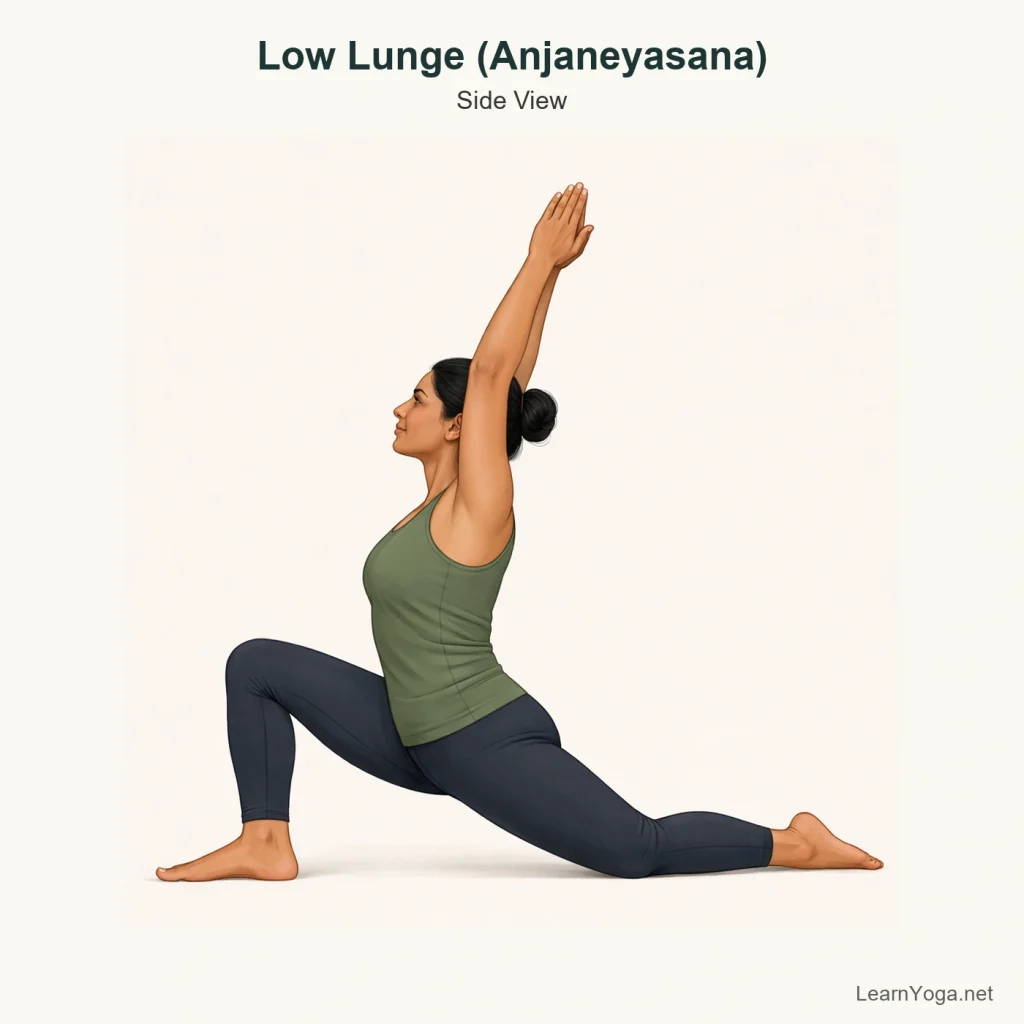
Low Lunge
Bend the front knee and lower the back knee to the floor to reduce the strong straight-leg demand of Pyramid work.
A good option if balancing the back heel and lengthening the front hamstring at the same time feels too intense.
Common variations
Reverse prayer at the chest
The palms press together behind the back while the torso stays more upright or folds only slightly forward.
Elbow hold variation
Instead of reverse prayer, the hands hold opposite elbows behind the back for a gentler shoulder position.
Deep fold variation
The torso comes closer to the front thigh while the bind stays in place and the legs remain active.
Safety and contraindications
When to avoid or get individual guidance
Recent or irritated hamstring strain may need a shallower fold or a different pose.
If reverse prayer aggravates wrist, shoulder or upper back pain, skip the bind.
Ease off if you feel sharp pulling in the front hamstring or strong strain in the shoulders, wrists or back knee.
Keep a small softness in the front knee if locking the leg makes the hamstring feel vulnerable.
If reverse prayer is uncomfortable, choose a simpler arm position rather than forcing the hands together.
Come out of Pyramid Pose with Reverse Prayer for sharp pain in the front hamstring, shoulders, wrists, or back knee. Choose a simpler arm position or a shallower fold, and get individual guidance before repeating the full variation.
Accessibility and limited mobility
This pose can be difficult for anyone who finds standing balance narrow or tiring. Widening the stance often helps immediately.
If getting the hands into reverse prayer is not realistic for your shoulders, skip the bind. Hands on hips gives useful feedback without the extra strain.
For older adults or anyone with limited hamstring range, keeping the torso higher is often more workable than trying to reach a full fold shape.
Easier options
Use these related poses when you want a more accessible way to practise a similar movement or prepare for this pose.
What if I cannot bring my palms together behind my back?
That is very common. Use hands on hips or hold opposite elbows instead. The pose is still doing its job if your stance is steady, your spine is long and the fold comes from the hips.
How narrow should my feet be in this pose?
Most people do better with some width between the feet rather than standing on a tight line. If you feel wobbly or twisted, step the front foot slightly out to the side so the stance feels more stable.
Should my head reach my shin?
No. The goal is not to force the head down. A smaller fold with a long spine and even breath is usually more useful than a deeper shape made by rounding the back.
Why does the back heel keep lifting or feeling unsteady?
Your stance may be too long or too narrow. Shorten it a little and press the outer edge of the back foot down. If that still feels awkward, practise regular Pyramid Pose with hands on blocks first.
Where should I feel the work most clearly?
Usually in the hamstrings of the front leg, the chest and shoulders if you take the bind, and in the feet and legs working to steady the pose. Sharp sensation in the knee, wrist or shoulder is a sign to back out.
Reviewed for yoga instruction
Yogita
Certified Yoga Instructor with 5+ years of Teaching and Consistent Practice