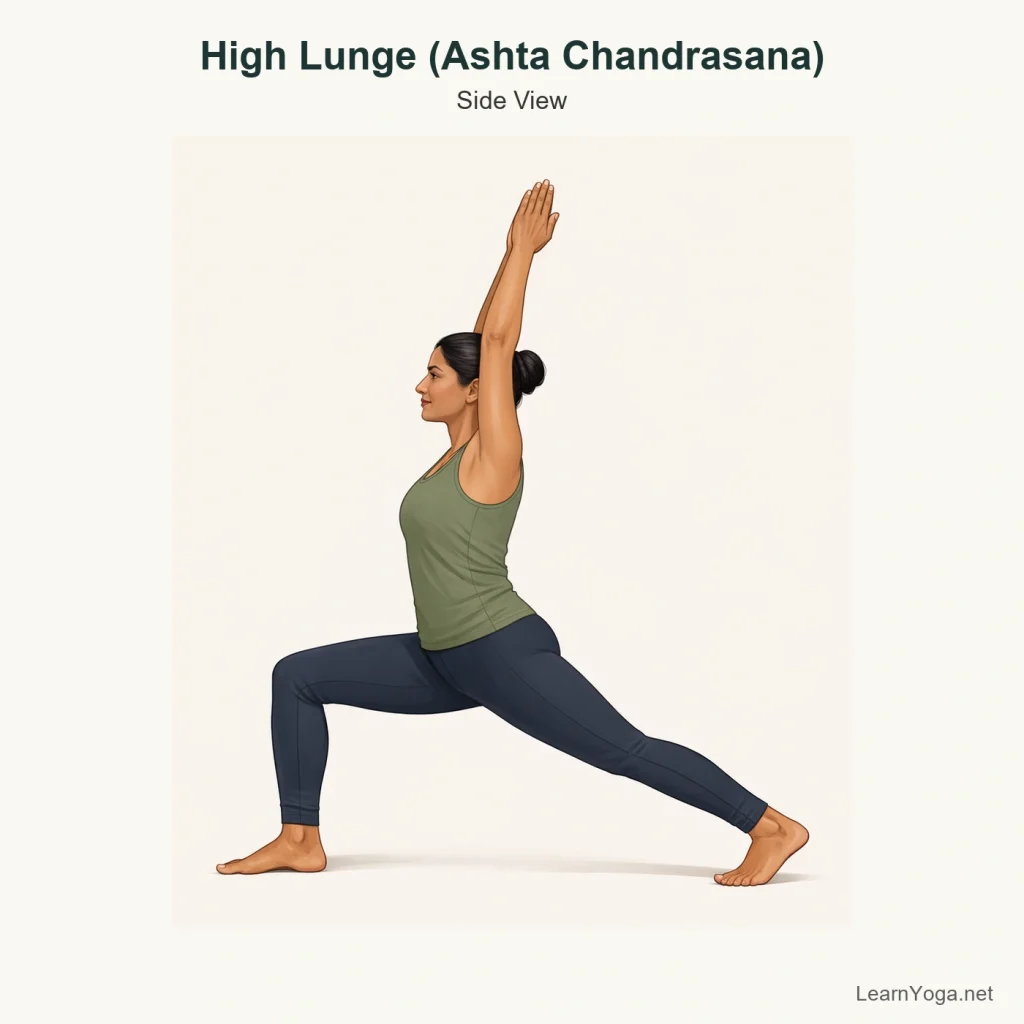
High Lunge is a strong standing pose that builds heat through the legs while asking for balance, length in the hip flexors and steadiness through the trunk.
High Lunge is often taught as a simple stepping shape, but it works best when you organise it from the ground up. The front foot needs a steady base, the back heel reaches back, and the pelvis stays more level than many people expect. You do not need a very deep bend in the front knee to get the pose. For many bodies, a slightly shorter stance gives better balance and cleaner effort through the legs.
How to do High Lunge
Start in Mountain Pose. Step your left foot back into a long stance, keeping the front foot pointing forward and the back heel lifted.
Place your feet about hip-width apart from side to side rather than on one tight line. This usually makes balancing easier.
Bend your right knee until it stacks roughly over the ankle, or a little less if that feels more stable.
Press firmly into the front heel and the ball of the back foot. Reach the back leg straight and active.
Draw the front hip back slightly and the back hip forward slightly so the pelvis faces more toward the front.
Lift through the lower belly without hardening the breath. Let the ribs stay stacked over the pelvis instead of pushing forward.
Raise your arms overhead if comfortable, with palms facing each other or hands shoulder-width apart. If the shoulders tighten, keep the hands at the hips.
Stay for 3 to 5 breaths. On each inhale, lengthen up through the spine. On each exhale, root down through both feet and steady the pose.
To come out, lower the hands, step forward to Mountain Pose, and repeat on the second side.
Yogita's tip
If the back leg feels wobbly, shorten the stance a little and press back through the inner ball of that foot. That usually makes the rear leg feel more connected instead of hanging behind you.
Benefits
Strengthens the front thigh and glutes while the back leg stays active and extended.
Lengthens across the front of the back hip, especially when the pelvis stays more upright.
Improves balance and coordination in a split stance.
Builds awareness of how the ribs, pelvis and legs work together in standing poses.
Prepares the body for stronger standing sequences such as Warrior I and Warrior III.
Common mistakes
Placing the feet on a tightrope line, which can make the pose unnecessarily shaky.
Letting the front knee collapse inward instead of tracking in line with the middle toes.
Arching the lower back by pushing the ribs forward when the arms lift.
Keeping too long a stance and then losing stability in the back leg.
Forcing the front knee into a very deep bend when a smaller bend would allow better alignment.
Make it work for you
Hands on hips
Keep your hands at your hips instead of reaching the arms overhead. This reduces shoulder demand and makes it easier to feel whether the pelvis is tipping forward.
Shorter stance
Step the back foot in a little closer. A shorter stance often helps you balance and keeps the front knee and lower back from working harder than needed.
Wall support
Stand near a wall and lightly touch it with one hand, or place fingertips on a chair seat in front of you while you settle into the shape.
Alternatives
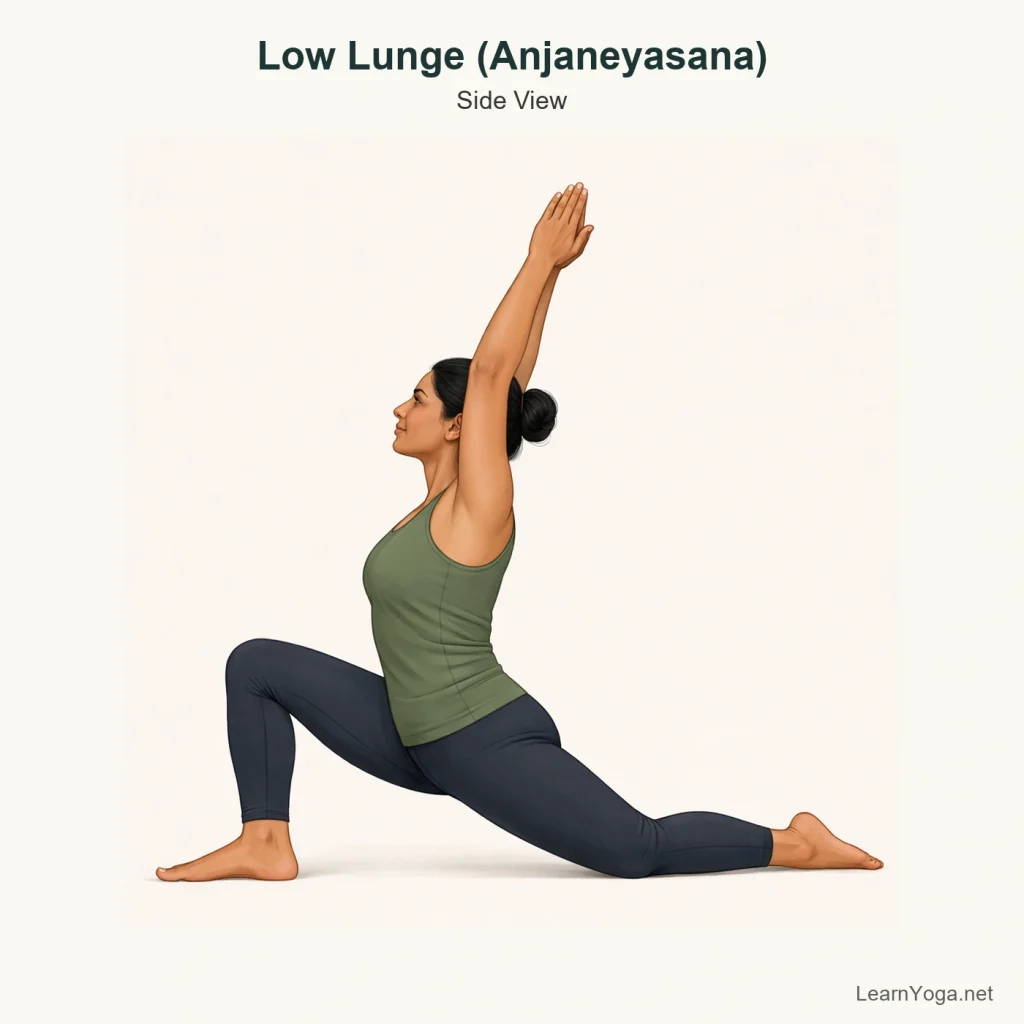
Low Lunge
Lower the back knee to the floor and place hands on blocks or on the front thigh.
Use this if balancing in a split stance feels too demanding or if the back calf and foot fatigue quickly.
Chair Pose
Practise Chair Pose instead, keeping both feet grounded and knees bent.
Use this if stepping into a lunge bothers the back toes or if split-stance balance feels unsteady today.
Kneeling Crescent Pose
Take one foot forward with the back knee down, then lift the torso upright and raise the arms only if comfortable.
Use this to work on hip extension with less balance demand than full High Lunge.
Common variations
High Lunge with prayer hands
The hands stay at the chest in Prayer Pose instead of lifting overhead. This keeps the trunk more compact and can make balance easier.
High Lunge with cactus arms
The elbows bend out to the sides, which can feel more spacious across the chest for people who do not want the arms fully overhead.
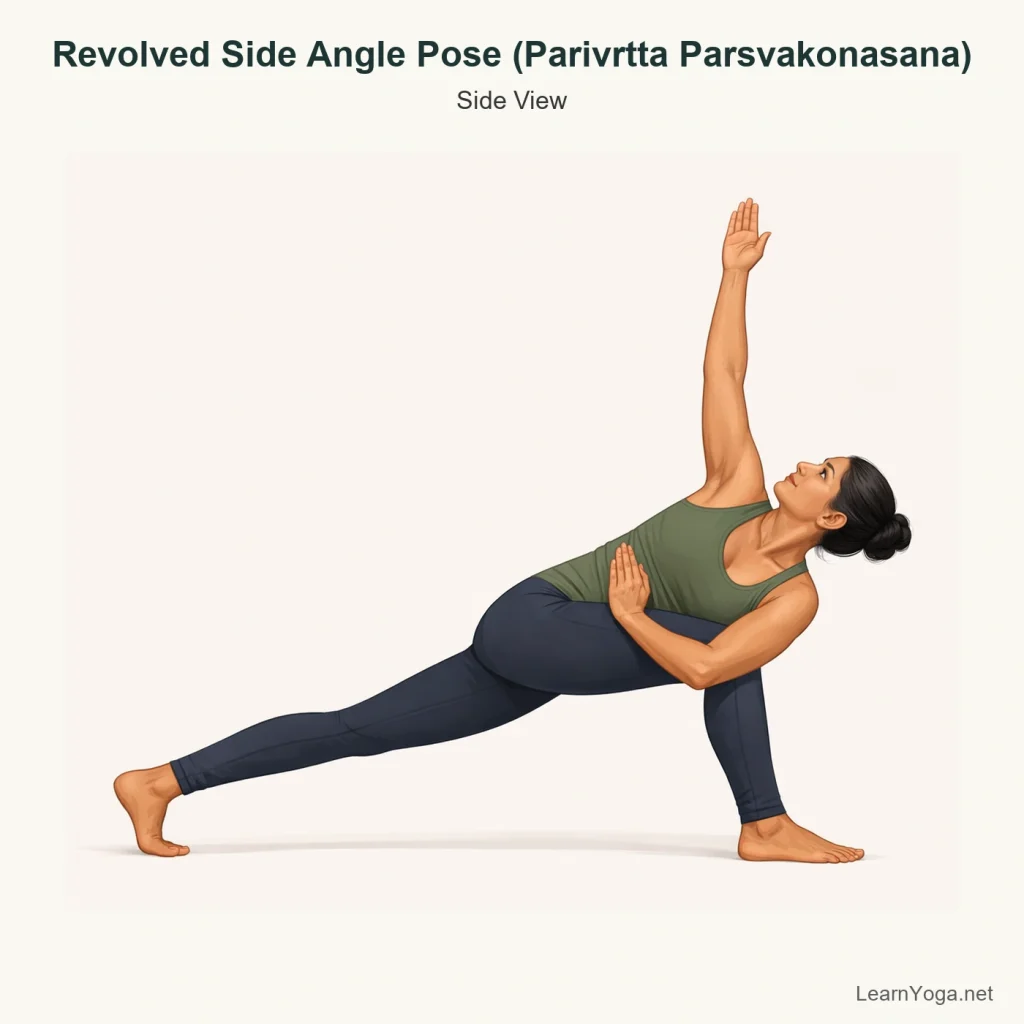
Twisted High Lunge
The torso rotates toward the front leg, usually with hands in prayer. This adds more demand to balance, legs and trunk control.
Safety and contraindications
When to avoid or get individual guidance
Recent or aggravated knee, ankle or hip pain may make this pose less suitable today.
Use caution with balance difficulties, especially when stepping into or out of the stance.
If raising the arms overhead causes shoulder or neck strain, keep the hands lower.
This pose places meaningful load on the front knee, back toes and calf, and asks the pelvis to control a fairly long stance.
Keep the front knee tracking in line with the toes rather than dropping inward.
If the lower back feels pinched, shorten the stance and lift the front of the pelvis slightly instead of sinking deeper.
Use Low Lunge or Kneeling Crescent Pose if balance is the main difficulty, or if the back foot and ankle do not tolerate the lifted-heel position well.
Come out of High Lunge for sharp pain in the knee, ankle, hip, or low back, or when the split stance feels too unstable to support your weight with control. Choose a lower variation such as Low Lunge or Kneeling Crescent, and get individual guidance before continuing with lunges.
Accessibility and limited mobility
A chair, wall or blocks can make this pose much more manageable if balance is limited.
If getting into a long step is awkward, start in a shorter split stance and increase the distance only if you can stay steady.
For older adults or anyone who tires quickly in the calves, keeping the hands on the hips and taking fewer breaths can make the pose more workable.
If lifting the arms strains the shoulders or neck, keep the hands on the waist or bring them to prayer at the chest.
Easier options
Use these related poses when you want a more accessible way to practise a similar movement or prepare for this pose.
How far apart should my feet be from side to side?
For most people, hip-width apart works better than placing one foot directly in front of the other. A slightly wider track gives you a steadier base and usually helps the hips face forward more easily.
Does my front thigh need to become parallel to the floor?
No. That depth is not necessary. Bend the front knee only as much as you can while keeping the front heel grounded, the knee tracking well and the back leg active. A smaller bend is often the better version.
Why does this pose feel so shaky?
Usually the stance is either too narrow or too long. Try stepping the feet wider apart side to side, then shorten the distance front to back a little. Keeping your hands on your hips can also help you organise the pose before adding the arms.
What if the lifted back heel makes my calf or foot tire quickly?
That is common. Come out sooner, shorten the stance, or practise Low Lunge with the back knee down. Over time the back leg usually becomes more comfortable with the work, but there is no need to force a long hold.
Should my hips face straight forward?
They can move in that direction, but they do not have to become perfectly square. Aim for a manageable version: draw the front hip slightly back and the back hip slightly forward without twisting the knee or gripping the lower back.
Reviewed for yoga instruction
Yogita
Certified Yoga Instructor with 5+ years of Teaching and Consistent Practice