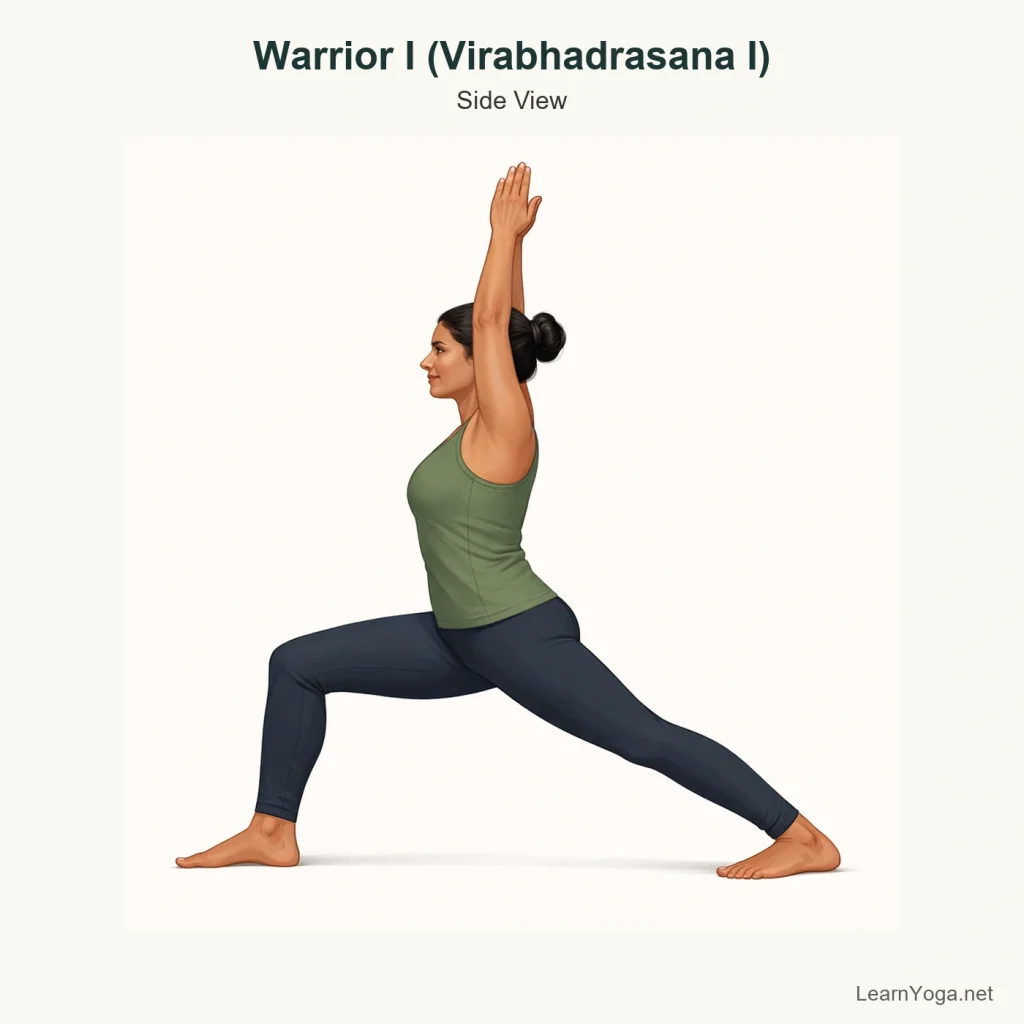
Warrior I is a standing lunge with the back heel grounded and the arms reaching up. It asks for steadiness through the legs while the chest lifts and the spine lengthens, and it often works best with a slightly shorter stance than people expect.
Timing: Hold for 3 slow breaths per side · Hold for 5 steady breaths per side · Move in and out with 1 breath in and 1 breath out for 3 rounds before holding
Warrior I brings together a bent front knee, a firm back leg and an overhead reach. For some bodies the main work is in the legs. For others it is the shoulders, ribs or balance. There is no single correct depth. A useful version is one where you can keep breathing evenly, press into both feet and feel the shape from the ground up rather than hanging in the lower back.
How to do Warrior I
Start in Mountain Pose. Step one foot back into a comfortable lunge, keeping the front foot pointing forward.
Turn the back foot out slightly so the heel can root down. Keep both feet about hip-width apart rather than on a tight line if that helps your balance.
Bend the front knee in the direction of the second and third toes. Stop before the knee twists inward or the back heel peels up.
Press firmly through the back foot and straighten the back leg with a steady, active lift through the thigh.
Square the chest generally toward the front as much as is comfortable, but let the pelvis stay a little natural if forcing it creates strain.
Lift the arms overhead on an inhale. Keep the hands apart if that gives your shoulders and neck more space.
Lengthen up through the sides of the waist and gently lift the chest without pushing the front ribs hard forward.
Stay for 3 to 5 breaths. To come out, lower the arms, straighten the front leg and step forward. Repeat on the second side.
Yogita's tip
If the pose feels jammed in the lower back, bend the front knee a little less and draw the front lower ribs in softly as you press the back heel down. That usually spreads the effort into the legs and makes the lift of the arms feel lighter.
Benefits
Builds steady work in the front thigh and back leg.
Practises coordinating the feet, pelvis, spine and arms in one shape.
Opens the front of the hip on the back leg side for many people.
Encourages an upright chest and overhead reach without needing a deep backbend.
Can help develop balance and attention in standing transitions.
Common mistakes
Placing the feet on one narrow line and then struggling to balance.
Forcing the hips to square completely and creating strain in the lower back or sacrum.
Letting the front knee drift inward instead of tracking over the foot.
Reaching the arms up while the shoulders climb into the ears.
Taking such a long stance that the back heel lifts or the torso leans forward.
Make it work for you
Shorter stance
Step the back foot in a little closer. A shorter distance often makes it easier to keep the back heel grounded and the spine upright.
Hands apart overhead
Keep the arms shoulder-width apart or bend the elbows slightly if bringing the palms together crowds the neck or shoulders.
Hands on hips
Keep your hands on your hips while you organise the feet and pelvis. Add the arm lift only if you can do it without losing the shape below.
Alternatives
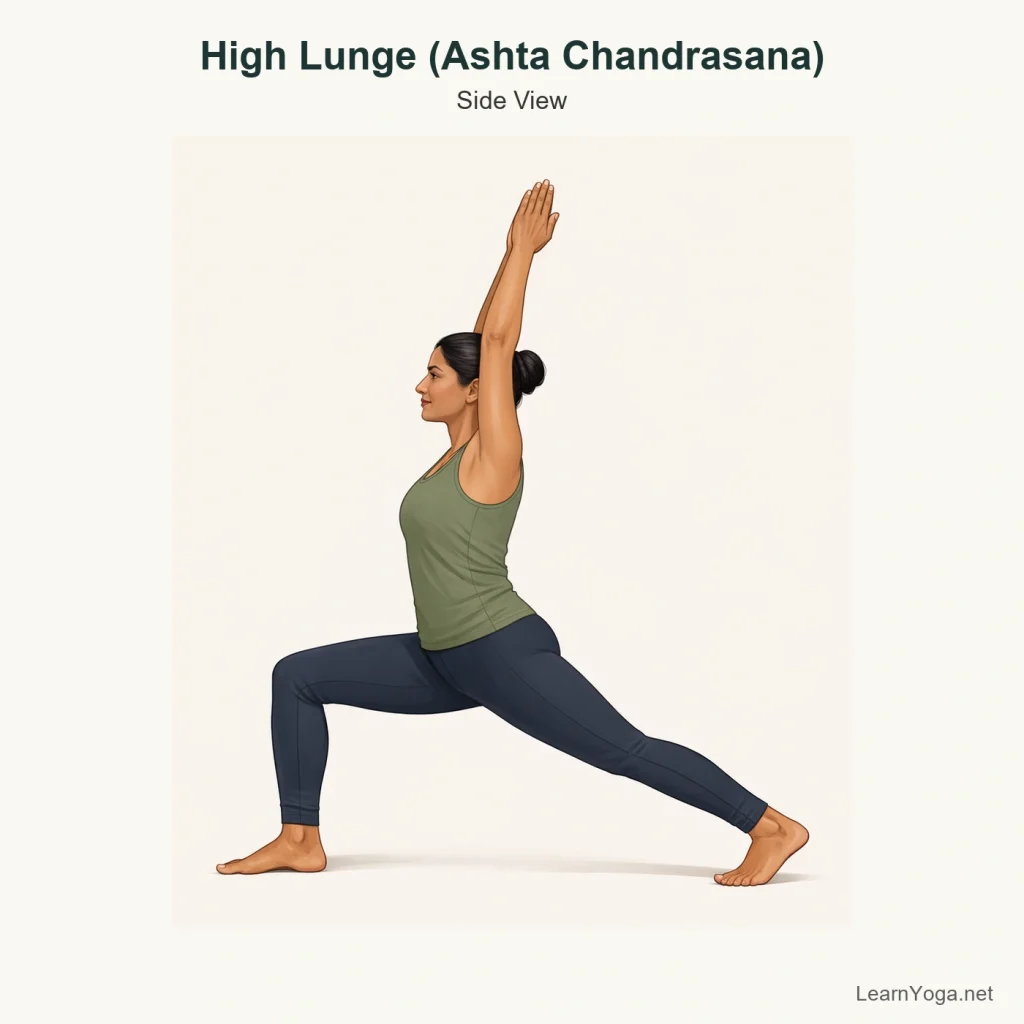
High Lunge
Practise with the back heel lifted and the back leg strong, keeping the torso upright and the hands on hips or overhead.
Use this if grounding the back heel bothers the ankle, knee or hip.
Kneeling Crescent
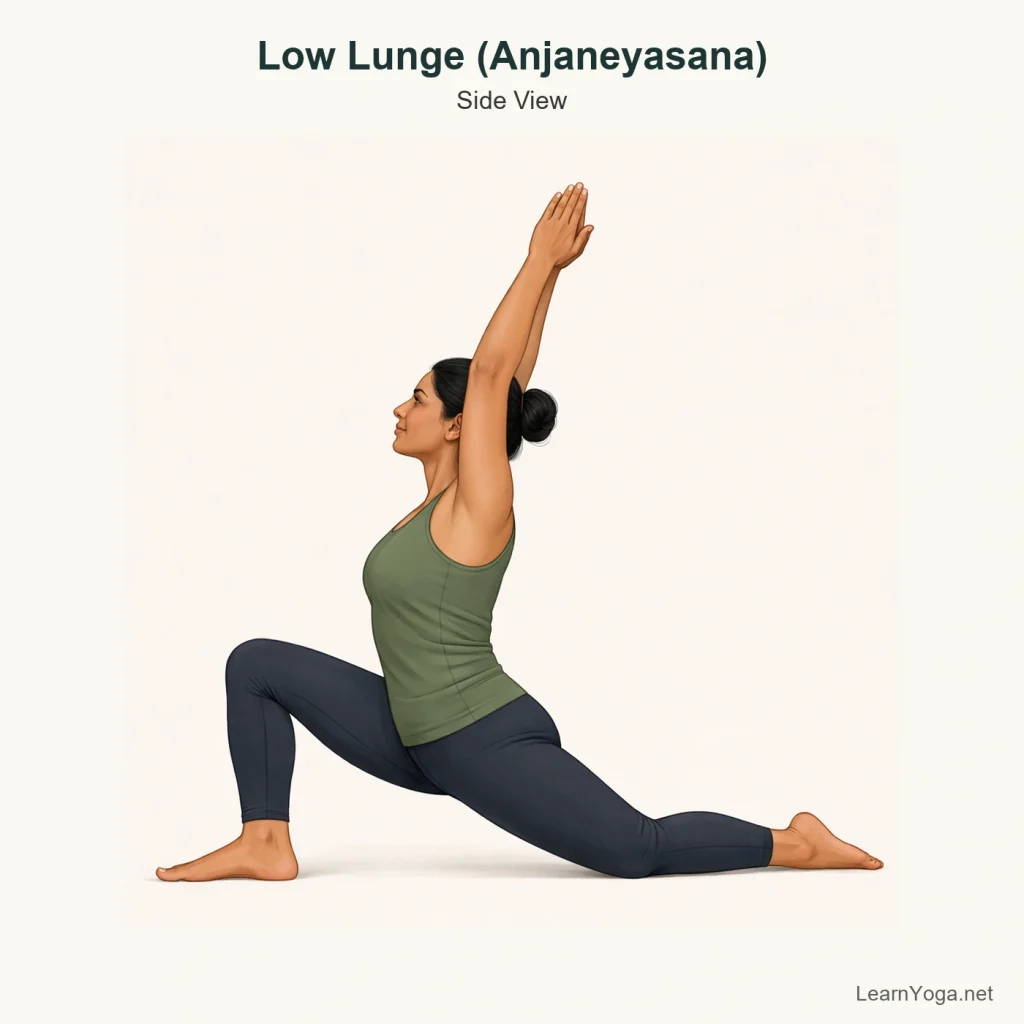
Lower the back knee to the floor, pad it if needed, and lift the torso upright with the hands on the front thigh or overhead.
Use this if balance is the main challenge or if you want less load through the back ankle.
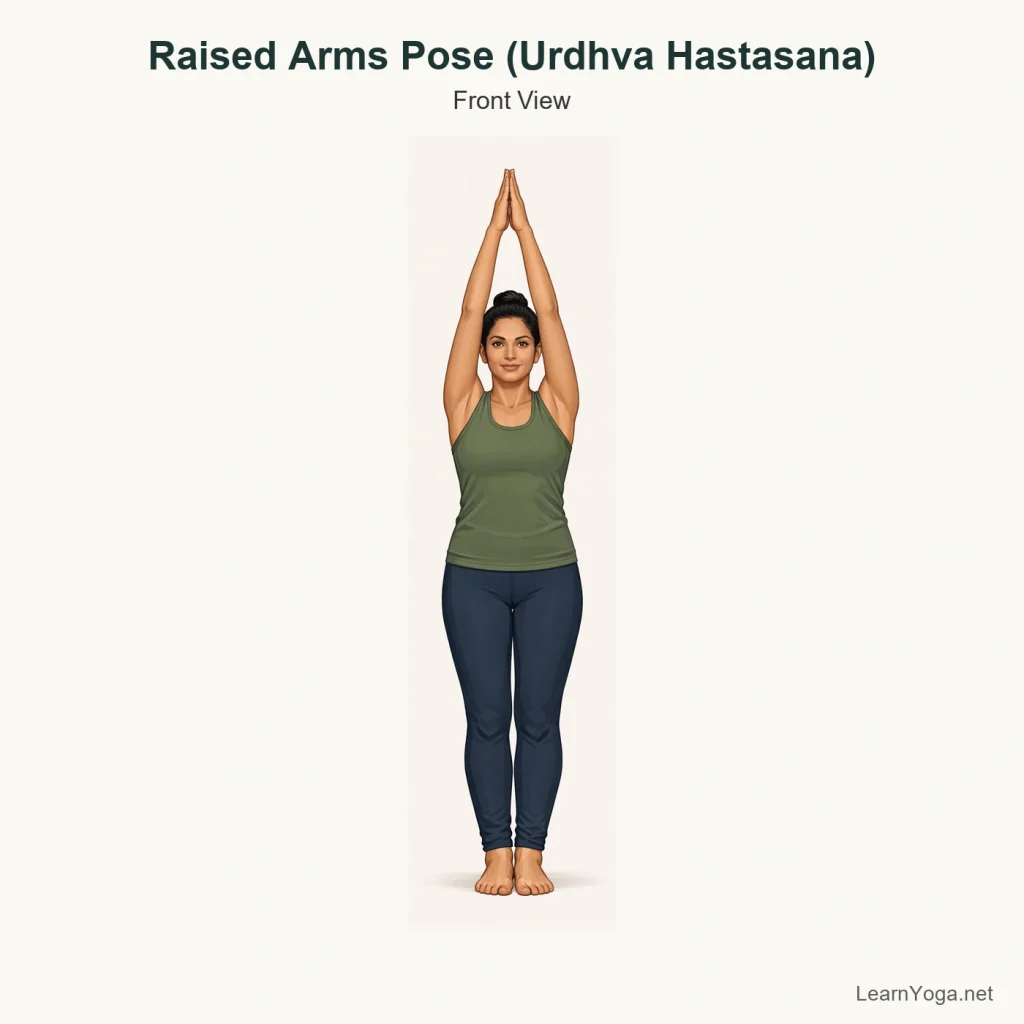
Mountain Pose with arms overhead
Stand with both feet grounded and practise the arm lift and rib control without the lunge.
Use this if you are working with limited balance, fatigue or difficulty stepping into a long stance.
Common variations
Prayer hands Warrior I
The palms meet overhead or at the chest instead of staying apart. This changes the shoulder demand and can make the pose feel either more contained or more crowded depending on your range.
Warrior I with cactus arms
The elbows bend out to the sides instead of reaching straight up. This can reduce load from full overhead flexion while still keeping the chest lifted.
Short stance Warrior I
The feet are closer together front to back. This is often the most practical variation for newer students and for anyone whose back heel tends to lift.
Safety and contraindications
When to avoid or get individual guidance
Recent or current pain with lunging through the front knee, back ankle or hip.
Shoulder irritation with overhead reaching, especially if the arms create pinching or numbness.
Balance difficulties that make stepping into or holding the pose unsafe without support.
Keep the front knee tracking in line with the foot rather than collapsing inward.
If the lower back feels compressed, shorten the stance or keep the arms lower.
If grounding the back heel twists the back knee or ankle, switch to High Lunge instead.
Pause Warrior I when sharp pain shows up in the front knee, back ankle, or lower back, or weight still does not feel comfortable in the lunge after shortening the stance. Choose a gentler variation such as High Lunge or get individual guidance before working on longer holds.
Accessibility and limited mobility
Using a wall for light fingertip support can make stepping in and out more manageable if balance is limited.
A shorter stance usually suits older adults and anyone with reduced hip or ankle range better than a long, dramatic lunge.
If getting to and from the floor is difficult, choose High Lunge or a hands-on-hips version rather than a kneeling alternative.
Easier options
Use these related poses when you want a more accessible way to practise a similar movement or prepare for this pose.
Not necessarily. In many bodies, trying to force a full square can make the lower back grip or the back knee twist. Let the chest turn forward as much as is reasonable, but allow a small amount of natural angle in the pelvis if that feels steadier.
Why won't my back heel stay down?
The stance may be too long, or the back foot angle may be too narrow for your ankle and calf range. Shorten the distance between the feet and turn the back toes out a little more. If the heel still lifts, practise High Lunge instead.
Should my front knee come to a right angle?
Only if that happens comfortably without losing the rest of the pose. A smaller bend is completely fine. The useful measure is whether you can keep the front knee tracking well and the back leg active while breathing steadily.
What can I do if my shoulders feel tight overhead?
Keep the hands apart, place them on your hips, or bend the elbows into a cactus shape. The leg and trunk work of Warrior I is still there even if the arms are lower.
Why do I feel this mostly in my lower back?
That usually means the ribs are pushing forward or the stance is longer than your hips and legs can support. Soften the front ribs, shorten the stance slightly and press the back heel down more firmly. You may also keep the arms lower until the spine feels more spacious.
Reviewed for yoga instruction
Yogita
Certified Yoga Instructor with 5+ years of Teaching and Consistent Practice