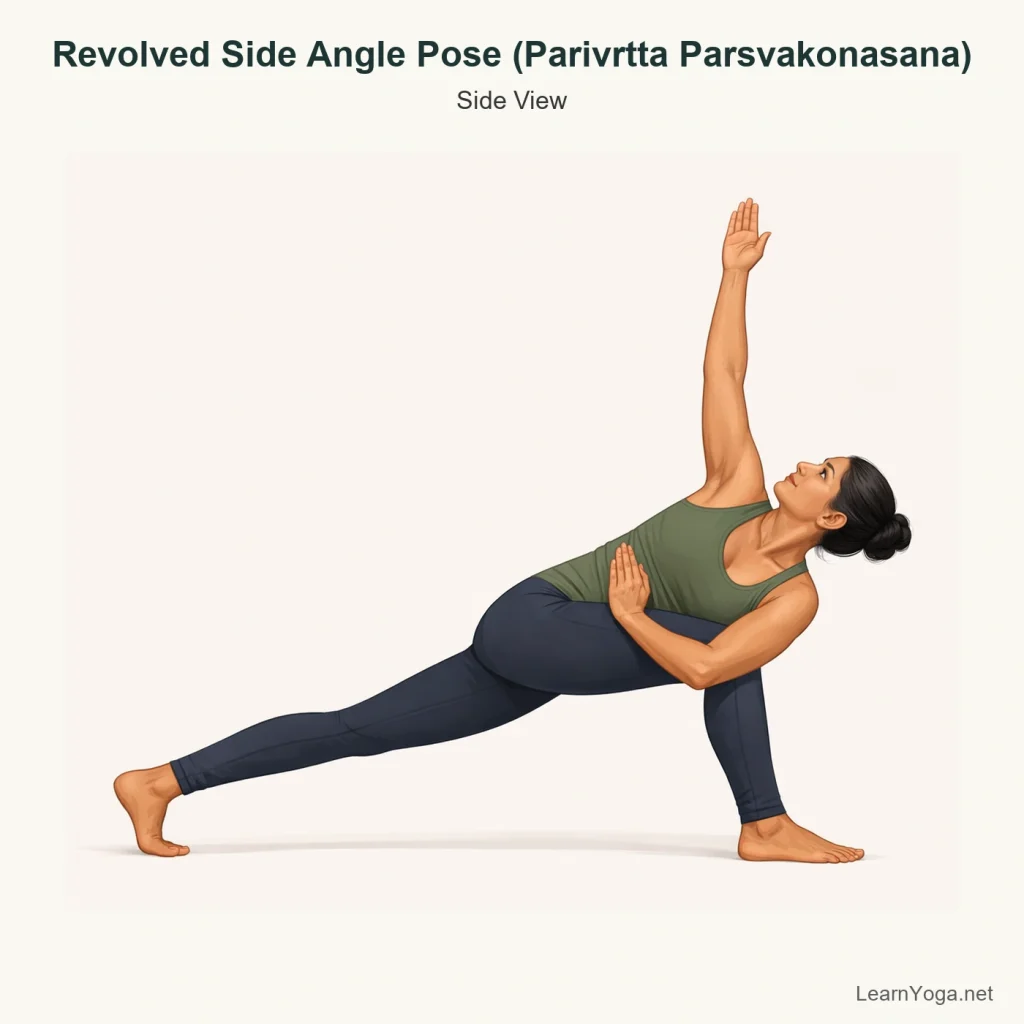
Revolved Side Angle Pose is a standing twist that asks for steady legs, a long spine and controlled rotation. It can be practised in a smaller, more workable shape with the back knee lowered or the bottom hand lifted onto a block.
This pose combines a lunge, a twist and a balance challenge. For many people, it feels more useful when the twist stays secondary to the base. First organise your feet and legs, then create length through the spine, and only then turn. The full expression is not necessary for the pose to make sense.
How to do Revolved Side Angle Pose
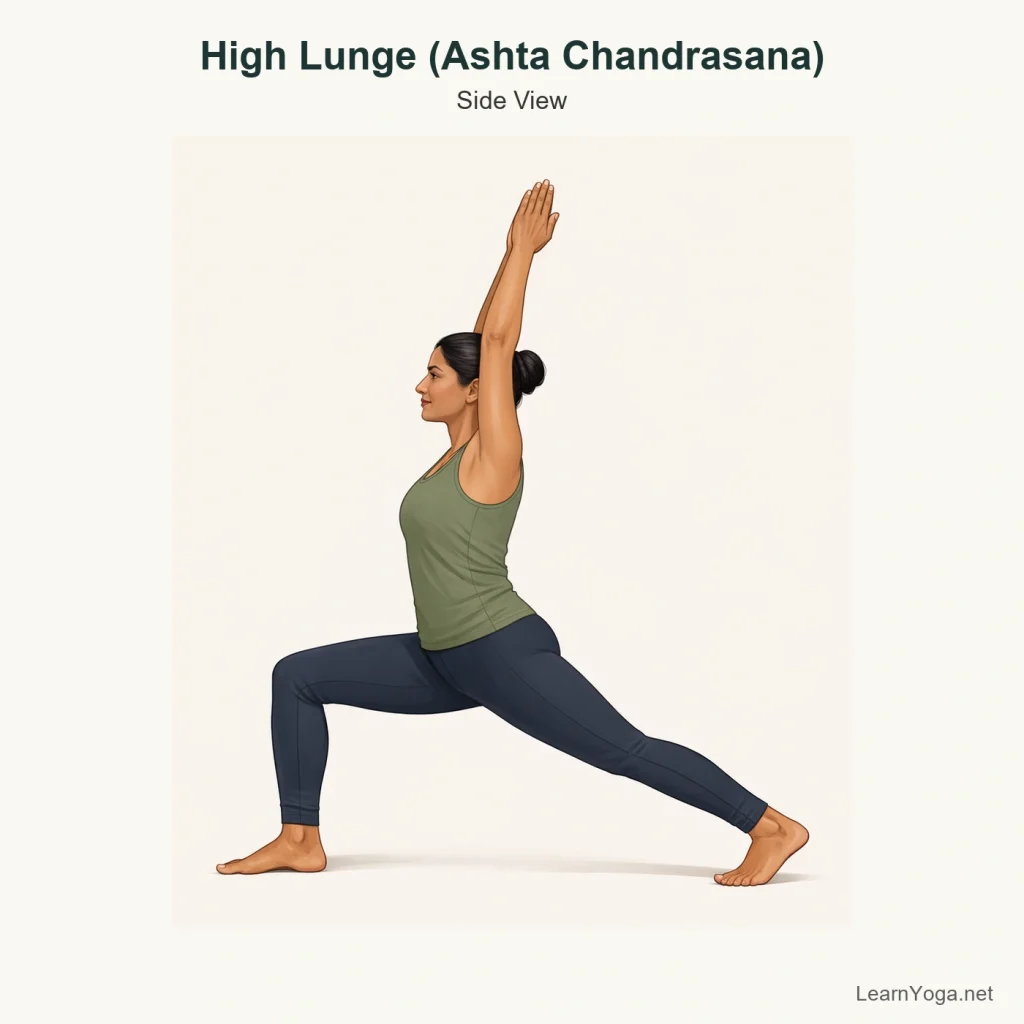
Start in High Lunge with your right foot forward and left heel lifted. Keep your feet about hip-width apart rather than on a tight line.
Bend the front knee so it stacks roughly over the ankle. Press firmly through the back heel and straighten the back leg without locking the knee.
Bring your hands to prayer at your chest. Inhale to lift through the sternum and lengthen both sides of the waist.
Exhale and rotate your chest to the right. You may keep the twist small at first and focus on turning from the ribcage rather than yanking with the arms.
If available, place your left upper arm or elbow to the outside of the right thigh while keeping the palms pressing evenly. If that shifts your hips badly, stay higher with hands at the chest.
Keep the back leg active and the back inner thigh lifting. Try to keep the front knee pointing in the same direction as the toes.
For a fuller version, place the left hand to the floor or onto a block inside or outside the front foot and reach the right arm overhead, making one long line from the back heel through the top fingertips.
Breathe steadily for 3 to 5 breaths. On each inhale, make a little more space through the spine. On each exhale, refine the twist without forcing it.
To come out, inhale back to High Lunge with the torso upright. Step back or lower the hands, then repeat on the second side.
Yogita's tip
If the front knee keeps drifting inward as you twist, ease the rotation slightly and press the front big-toe mound down. That usually helps the outer hip wake up and makes the pose feel much steadier.
Benefits
Builds leg strength and steadiness in a staggered standing position.
Practises spinal rotation while the pelvis and legs stay organised.
Challenges balance, attention and breath control at the same time.
Can improve awareness of how the feet, hips and ribcage work together in twisting poses.
Offers a stronger version of lunge work for students moving toward more complex standing sequences.
Common mistakes
Putting the feet on one tight line, which often makes balance unnecessarily shaky.
Trying to twist deeply before creating length in the spine.
Letting the front knee collapse inward or slide far past the ankle.
Dropping weight into the lower hand instead of keeping the legs active.
Forcing the prayer twist with the arms and rounding the upper back.
Make it work for you
Hands at prayer, twist kept higher
Stay in High Lunge with the hands at the chest and rotate without hooking the elbow outside the thigh. This reduces leverage and helps you work on length before depth.
Bottom hand on a block
Place a block by the front foot and set the lower hand on it. Use the height that lets you keep the chest broad and the back leg strong.
Back knee down
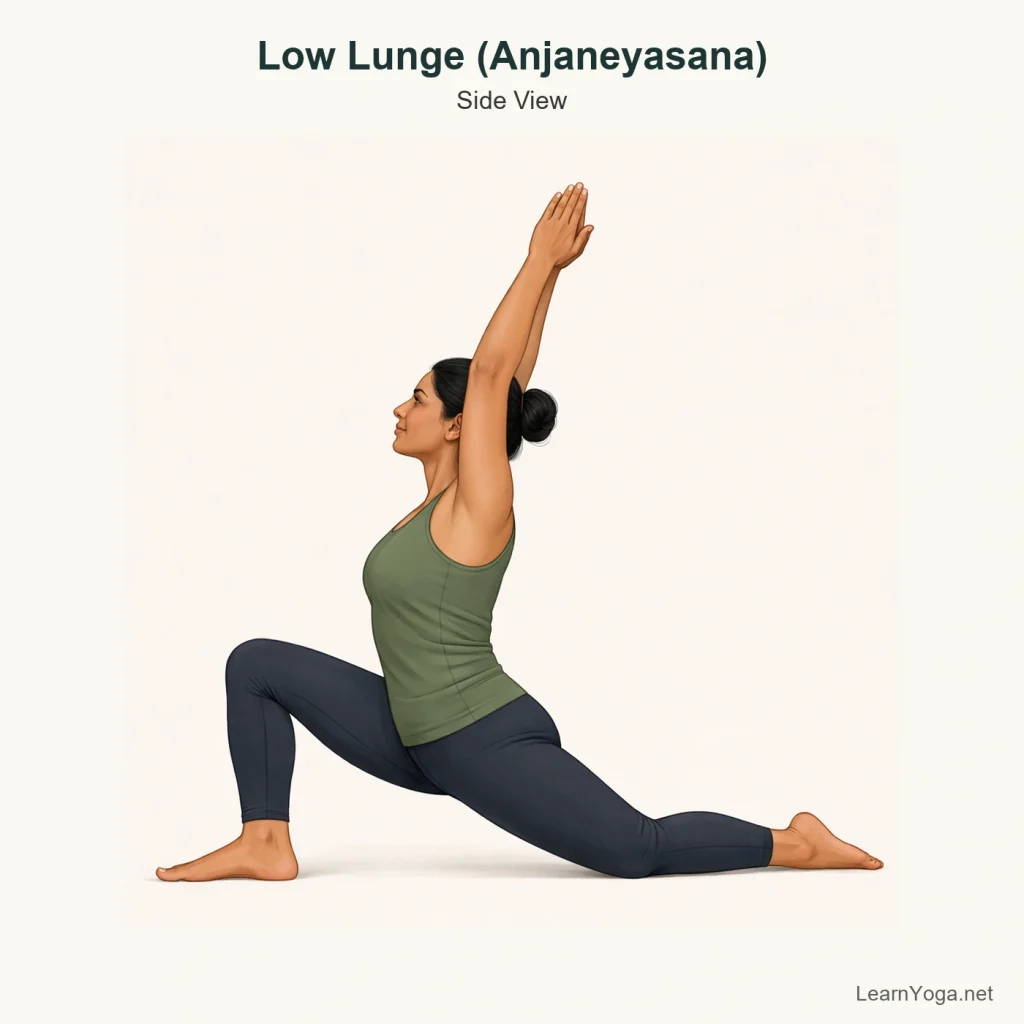
Lower the back knee into a Low Lunge before twisting. Keep a folded blanket under the knee if needed and turn from the chest rather than trying to reach the floor.
Alternatives
Revolved Chair Pose
Practise the twist with both feet grounded and the hands in prayer.
Useful if balancing in a lunge makes the pose too unstable.
Low Lunge Twist
Come into a kneeling lunge and twist toward the front leg, keeping one hand on the floor or on a block for support.
Useful if the back leg and balance demand feel too strong in the full pose.
Half Lord of the Fishes Pose
Take the twist seated so you can focus on spinal rotation without managing a standing base.
Useful if getting into or holding a standing twist is not comfortable today.
Common variations
Prayer twist variation
Hands stay at the chest with the lower elbow or upper arm meeting the outside of the front thigh. This is often the clearest place to learn the action of the pose.
Open-arm variation
The lower hand comes to the floor or a block and the top arm reaches overhead or upward. This creates a longer line through the side body and usually increases the balance challenge.
Back knee lowered variation
The back knee rests on the floor, turning the pose into a more supported lunge twist with less demand on balance and leg endurance.
Safety and contraindications
When to avoid or get individual guidance
Use caution with recent or active knee, sacroiliac or lower back irritation.
If balancing lunges aggravate an ankle issue, choose a more supported variation.
Keep the front knee tracking with the toes rather than collapsing inward as you twist.
Use a block or lower the back knee if the pose makes you wobble so much that you cannot breathe steadily.
If you feel pinching in the lower back, come higher, lengthen the spine and reduce the twist.
Come out of revolved side angle when sharp pain shows up in the knee, ankle or lower back, or the lunge and twist feel so unsteady that you might fall. Choose a more supported version and get individual guidance before trying it again.
Accessibility and limited mobility
A block under the lower hand can make the pose much more workable if hamstrings, hips or spine feel restricted.
If getting low in a lunge is difficult, practise the twist higher with hands at the chest or choose Low Lunge Twist with the back knee down.
For older adults or anyone who finds balance changeable, keeping the feet wider apart usually helps more than trying to force a narrow textbook stance.
If moving to and from the floor is not convenient, a standing alternative such as Revolved Chair Pose may be easier to organise.
Easier options
Use these related poses when you want a more accessible way to practise a similar movement or prepare for this pose.
Do I need to hook my elbow outside the front thigh?
No. That shape can help some people find leverage, but it is not required. If hooking the elbow rounds your back or throws your hips off line, keep the hands at your chest and twist higher.
Should my back heel stay lifted or lowered?
In the common lunge version, the back heel stays lifted. Press back strongly through that heel to keep the back leg active. If you want more support, lower the back knee instead of trying to force the heel down.
What if I cannot keep my balance in the pose?
Widen your stance from side to side, keep the torso a little higher and use a block under the lower hand if you take the open-arm version. You can also practise Low Lunge Twist first, which removes some of the balancing demand.
Where should I look in Revolved Side Angle Pose?
Let your gaze match what keeps your neck easy and your balance steady. Looking down or sideways is completely fine. Looking up is optional and usually works better only when the base already feels stable.
Why does the pose feel stuck in my lower back?
That usually means the twist has gone deeper than the spine can organise cleanly. Lengthen first, lift through the chest and soften the depth of the turn. Often the ribs and upper back can rotate more comfortably once the lower back stops doing all the work.
Reviewed for yoga instruction
Yogita
Certified Yoga Instructor with 5+ years of Teaching and Consistent Practice