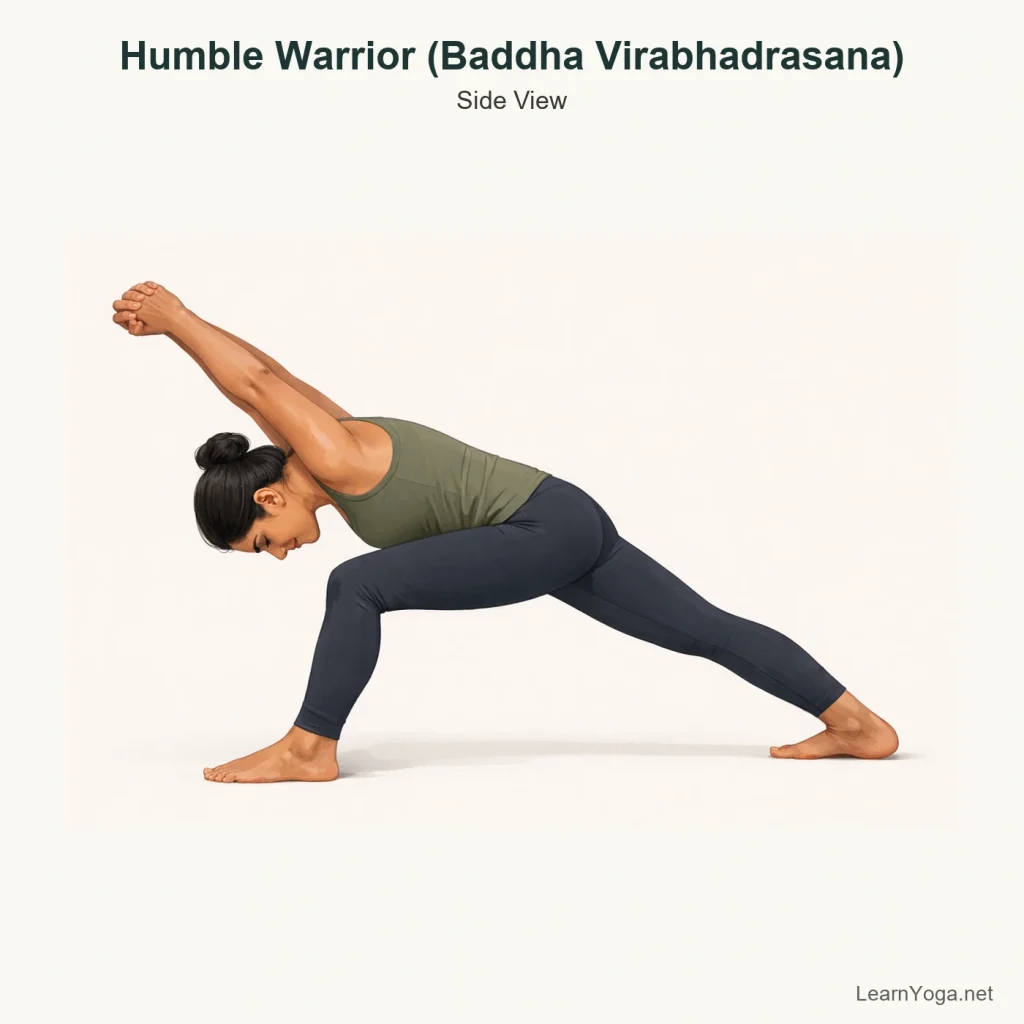
Humble Warrior combines a Warrior I base with a bound shoulder opening and a forward fold over the front leg. It asks for steady feet, active legs and enough shoulder range to clasp the hands comfortably, so it is usually more manageable when entered gradually.
This pose is less about folding as low as possible and more about keeping the shape organised from the feet up. The front knee stays bent, the back leg stays grounded, and the torso tips forward inside that strong base. For many people the shoulder bind is the limiting part, not the fold. If that is the case, use a strap or simply keep the hands at the hips.
How to do Humble Warrior
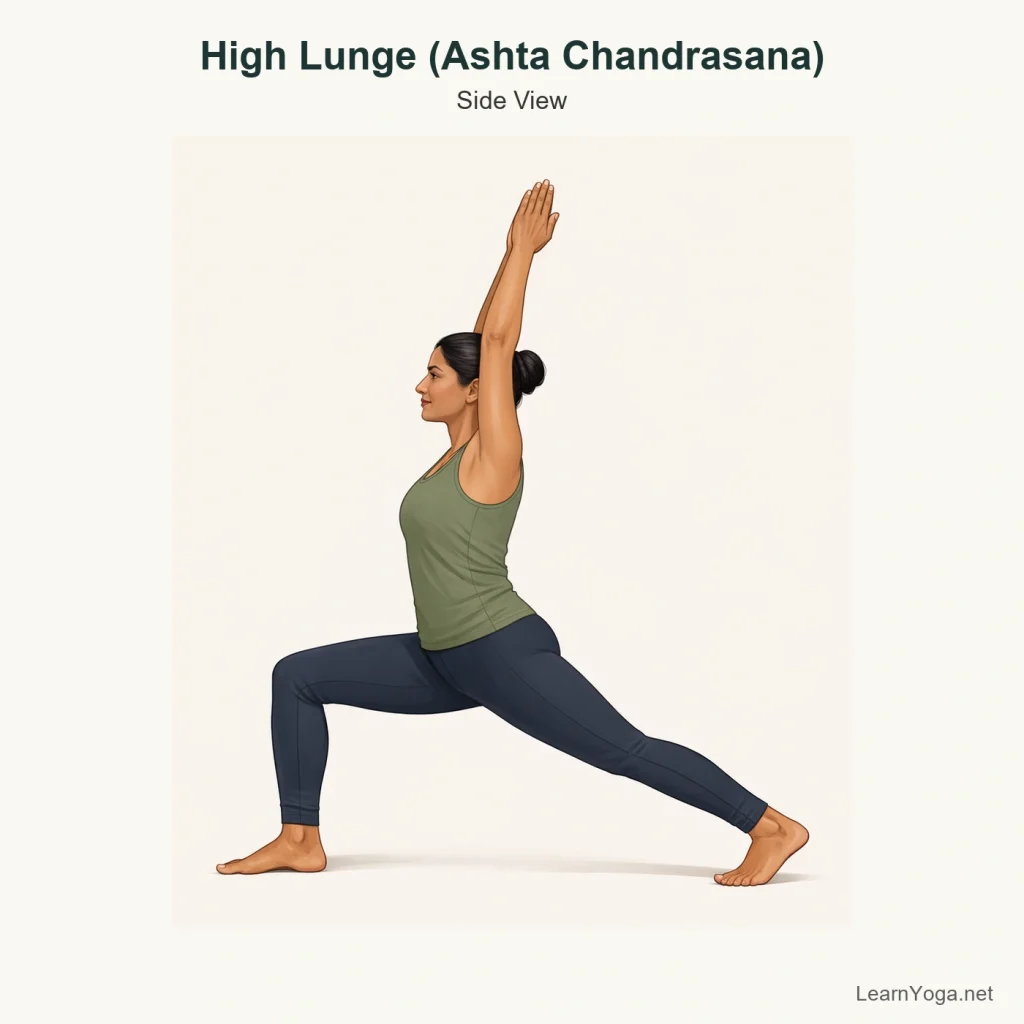
Begin in Warrior I with your right foot forward and your back heel grounded. Square your pelvis forward as much as is comfortable without forcing it.
Interlace your hands behind your back, or hold a strap between your hands if the shoulders feel tight. Straighten the elbows gently and lift the knuckles slightly away from the lower back.
Keep bending into the front knee so it stays roughly over the ankle, and press firmly through the outer edge of the back foot.
Inhale to lengthen your spine and lift through the chest. Exhale and hinge forward from the hips, bringing your torso toward the inside of the front thigh.
Let the arms move up and overhead only as far as the shoulders allow without strain. Keep the neck easy and let the head hang only if that feels comfortable.
Stay for 3 to 5 breaths. On each inhale, create a little more length through the front of the body. On each exhale, root both feet and soften into the shape.
To come out, press down through both feet, engage the legs, and rise back up slowly with an inhale. Release the bind and repeat on the second side.
Yogita's tip
If the fold keeps collapsing onto the front thigh, press the back heel down and draw the back inner thigh slightly up. That usually gives the torso more space to lengthen instead of just dropping.
Benefits
Strengthens the legs while you maintain a bent front knee and grounded back leg.
Opens the front of the shoulders and chest through the bind or strap hold.
Encourages length through the sides of the waist and spine as you hinge forward.
Builds balance and concentration because the base stays active while the torso changes direction.
Gives a deeper hip and hamstring challenge than an upright Warrior I for many practitioners.
Common mistakes
Letting the front knee drift inward instead of tracking in line with the toes.
Lifting the back heel or losing pressure through the outer edge of the back foot.
Forcing the hand clasp and turning the pose into shoulder strain.
Dropping the torso quickly without first lengthening through the spine.
Locking the neck or throwing the head back to lift the arms higher.
Make it work for you
Use a strap behind the back
Hold a yoga strap, belt or towel between your hands instead of interlacing the fingers. Keep some space between the hands so the shoulders can open without forcing the bind.
Keep the torso higher
Hinge forward only partway and pause with the chest still lifted away from the thigh. This keeps the leg work and shape of the pose without demanding as much hamstring or shoulder range.
Hands on hips
Skip the bind and place your hands on your hips as you fold forward. This is useful when the shoulder position distracts from the stance.
Alternatives
Warrior I
Stay upright in Warrior I and focus on grounding the back heel, bending the front knee and lengthening the spine.
Use this if the forward fold or shoulder bind makes the pose feel unstable.
Pyramid Pose
Straighten the front leg more and shorten the stance slightly, with hands on blocks or hips.
Use this if you want a forward fold without the deep lunge load on the front thigh.
Low Lunge
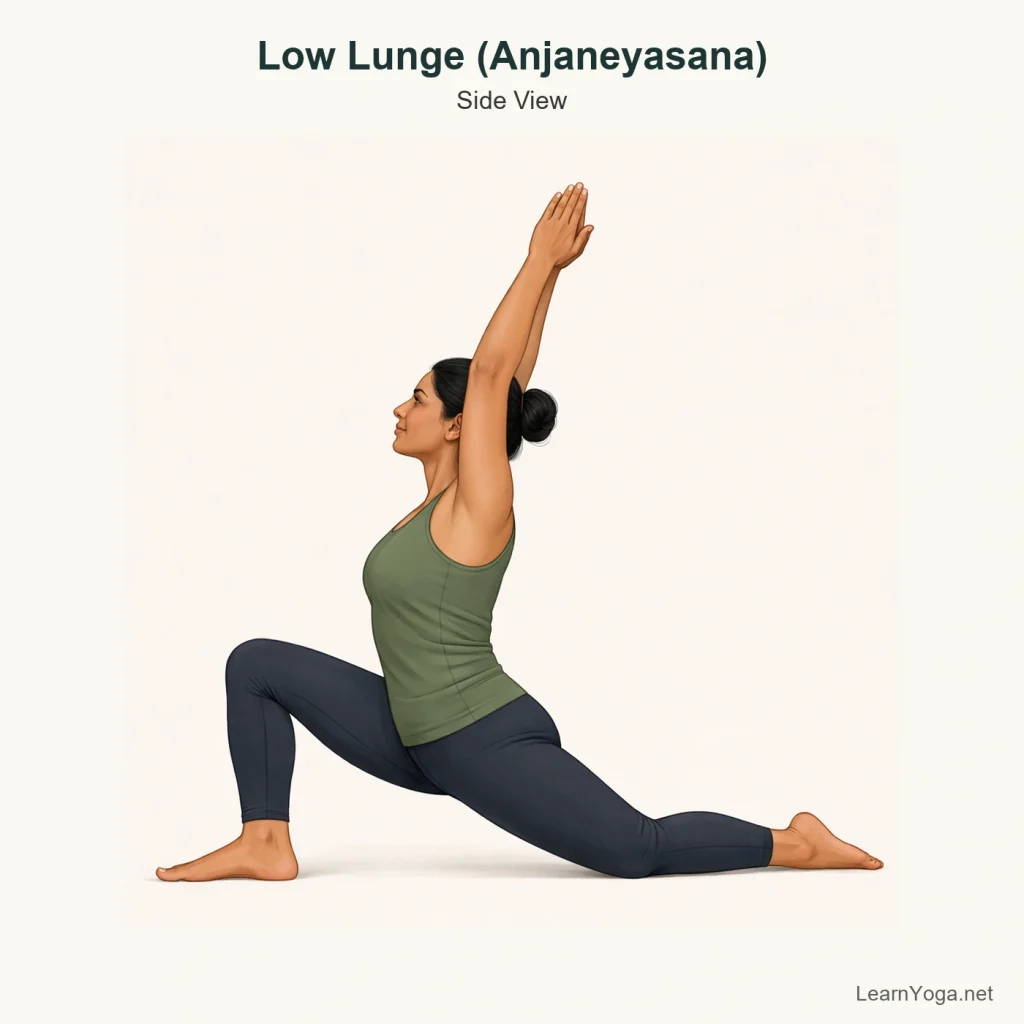
Lower the back knee to the floor and keep the hands on the front thigh or on blocks.
Use this if grounding the back heel or balancing in the full stance is difficult.
Common variations
Humble Warrior with strap bind
The hands hold a strap behind the back instead of clasping. This keeps the shoulder action but gives more space across the chest and upper arms.
Half Humble Warrior
The torso folds only partway forward rather than resting close to the front thigh. This variation helps maintain length in the spine and steadiness in the legs.
Open-arm Humble Warrior
The arms stay reaching back or resting on the hips rather than binding. This reduces shoulder demand while keeping the lower-body work.
Safety and contraindications
When to avoid or get individual guidance
Recent or irritated shoulder strain may make the bind uncomfortable.
Be cautious with knee or hip pain in lunging positions, especially if the front knee feels unstable.
If forward folds tend to make you dizzy, keep the torso higher or choose an upright variation.
Keep the front knee tracking with the toes and avoid letting it collapse inward.
Do not force the bind if the shoulders feel pinched or the chest narrows.
If the back heel will not stay grounded, shorten the stance or return to Warrior I.
Come up slowly if you are prone to feeling lightheaded in forward folds.
Come out of Humble Warrior for sharp pain in the front knee, hip crease, hamstring, or shoulders, or any sense that the bind and forward lean make you too unsteady to stay controlled. Choose a simpler version such as Warrior I and get individual guidance before trying it again.
Accessibility and limited mobility
If getting into a long standing stance feels unsteady, shorten the distance between the feet.
Practitioners with limited shoulder range can keep hands on hips or use a strap rather than clasping.
If balance is a concern, practise near a wall and lightly touch it with the front hand before folding.
Older adults or anyone who tires in lunges may prefer Low Lunge as a similar shape with less balance demand.
Easier options
Use these related poses when you want a more accessible way to practise a similar movement or prepare for this pose.
No. The bind is optional. If your shoulders tighten, your chest collapses or your neck feels strained, hold a strap behind your back or place your hands on your hips. The leg work and forward hinge still make it the same family of pose.
Why does my back heel keep lifting?
The stance may be too long or too narrow for your current range. Shorten the distance between the feet and make sure you press through the outer edge of the back foot before you fold. Sometimes rising a little higher with the torso also helps the heel stay down.
Should my torso touch my front thigh?
Not necessarily. Some bodies will fold deeply and others will not, especially if the shoulders are bound. It is more useful to keep the front knee steady, the spine long and the breath smooth than to chase contact with the thigh.
Where should I feel Humble Warrior the most?
Many people feel it in the front thigh, back leg calf, shoulders and chest, with some stretch around the hips and hamstrings. It should feel active and spacious rather than sharp. If sensation moves into pinching at the knee or shoulder, ease out a little.
Is it better to look back, down or forward?
Usually down works best once you fold, because it keeps the neck quieter. If looking down makes you feel compressed, keep the back of the neck long and let your gaze fall slightly forward on the floor rather than lifting the chin.
Reviewed for yoga instruction
Yogita
Certified Yoga Instructor with 5+ years of Teaching and Consistent Practice