Bound Side Angle Pose combines the legs of Side Angle with a shoulder bind around the front thigh. It asks for steadiness in the feet and legs, space through the chest, and enough hip and shoulder mobility to keep the shape broad rather than cramped.
This is a strong standing pose with a fairly complex bind, so it helps to build it from the ground up. The front hip and outer leg work, the back leg stays active, and the chest turns open as the lower shoulder threads under the thigh. For some bodies the full hand clasp is available; for others, the same pose is more useful with the hands apart or with a strap.
How to do Bound Side Angle Pose
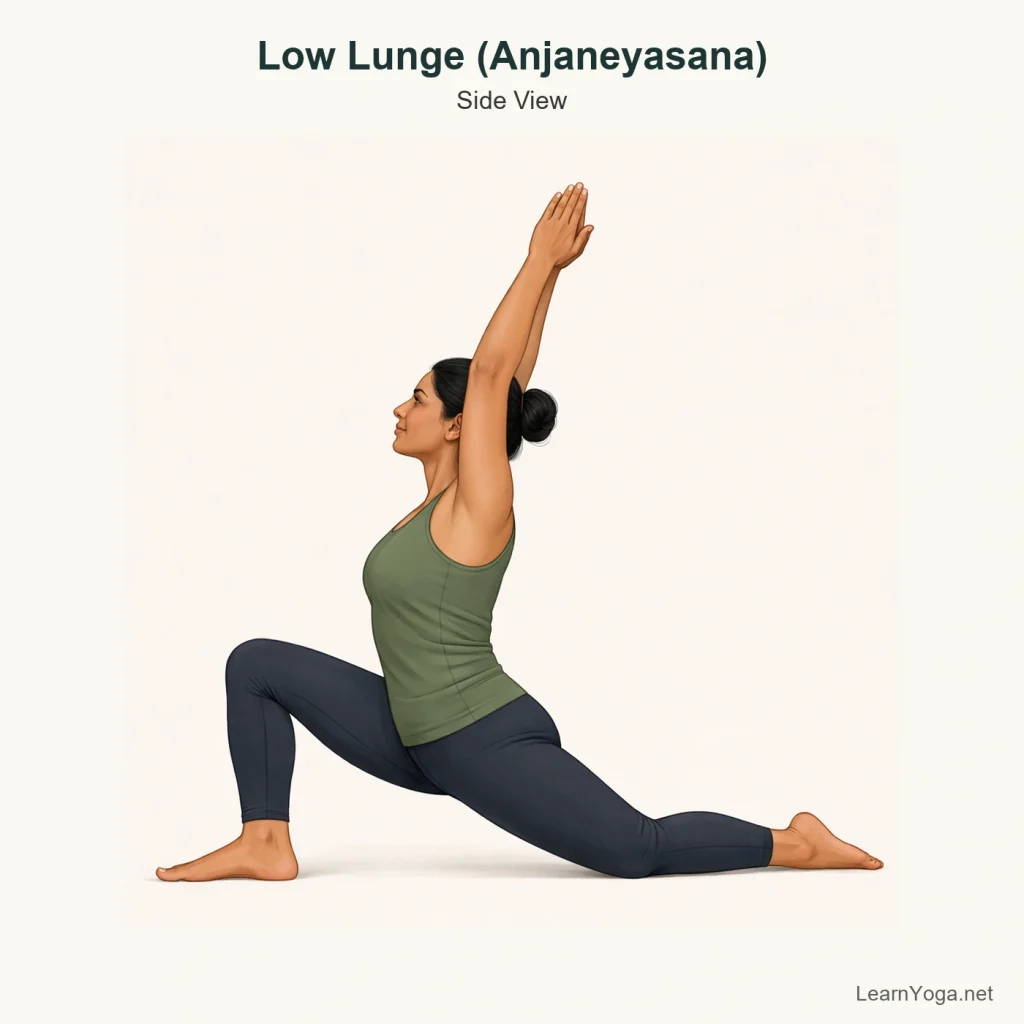
Begin in Warrior II with your right foot forward. Bend the right knee so it stacks roughly over the ankle, and press firmly through the outer edge of the back foot.
Bring your right forearm lightly to your right thigh or place your right fingertips to the floor inside the front foot. Lengthen both sides of the waist as you inhale.
On an exhale, turn your chest to the left and slide your right shoulder a little farther under the right thigh without collapsing your front ribs.
Reach your right arm underneath the front thigh with the palm facing back. Sweep your left arm behind your back and see whether your hands meet.
If they do not meet comfortably, hold a strap between the hands or keep the top hand on the hip. Keep the front knee tracking toward the middle toes.
Once the bind is set, roll the chest open and draw the left shoulder back. Stay heavy through both feet and let the spine lengthen forward rather than dropping into the lower back.
Breathe for 3 to 5 steady breaths. To come out, release the bind, press strongly through the feet, and return to Warrior II before changing sides.
Yogita's tip
If the bind makes the chest collapse, ease the lower shoulder slightly away from the thigh and reopen the top collarbone first. A smaller bind with a clearer chest usually feels better than forcing the hands to meet.
Benefits
Builds strength and steadiness in the legs while the front knee stays bent.
Creates a deeper shoulder and chest opening than standard Side Angle for many practitioners.
Encourages thoracic rotation and awareness of how the spine can lengthen while twisting.
Challenges balance, attention and breath control in a strong standing shape.
Offers focused work through the hips and side body.
Common mistakes
Letting the front knee drift inward instead of tracking over the foot.
Dumping too much weight into the lower hand or lower shoulder while setting up the bind.
Forcing the hand clasp and rounding the chest forward.
Losing the back leg so the back heel gets light and the pose becomes unstable.
Dropping into the neck instead of keeping the back of the neck long.
Make it work for you
Half bind
Place the lower forearm on the front thigh and wrap only the top arm behind your back. This keeps the chest-opening element without demanding the full shoulder position.
Use a strap
Hold a yoga strap between the lower and upper hand so you can keep the bind shape without twisting or hunching to make the hands touch.
Bottom hand to floor or block
Keep the lower hand on a block inside or just outside the front foot and leave the top hand on the hip if the bind pulls the torso down.
Alternatives
Extended Side Angle Pose
Take the lower forearm to the front thigh or lower hand to a block, and reach the top arm overhead without binding.
Use this if the full bind strains the shoulders, neck or breath.
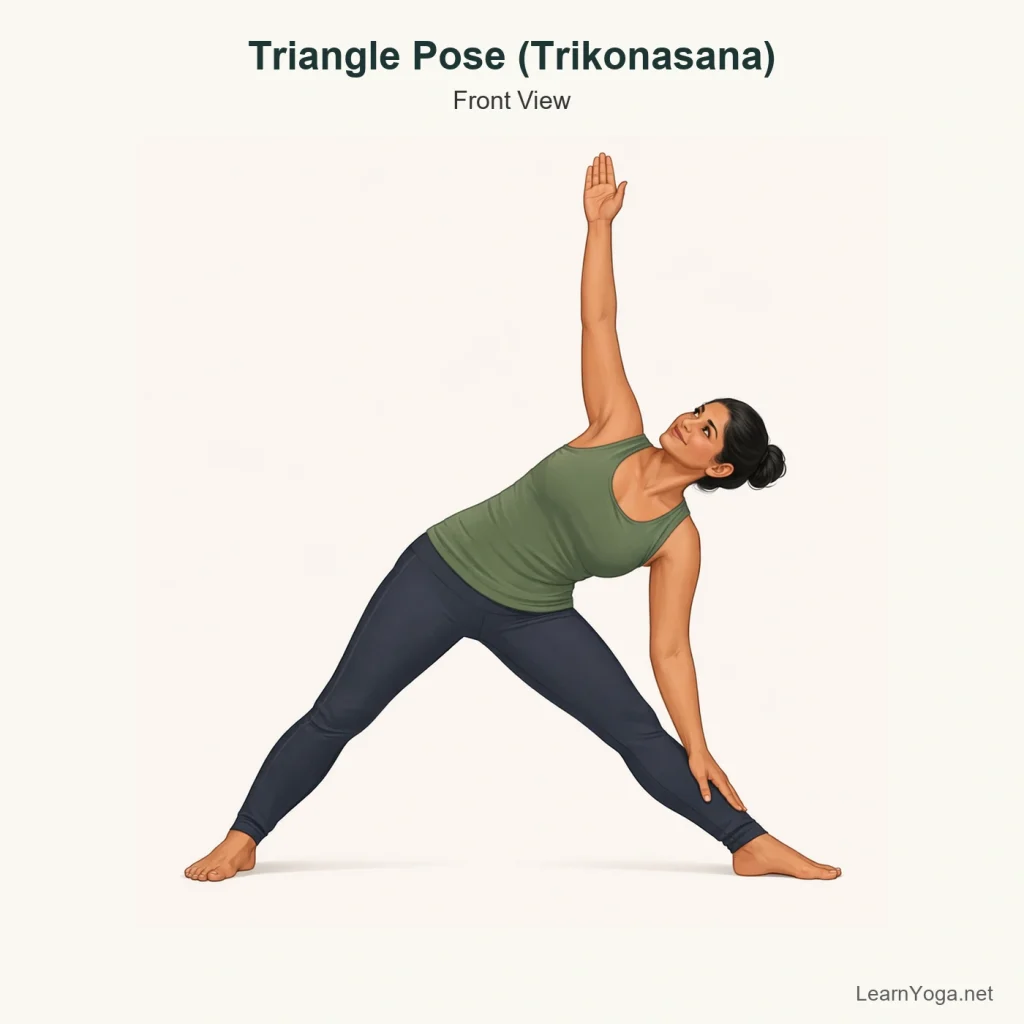
Triangle Pose
Straighten the front leg and place the lower hand on the shin or a block, keeping the chest open.
Use this if a deep front-knee bend is not comfortable today.
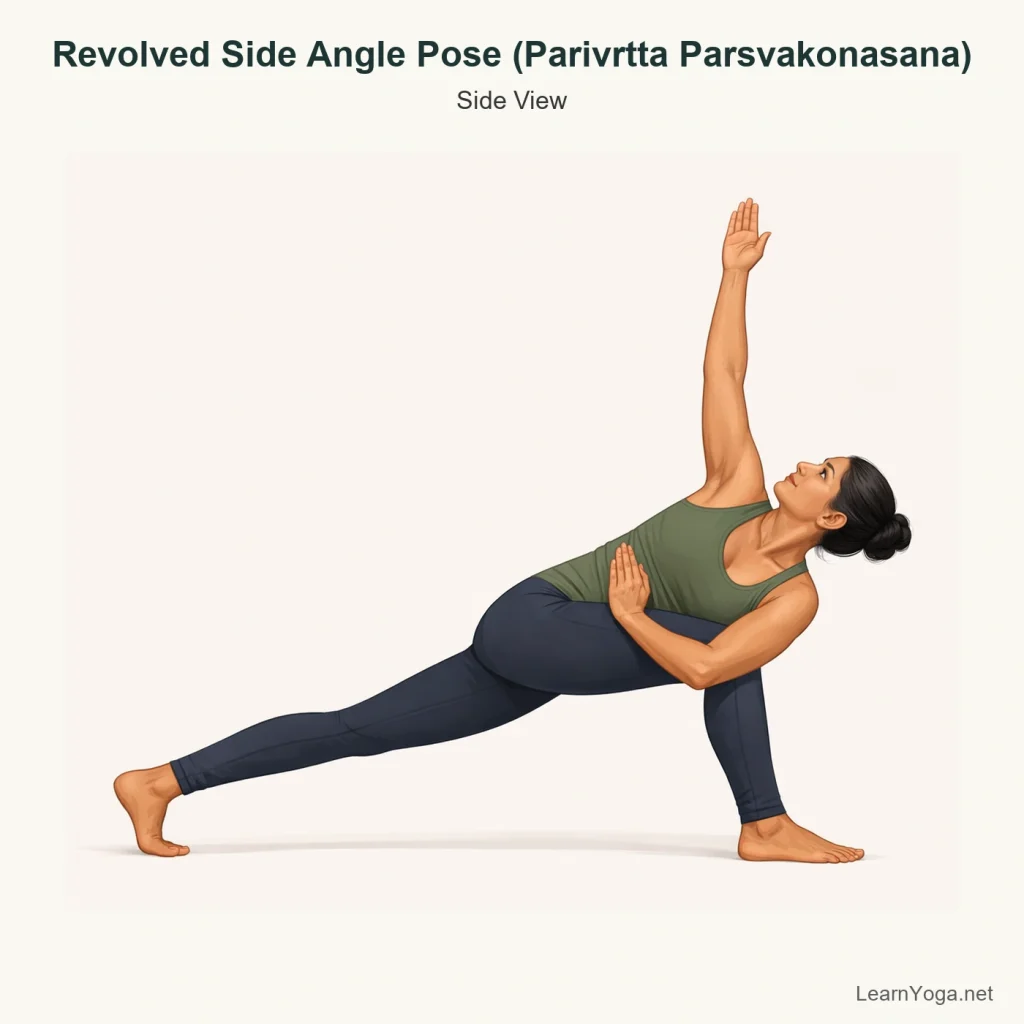
Revolved Side Angle Pose
Work with hands in prayer or one hand to a block rather than a bind, keeping the spine long.
Use this if you want a twisting standing pose with a different shoulder demand.
Common variations
Half Bound Side Angle
The lower arm threads under the front thigh while the top hand stays on the hip instead of reaching behind the back.
Bound Side Angle with Strap
A strap joins the hands behind the front thigh so the chest can stay open while the bind remains spacious.
Bound Side Angle from a shorter stance
The stance is slightly shortened to make balance easier and reduce the demand on the hips and groin.
Safety and contraindications
When to avoid or get individual guidance
Avoid or modify if you have a current shoulder strain, groin strain, or knee pain that worsens in a deep lunge.
Skip the full bind if turning the chest or reaching behind the back causes neck discomfort.
Move into the bind gradually and keep the front knee aligned with the foot.
If the shoulder bind makes your breath shallow or your chest collapse, back out to a half bind or regular Side Angle.
Keep steady pressure through the back foot so the pose does not tip into the front knee.
Repeated sharp pain in the front knee, groin, shoulder, or lower back during the bind is a sign to stop and step back to regular or half-bound Side Angle. Get individual guidance before continuing with bound standing poses.
Accessibility and limited mobility
This pose is usually not the best starting point for older adults or anyone who is still building confidence in standing balances and deeper binds. Extended Side Angle with a forearm on the thigh is often more workable.
If reaching the floor changes the shape too much, place a block under the lower hand during setup or skip the bind entirely.
For limited shoulder range of motion, a strap is often more useful than trying to clasp the hands directly.
Easier options
Use these related poses when you want a more accessible way to practise a similar movement or prepare for this pose.
No. The useful work is in the legs, the side-body length and the chest opening. If your hands do not meet without strain, use a strap or stay with a half bind.
What should I do if I keep tipping forward?
Usually the back leg has gone quiet or the chest has dropped. Press the back heel down more firmly, lift through the lower side waist, and make the bind smaller so the torso has room to turn.
Should my bottom shoulder press hard under the thigh?
Not hard. It can gently nestle under the thigh, but if you shove the shoulder through, the chest often rounds and the neck tightens. Think of threading the arm through while keeping space across the collarbones.
Why does the front knee feel unstable here?
The knee often wobbles when the front thigh turns inward or when too much weight shifts forward. Shorten the stance a little, keep the knee aiming toward the middle toes, and press strongly into the back foot.
Is it better to look up or down?
Either is fine. Look up only if your neck feels easy and the chest stays open. If looking up compresses the neck or affects balance, keep your gaze forward or down.
Reviewed for yoga instruction
Yogita
Certified Yoga Instructor with 5+ years of Teaching and Consistent Practice