Yoga pose
Virabhadrasana II
Warrior II
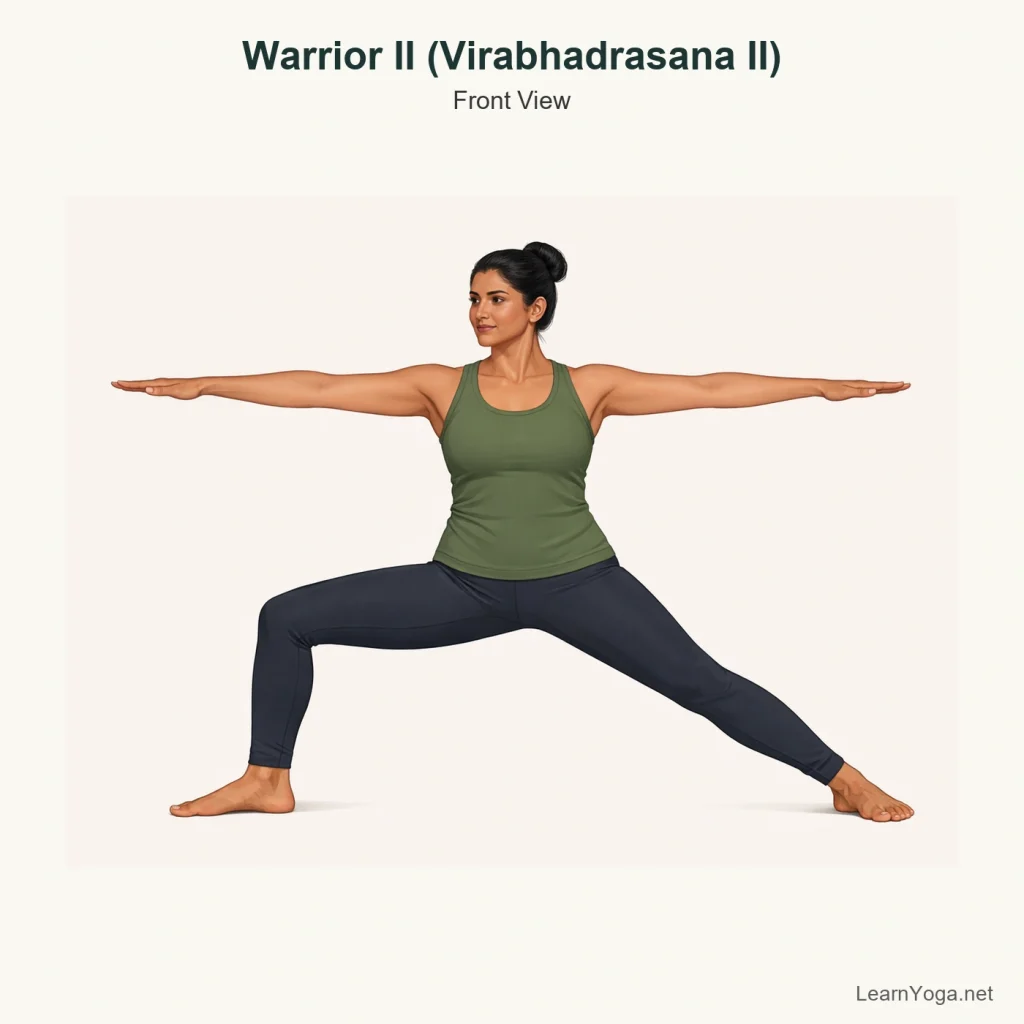
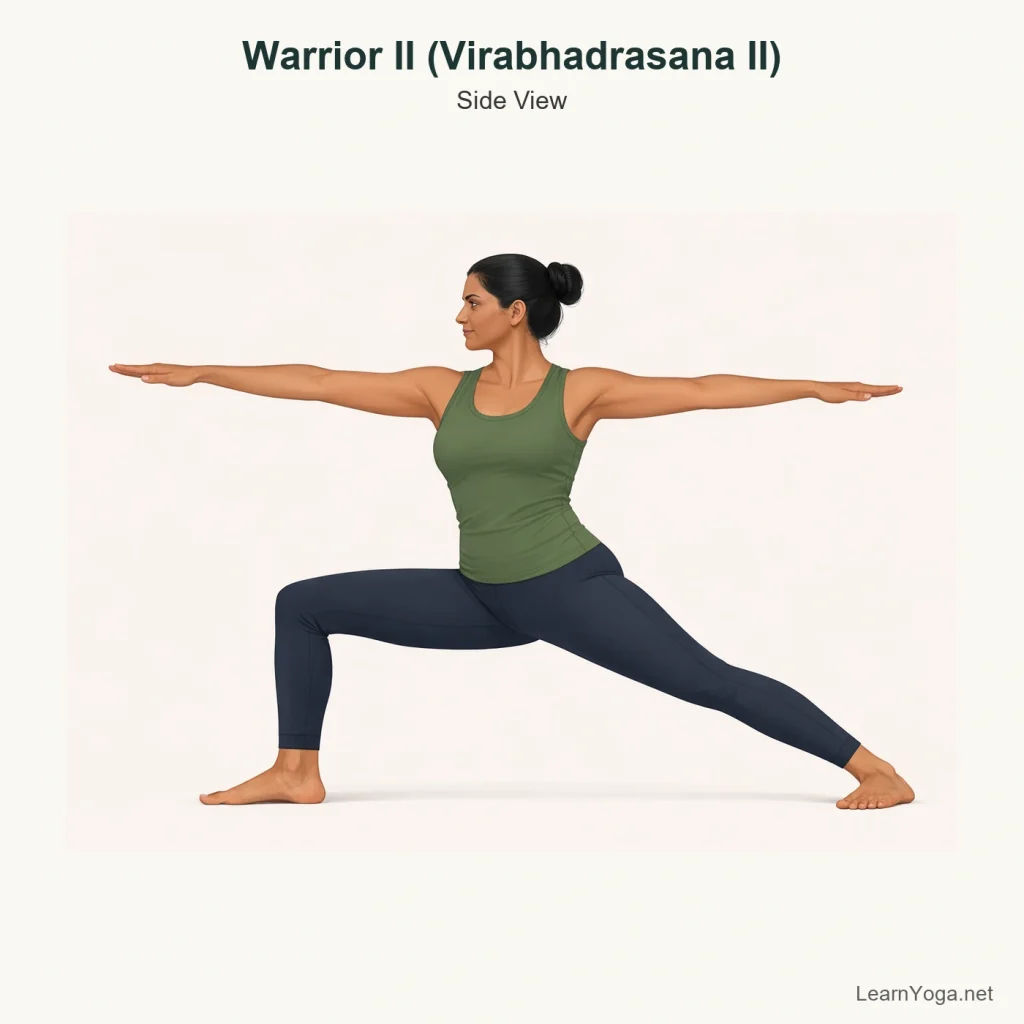
Warrior II is a wide standing pose with one knee bent, one leg straight and the arms reaching out to the sides. It builds steadiness in the legs and helps you practise keeping the chest broad without hardening the lower back.
BeginnerbalancestandinganklescalvescoregluteshipskneesquadricepsshouldersEnergising
Typical hold: 3 to 6 breaths per side
Timing: 3 breaths per side · 5 breaths per side · 20 to 30 seconds per side
Build a routine with this pose
This pose asks several parts of the body to work at once. The front leg bends and bears load, the back foot grounds you, and the arms extend without lifting the shoulders. It does not need to be very deep to be effective. A shorter stance and a softer bend often make the shape clearer, especially while you are learning how to organise your feet and pelvis.
Yogita's tipIf the front thigh is working hard but the back leg feels absent, press the back outer heel down more firmly. That usually brings the pose back into the whole body and stops you hanging into the bent knee.
Safety and contraindications
When to avoid or get individual guidance
- Recent or aggravated knee irritation may be more comfortable with a smaller bend or a supported variation.
- If shoulder lifting is uncomfortable, keep the hands on the hips instead of reaching the arms wide.
- Most of the work lands in the front knee and hip and in the back ankle. Keep the bend moderate enough that you can press evenly through both feet.
- If the front knee feels pinched or wobbly, shorten the stance and reduce the depth.
- If the back foot cannot stay grounded comfortably, turn the back toes in a little more or come to a smaller shape.
- Keep the gaze neutral if turning the head makes the neck feel strained.
Come out of Warrior II and get individual guidance before holding it longer when the front knee has sharp pain, the back ankle keeps giving way, or standing here brings on strong dizziness.
Easier options
Use these related poses when you want a more accessible way to practise a similar movement or prepare for this pose.
Try before this pose
These poses can help prepare the movement pattern or body position used here.
Try next
When this pose feels steady and controlled, these related poses may provide a logical next step.
Counterposes
These poses can provide a contrasting movement or a quieter transition after this pose.
Practise this pose in a routine
See how this pose fits into a complete practice rather than using it in isolation.
Frequently asked questions
Does my front thigh need to come parallel to the floor?
No. That version suits some bodies, but it is not the measure of the pose. If the knee stays comfortable, the back foot stays grounded and you can breathe steadily, a smaller bend is completely valid.
Why does my front knee drift inward?
Often the front foot is not pressing evenly, or the stance is too wide. Try a shorter distance between the feet and press through the big-toe mound and inner heel as the knee bends in the direction of the middle toes.
What should I do with my arms if my shoulders get tired first?
Place your hands on your hips for a few rounds, or lower the arms between breaths and lift them again. The leg work is still there, and it can help you learn the pose without neck and shoulder tension taking over.
Should my hips face the side or the front?
In Warrior II, the pelvis usually stays more open to the long side of the mat than it would in Warrior I. You do not need to force a perfectly square position. Aim instead for a steady pelvis and a front knee that tracks cleanly.
How long should I hold Warrior II?
Start with 3 calm breaths on each side. If you can keep the feet grounded, the face soft and the breath even, you might build to 5 or 6 breaths or about 30 seconds per side.
Reviewed for yoga instruction
Yogita
Certified Yoga Instructor with 5+ years of Teaching and Consistent Practice
Last reviewed: 2026-08-08