Half Moon Pose is a standing balance with one leg grounded and the other reaching long behind. It asks for ankle stability, hip control and a clear sense of length through the whole body more than a high lifted leg.
Half Moon Pose can feel unsteady at first because several actions happen together. You balance on one leg, open the chest, and keep the lifted leg active without letting the standing side collapse. A block under the lower hand often makes the pose much clearer. The shape does not need to look large to be effective. For many people, a smaller range with steadier breathing is the better version.
How to do Half Moon Pose
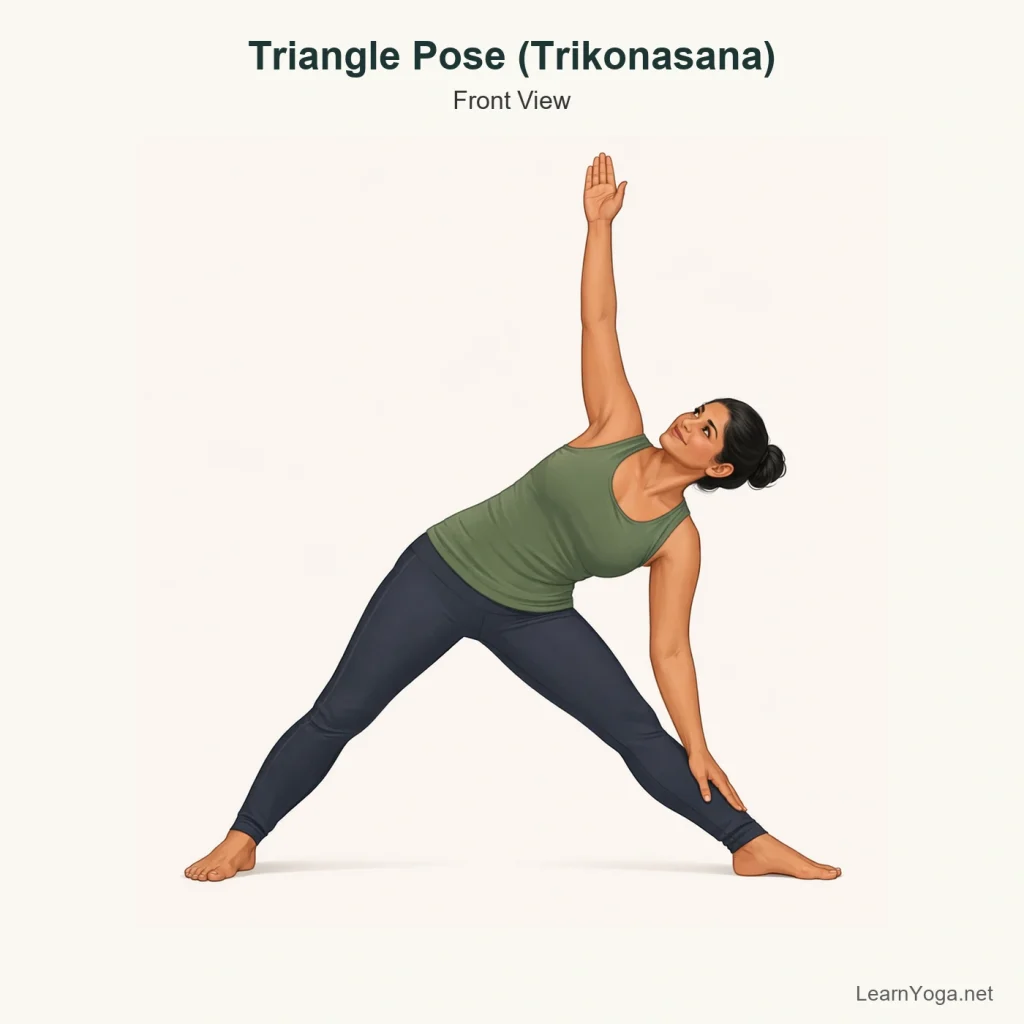
Begin in Triangle Pose with your right foot forward. Bend your right knee slightly and place your right hand a little in front of your right foot, on the floor or on a block.
Shift your weight into the right foot and lift your left leg until it reaches about hip height, keeping the left leg long and active.
Straighten the right leg as much as feels steady without locking the knee. Press down through the standing foot and let the standing hip stay firm rather than sinking sideways.
Stack the left hip over the right as much as your balance allows. Turn the chest open gently and extend the left arm upward if that feels comfortable for the shoulder and neck.
Keep the gaze forward, down, or up depending on what helps you stay balanced. Soften the face and breathe evenly for 3 to 5 breaths.
To come out, look down, bend the standing knee slightly, and step back to Triangle Pose or stand upright with control before changing sides.
Yogita's tip
If the standing leg feels wobbly, press the inner edge of that foot down as well as the outer heel. That usually stops the ankle from rolling and gives the lifted leg something more solid to reach from.
Benefits
Builds balance on one leg and helps you organise the standing foot and ankle.
Strengthens the outer hip and glutes of the standing leg.
Improves awareness of how the pelvis and ribcage move in relation to each other.
Creates length through the side body and back body while the chest opens.
Develops steadier focus because the pose asks for clear attention and measured breathing.
Common mistakes
Trying to lift the top leg too high and losing length through the spine.
Dumping weight into the lower hand instead of using the standing leg and core.
Locking the standing knee and pushing the pelvis forward.
Turning the chest open by twisting the neck more than the upper body.
Letting the lifted leg drift behind the body instead of reaching straight back from the hip.
Make it work for you
Block under the lower hand
Place a block under the lower hand at its tallest, medium, or lowest height. This reduces the reach to the floor and helps you keep more length in the standing side.
Back to wall
Practise with your back heel, top hip, and upper back lightly touching a wall. This gives feedback for the lifted leg and helps you learn the turning action without chasing balance.
Lower hand on shin-free setup
Instead of reaching toward the floor, keep the lower hand on a block well in front of the standing foot so the torso has room to lengthen. Avoid bracing directly on the standing knee.
Alternatives
Triangle Pose
Stay in Triangle Pose and work on pressing into both feet, lengthening the side body, and opening the chest without the added balance challenge.
Use this if balancing on one leg makes the pose too rushed or unstable.
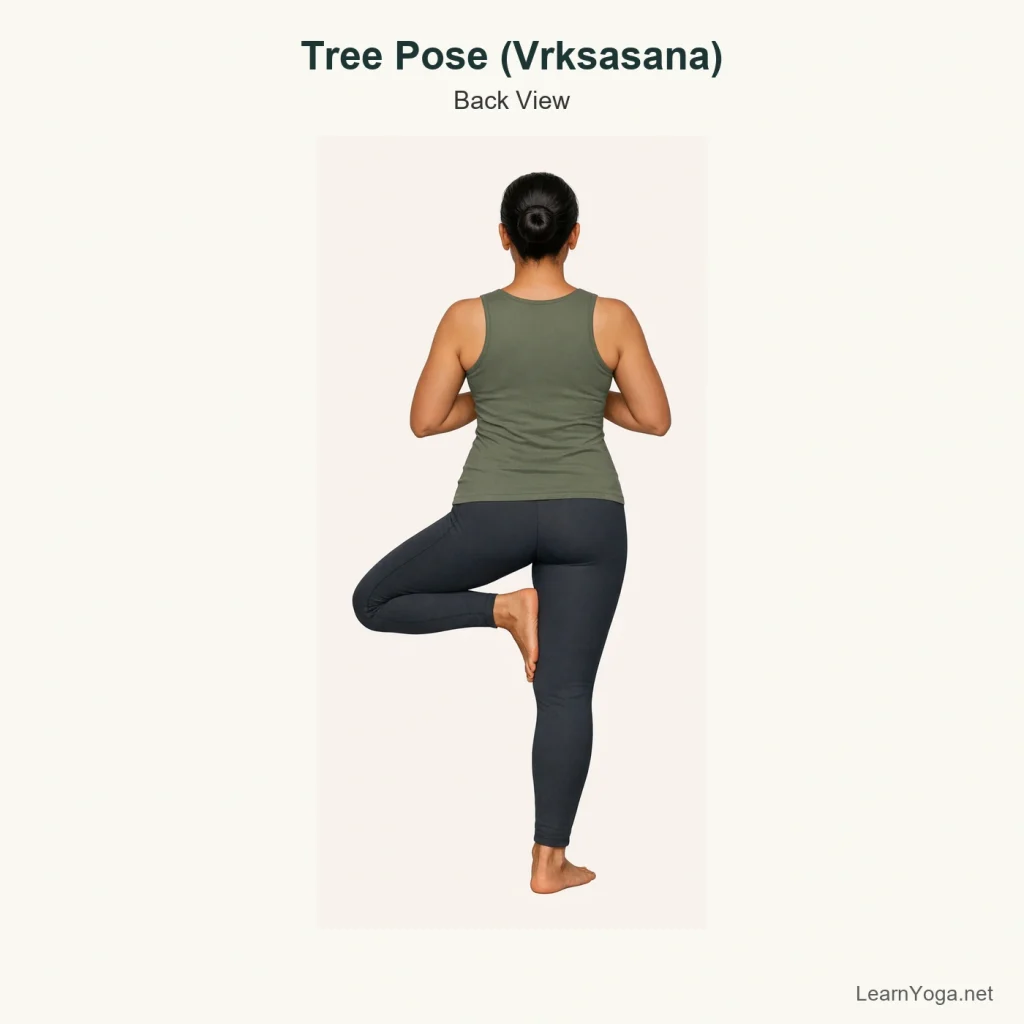
Tree Pose
Practise Tree Pose with one hand on a wall to build single-leg balance and pelvic control in a simpler shape.
Use this if the lifted-leg position in Half Moon feels too demanding.
Reclining Hand-to-Big-Toe Pose
Lie on your back and take one leg up with a strap, or open it slightly to the side. This lets you work with hamstring length and leg direction without balancing.
Use this if you want a supine option or if getting to the floor with a block is more manageable than standing balance.
Common variations
Supported Half Moon at the wall
The lifted foot or back body touches the wall to reduce the balance demand and clarify alignment.
Half Moon with lower hand on a block
A practical variation that raises the floor and helps maintain more space through the torso and standing leg.
Half Moon with top hand on hip
Keeping the top hand on the upper hip makes it easier to feel whether the pelvis is opening or rolling backward.
Safety and contraindications
When to avoid or get individual guidance
Skip or modify if you have a current ankle strain or are not confident bearing weight on one leg.
Use support or choose an alternative if you feel dizzy in standing balance.
If hamstring or outer-hip discomfort becomes sharp rather than workable, come out of the pose.
Use a block or wall if balance feels uncertain. That usually makes the pose safer and more useful.
Keep a small softness in the standing knee if locking the leg makes the ankle or hamstring feel strained.
If turning the chest upward bothers your neck, keep your gaze down or forward and leave the top hand on the hip.
Stop Half Moon and set up at a wall or with a block if sharp pain shows up in the standing ankle, hip, hamstring, or low back, or the balance feels too shaky to control safely. Get individual guidance before trying it again.
Accessibility and limited mobility
A wall and a block can make this pose much more workable for older adults or anyone who feels unsteady balancing in open space.
If reaching the floor changes your breathing or rounds your spine sharply, raise the lower hand on a block instead of trying to touch the ground.
For students who find standing balance difficult or tiring, Triangle Pose or Reclining Hand-to-Big-Toe Pose are often better choices.
If getting down to pick up a block is awkward, set the props in place before you begin or practise near a countertop for support.
Easier options
Use these related poses when you want a more accessible way to practise a similar movement or prepare for this pose.
No. For many people the floor is simply too far away in a balanced version of the pose. A block is often the better choice because it lets the spine stay longer and stops you from hanging into the lower side.
Why do I keep falling backward or forward?
Usually the weight has shifted too far into the heel or too far into the toes of the standing foot. Try pressing evenly through the standing foot and reach the lifted leg straight back, not up and back. A wall behind you can help you feel the line more clearly.
Does the top arm have to lift up?
No. You can keep the top hand on your hip. That often makes the pose steadier and helps you feel whether the pelvis is stacking without adding extra work for the shoulder or neck.
Where should I look in Half Moon Pose?
Choose the gaze that keeps your breath even. Looking down is often the steadiest option. Looking forward is a middle step. Looking up adds more challenge and is not necessary if it strains your neck or disturbs your balance.
What if my standing hamstring feels tight?
Keep a slight bend in the standing knee and use a higher block. That usually reduces the pull at the back of the leg and helps the pose spread more evenly through the hip, side body, and standing foot.
Reviewed for yoga instruction
Yogita
Certified Yoga Instructor with 5+ years of Teaching and Consistent Practice