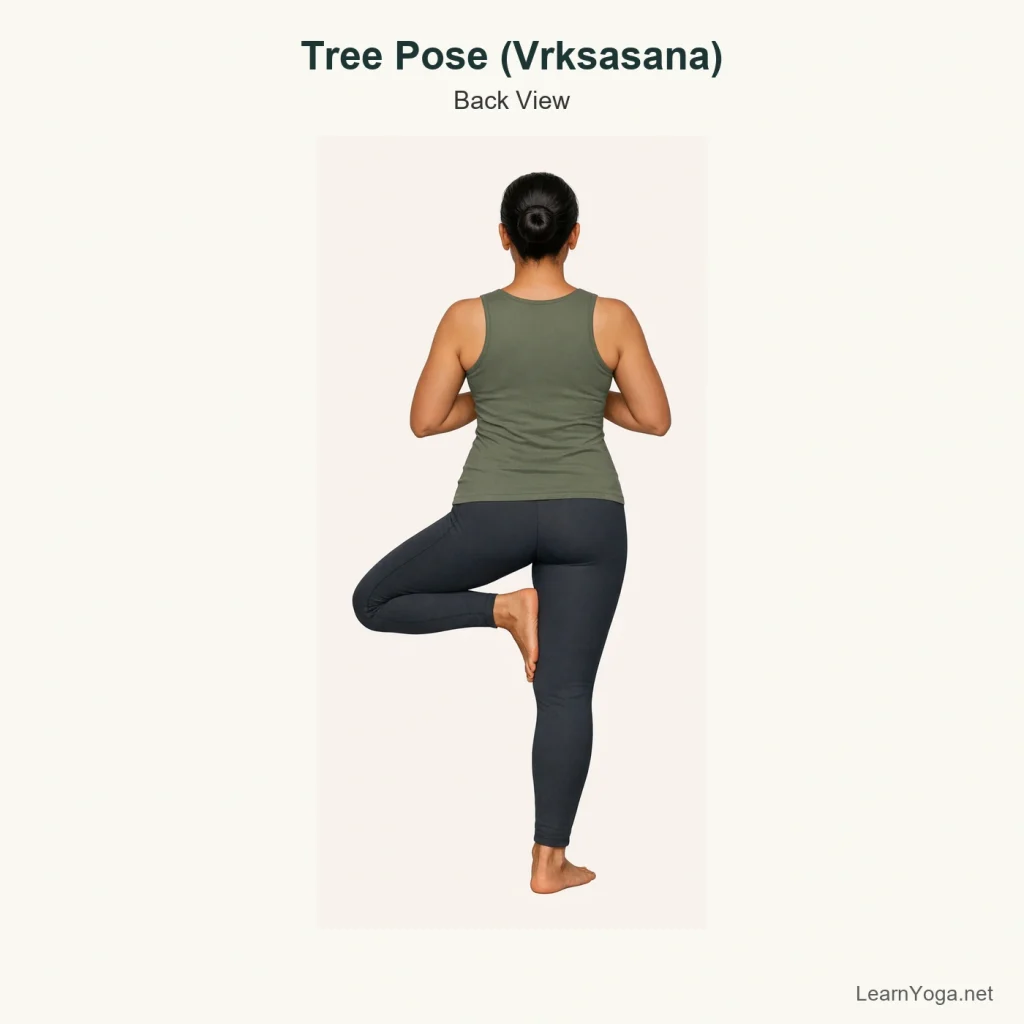
Tree Pose is a simple standing balance that asks one leg to stabilise while the other hip opens outward. It helps you organise the feet, pelvis and spine without needing a large range of motion.
Tree Pose can look still from the outside, but there is quite a lot happening in the standing foot and ankle. The pose is usually easier when you build it from the ground up rather than rushing to place the lifted foot high. Some people feel steady with the toes still touching the floor. Others are comfortable with the sole of the foot on the inner calf or inner thigh. There is no single correct height if the shape is stable and the knee is comfortable.
How to do Tree Pose
Stand in Mountain Pose and place your weight into one foot without locking that knee.
Spread the standing toes and feel the heel, base of the big toe and base of the little toe making contact with the floor.
Lift the other foot and place it lightly against the inner ankle, inner calf or inner thigh, avoiding direct pressure on the side of the knee joint.
Let the lifted knee turn out only as far as it can without twisting the standing knee or tipping the pelvis sideways.
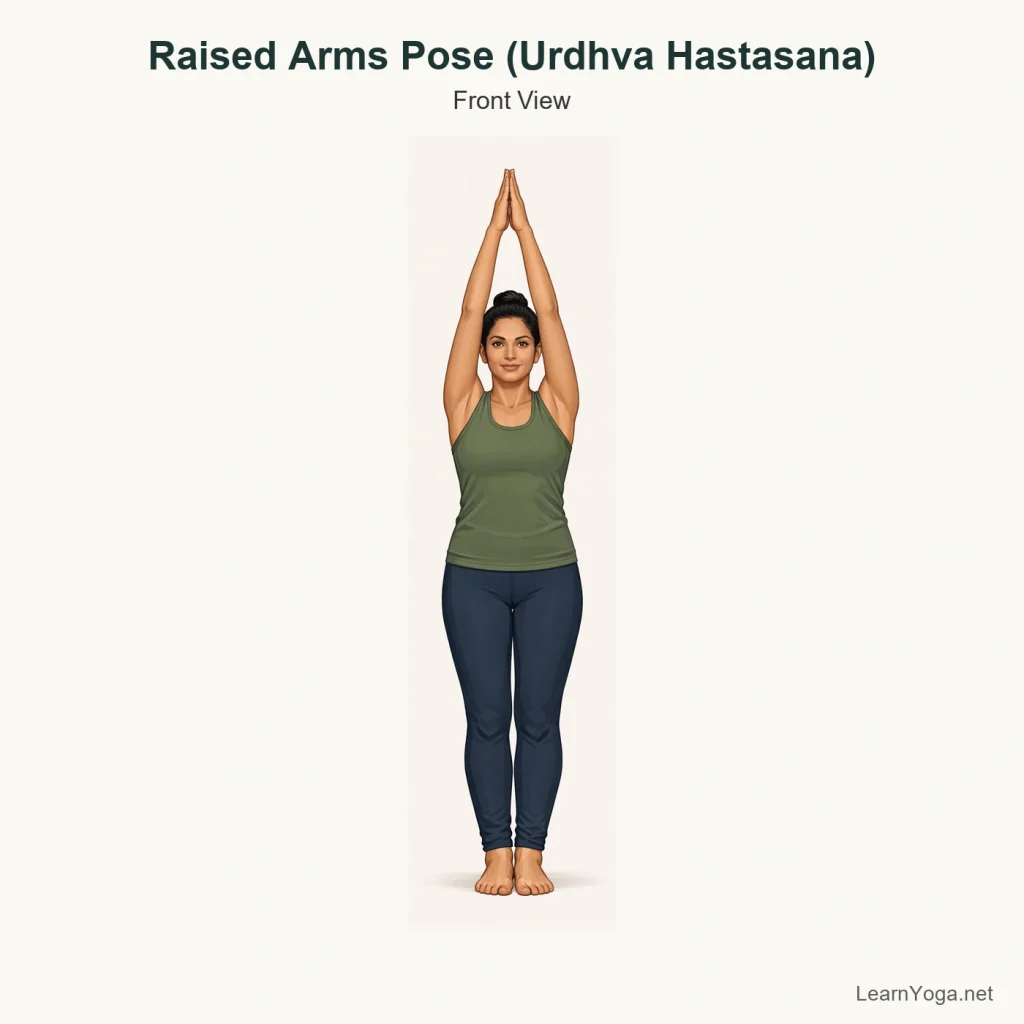
Bring your hands to Prayer Pose at the chest, or if you feel steady, reach the arms overhead.
Lengthen the spine upward and keep the front ribs easy rather than pushing them forward.
Hold for 3 to 6 breaths, keeping the jaw and face soft while the standing leg stays active.
To come out, lower the lifted foot with control, return to Mountain Pose and pause before changing sides.
Yogita's tip
If the lifted foot keeps sliding, press foot and inner leg into each other gently instead of forcing the knee farther open. That small two-way action usually makes the pose feel much steadier.
Benefits
Builds balance and awareness in the standing foot and ankle.
Strengthens the standing leg and outer hip in a practical, functional way.
Helps you notice how the pelvis and ribs shift when you stand on one leg.
Encourages upright posture without needing a deep backbend or large stretch.
Gives you a clear point of focus, which can make balancing less fussy.
Common mistakes
Placing the lifted foot directly against the side of the knee joint.
Locking the standing knee back and hanging into the joint.
Pushing the lifted knee open so far that the pelvis tilts or twists.
Leaning the torso to one side instead of stacking over the standing leg.
Looking around the room while trying to settle the balance.
Make it work for you
Toes down kickstand
Keep the toes of the lifted foot on the floor and rest the heel at the inner ankle. This reduces the balance demand while you practise the shape of the legs.
Wall support
Stand with one hand lightly on a wall or fingertips to the wall. Use only enough support to stop wobbling from becoming a struggle.
Hands at chest
Keep the hands in Prayer Pose rather than reaching them overhead if lifting the arms makes the ribs flare or the balance less steady.
Alternatives
Mountain Pose
Stay in Mountain Pose and practise shifting weight from one foot to the other without lifting the knee high.
Useful if full single-leg balance feels too unsteady today.
Chair-supported standing balance
Stand beside a chair and hold the backrest while placing one foot at the inner ankle or calf.
Useful if you want the balance work with less fear of falling.
Supine Figure Four
Lie on your back and cross one ankle over the opposite thigh instead of balancing upright.
Useful if getting steady on one leg is not comfortable, or if you want a non-standing option for the outer hip shape.
Common variations
Low Tree
The toes stay on the floor and the heel rests at the inner ankle. This is often the most workable starting version.
Tree with arms overhead
From the basic shape, the arms reach up beside the ears or slightly wider. This increases the balance challenge.
Tree with foot at inner thigh
The lifted foot presses into the inner thigh rather than the calf or ankle. This is a stronger version if the pelvis can stay level.
Safety and contraindications
When to avoid or get individual guidance
Recent ankle sprain or a flare of knee pain may make this pose less comfortable without support.
Skip the unsupported version if balance is very unsteady today.
Avoid pressing the lifted foot directly into the side of the knee.
Use wall support if balance is unreliable or if you feel likely to step out suddenly.
If the standing ankle or knee feels strained, lower the lifted foot and choose a smaller version.
Pause Tree Pose and lower the lifted foot when sharp ankle or knee pain keeps showing up, or when balance feels so unreliable that you might fall even with a wall or other support. Get individual guidance before trying it again.
Accessibility and limited mobility
Practising with a wall, countertop or sturdy chair nearby can make the pose more accessible for older adults or anyone who feels unsure about balance.
If hip rotation is limited, keep the lifted foot low at the ankle or calf rather than forcing it higher.
If standing for long is tiring, hold for only 1 to 2 breaths at a time and repeat more than once instead of staying up longer.
Easier options
Use these related poses when you want a more accessible way to practise a similar movement or prepare for this pose.
Anywhere that lets you stay steady without pressing into the knee joint is fine. Common options are the inner ankle, inner calf or inner thigh. A lower placement is not a lesser version if it helps you organise the pose well.
Why do I wobble more on one side?
That is very common. Most people have one side that feels more practiced or more responsive in the foot, hip or eyes. Use the less steady side as information rather than a problem, and work with a wall if needed.
Should the lifted knee turn out as much as possible?
No. Let the knee open only as far as the hip allows while the pelvis stays fairly level and the standing leg feels stable. Forcing more turnout often makes the balance worse and can make the standing knee work harder than necessary.
Is it better to keep the hands at the chest or lift them up?
Hands at the chest usually make the pose easier to organise. Reaching the arms overhead adds more balance demand and can also make the ribs push forward. Choose the arm position that lets you breathe evenly and stay tall through the spine.
Reviewed for yoga instruction
Yogita
Certified Yoga Instructor with 5+ years of Teaching and Consistent Practice