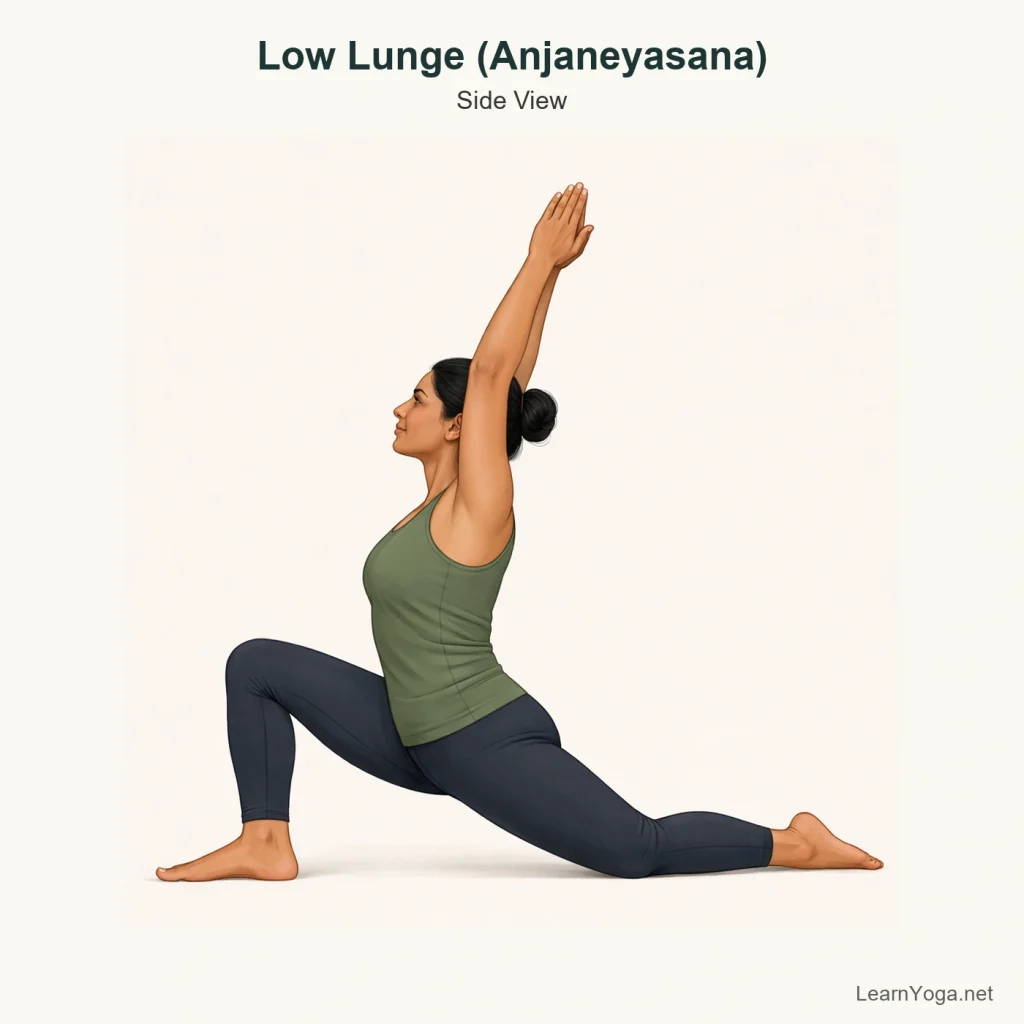
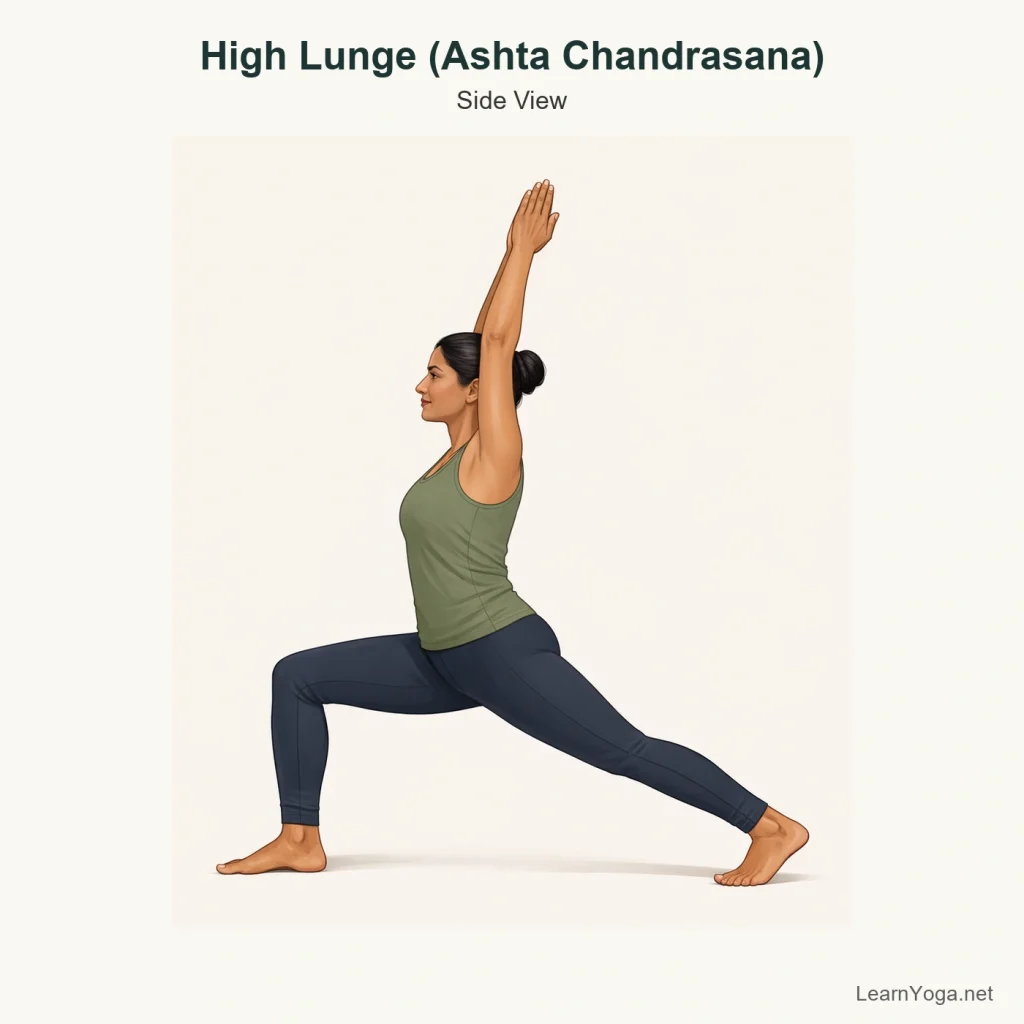
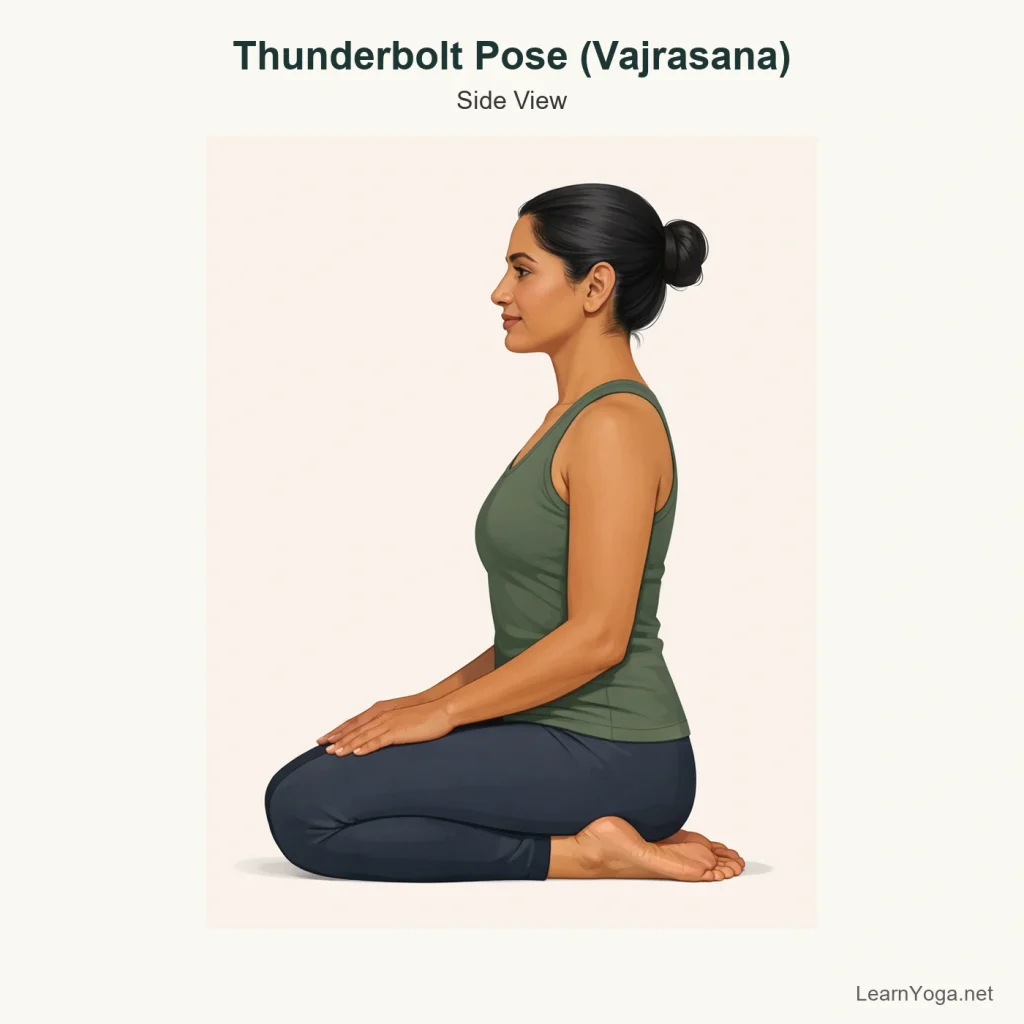
Kneeling Crescent Pose is a low lunge variation that opens the front of the back hip while giving you a clear chance to organise the pelvis, ribs and arms.
This pose often looks simple, but the useful work is in how you arrange it. The front foot grounds, the back knee supports you, and the pelvis moves forward only enough to create a clear stretch through the front of the back hip and thigh. Some people feel plenty here with the hands on the front thigh. Others can comfortably lift the arms. There is no need to force a deeper lunge.
How to do Kneeling Crescent Pose
Start in a low kneeling lunge with your front foot planted and your back knee on the floor. Place your front knee roughly over the ankle.
Press the front foot down and let the back shin rest heavily. Draw the lower belly in lightly so the front ribs do not spill forward.
Bring your hands to your front thigh first and lift your chest. Stay here, or raise both arms overhead with the palms facing each other.
On an inhale, grow taller through both sides of the waist. On an exhale, ease the pelvis slightly forward until you feel a stretch at the front of the back hip or thigh.
Keep the back of the neck easy and the shoulders soft. You can look forward or slightly up if that feels comfortable.
Stay for 3 to 6 breaths. To come out, lower the hands, shift the hips back a little, and change sides.
Yogita's tip
If the pose feels like a backbend more than a hip stretch, draw your front lower ribs in a touch. That small change usually brings the sensation back toward the front of the back hip.
Benefits
Gently stretches the front of the back hip and thigh.
Builds awareness of pelvic position and rib control in a lunge shape.
Can help you practise lifting the chest without losing support through the legs.
Warms the hips and legs for standing poses and longer lunges.
Common mistakes
Pushing the hips far forward and losing steadiness in the lower back.
Letting the front knee slide well past the ankle without control.
Shrugging the shoulders up toward the ears when the arms lift.
Collapsing into the back knee instead of sharing the work between the front foot and back shin.
Forcing the backbend rather than lengthening up first.
Make it work for you
Hands on thigh
Keep both hands on the front thigh instead of lifting the arms. This makes it easier to organise the pelvis and stay steady through the trunk.
Blanket under back knee
Place a folded blanket under the back knee for cushioning if the floor feels too firm.
Smaller lunge
Shift the hips less far forward and keep the pelvis more directly over the back knee if the front of the hip feels too intense or the lower back starts to grip.
Alternatives
Half Splits Pose
Straighten the front leg and shift the hips back for a hamstring-focused shape with less demand on the back knee.
Use this if kneeling lunge irritates the back knee or if you want a gentler transition on the floor.
Low Lunge
Practise the same base shape with the hands on the floor or on blocks beside the front foot.
Use this if lifting the torso upright feels unsteady.
Kneeling Quad Stretch
Take a more focused stretch for the back thigh with added support rather than pushing deeper into the lunge.
Use this if you are mainly looking for more sensation along the front of the back thigh.
Common variations
Arms overhead variation
The classic upright version with both arms reaching up while the chest stays lifted and the ribs remain contained.
Prayer hands at chest
A steadier option that keeps the torso upright without adding shoulder work.
Gentle backbend variation
From the upright shape, the upper chest lifts slightly more while the pelvis stays anchored and the lower back stays long.
Safety and contraindications
When to avoid or get individual guidance
Recent irritation in the kneeling knee may make this pose uncomfortable.
Skip the deeper version if the front of the hip or lower back feels pinchy.
Use padding under the back knee if kneeling is uncomfortable.
Keep the lunge in a range where the lower back feels long rather than compressed.
If lifting the arms strains the shoulders or neck, keep the hands on the front thigh.
If this pose consistently causes sharp pain in the knee, front hip, or lower back, stop and get individual guidance before repeating it.
Accessibility and limited mobility
A folded blanket under the back knee can make the pose much more workable on a hard floor.
If getting up and down from the floor is difficult, choose a shorter hold and use nearby support when transitioning.
Older adults or anyone with limited balance may find it easier to keep the hands on the front thigh rather than lifting the arms.
If overhead reaching is limited, keep the hands at the hips or on the thigh and work on the lower-body shape first.
Easier options
Use these related poses when you want a more accessible way to practise a similar movement or prepare for this pose.
Does my front knee need to make a perfect right angle?
No. That can be a useful reference, but exact angles vary with leg length and comfort. More important is that the front foot feels grounded and the knee tracks in a comfortable line over the foot.
Where should I feel the stretch in this pose?
Many people feel it most clearly at the front of the back hip or along the back thigh. You may also notice work in the front leg and some lift through the chest. If you mainly feel a jam in the lower back, make the lunge smaller and lift up through the waist first.
Do I have to lift my arms overhead?
Not at all. Hands on the front thigh is often the better starting point because it gives you feedback for balance and helps you organise the pelvis. Add the arms only if the shape stays easy through the neck and lower back.
What if my back knee hurts on the floor?
First add a folded blanket under the knee. If that is not enough, reduce how far forward you shift the hips. You can also choose Low Lunge with the hands supported, or move to Half Splits instead.
Reviewed for yoga instruction
Yogita
Certified Yoga Instructor with 5+ years of Teaching and Consistent Practice