Eagle Arms Stretch wraps one arm under the other to spread the space across the upper back and work into the shoulders. It is a simple shape, but it feels clearer when the elbows stay roughly in front of the chest and the shoulders do not creep up.
Beginnerseatedarmsshouldersupper-backNeutral
Typical hold: 3 to 6 breaths per side
Timing: 3 breaths per side · 5 breaths per side · 20 to 30 seconds per side
This arm position is often used on its own or inside Eagle Pose. Practised separately, it gives you time to organise the shoulders without worrying about balance. Some bodies will bring the palms together easily, while others will stay with the backs of the hands touching or simply hugging the shoulders. Any of those versions can work well.
How to do Eagle Arms Stretch
Sit or stand tall with your spine neutral and your ribs easy.
Reach both arms forward at shoulder height.
Slide your right arm under your left and bend both elbows.
Either bring the backs of the hands together, press palm to palm, or hold opposite shoulders if that is the comfortable range today.
Lift the elbows to about shoulder height, or a little lower if your neck feels crowded.
Gently move the hands away from the face so the forearms stack more upright.
Take 3 to 6 steady breaths, feeling the upper back widen on each inhale and the shoulders soften down on each exhale.
Release slowly and repeat with the left arm underneath.
Yogita's tip
If the stretch disappears and your wrists feel tangled, move your elbows a little farther away from your chest. That small reach usually brings the work back into the upper back and outer shoulders.
Benefits
Creates a clear stretch across the upper back and the back of the shoulders.
Gives gentle mobility work to the shoulder blades and arms.
Can help you notice when the shoulders tend to lift or round forward.
Works well as a brief break from desk work or before poses that use the shoulders more strongly.
Common mistakes
Pulling the elbows too high and tightening the neck.
Forcing the palms together when the shoulders or wrists are not ready for that range.
Letting the ribs thrust forward instead of keeping the trunk steady.
Pressing into the bind so strongly that the breath becomes shallow.
Make it work for you
Backs of Hands Together
If palm-to-palm is not available, place the backs of the hands together and keep the elbows in line with the shoulders as much as is comfortable.
Shoulder Hug
Cross the arms and place each hand on the opposite shoulder. This gives a similar upper-back shape with less demand on the wrists and shoulders.
Lower Elbows
Keep the elbows a little below shoulder height if your neck feels tight or the tops of the shoulders start gripping.
Alternatives
Prayer Pose
Bring the palms together at the chest and keep the shoulders broad.
Use this if the wrapped arm position feels too restricted or irritating in the wrists.
Cow Face Arms
Take one elbow up and one elbow down, using a strap if needed.
Use this if you want shoulder work in a different direction from Eagle Arms.
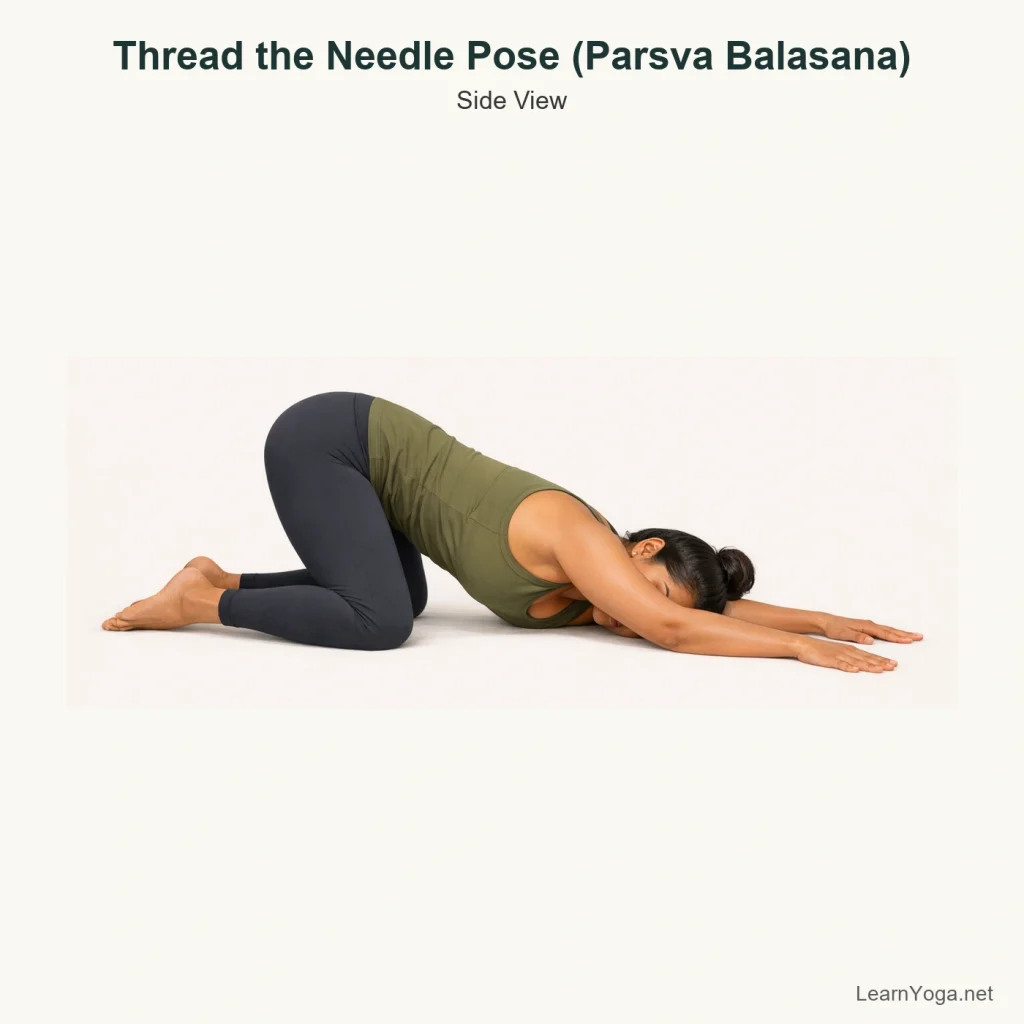
Thread the Needle Pose
From hands and knees, slide one arm under the other and rest on the shoulder and side of the head.
Use this if you prefer a floor-based twist and shoulder stretch rather than a wrapped arm bind.
Common variations
Eagle Arms in Chair Pose
The arm bind is kept while sitting back into Chair Pose, adding leg work and balance demand.
Seated Eagle Arms
The same arm position is practised while sitting on a chair or on the floor so the trunk can stay steady.
Eagle Arms with Forward Reach
From the wrapped arms, the elbows and hands reach slightly forward to broaden the shoulder blades more clearly.
Safety and contraindications
When to avoid or get individual guidance
Recent shoulder or wrist irritation may make the full wrap uncomfortable.
Skip the stronger bind if it causes pinching at the front of the shoulder.
Keep the neck easy and lower the elbows if the tops of the shoulders start to bunch up.
If the wrists feel strained, use the backs-of-hands version or hold opposite shoulders instead of pressing palm to palm.
Stay in a range where you can breathe smoothly rather than pulling into the bind.
If this movement repeatedly causes sharp pain, tingling or lingering strain in the shoulder, arm or wrist, stop and get individual advice before practising it again.
Accessibility and limited mobility
This shape can be done seated on a chair, which is useful if standing for long is tiring or balance is limited.
If getting the palms together is not realistic, use the backs of the hands or hold opposite shoulders instead.
For older adults or anyone with a stiff upper back, a shorter hold with easy breathing usually works better than trying to create a deeper bind.
Easier options
Use these related poses when you want a more accessible way to practise a similar movement or prepare for this pose.
That is very common. You can press the backs of the hands together or simply hold opposite shoulders. The pose still works well when the upper back broadens and the neck stays relaxed.
Should my elbows be as high as possible?
No. Elbows around shoulder height are enough for most people. If lifting them higher makes your neck tighten or your shoulders creep toward your ears, lower them a little.
Why do I feel this more in my upper back than in my shoulders?
That usually means the shoulder blades are spreading well, which is part of the pose. Depending on your build and range, some people feel a stronger stretch across the upper back, while others notice more around the back of the shoulders.
Can I practise Eagle Arms while sitting in a chair?
Yes. Sitting can make the shape easier to organise because you do not have to think about balance. Sit upright with both feet grounded and wrap the arms in the same way.
Reviewed for yoga instruction
Yogita
Certified Yoga Instructor with 5+ years of Teaching and Consistent Practice