Easy Pose is a simple cross-legged seat used for breathing, meditation and quiet pauses in practice. The shape is straightforward, but it is usually more comfortable when the pelvis is slightly elevated and the knees are allowed to settle in their own range.
Beginnerseatedhipskneeslower-backspineCalming
Typical hold: 1 to 5 minutes
Timing: 5 slow breaths · 1 minute · 3 to 5 minutes for seated breath or meditation practice
Easy Pose is less about forcing the legs into a neat cross and more about finding a steady seat you can stay with. For some bodies that means sitting on a folded blanket or block straight away. The aim is a natural lift through the spine without gripping in the lower back or hard work in the hips.
How to do Easy Pose
Sit on the floor, a folded blanket or a cushion, and cross your shins in a relaxed way.
Let each foot rest under the opposite knee rather than pulling the feet very close in.
Place your hands on your thighs or knees and sit evenly on your sitting bones.
If your lower back rounds, raise your seat until the pelvis can tip slightly forward.
Soften your shoulders, let the front ribs stay easy, and lengthen through the back of the neck.
Stay for 5 slow breaths or longer, then uncross the legs and cross them the other way if you are sitting for more than a short pause.
Yogita's tip
If one knee always floats much higher than the other, try crossing the opposite shin in front next time. Many people have a clearly easier side, and simply changing which leg is in front can make the seat feel much more even.
Benefits
Gives you a stable seat for breath awareness, meditation or a quiet start to practice.
Encourages a gentle upright spine without the balance demands of standing poses.
Offers a mild opening through the outer hips, depending on your natural range.
Can help you notice when the shoulders, jaw or belly are holding more effort than needed.
Common mistakes
Sitting so low that the pelvis tucks under and the lower back rounds heavily.
Pulling the feet too close to the groin and turning the pose into a stronger hip shape than intended.
Forcing the knees down instead of letting them rest where they naturally land.
Lifting the chest by flaring the ribs and tightening the lower back.
Staying on one cross of the legs for a long sit and ending up noticeably uneven.
Make it work for you
Sit on a folded blanket
Place one or more folded blankets under your sitting bones so the knees can drop below or closer to hip height.
Support under the thighs
Slide blocks, cushions or folded blankets under one or both outer thighs if the legs feel strained while you sit.
Back support at the wall
Sit with your back lightly touching a wall, or with a small space behind you, if holding yourself upright becomes tiring.
Alternatives
Chair seat
Sit toward the front of a chair with both feet flat on the floor and hands on your thighs.
Use this if getting to the floor is difficult or if crossing the legs irritates the hips or knees.
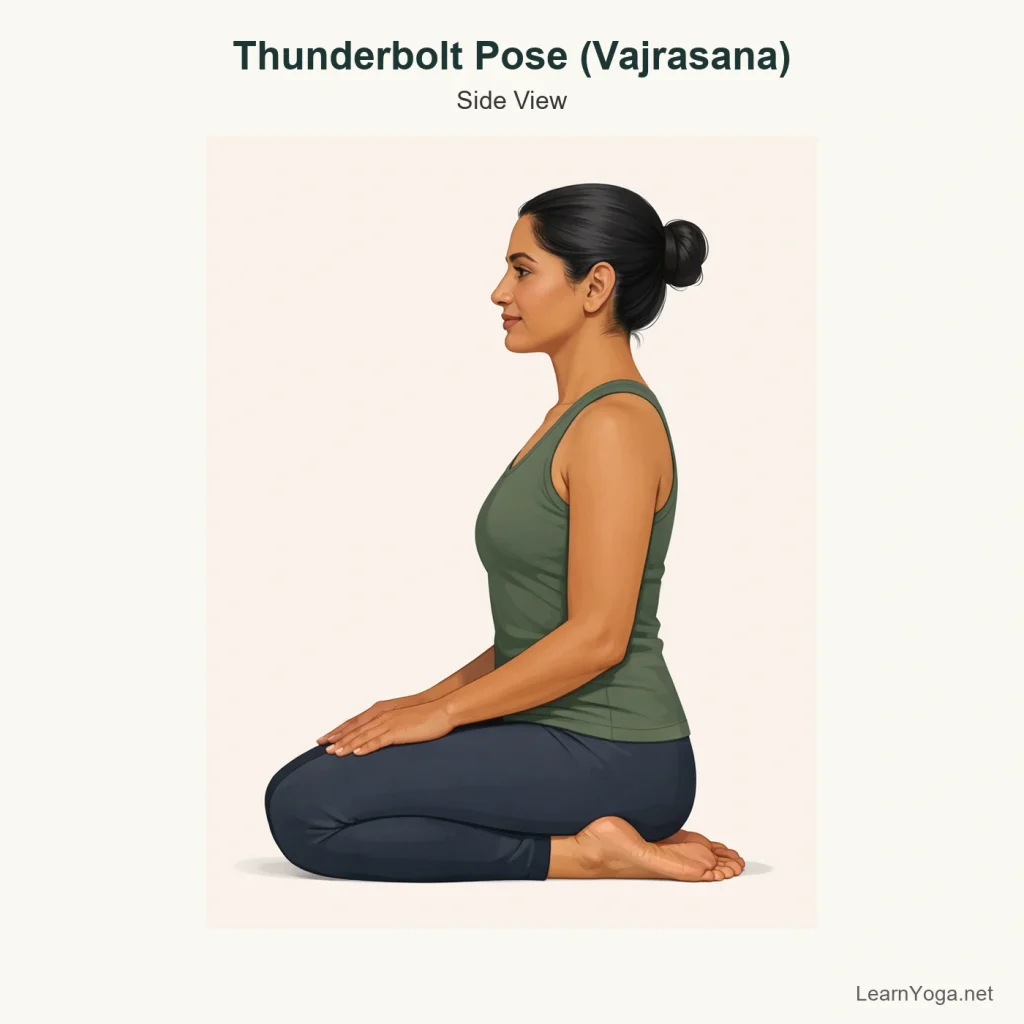
Thunderbolt Pose
Sit on your heels or on a block placed between the feet.
Use this if cross-legged sitting is uncomfortable but kneeling feels fine.
Constructive Rest Pose
Lie on your back with knees bent and feet on the floor if you want a quiet breathing position without sitting upright.
Use this when the back, hips or legs need less load.
Common variations
Elevated Easy Pose
Sitting on a blanket, bolster or block to make the pelvis more neutral and reduce effort in the hips and lower back.
Easy Pose at the Wall
A lightly supported version with the back near a wall for longer breathing or meditation practice.
Hands in Prayer
The same seated base with palms together at the chest for a steadier focus point.
Safety and contraindications
When to avoid or get individual guidance
Recent or irritated knee or hip pain may make cross-legged sitting uncomfortable.
Numbness or tingling in the legs is a sign to come out, shift position or choose a chair.
Keep the pose easy enough that the knees and hips feel quiet rather than pulled on.
If the lower back rounds and becomes tired quickly, raise the seat or lean lightly into wall support.
Change the cross of the legs when sitting for longer than a brief hold.
If simple cross-legged sitting repeatedly causes sharp knee or hip pain, or numbness that does not settle when you change position, pause and get individual advice before continuing with seated floor poses.
Accessibility and limited mobility
A higher seat is often the most useful change for older adults or anyone with tight hips or a rounding lower back.
If getting down to the floor or back up again is not practical, take the same upright shape on a chair.
Support under the thighs can make a noticeable difference if the knees stay high or the hip muscles grip continuously.
Easier options
Use these related poses when you want a more accessible way to practise a similar movement or prepare for this pose.
No. Some people sit with the knees quite low, while others do not. What matters more is that the knees feel comfortable and the spine can stay upright without strain. Sitting on support often helps.
Why does my lower back get tired so quickly here?
That usually means the pelvis is tipping backward and the back muscles are doing too much work. Try sitting on a folded blanket, block or cushion so the hips are slightly higher than the knees.
How close should my feet be to my body?
In Easy Pose, a softer cross is usually better than pulling the heels in tightly. Let the feet rest comfortably under the opposite knees so the shape stays gentle rather than becoming a deep hip opener.
Do I need to change the cross of my legs?
If you are only there for a few breaths, it is not essential. For a longer seated practice, it is sensible to switch the cross halfway through so the hips and knees are not loaded the same way the whole time.
Reviewed for yoga instruction
Yogita
Certified Yoga Instructor with 5+ years of Teaching and Consistent Practice