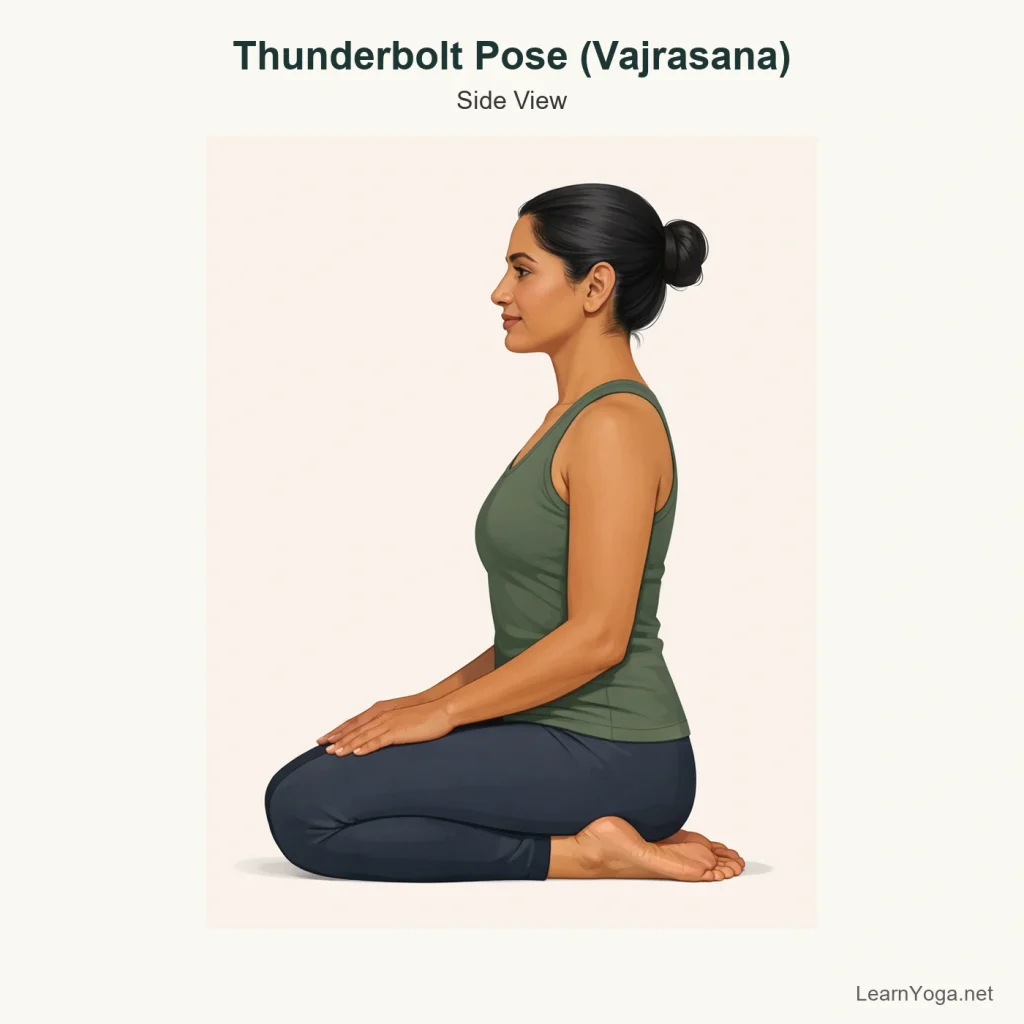
Bound Angle Pose is a seated hip-opening posture with the soles of the feet together and the knees opening out to the sides. It is often more comfortable when the spine stays upright and the legs are supported rather than pushed down.
This pose works best when you stop trying to make the knees reach the floor. The useful part is usually the steady shape of the pelvis, spine and hips, not the depth. For some bodies it feels quite open. For others, sitting higher or keeping the feet farther forward makes all the difference.
How to do Bound Angle Pose
Sit on the floor with your legs extended in front of you.
Bend your knees and bring the soles of your feet together, letting the knees open out to the sides.
Hold your feet or ankles lightly, or place your hands on the floor beside you if that helps you sit more upright.
Adjust the distance of your feet from your pelvis. Closer in is not always better; move them farther away if your back rounds or your knees feel strained.
Lift through the centre of the chest and let the shoulders soften away from the ears.
Stay upright, or if there is room, hinge forward a little from the hips rather than collapsing from the waist.
Breathe evenly for 5 to 8 slow breaths or up to 2 minutes with support.
To come out, use your hands to help the knees draw toward each other, then extend the legs forward.
Yogita's tip
If the pose feels stuck in your lower back, slide the feet a little farther away from you. That often gives the pelvis enough room to tip forward and makes the hip opening feel clearer.
Benefits
Gently opens the inner thighs and hips.
Can help you practise sitting upright with less gripping in the shoulders and jaw.
Offers a simple seated shape for slower breathing and settling at the end of practice.
Helps you notice the difference between hip movement and pulling at the knees.
Common mistakes
Pulling the feet in so close that the spine rounds and the groins feel pinched.
Pressing the knees down with the hands.
Forcing a forward fold from the waist instead of hinging from the hips.
Holding the breath while trying to deepen the pose.
Letting the shoulders tense as you grip the feet.
Make it work for you
Sit on a folded blanket
Place one or more folded blankets under your sitting bones. The small lift can make it easier to tip the pelvis forward and sit with a longer spine.
Support the thighs
Place blocks, cushions or folded blankets under the outer thighs or knees so the legs do not have to hang in space.
Diamond shape
Move the feet farther away from the pelvis so the legs make a wider diamond. This usually reduces the pull at the knees and groins.
Alternatives
Easy Pose
Sit cross-legged with support under the hips if needed and keep the hands on the knees or thighs.
Use this if bringing the soles of the feet together bothers the knees or feels too awkward today.
Reclining Bound Angle
Lie back with the soles of the feet together and place support under the thighs if needed.
Use this if sitting upright is tiring or if you want a quieter version with less work through the back.
Constructive Rest Pose
Lie on your back with knees bent and feet on the floor, letting the spine settle.
Use this if getting into a seated hip opener is not comfortable or getting down to the floor needs to stay simple.
Common variations
Upright Bound Angle
The classic version with the spine tall and the hands holding the feet or resting beside the hips.
Forward-Folding Bound Angle
A deeper variation where the torso tips forward from the hips while the spine stays as long as is comfortable.
Supported Bound Angle
A gentler version using props under the thighs or under the sitting bones to reduce effort and strain.
Safety and contraindications
When to avoid or get individual guidance
Recent or irritated knee, groin or hip pain may call for extra support or a different seated position.
Skip the forward-folding version if it strains your lower back.
Keep the movement in a comfortable hip range rather than pushing the knees down.
If the lower back rounds strongly, sit on support or move the feet farther forward.
Come out slightly if you feel pinching at the front of the hips or pulling at the inner knee.
Stop and ease out if Bound Angle Pose brings on sharp pain in the knee, groin, or hip, or leaves soreness that lingers after you come up. Use a gentler variation or get individual guidance before trying it again.
Accessibility and limited mobility
Sitting on a folded blanket, bolster or firm cushion often makes this pose much more accessible for people with tight hips or a rounded lower back.
If getting to the floor is difficult, choose a supported seated position on the edge of a firm bed or a sturdy padded surface, or use Easy Pose instead if that is more manageable.
Support under the thighs can be especially helpful for older adults or anyone whose legs feel heavy in the shape.
Easier options
Use these related poses when you want a more accessible way to practise a similar movement or prepare for this pose.
What if my knees stay very high in Bound Angle Pose?
That is completely normal for many bodies. High knees do not mean you are doing the pose wrongly. Sit on a folded blanket and place support under the thighs if needed. Over time the pose often becomes steadier, but there is no need to force it.
Should I keep my feet close to my pelvis?
Not necessarily. Bringing the feet very close can make the pose feel stronger, but it can also round the back or create pressure at the knees. If that happens, move the feet farther away and make a wider diamond shape with the legs.
Is it better to stay upright or fold forward?
For many people, upright is the better place to start. If you can keep length through the front of the body and hinge from the hips, a small forward lean may feel good. If the fold makes your back round or your knees complain, stay upright.
Where should I feel this pose?
Usually you will notice it through the inner thighs, groins and outer hips. You may also feel some work in the back as you sit upright. You should not feel sharp pulling at the inside of the knees.
Can I use this pose for breathing practice?
Yes, if the seat is comfortable enough that you are not bracing. Try 5 to 8 smooth breaths, letting the belly soften on the inhale and the inner thighs release a little on the exhale. If sitting is distracting, use support or choose Reclining Bound Angle instead.
Reviewed for yoga instruction
Yogita
Certified Yoga Instructor with 5+ years of Teaching and Consistent Practice