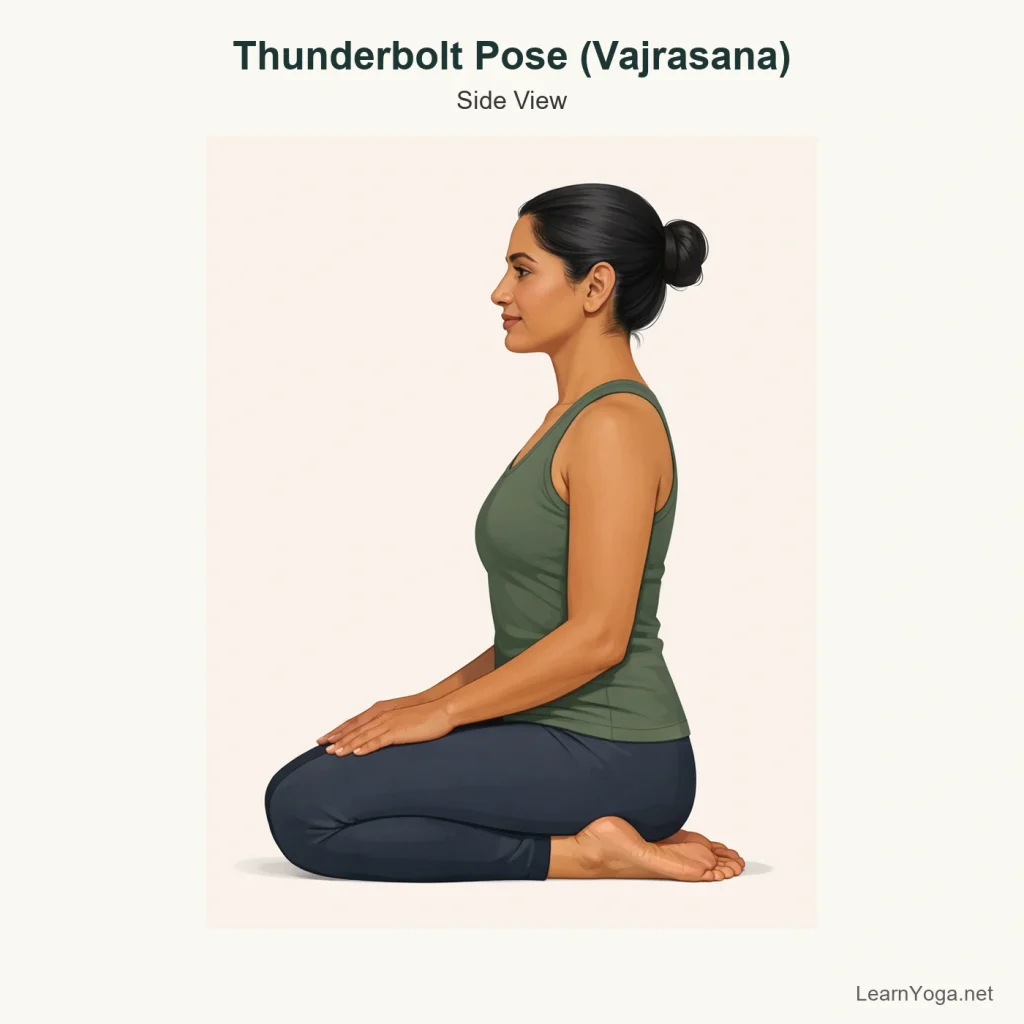
Staff Pose is a simple seated foundation that helps you organise the legs, pelvis and spine. It can look easy, but for many bodies it is clearer and more comfortable with a folded blanket under the hips.
Staff Pose gives you a reference point for many seated postures. Instead of trying to sit as upright as possible at any cost, look for a shape where the sitting bones feel grounded, the legs are active without becoming rigid, and the chest can stay easy. For some people that means sitting directly on the floor. For others, a little height under the hips makes the pose much more workable.
How to do Staff Pose
Sit on the floor with both legs extended straight in front of you and the feet about hip-width apart or together, whichever lets the legs feel even.
Place your hands on the floor beside your hips or slightly behind you and press down lightly to help lift through the spine.
Flex the feet gently so the toes point up, and reach through the heels without locking the knees hard.
Let the thigh bones settle down while you tip the pelvis just enough to sit on the front edge of the sitting bones.
Draw the lower ribs in softly, widen across the collarbones, and keep the back of the neck long rather than jutting the chin forward.
Stay for 4 to 8 slow breaths. On each inhale, lengthen up through the crown of the head. On each exhale, keep the jaw, throat and shoulders from tightening.
To come out, soften the legs and either shake them out or bend the knees.
Yogita's tip
If you keep sliding back onto the tailbone, sit on a folded blanket before trying to straighten the legs more. In this pose, a small lift under the hips often gives a clearer spine straight away.
Benefits
Builds awareness of upright seated alignment.
Gently engages the legs and lower belly to support a steadier seat.
Offers a clear starting position for many seated forward bends and twists.
Can help you notice whether tight hamstrings are pulling the pelvis backward.
Common mistakes
Rounding the lower back and collapsing behind the sitting bones.
Forcing the knees straight so the legs become hard and the breath gets tight.
Leaning too far back into the hands instead of using them lightly for support.
Lifting the chest by flaring the ribs and gripping the lower back.
Pulling the toes back aggressively and creating strain in the calves or behind the knees.
Make it work for you
Folded blanket under the hips
Sit on one or more folded blankets so the pelvis can tip forward more easily. This often makes it easier to sit upright without forcing the spine.
Bent-knee Staff Pose
Bend the knees a little and place the feet on the floor if straight legs pull the lower back into a slump. Keep the spine long first, then gradually work toward more leg extension.
Hands slightly behind the hips
Place the fingertips on the floor behind you and press gently down if sitting upright without support is difficult. Keep the chest broad and avoid dropping heavily into the arms.
Alternatives
Easy Pose
Sit cross-legged on a folded blanket with the hands on the thighs and find the same long spine and relaxed shoulders.
Use this if straight-leg sitting is uncomfortable in the hamstrings or lower back.
Constructive Rest
Lie on your back with knees bent and feet on the floor, then lengthen the back of the neck and let the ribs settle.
Use this if getting upright on the floor is tiring or if seated posture work feels too effortful today.
Common variations
Blanket-Supported Staff Pose
The hips are raised on folded blankets to reduce the pull on the hamstrings and help the pelvis tip forward.
Feet Hip-Width Apart
Instead of keeping the inner legs together, the feet are placed hip-width apart to make the seat feel more stable.
Bent-Knee Variation
The knees stay softly bent while the focus remains on the upright spine and grounded sitting bones.
Safety and contraindications
When to avoid or get individual guidance
Recent hamstring strain may make straight-leg sitting uncomfortable.
Irritated lower back symptoms can be aggravated if you force an upright seat without support.
Keep the knees softly active rather than jammed straight.
If the lower back rounds strongly, raise the hips or bend the knees a little.
Back off if you feel sharp pulling behind the knees or at the hamstring attachments.
If simple seated positions repeatedly cause sharp back pain, strong pain behind the knees, or numbness that does not settle when you change position, pause and get individual advice before continuing.
Accessibility and limited mobility
A folded blanket or low cushion under the hips is often useful for older adults or anyone with limited hamstring length.
If getting down to the floor is difficult, practise the same upright sitting action near the front edge of a firm chair with both feet grounded.
If straightening both knees fully is not comfortable, keep a soft bend in them rather than forcing the legs flat.
Easier options
Use these related poses when you want a more accessible way to practise a similar movement or prepare for this pose.
Often the hamstrings are pulling the pelvis backward, which makes the lower back round. Sitting on a folded blanket usually helps more than forcing the chest up. A small bend in the knees can help as well.
Should my knees touch the floor?
Not necessarily. The aim is not to pin the legs down but to sit with steady support through the legs while the spine can lengthen. Different bodies will show the pose differently.
What should I feel in Staff Pose?
You may feel light work in the fronts of the thighs, a gentle stretch along the backs of the legs, and a clear sense of lift through the spine. You should not feel sharp pulling behind the knees or strain in the lower back.
Is it better to keep the feet together or apart?
Either can work. Feet together gives a more classic shape, but feet hip-width apart can make the pelvis and legs feel more even. Choose the version that lets you sit upright without gripping.
Reviewed for yoga instruction
Yogita
Certified Yoga Instructor with 5+ years of Teaching and Consistent Practice