Boat Pose builds a clear, compact kind of core strength while asking you to balance on the sitting bones with an upright chest. The shape is usually more useful when it is a little smaller and steadier, rather than taken to the biggest version possible.
Boat Pose is one of those postures where a few careful adjustments matter more than willpower. You are balancing, lifting the legs and organising the trunk all at once, so it helps to work in a range where the spine can stay long. For some bodies that means bent knees, hands behind the thighs, or shorter holds. The aim is not to collapse into a V-shape. It is to feel the front body working while the chest stays broad and the breath can still move.
How to do Boat Pose
Sit on the floor with your knees bent and feet on the mat, about hip-width apart.
Place your hands lightly behind your thighs and lean back a little until you feel your weight shift onto the sitting bones rather than the tailbone.
Lift one foot and then the other so your shins come roughly parallel to the floor.
Draw the breastbone forward and up so the chest stays open. Let the spine lengthen instead of rounding.
If you feel steady, release the hands and reach the arms forward alongside the legs with the palms facing each other.
Stay with bent knees, or if your spine remains long and your breath stays easy, begin to straighten the legs partway or fully.
Keep the lower belly gently toned, the neck soft and the shoulders away from the ears.
Hold for 3 to 5 breaths, then bend the knees more if needed and place the feet back down with control.
Yogita's tip
If you are wobbling or gripping in the hip flexors, bend the knees more and think of lifting the chest toward the thighs, not the feet away from the chest. That usually makes the balance feel much lighter.
Benefits
Builds strength and endurance through the front of the torso.
Improves awareness of how to sit upright without leaning into the lower back.
Challenges balance in a compact seated position.
Strengthens the hip flexors and deep trunk support in a controlled way.
Can help prepare for other poses that need core stability, such as transitions and arm balances.
Common mistakes
Rounding the back and dropping onto the tailbone instead of balancing on the sitting bones.
Straightening the legs too soon and losing the lift through the chest.
Holding the breath or clenching the jaw.
Pulling the shoulders up toward the ears.
Locking the knees to make the pose look bigger rather than keeping it steady.
Make it work for you
Hands Behind Thighs
Keep hold of the backs of the thighs as you lift the feet. Use the hands to help you lengthen the spine and stay broad across the collarbones.
Bent-Knee Boat
Keep the knees bent and the shins lifted. This reduces the hamstring pull and often helps you keep the trunk upright.
Toes on the Floor
Keep the toes lightly touching the mat while you lean back and lift the chest. This lets you work the core without the full balance demand.
Alternatives
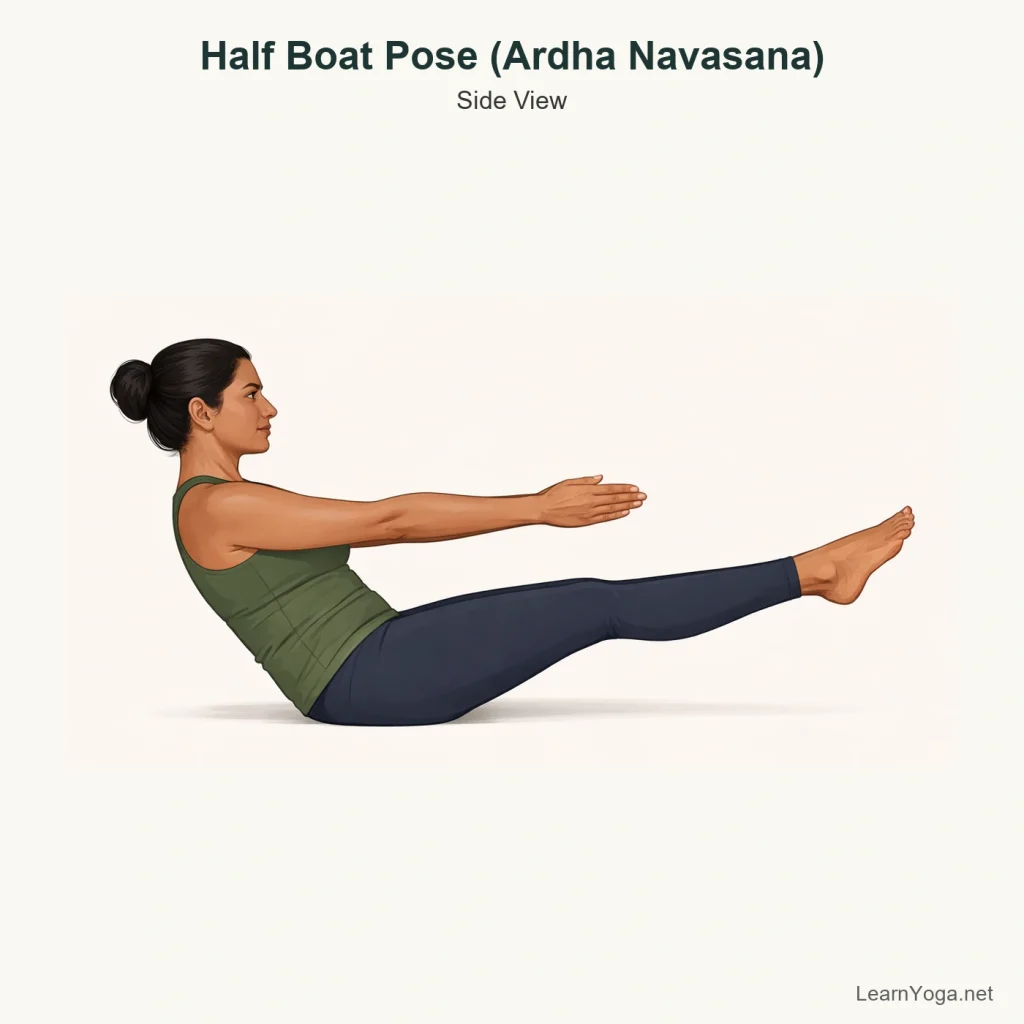
Half Boat Pose
Practice Half Boat with bent knees or straighter legs to work the trunk in a lower position.
Use this if full Boat makes you grip in the neck or lower back.
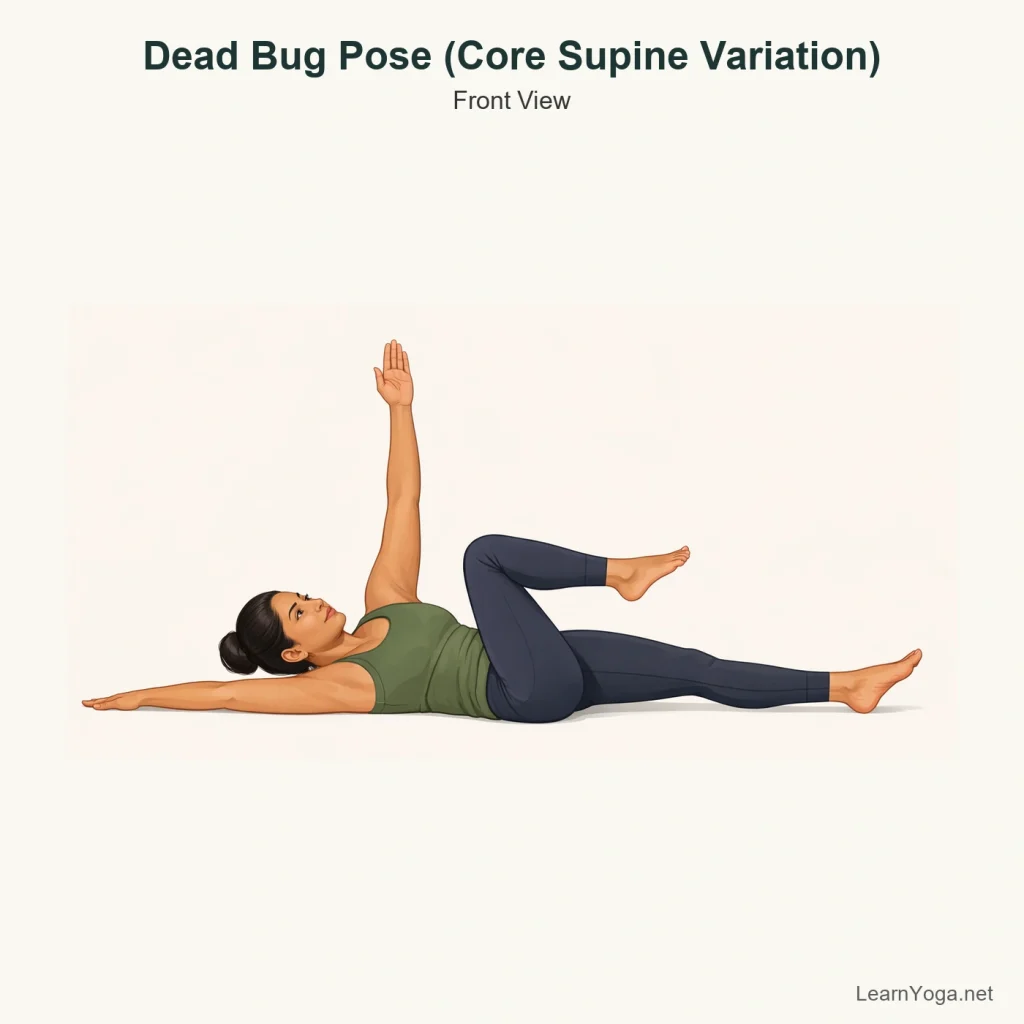
Dead Bug Pose
Lie on your back with knees lifted and move arms and legs in a controlled way while keeping the ribs settled.
Use this if getting upright into the balance is not comfortable or if you need a supine option.
Staff Pose
Sit upright with the legs extended and hands by the hips or on blocks, focusing on a long spine and steady base.
Use this if the main challenge is maintaining an upright seat.
Common variations
Bent-Knee Boat Pose
The knees stay bent and the shins lift parallel or slightly higher. This is often the most workable version for keeping the spine long.
Straight-Leg Boat Pose
The legs extend more fully while the chest stays lifted. This increases the lever length and the core demand.
Supported Boat Pose
The hands stay behind the thighs for extra help with balance and spinal length.
Safety and contraindications
When to avoid or get individual guidance
Use care with an irritated lower back or hip flexor strain.
Skip or modify if sitting balance on the floor is currently uncomfortable.
Back off if you feel pinching in the front of the hips or strain in the lower back.
Bend the knees or hold behind the thighs if straight legs make the spine round heavily.
Keep the neck easy and the face soft rather than forcing a long hold.
Sharp lower-back pain, a strong pinch at the front of the hips, or tingling that stays after you come out are signs to pause Boat Pose and get individual guidance before trying it again.
Accessibility and limited mobility
If sitting directly on the floor rounds your back, sit on a folded blanket or low cushion.
If balancing is the main difficulty, keep the toes on the floor or hold behind the thighs.
For older adults or anyone who finds floor transitions awkward, a chair-based core variation may be more practical than working toward the full pose on the mat.
Easier options
Use these related poses when you want a more accessible way to practise a similar movement or prepare for this pose.
Should my legs be completely straight in Boat Pose?
Not necessarily. Straight legs make the pose much stronger, but they are only useful if you can keep the spine long and the chest lifted. Bent knees are often the better version for learning the shape well.
Why do I feel this more in my hip flexors than in my abs?
That usually happens when the chest drops back and the legs are trying to do all the work. Try bending the knees more, holding behind the thighs, and lifting the breastbone forward. You may still feel the hip flexors, but the effort often spreads more evenly through the trunk.
Where should I balance in Boat Pose?
Aim to balance on the sitting bones, not right on the tailbone. If you feel tucked under and rounded, come a little higher through the chest and reduce the size of the pose.
How long should I hold Boat Pose?
A short, steady hold is usually enough. Try 3 to 5 smooth breaths, or 2 to 3 shorter rounds. If the breath becomes choppy or the lower back starts gripping, come out a little sooner.
What if I keep shaking in the pose?
A bit of shaking is common when the muscles are working hard. If the shape still feels organised and you can breathe, it is usually fine. If the shaking comes with collapsing, gripping in the neck or back strain, make the pose smaller by bending the knees or keeping the toes down.
Reviewed for yoga instruction
Yogita
Certified Yoga Instructor with 5+ years of Teaching and Consistent Practice