Scale Pose is a compact seated arm balance that asks for strong pressing through the hands, a rounded lift through the trunk and enough hip mobility to keep the legs tucked in. It is usually approached from Lotus Pose, though not every body will find that version comfortable or appropriate.
Scale Pose looks small, but it is demanding. The work is not only in the arms. You need a clear push into the floor, a firm lift of the lower belly and hips, and a compact leg position that does not pull the knees into a range they cannot manage. For many people, the main practice is learning the upward action even before the body fully leaves the floor.
How to do Scale Pose
Begin in Lotus Pose if that shape is already steady and comfortable for you. Place your palms on the floor beside your hips, fingers spreading naturally.
Press down through the whole hand, especially the base of the index finger and thumb. Straighten the elbows as much as your arms allow without locking harshly.
Take an inhale to lengthen the spine. On an exhale, draw the lower belly in and slightly up, broaden across the upper back, and push the floor away.
Lift the hips first. Then see if the knees and feet can float up as the body becomes light between the hands.
Keep the shoulders active rather than sinking. Let the chest stay lifted enough that you are not collapsing into a heavy slump.
Hold for 1 to 3 quiet breaths, or for a brief hover. Lower down with control on an exhale and release the legs carefully.
Yogita's tip
If you can press strongly but still do not lift, place blocks under the hands. That extra height often gives the hips just enough space to clear the floor and helps you feel the true action of the pose.
Benefits
Builds pressing strength in the hands, arms and shoulders.
Trains the trunk to stay compact and lifted rather than dropping into the floor.
Improves coordination between core engagement and arm support.
Can sharpen attention because the pose is brief and precise.
Common mistakes
Trying to yank the body up with effort in the neck and shoulders instead of pressing the floor away.
Letting the elbows bend out to the sides so the lift becomes unstable.
Collapsing the chest and rounding so heavily that the breath becomes tight.
Forcing Lotus Pose even when the knees or ankles are not comfortable there.
Holding the breath during the lift.
Make it work for you
Blocks under the hands
Place one block under each hand on a stable setting. The added height can make it easier to lift the hips and legs without forcing the shoulders.
Lift-and-tap practice
Press down on an exhale and try to lift the hips even if the legs stay grounded. Hold for one breath, lower, and repeat a few times.
Cross-legged version
If Lotus Pose is not suitable, try the same hand and core action from a simple cross-legged seat. You may only get a light hover, which is still useful practice.
Alternatives
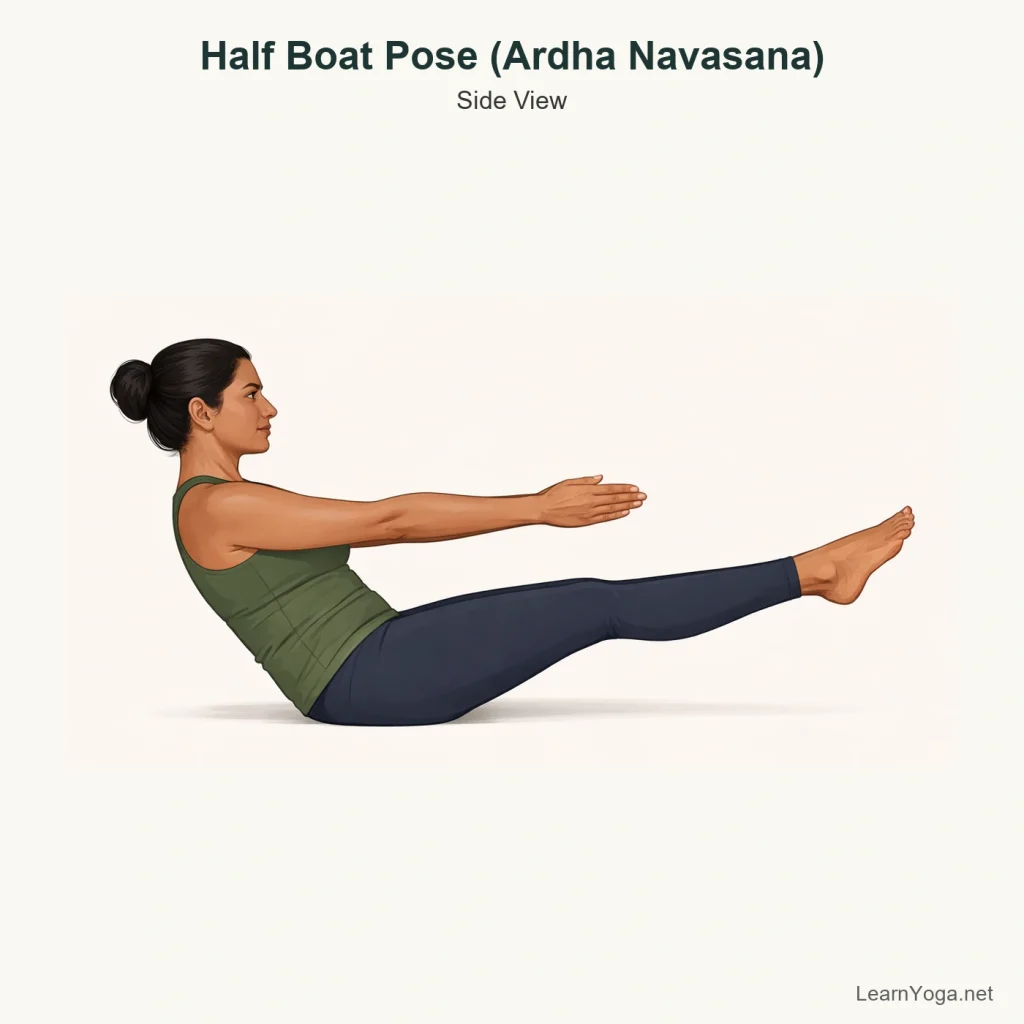
Boat Pose
Sit with the chest lifted and shins raised, holding behind the thighs if needed.
Use this if the wrist load of Scale Pose is too much or if Lotus Pose is not available.
Forearm Plank
Come onto the forearms and step the legs back, keeping the body in one long line.
Use this to work on core strength without the compact hip and knee position of Scale Pose.
Easy Pose with hand press
Sit cross-legged and press the hands firmly into blocks or the floor without trying to lift. Feel the shoulders rise and the belly tone.
Use this if getting fully off the floor is not realistic yet or getting down into Lotus is not comfortable.
Common variations
Lotus Scale Pose on blocks
The classic leg position with the hands elevated on blocks to create more clearance under the hips.
Cross-Legged Scale
A simpler version with the legs loosely crossed instead of Lotus, focusing on the hand press and hip lift.
Pulse lifts
Several short lifts instead of one longer hold, useful for building the action gradually.
Safety and contraindications
When to avoid or get individual guidance
Avoid or modify if you have a current wrist, shoulder, knee or ankle injury.
Skip the Lotus version if deep hip rotation or knee bending is not comfortable for your body.
Do not force the leg position, especially if Lotus Pose creates pressure in the knees or ankles.
Keep the load in the hands active and even rather than dropping heavily into the wrists.
A brief hold is enough. This pose does not need to be strained.
Come out of Scale Pose if you get sharp pain in the wrists, shoulders, knees or ankles, or if pressing into the hands is painful. Use an easier variation and get individual guidance before trying to lift again.
Accessibility and limited mobility
This pose is not a good fit for many beginners, older adults or anyone who has difficulty getting down to and up from the floor.
If deep knee and hip flexion for Lotus Pose is limited, use a cross-legged version or choose Boat Pose instead.
If wrist extension is uncomfortable, practising the lift action with hands on blocks may be more manageable than placing the palms flat on the floor.
Easier options
Use these related poses when you want a more accessible way to practise a similar movement or prepare for this pose.
That is common. Start by pressing strongly into the floor or blocks and feel the shoulders lift away from the ears while the lower belly draws in. Even a small unweighting of the hips is useful practice.
Do I need to practise this in Lotus Pose?
No. Scale Pose is often shown from Lotus, but that shape is not right for every body. A cross-legged version or a strength alternative such as Boat Pose can teach similar actions with less demand on the knees and ankles.
Why do my wrists feel overloaded?
Usually the body is dropping down instead of actively pushing the floor away. Try blocks under the hands, spread the fingers, and keep the lift brief. If the wrists still hurt, choose a non-weight-bearing alternative for now.
Should I round my back a lot in this pose?
Some rounding helps you lift, especially through the lower belly, but the pose should not become a collapse. Think of broadening the upper back while still keeping a little lift through the chest.
Reviewed for yoga instruction
Yogita
Certified Yoga Instructor with 5+ years of Teaching and Consistent Practice