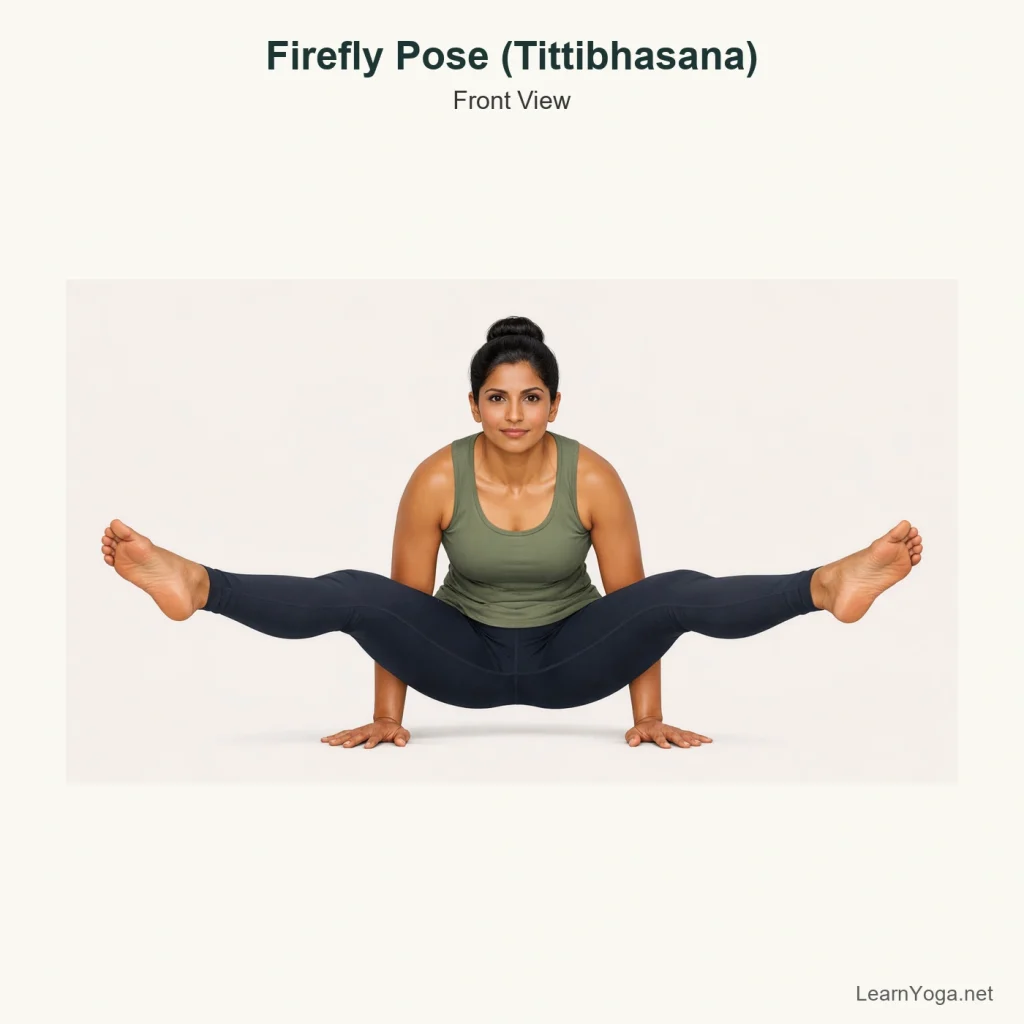
Crow Pose is a compact arm balance that asks for a rounded upper back, steady hand pressure and a clear forward shift. It is less about jumping up and more about placing your weight carefully over your hands.
Crow Pose can feel intimidating because the floor is suddenly much closer to your face. In practice, the shape works best when you move in small steps. The hands root down, the knees draw in, and the body tips forward enough that the feet become light. Some people balance with the knees high on the upper arms, others lower. A comfortable range will depend on your wrists, hips and how easily you can fold.
How to do Crow Pose
Begin in a squat with your feet about hip-width apart or slightly wider if that gives you more room.
Place your hands on the floor shoulder-width apart, fingers spread. Press through the base of the index finger and thumb as well as the heels of the hands.
Bend your elbows slightly back, not out to the sides, and lift your hips enough to place your knees onto your upper arms.
Look a little forward on the floor rather than straight down. That forward gaze helps shift your weight without collapsing your chest.
Lean your body weight into your hands gradually until one foot, then possibly both feet, become light.
Draw your heels toward your sitting bones and firm your belly gently in so the shape stays compact.
Press the floor away and broaden across the upper back. Keep the breath steady for 2 to 5 breaths.
To come down, lower one foot and then the other with control, and return to a squat or standing fold.
Yogita's tip
If your feet will not leave the floor, shift your gaze slightly farther forward and let the upper back round more. Many people keep trying to lift upward when what the pose actually needs first is a clear forward lean.
Benefits
Builds arm and shoulder strength through weight-bearing.
Trains the core to organise the body in a compact shape.
Improves awareness of how to shift weight with control.
Develops concentration because the balance changes quickly with small adjustments.
Can help prepare the body and attention for other arm balances.
Common mistakes
Looking straight down, which often keeps the weight too far back.
Trying to hop into the pose instead of leaning forward gradually.
Letting the elbows splay wide, which makes the base less stable.
Dumping into the wrists instead of spreading pressure through the whole hand.
Holding the breath once the feet lift.
Make it work for you
Block under the feet
Stand on a yoga block before placing the hands down. The extra height can make it easier to bring the knees onto the arms and shift weight forward with less strain.
One-foot lift practice
Set up for Crow Pose but keep one set of toes on the floor while you lift the other foot. Alternate sides to practise the forward shift without fully balancing.
Blanket in front of the face
Place a folded blanket or cushion in front of you. This does not change the mechanics much, but it often reduces the fear of tipping forward enough to learn the lean.
Alternatives
Plank hold
Practise Plank Pose with steady hand pressure and a firm belly to build strength for arm balancing.
Use this if full weight-bearing on bent arms feels too demanding.
Garland Pose
Stay in a squat with the elbows inside the knees and work on balance, hip flexion and hand placement without lifting the feet.
Use this if getting the knees high onto the arms is the main challenge.
Bird Dog
Practise Bird Dog slowly to build trunk control and balance in a less wrist-heavy position.
Use this if wrist loading or fear of falling makes Crow inaccessible today.
Common variations
Crane Pose
A straighter-arm version of the shape, usually with the knees placed higher and the elbows more extended. It asks for more hamstring fold and stronger wrist support.
Side Crow
A twisting arm balance where both legs rest to one side. The load pattern changes, with more rotational control through the trunk.
Crow Pose with block support
A supported version using a block under the feet at setup to reduce the distance between the floor and the balance point.
Safety and contraindications
When to avoid or get individual guidance
Avoid or modify if you have a current wrist, hand, elbow or shoulder injury.
Skip the full balance if deep knee flexion is painful in the setup.
Avoid practising this pose if you cannot comfortably bear weight through the hands today.
Crow Pose places clear load through the wrists, shoulders and hands.
Set the hands firmly and spread the fingers so the weight does not collapse into the heel of the palm.
Use a blanket or cushion in front of you if fear of falling forward makes you hold back abruptly.
If deep squatting bothers your knees or ankles, use a block under the feet or choose an alternative.
Stop practising Crow Pose and get individual guidance before continuing with arm balances if weight-bearing here brings sharp wrist pain, numbness in the hand, or a shoulder that feels like it is slipping or giving way.
Accessibility and limited mobility
This pose can be difficult if getting into a deep squat is limited. A block under the feet can make the setup more manageable.
If moving down to and up from the floor is not comfortable, choose a strength-building alternative such as Plank Pose instead.
Older adults or anyone with reduced wrist extension may prefer forearm or supine core work on days when hand balance is not practical.
Easier options
Use these related poses when you want a more accessible way to practise a similar movement or prepare for this pose.
Why do I feel stuck even when my knees are on my arms?
Usually the weight is still too far back. Try leaning your chest a little farther forward, looking slightly ahead instead of down, and lifting one foot at a time first. The balance point is farther forward than many people expect.
Is it better to jump into Crow Pose?
For most learners, no. A small controlled lean teaches the pose more clearly and puts less surprise into the wrists and shoulders. Jumping often throws the weight around and makes the landing less steady.
What should my elbows be doing?
Keep them slightly bent and pointing generally back rather than winging out wide. You are making a shelf with the upper arms, but you are also pressing the floor away so the shoulders stay active.
Can I practise Crow Pose if my wrists feel sensitive?
If the wrists are mildly sensitive, shorten the hold, warm them first and spread the pressure through the whole hand. If weight-bearing itself is painful, choose an alternative such as Plank variations only if they are comfortable, or use a non-weight-bearing core option instead.
Do my feet need to touch each other in the pose?
Not necessarily. Some people find it easier to keep the feet together, while others balance better with the heels slightly apart. What matters more is that the legs stay active and the shape feels compact and controlled.
Reviewed for yoga instruction
Yogita
Certified Yoga Instructor with 5+ years of Teaching and Consistent Practice