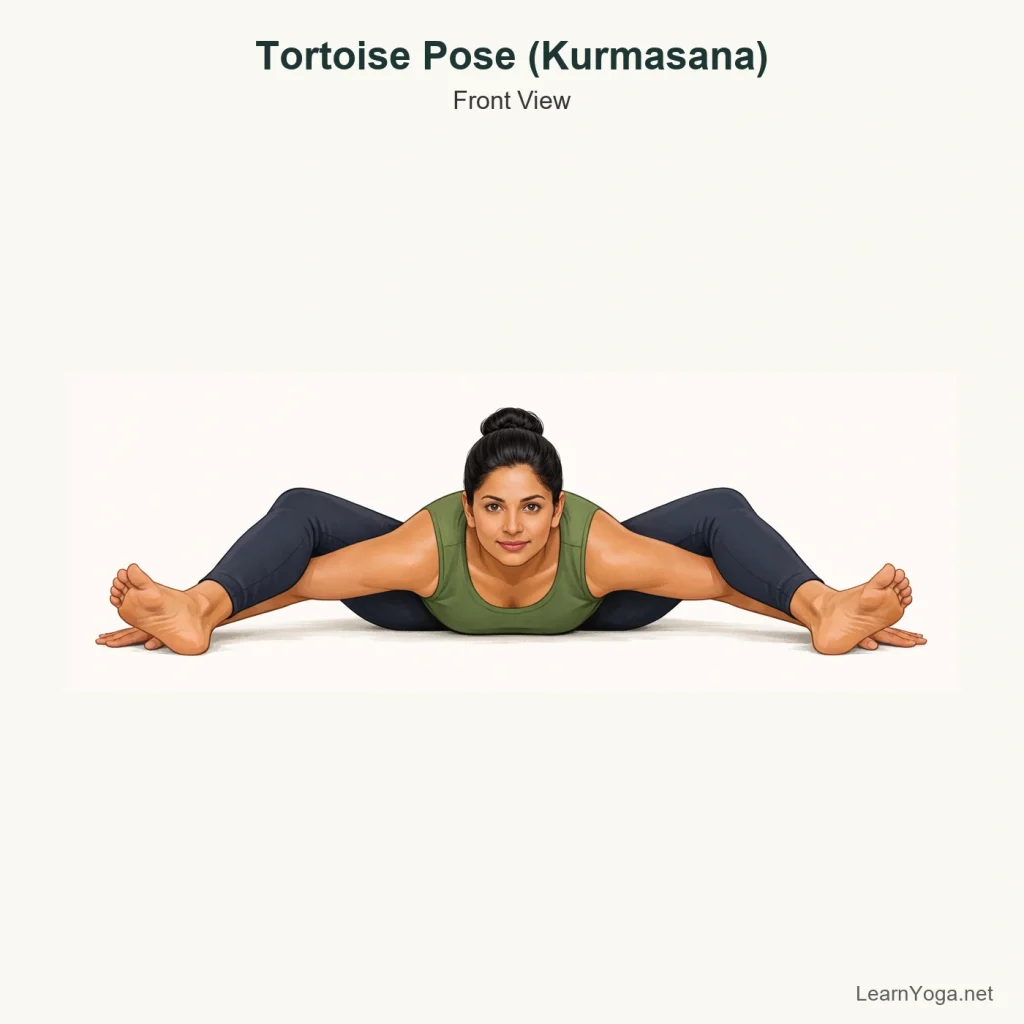
Wide-Angle Seated Forward Fold opens the legs into a broad straddle and adds a forward hinge from the hips. It can stretch the inner leg line and hamstrings while asking for an upright, steady spine rather than a collapsed reach.
This pose can look simple from a distance, but it asks for a clear combination of hip abduction, hamstring length and a controlled forward fold. For many people, the most useful version is not the deepest one. Sitting a little higher, narrowing the legs, or keeping the hands behind you may give you a truer shape and a calmer breath.
How to do Wide-Angle Seated Forward Fold
Sit on the floor with your legs spread into a comfortable wide V shape. Place your hands on the floor behind you and rock slightly forward so you are sitting on the front edge of the sitting bones rather than behind them.
Flex your feet gently so the toes and kneecaps point more or less toward the ceiling. Keep a soft bend in the knees if the backs of the legs pull strongly.
On an inhale, lengthen up through the spine and broaden across the collarbones.
Walk your hands forward on the floor and begin to tip from the hips rather than rounding straight down from the waist.
Pause when you feel a clear stretch through the inner thighs or hamstrings but can still breathe steadily. Let the front of the neck stay easy and keep some length through the lower back.
Stay for 5 to 10 breaths. On each inhale, create a little more space through the torso. On each exhale, soften unnecessary effort in the jaw, shoulders and belly.
To come out, press your hands into the floor and slowly walk them back toward you until you are upright again.
Yogita's tip
If the pelvis keeps rolling backward and the fold feels stuck before it starts, sit on a folded blanket. Even a small lift under the hips often turns the pose from a back strain into a hip hinge.
Benefits
Lengthens the hamstrings and the inner leg line in a broad-legged position.
Practises folding forward from the hips with more awareness of spinal position.
Can improve comfort in other seated straddle and forward-bending poses.
Invites a slower breath and steadier attention when held without forcing.
Common mistakes
Taking the legs so wide that the pelvis tips back and the spine collapses.
Pulling the chest down by force instead of hinging gradually from the hips.
Locking the knees hard and shifting the stretch into the joints.
Letting the feet roll out and the legs become passive.
Holding the breath while trying to go lower.
Make it work for you
Sit on a folded blanket
Raise the hips on one or more folded blankets so the pelvis can tip forward more easily. This often makes it simpler to sit upright and fold without rounding heavily.
Bend the knees slightly
Keep a small bend in both knees if the hamstrings feel sharp or if the lower back rounds quickly. Maintain the bend as you hinge forward.
Hands behind for upright version
Stay upright with the hands behind or beside you and focus on lengthening the spine. This is still a valid version if the forward fold is not accessible today.
Alternatives
Bound Angle Pose
Bring the soles of the feet together and let the knees open out to the sides. Sit upright or fold only a little.
Use this if a wide straddle on the floor feels too intense through the hamstrings.
Reclining Hand-to-Big-Toe Pose
Lie on your back and work one leg at a time with a strap, keeping the other leg bent or straight on the floor.
Use this if sitting upright is difficult or if you want less load on the lower back.
Butterfly Forward Fold
Sit with the soles of the feet together and hinge forward gently from the hips, using the hands for support.
Use this if the wide-leg position bothers the backs of the knees.
Common variations
Upright Wide-Angle Seat
Remain tall with the hands on the floor and do not fold forward. This emphasises the seated base and leg position.
Supported Forward Fold
Rest the forearms or forehead on a bolster or stacked cushions placed in front of you to reduce effort in the spine and neck.
Side Reach in Wide Angle
Instead of folding centrally, turn slightly and reach toward one leg for a side-bending variation with less direct pressure into both hamstrings at once.
Safety and contraindications
When to avoid or get individual guidance
Use care with hamstring strains or recent inner thigh strain.
Modify if sitting with the legs wide aggravates lower back discomfort.
If hip range feels pinched at the front of the joint, narrow the stance or come out.
Move into the pose gradually, especially if the hamstrings or inner thighs feel tight.
A slight bend in the knees is often safer and more useful than forcing the legs straight.
If the lower back rounds sharply, come higher or sit on support.
If the backs of the knees feel strained, reduce the depth or choose a different seated shape.
Repeated sharp groin pain, strong pulling where the hamstrings meet the sitting bones, or back pain that lingers after Upavistha Konasana are good reasons to back out and stop going deeper. Choose a gentler version and get individual guidance before continuing forward folds.
Accessibility and limited mobility
Sitting on a firm cushion, folded blanket or low bolster can make the pose much more workable for people with limited hip range or a tendency to round backward.
If getting down to the floor is difficult, a seated wide-leg position on a bed or firm sofa edge may be easier to set up, though the fold should stay small and supported.
Older adults or anyone with reduced hamstring range may do better with a narrower leg position and an upright hold rather than a deep fold.
Easier options
Use these related poses when you want a more accessible way to practise a similar movement or prepare for this pose.
Wide enough that you feel the legs opening, but not so wide that you immediately roll back onto the tailbone. If you cannot sit upright with a steady breath, bring the legs a little closer together.
Where should I feel Wide-Angle Seated Forward Fold?
Most people feel it through the hamstrings, inner thighs and around the hips. You may also notice the work of staying long through the spine. Sharp pain in the groin, knees or lower back is a sign to ease off.
What if I cannot fold forward very far?
That is completely fine. An upright version with the hands on the floor or sitting on a folded blanket is often the better starting point. The quality of the hinge matters more than how low you go.
Should my knees stay completely straight?
Not necessarily. A soft bend can help if the backs of the legs feel over-pulled or if the pelvis keeps tucking under. Over time, the legs may straighten more naturally without forcing.
Is it better to hold the feet or walk the hands forward?
For many people, walking the hands forward is more useful because it lets the spine stay longer. Reaching for the feet can encourage rounding if the range is not there yet.
Reviewed for yoga instruction
Yogita
Certified Yoga Instructor with 5+ years of Teaching and Consistent Practice