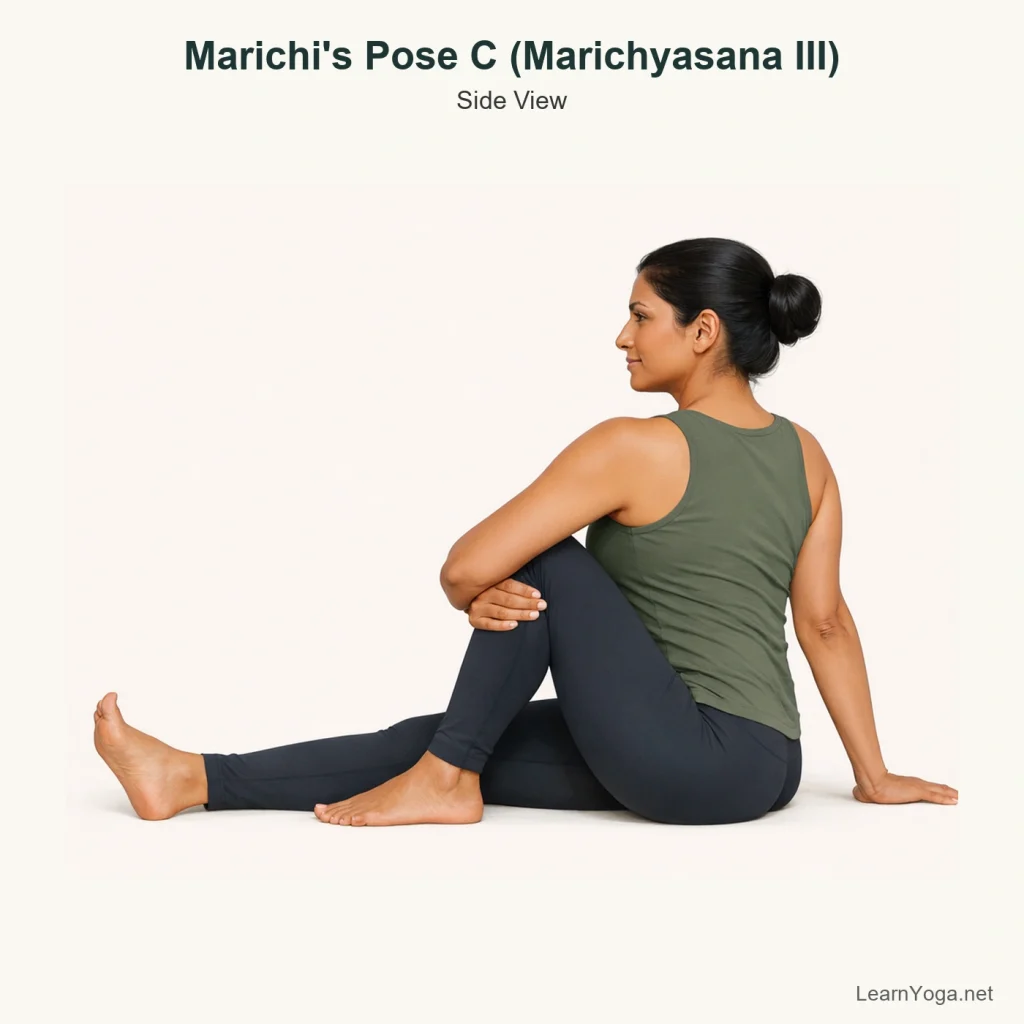
Half Lord of the Fishes Pose is a seated spinal twist that combines an upright base, hip positioning and a steady turn through the torso. It is usually more comfortable when the twist stays tall rather than deep.
This seated twist can be useful for practising rotation without rushing into a big range. The shape asks for enough hip comfort to sit upright first. Once that is in place, the twist tends to feel clearer and lighter. If the stacked-leg version makes you round or brace, simplify the legs and keep the turn smaller.
How to do Half Lord of the Fishes Pose
Sit on the floor with both legs extended in Staff Pose.
Bend your right knee and place the right foot on the outside of the left thigh. If it is comfortable, bend the left knee and bring the left foot beside the right hip. If that bottom leg position feels awkward, keep the left leg straight.
Press both sitting bones down as evenly as you can. If your pelvis tips back, sit on a folded blanket.
Place your right fingertips on the floor just behind your sacrum for support.
Inhale and lift through the breastbone and the crown of the head so the spine feels tall rather than rigid.
Exhale and turn to the right from the waist, ribs and chest. Bring your left arm around the outside of the right knee, or simply hug the knee toward you.
Keep the shoulders level and broad. Let the neck follow the twist last, only as far as feels easy.
Stay for 3 to 6 slow breaths. Each inhale creates length; each exhale can refine the turn a little if the breath stays smooth.
To come out, inhale to lengthen, then exhale and slowly return to centre. Extend the legs forward for a moment before changing sides.
Yogita's tip
If the twist feels stuck in your lower back, ease the turn slightly and lift more through the sternum. In this pose, a taller spine usually gives you a cleaner twist than pulling harder with the arm.
Benefits
Encourages gentle rotational mobility through the spine and upper back.
Helps you practise sitting upright while the hips and torso do different jobs.
Can bring clearer awareness to the waist, ribs and shoulder position in twists.
Builds steadiness and attention because the pose works better when you move gradually with the breath.
Common mistakes
Forcing the twist with the arms instead of creating length first.
Rounding back onto the tailbone, which makes the turn feel cramped.
Using a leg position that is too complex to sit comfortably upright.
Turning the head more than the chest and ending up with neck strain.
Letting the lifted knee drift inward so the base becomes unstable.
Make it work for you
Keep the bottom leg straight
Instead of bending the lower leg in, leave it extended on the floor. This usually makes the pelvis easier to level and reduces pressure around the knee.
Sit on a folded blanket
Place a folded blanket or firm cushion under your sitting bones if your lower back rounds. Even a small lift can help the spine lengthen and make the twist more comfortable.
Hug the front knee
Rather than hooking the elbow outside the knee, wrap the opposite arm around the bent leg and keep the twist gentler and more upright.
Alternatives
Bharadvaja's Twist
Sit with both legs folded to one side and take a smaller seated twist with the hands helping you stay tall.
Use this if the classic leg position in Half Lord of the Fishes feels too tight in the hips or knees.
Supine twist
Lie on your back, draw one knee across the body and let the floor support the turn.
Use this if getting upright on the floor is tiring or if seated twisting feels too effortful today.
Easy cross-legged twist
Sit cross-legged or on a chair and take a gentle twist with one hand behind you and the other on the opposite knee.
Use this when you want the spinal action of a twist without the deeper leg setup.
Common variations
Straight-bottom-leg variation
The top foot crosses over an extended lower leg. This is often the most useful version for people who want the twist without the extra knee bend.
Bound arm variation
The opposite arm wraps around the raised knee or catches the foot for a deeper bind. This increases the rotational demand and is only helpful if you can stay tall.
Gentle open twist
Both knees stay bent or crossed more softly, with the lower arm simply hugging the front knee. This keeps the shape accessible while preserving the main action of the pose.
Safety and contraindications
When to avoid or get individual guidance
Avoid or simplify this pose if a seated twist aggravates knee, hip or back pain.
Use a gentler version if sitting on the floor comfortably is not available today.
Keep the twist moderate and upright rather than trying to turn as far as possible.
If the lower knee or crossed-over hip feels pinched, change the leg position right away.
Let the neck turn last, and keep your gaze more forward if your neck prefers less rotation.
If twisting repeatedly causes sharp pain in the knee, hip or back, or you notice numbness or tingling that does not ease after coming out, stop and get individual advice before practising deeper seated twists.
Accessibility and limited mobility
Sitting on one or two folded blankets can make a noticeable difference if the pelvis rolls back or the hips feel restricted.
If getting to the floor is difficult, a seated chair twist offers a similar action with less effort and easier entry and exit.
Older adults or anyone with limited hip or knee range may prefer to keep the bottom leg straight rather than folded in.
Easier options
Use these related poses when you want a more accessible way to practise a similar movement or prepare for this pose.
No. Many people do better with the lower leg straight. The folded-in version is traditional, but it is not more correct if it makes you lean back, strain the knee or lose the lift of the spine.
Should I hook my elbow outside the knee?
Only if you can stay tall and breathe normally. Hugging the knee is often the better choice because it keeps the twist organised instead of turning it into a tug with the arm.
Where should I feel this pose most?
Usually you will notice work around the waist, ribs, upper back and outer hip of the bent leg. You should not feel sharp pressure in the knee or a pinching sensation in the lower back.
Why do I keep rounding when I try to twist?
Most often the base is too low or the leg setup is too ambitious. Sit on a folded blanket, simplify the legs and use each inhale to create height before you turn.
Can I practise this pose in a chair instead?
Yes. A chair twist is a useful option if sitting on the floor is uncomfortable or difficult to get into. You can still work on lengthening the spine on the inhale and turning gently on the exhale.
Reviewed for yoga instruction
Yogita
Certified Yoga Instructor with 5+ years of Teaching and Consistent Practice