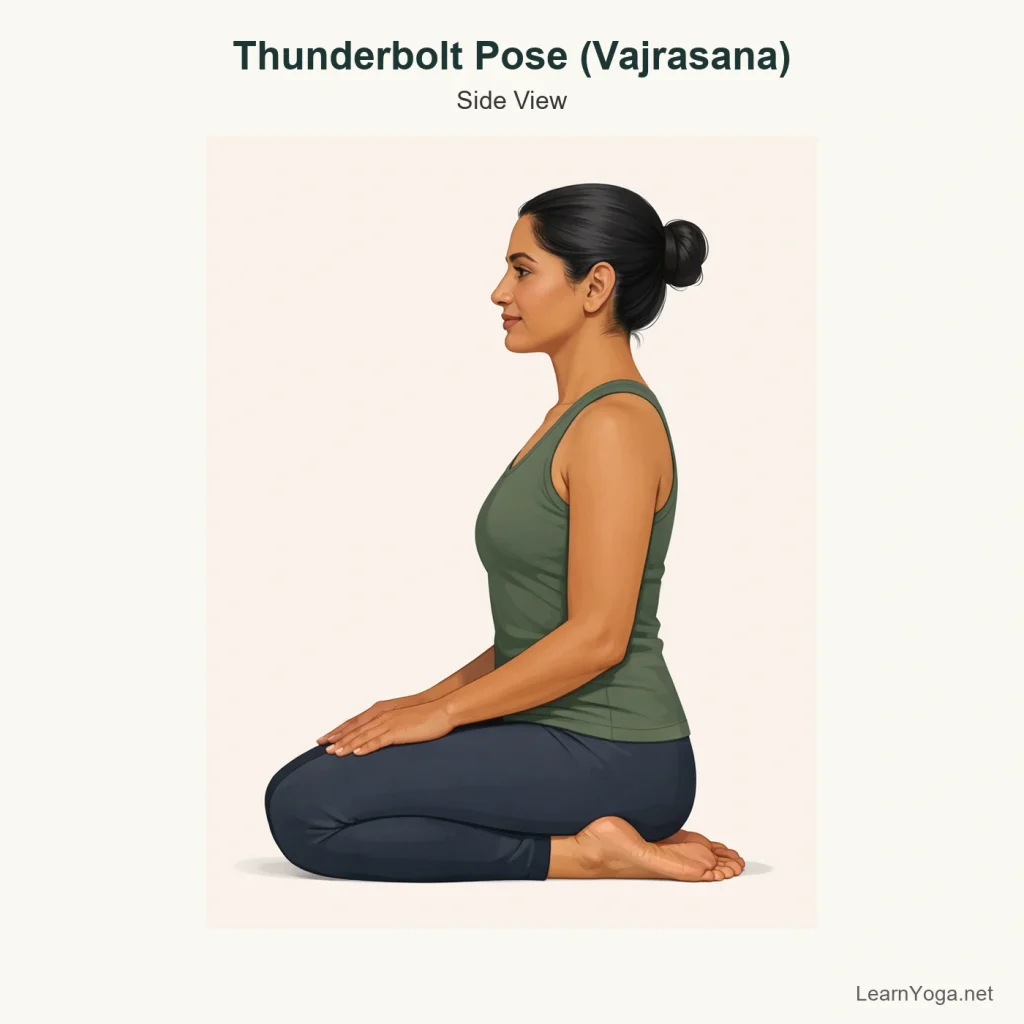
Hero Pose is a kneeling seat with the feet beside the hips rather than under them. It can be a steady place for breathing and upright sitting, but many people need height under the sitting bones to make it comfortable for the knees, ankles or feet.
Hero Pose looks simple, yet the details matter. The knees bend deeply, the ankles point back and the tops of the feet take pressure, so the most useful version is often the one with support. When the seat height is right, the spine usually settles more naturally and the breath feels easier.
How to do Hero Pose
Come to kneeling with your knees together or slightly apart, whichever feels more natural for your body.
Separate your feet wider than your hips so there is space to sit between them, with the tops of the feet on the floor and the toes pointing straight back if that is comfortable.
Place a block, folded blanket or cushion between your feet if sitting all the way down is too much for your knees or ankles.
Lower your sitting bones onto the support or toward the floor between your heels, not directly on top of your feet.
Press the tops of the feet and shins down lightly, and let both ankles stay as even as you can rather than sickling out strongly.
Lengthen up through the front of the chest without hardening the lower ribs. Rest your hands on your thighs.
Stay for 5 to 8 slow breaths or longer if the shape remains easy and steady.
To come out, lean forward into your hands, lift your hips and bring your legs out slowly.
Yogita's tip
If the pose feels fine in the knees but sharp across the fronts of the ankles, lift your seat a little higher before changing anything else. A small increase in height often reduces that ankle compression straight away.
Benefits
Gives a gentle stretch across the fronts of the ankles and feet.
Can lengthen the front thighs when the knees tolerate the bend comfortably.
Offers a stable upright seat for breath awareness, meditation or a short pause between poses.
Helps you practise sitting with the pelvis grounded and the spine rising naturally rather than slumping back.
Common mistakes
Sitting directly on the feet instead of between them, which changes the pose and can crowd the ankles.
Forcing the hips to the floor when support would allow a steadier, more relaxed shape.
Letting the feet turn out so much that the ankles collapse unevenly.
Pushing through numbness or sharp knee sensation instead of coming out promptly.
Overarching the lower back while trying to sit tall.
Make it work for you
Block or cushion under the seat
Place one or more blocks, a folded blanket or a firm cushion between your feet and sit on it. Use enough height that the knees, ankles and tops of the feet can soften.
Blanket under shins or ankles
If the floor feels hard under the shins or the ankle crease, place a folded blanket underneath to reduce pressure.
Knees slightly apart
If keeping the knees together feels cramped, separate them a little while still keeping the sitting bones supported between the feet.
Alternatives
Thunderbolt Pose
Sit back on your heels with a folded blanket between calves and thighs or between heels and sitting bones if needed.
Use this if sitting between the feet is too intense but a kneeling seat still feels manageable.
Easy seated position on support
Sit cross-legged on a folded blanket or cushion so the hips are a little higher than the knees.
Use this if kneeling is uncomfortable or getting pressure off the ankles and knees is the main priority.
Chair sitting
Sit toward the front edge of a chair with both feet flat and the spine upright, resting the hands on the thighs.
Use this if getting down to the floor or bearing weight through bent knees is not practical today.
Common variations
Supported Hero Pose
The classic shape with a block, bolster or folded blankets under the sitting bones to reduce depth at the knees and ankles.
Wide-Knee Hero Pose
A slightly wider knee position that can give a little more space in the thighs or lower belly, while still sitting between the feet.
Reclining Hero preparation
A supported version with the torso leaning back onto hands or props rather than going fully into Reclining Hero Pose.
Safety and contraindications
When to avoid or get individual guidance
Avoid or heavily support the pose if deep knee bending is currently uncomfortable.
Use care if the fronts of the ankles or tops of the feet are sensitive to pressure.
Keep the pose in a comfortable range for your knees and ankles. Support under the seat is often the simplest way to do that.
Come out if you feel sharp pain, pinching or numbness in the knees, ankles or feet.
Move in and out slowly, especially if your knees feel stiff.
Pause Virasana and use more height under the seat when deep knee bending brings on sharp knee pain, noticeable swelling, or numbness in the lower legs or feet that does not settle after you come out. Get individual guidance before continuing with kneeling poses.
Accessibility and limited mobility
Many older adults and beginners find this pose much more workable with a block or firm cushion under the seat.
If bending the knees deeply is difficult, choose a higher support or use a chair instead of forcing the floor version.
If getting down to the floor or back up is the main challenge, set a chair or wall nearby for support when entering and exiting.
Easier options
Use these related poses when you want a more accessible way to practise a similar movement or prepare for this pose.
No. Some people are more comfortable with the knees together, while others need a small gap. What matters more is that the knees feel steady and the pose does not create strain.
Why do my feet turn out so much in this pose?
A little turning out can happen naturally, but if the ankles roll strongly outwards it often means the pose is too deep or the feet are set awkwardly. Try lifting your seat on support and place the feet so the toes point more straight back if that range is available.
Should I feel this more in my thighs or my ankles?
Either can be noticeable, but neither should feel sharp. Some people mainly notice the fronts of the thighs, while others feel the tops of the feet and ankles first. If the ankle sensation is the limiting factor, raise the seat.
Can I use Hero Pose for breathing or meditation?
Yes, if it is genuinely comfortable. It can be a steady upright seat for a short breathing practice, but use enough support so you are not constantly bracing in the legs.
What if I cannot sit all the way to the floor?
That is very common. Sit on a block, folded blankets or a cushion between the feet. The supported version is still Hero Pose and is often the more useful one.
Reviewed for yoga instruction
Yogita
Certified Yoga Instructor with 5+ years of Teaching and Consistent Practice