Gate Lunge Variation blends a kneeling lunge with the side-opening shape of Gate Pose. It gives you a clear stretch through the inner leg and side body while also asking for balance and steady support through the grounded knee.
This variation is useful when you want more than a simple lunge but do not want a very deep pose. One knee stays down, the other leg extends out to the side, and the torso usually arcs toward the straight leg. The shape can feel spacious through the ribs and inner thigh, but it works best when you keep some lift in the waist instead of collapsing into the side bend. Comfortable range will vary. For some people the focus is mostly in the adductors and hips; for others it is more about the side body and breath.
How to do Gate Lunge Variation
Come to kneeling and step your right leg out to the right side, straightening it as much as is comfortable. Keep the right foot on the floor with the toes pointing forward or slightly up if that feels better for your knee and hip.
Stack your left knee under your left hip and press the shin down. If the kneeling knee feels sensitive, place a folded blanket under it.
Inhale and open both arms out to the sides or bring the left arm up. Lengthen from the kneeling knee through the crown of the head.
Exhale and tip your torso gently toward the right leg. You can rest your right hand on your thigh, shin or a block rather than reaching for the floor.
Keep some tone in the lower belly and try not to drop all your weight into the lower hand. Let the top side of the waist stay long.
Take 3 to 6 slow breaths. On each inhale, create a little more space through the ribs. On each exhale, soften the inner right leg and settle only as far as the breath stays easy.
To come out, inhale and lift the torso back to upright. Bring the right leg in and pause in kneeling before repeating on the other side.
Yogita's tip
If the stretch disappears from the straight leg and all the sensation moves into the lower back, bend less deeply and slide your lower hand higher up the leg. A smaller side bend usually brings the pose back into the inner thigh and ribs.
Benefits
Lengthens the inner thigh of the extended leg.
Creates mobility through the side body and rib cage.
Builds awareness of how to side bend without collapsing forward.
Gently works hip stability around the kneeling side.
Can prepare the body for lunges, lateral standing poses and seated side bends.
Common mistakes
Letting the torso fall forward instead of bending to the side.
Locking the straight knee so hard that the leg feels rigid.
Dumping weight into the lower hand or shoulder.
Sitting back behind the kneeling knee rather than stacking the pelvis over it.
Forcing the extended foot into one position even when the knee or ankle feels strained.
Make it work for you
Block under the lower hand
Place a block inside or outside the extended leg so the lower hand can rest higher. This helps keep the chest more open and reduces the tendency to collapse.
Padding under the kneeling knee
Fold a blanket or mat under the grounded knee and shin if pressure on the floor is uncomfortable.
Smaller side bend
Keep the torso more upright and place one hand on the hip instead of reaching overhead. This still works the shape without asking for as much side flexion.
Alternatives
Half Gate Pose
Stay more upright with one leg extended to the side and both hands at the hips or one hand on a block.
Use this if the side bend feels too strong or balance is unsteady.
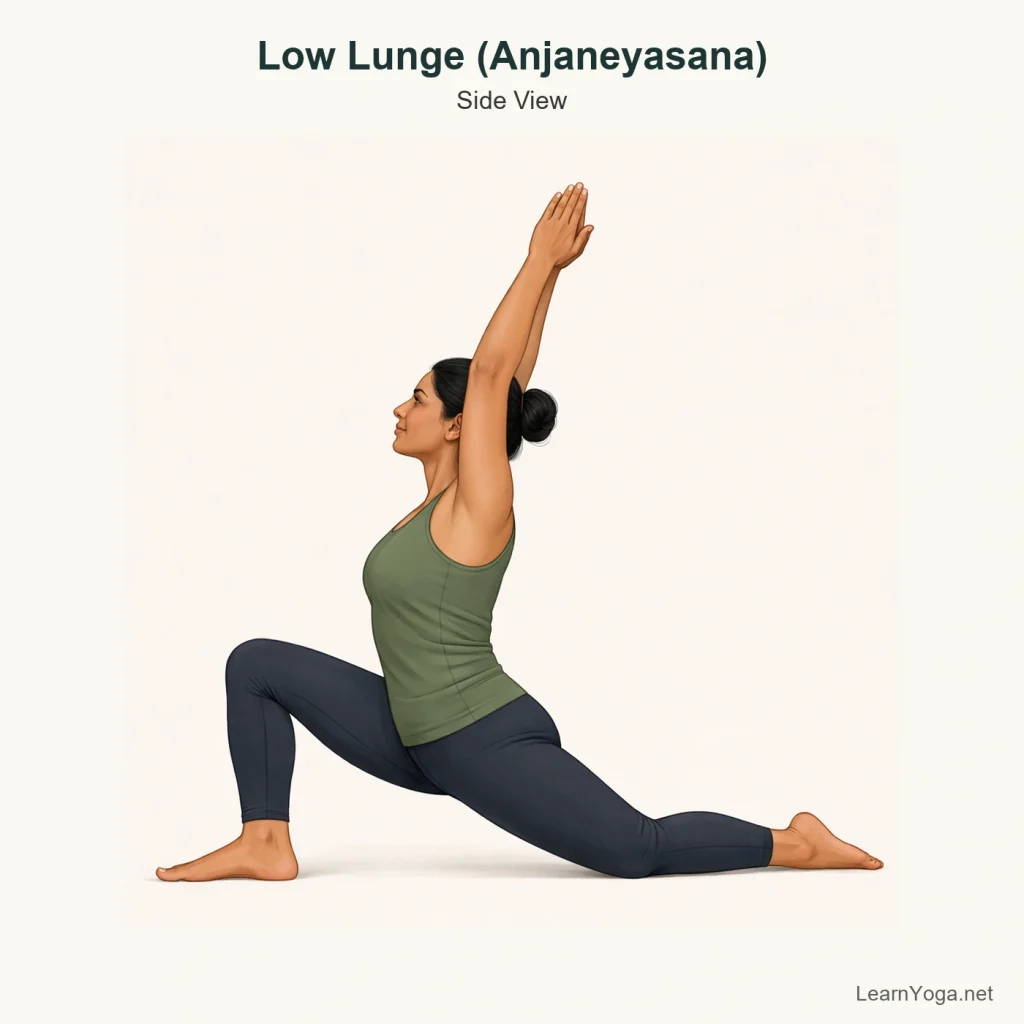
Low Lunge
Keep both hands on blocks beside the front foot and stay in a forward-facing kneeling lunge.
Use this if the side setup bothers the inner thigh or feels awkward on the kneeling knee.
Seated Side Stretch
Take a seated side bend with one hand grounded beside you and the other arm overhead.
Use this if getting up and down from kneeling is difficult or if kneeling is not comfortable today.
Common variations
Upright Gate Lunge Variation
Keep the torso vertical and the top hand on the hip or reaching up. This puts more emphasis on leg position and postural control than on the side bend.
Forearm-to-thigh variation
Rest the lower forearm lightly on the extended thigh instead of reaching lower. This often makes the pose steadier and easier to breathe in.
Arm overhead variation
Reach the top arm alongside the ear to create a longer line from the kneeling shin through the fingertips.
Safety and contraindications
When to avoid or get individual guidance
Use extra care with a sensitive kneeling knee.
Reduce the range or choose another pose if side bending aggravates your lower back.
Be cautious with inner thigh strains and keep the extended leg less straight if needed.
The grounded knee and the inner thigh of the extended leg take the clearest load here, so reduce depth if either area feels pinched rather than stretched.
Keep the lower hand supported on the leg or a block instead of reaching for the floor if that causes the side waist to compress.
If balance feels uncertain, stay more upright and keep one hand on your hip.
Pause Gate Lunge Variation and make it smaller if you get sharp pain in the kneeling knee, groin, or lower back, or any numbness that does not settle once you come out. Get individual guidance before trying it again.
Accessibility and limited mobility
A folded blanket under the kneeling knee can make a big difference for older adults or anyone with less tolerance for floor pressure.
If rising from the floor is difficult, practise a seated side bend instead on a chair or firm cushion rather than trying to force the kneeling setup.
Keeping the lower hand on a block or on the thigh makes the pose more manageable if hamstring or side-body range is limited.
Easier options
Use these related poses when you want a more accessible way to practise a similar movement or prepare for this pose.
Not necessarily. A small bend in the extended knee is fine if that lets you keep the foot grounded and the inner thigh comfortable. Straight is only useful if it still feels stable and easy to breathe.
What should I do with the foot of the side leg?
Many people do well with the sole of the foot on the floor and the toes pointing forward. If that twists the knee or hip, turning the toes slightly up can be more comfortable. Choose the version that keeps the leg feeling clear rather than strained.
Why do I feel this more in my lower back than in my side body?
That usually means the bend has gone too far or the lower hand is too low. Come up a little, support the hand on a block or thigh, and think of lengthening both sides of the waist before you lean.
Can I use this pose as part of a warm-up?
Yes. It works well after a few rounds of Cat-Cow or after a simple low lunge. Hold it briefly, around 3 breaths each side, if you are using it to prepare for a longer practice.
Is it normal for one side to feel much tighter?
Yes. Side bends and inner-thigh work often feel uneven from left to right. It is usually better to keep the tighter side a little smaller rather than trying to match the deeper side exactly.
Reviewed for yoga instruction
Yogita
Certified Yoga Instructor with 5+ years of Teaching and Consistent Practice