Four-Limbed Staff Pose
Four-Limbed Staff Pose is a strong low hover from Plank that asks the arms, shoulders, chest and core to work together. It is less about getting very low and more about keeping one long line as you lower with control.
Explore by goal
Build strength through yoga poses that ask your muscles to support, stabilise and control your body. Browse poses for the core, legs, arms and upper body, and choose variations that suit your current level of practice.
The poses below share this goal classification, but a useful practice still needs an appropriate order, level and pace. Use the pose guides for modifications and safety notes, or let the Practice Builder arrange a complete sequence.

Four-Limbed Staff Pose is a strong low hover from Plank that asks the arms, shoulders, chest and core to work together. It is less about getting very low and more about keeping one long line as you lower with control.

Frog Pose Backbend is a prone backbend with both knees bent and the hands pressing the feet toward the floor beside the hips. It asks for a strong lift through the chest while the front thighs, knees and shoulders all work in a fairly deep range.

Flying Pigeon Pose is a demanding standing-to-arm-balance transition that combines a figure-four hip shape with a forward shift onto the hands. It asks for hip mobility, wrist and shoulder support, core control and patient balance.

Flying Splits Pose is a strong arm balance built from a twisted standing setup. It combines wrist and shoulder loading with hamstring length, hip mobility and a clear forward shift of weight.

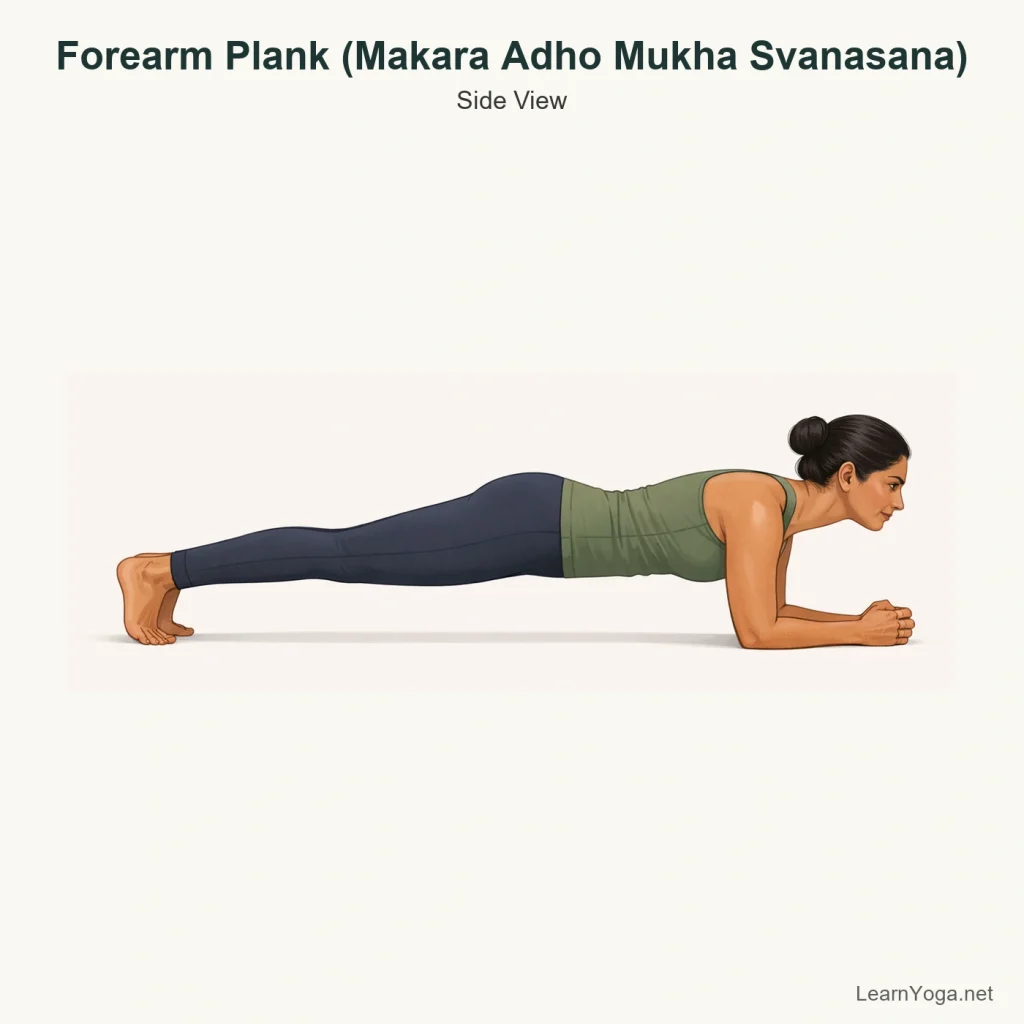
Forearm Plank is a strong, straightforward shape that builds organised support through the shoulders, belly, hips and legs. It asks for steady effort rather than strain, and it usually works best when you think of reaching long from heels to crown instead of trying to hold yourself rigid.

Forearm Stand is a strong inversion that asks for shoulder stability, upper-back lift and careful balance over the forearms. It is usually more workable when built patiently with wall support rather than rushed from momentum.

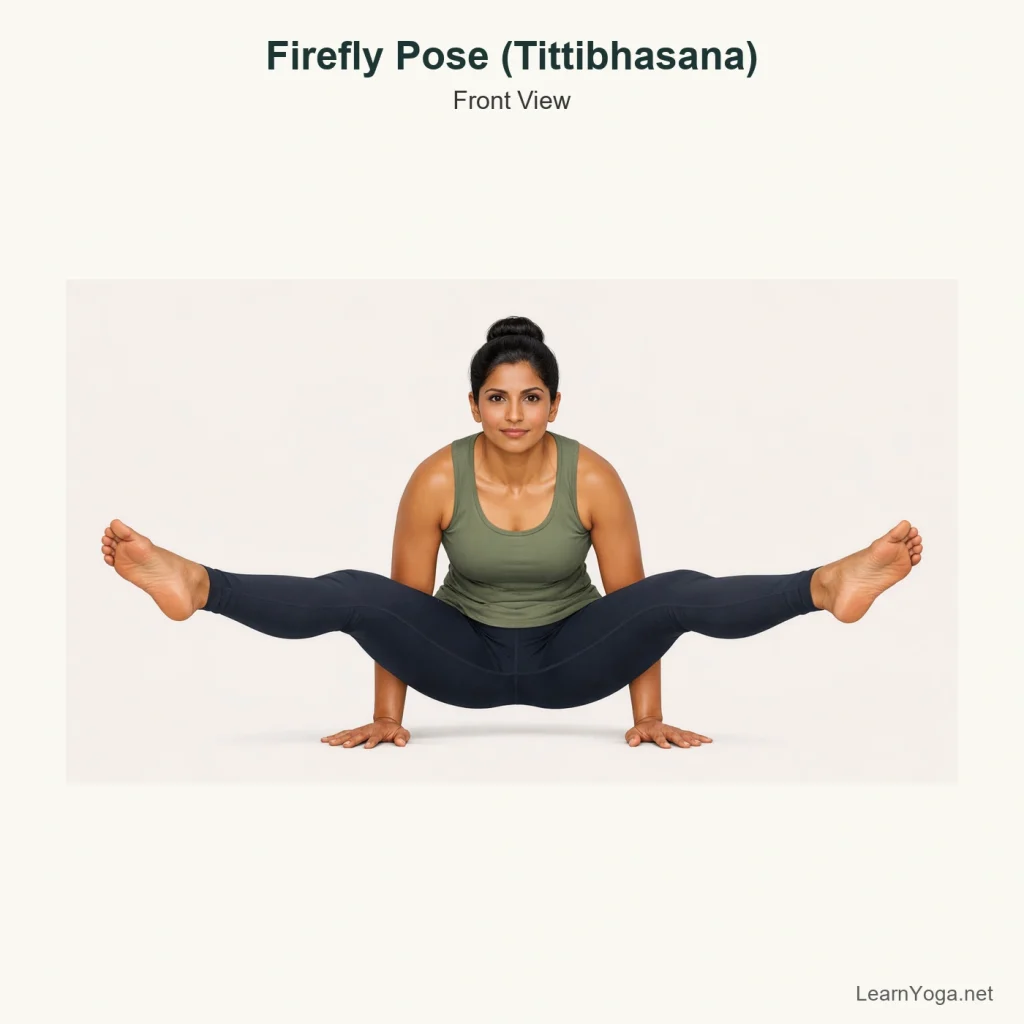
Firefly Pose is a strong arm balance with the legs reaching forward and the hips lifted from the floor. It asks for deep hip flexion, hamstring length, steady hands and a clear shift of weight into the arms.

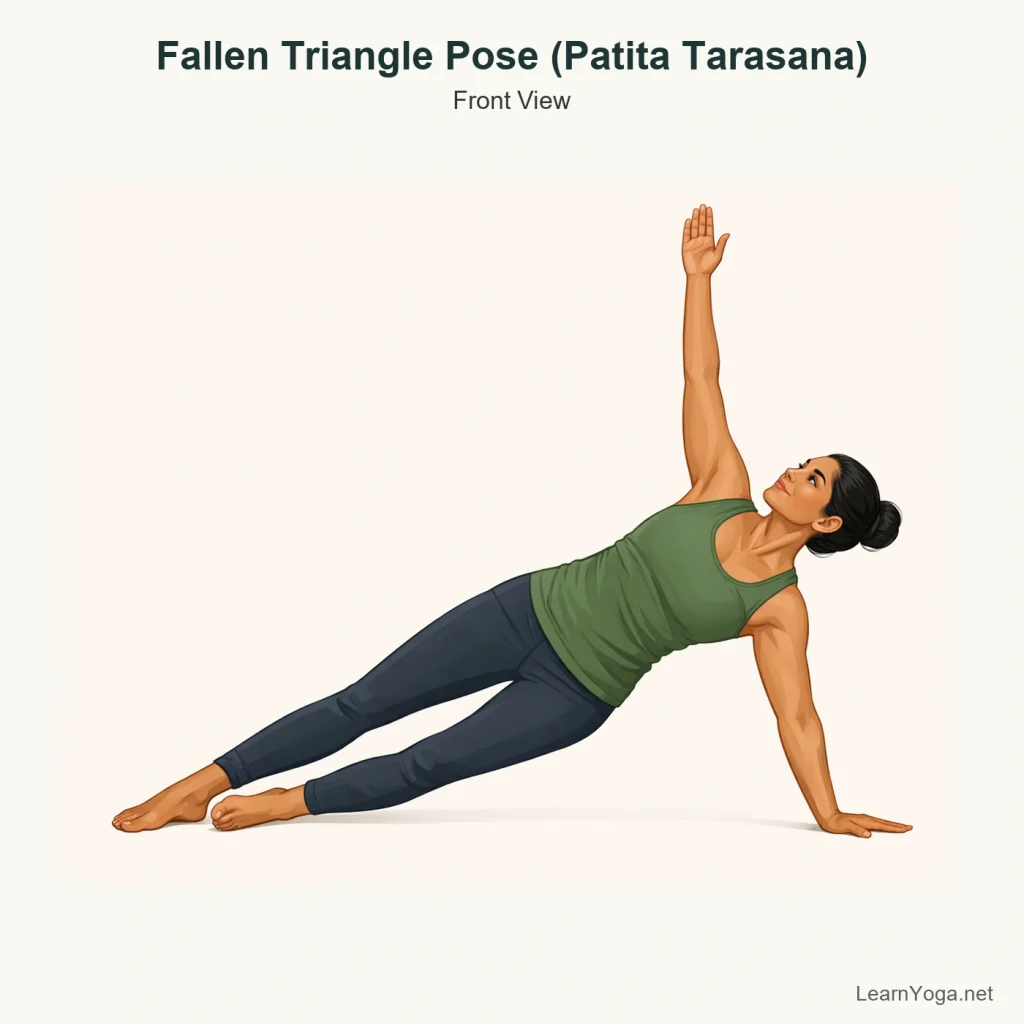
Fallen Triangle is a twisting balance with one hand on the floor, one foot grounded and the other leg extended underneath the body. It builds coordination between the shoulders, core and hips, and it usually feels steadier when you focus on the long line from the grounded hand through the lifted side of the chest rather than trying to drop into the shape quickly.

Forearm Balance Preparation builds the shape and control for Pincha without asking for a full free balance. It strengthens the shoulders and centre, teaches you how to press the floor away through the forearms, and lets you work with the wall if that gives you a steadier setup.

Eight-Angle Pose is a demanding seated arm balance that combines hip mobility, adductor grip, arm strength and clear trunk control. It usually works better when you build the shape in stages instead of trying to jump straight into the full pose.
Learn how pose order changes a complete session in How Yoga Sequencing Works. If you are learning a particular pose, use the Pose Progression Explorer to find preparation and possible next steps.