Eight-Angle Pose is a demanding seated arm balance that combines hip mobility, adductor grip, arm strength and clear trunk control. It usually works better when you build the shape in stages instead of trying to jump straight into the full pose.
This pose asks for more than strong arms. The leg high on the shoulder needs to stay connected, the hands need to press evenly, and the lower belly has to organise the shape so the weight does not drop heavily into the wrists. Some bodies will find the hip placement straightforward and the lift difficult; others may feel the opposite. It is fine to work with partial versions for quite a while.
How to do Eight-Angle Pose
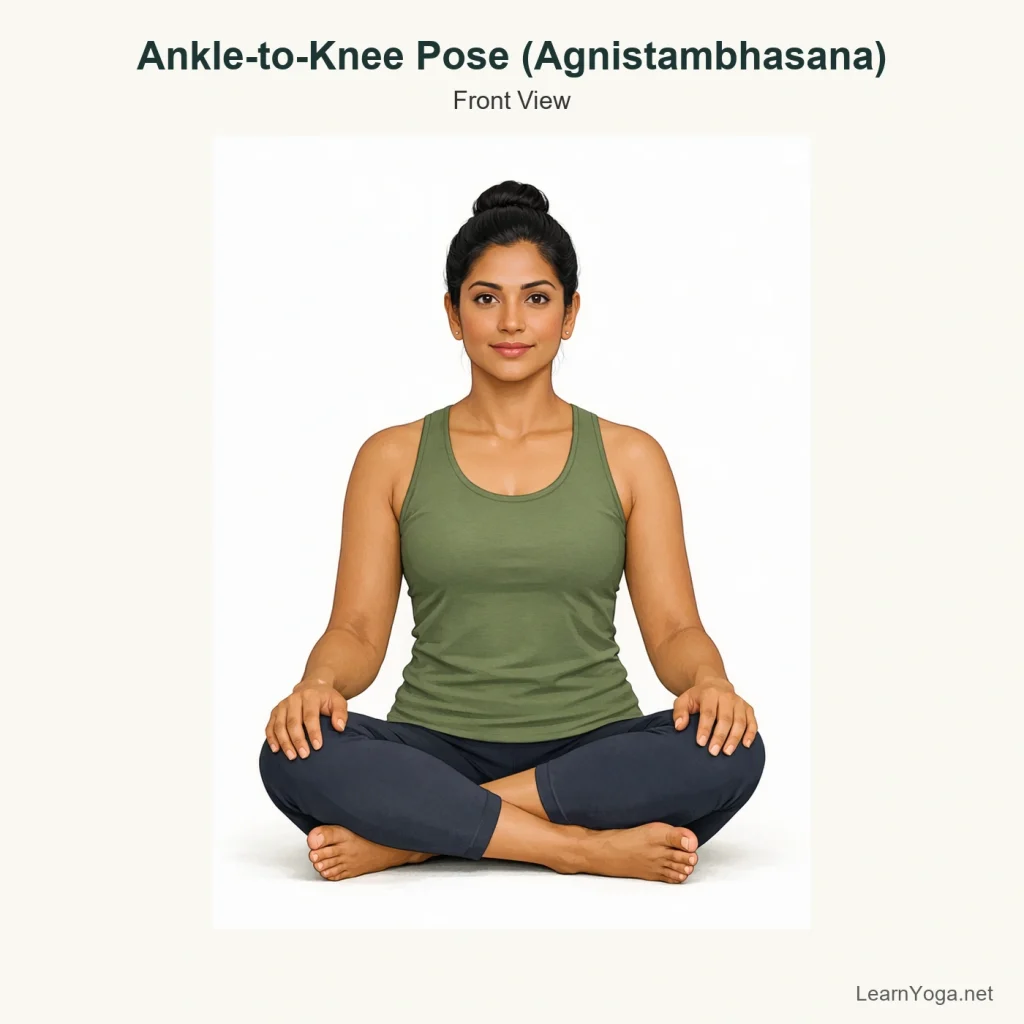
Sit with both legs extended. Bend one knee and draw that thigh in toward your chest.
Take the bent leg as high onto the same-side upper arm as your comfortable range allows. Use both hands to help place it, keeping the foot active.
Plant both hands on the floor beside your hips. Start to lean slightly forward and press down through the palms to lighten the seat.
Cross the other ankle over the first ankle in front of you. Squeeze the legs together as though you are holding the upper arm firmly between them.
On an exhale, bend the elbows a little, shift the chest forward and lift the hips from the floor. Keep looking slightly ahead rather than straight down.
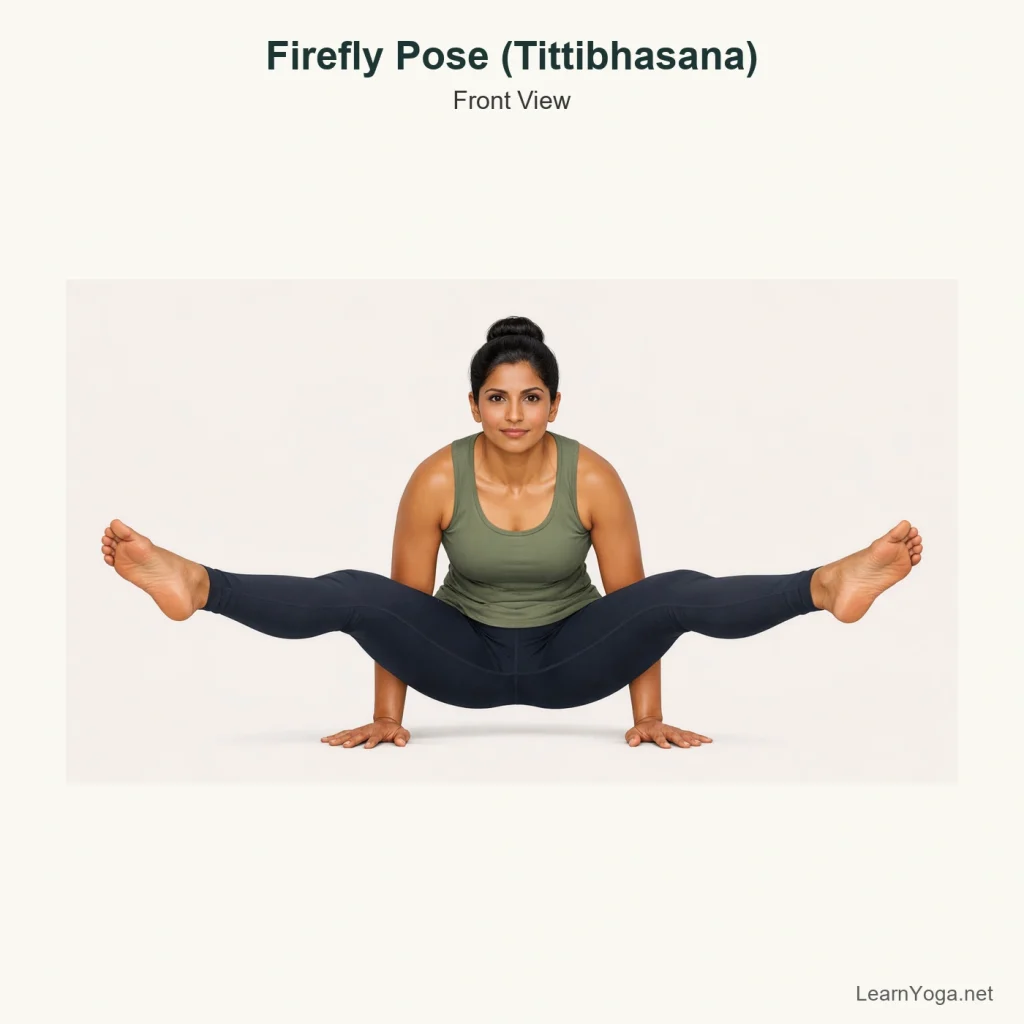
If you are stable, begin to extend both legs out to the side while keeping them crossed and active. Press the inner thighs together and keep the belly drawing in.
Stay for 2 to 5 breaths, breathing steadily. To come out, bend the knees, lower the hips with control and release the legs.
Repeat on the second side.
Yogita's tip
If the pose keeps collapsing as soon as you lift, check the top leg first. When that thigh sits a little higher on the arm and the legs hug in firmly, the hips usually feel much lighter.
Benefits
Builds pressing strength in the hands, arms and shoulders.
Develops strong midline engagement through the belly and inner thighs.
Practises coordinating hip mobility with arm balance rather than using force alone.
Improves concentration because the pose needs a clear forward shift and steady effort.
Common mistakes
Trying to lift before the top thigh is well placed on the arm.
Dropping the chest back, which makes the hips feel much heavier.
Letting the legs go passive instead of squeezing them together.
Looking straight down and rounding into the shoulders.
Forcing the leg higher than the hip comfortably allows.
Make it work for you
Seated placement practice
Work only on placing one leg high on the shoulder and pressing the hands into the floor without lifting. Stay for a few breaths, then change sides.
Hip lift with bent knees
After crossing the ankles, keep both knees bent and focus on lifting the hips for 1 breath at a time. This reduces the lever length and makes the balance easier to organise.
Hands on blocks
Place a block under each hand to give the hips more clearance. Press down firmly and keep the elbows drawing back rather than splaying wide.
Alternatives
Crow Pose
Practise balancing with the knees on the upper arms and both feet lifted. Keep the gaze slightly forward and the belly active.
Use this if the full crossed-leg shape is not yet available but you want to work on arm balance basics.
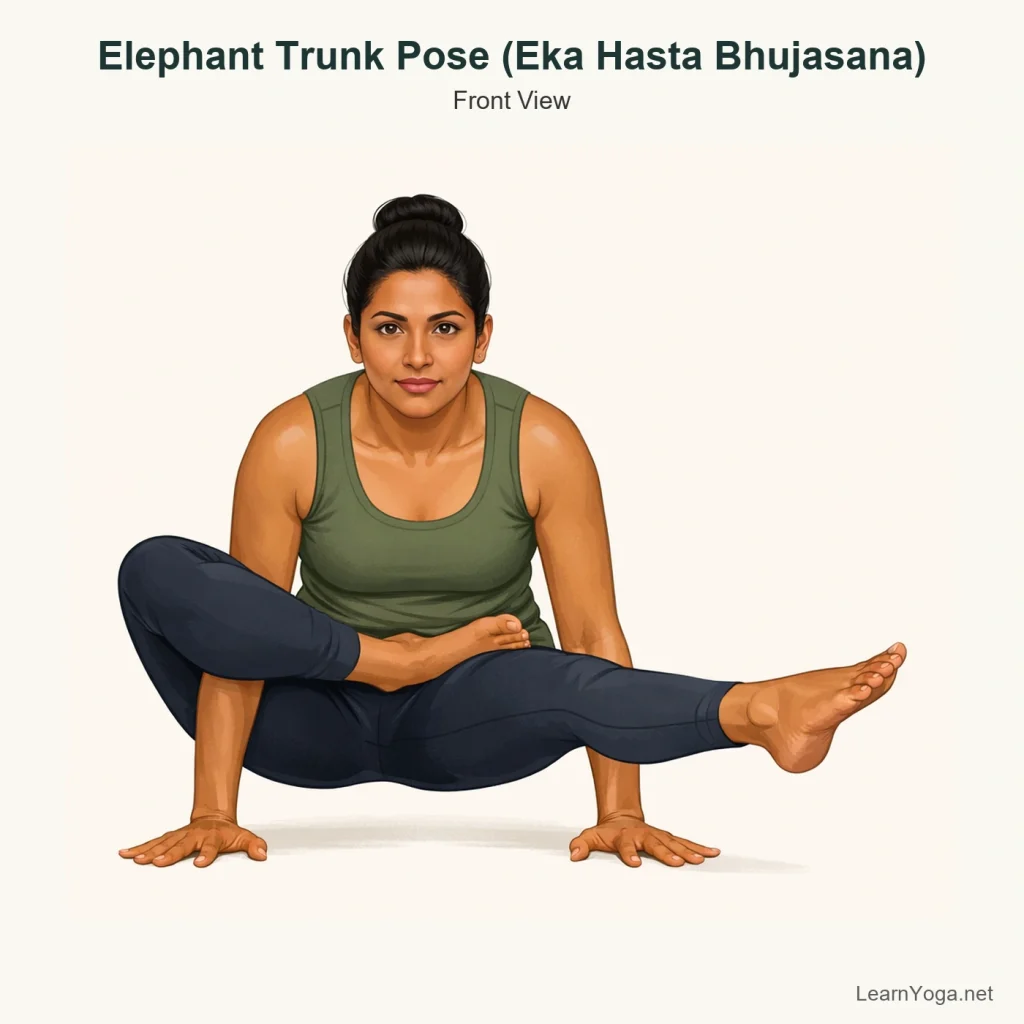
Elephant Trunk Pose
Sit upright with one leg over the shoulder and the hands on the floor beside you. You may keep the other foot grounded while you practise lifting the seat.
Use this if placing the leg on the arm is the main challenge.
Boat Pose
Balance on the sitting bones with the spine long and the shins lifted or legs extended. Keep the chest broad and breathe steadily.
Use this if wrist loading is not comfortable but you want to train the core work needed for Eight-Angle Pose.
Common variations
Bent-Knee Eight-Angle Pose
The pose is entered and briefly held with both knees still bent, which reduces the load of extending the legs away from the centre.
Block-Supported Eight-Angle Pose
Both hands press into blocks to create more space under the hips and make the lift more accessible.
Entry from Elephant Trunk
The pose is approached by first establishing one leg securely over the shoulder before crossing the ankles and leaning into the balance.
Safety and contraindications
When to avoid or get individual guidance
Avoid or modify if you have a current wrist, shoulder or hamstring injury.
Skip the full pose if deep hip flexion or strong abdominal bracing is not comfortable today.
This pose places clear load through the wrists, shoulders and lower belly, with a deep hip position on one side.
Warm the wrists, shoulders and hips first. A cold entry tends to make the lift feel abrupt.
Keep some bend in the elbows as you organise the balance, but avoid sinking heavily into the shoulder joints.
If the leg-on-shoulder setup creates pinching at the front of the hip or sharp hamstring pulling, back out and use a preparation instead.
Pause Astavakrasana and use a simpler arm-balance preparation when sharp pain shows up in the wrist, shoulder, groin or hamstring, or the weight keeps dropping into the arms. Get individual guidance before trying the full pose again.
Accessibility and limited mobility
This pose is not essential for a balanced practice. If getting down to the floor, deep hip flexion or weight-bearing on the hands is not comfortable, choose a seated core pose such as Boat Pose instead.
Older adults or anyone with reduced wrist tolerance may prefer hands-on-blocks preparation or a non-weight-bearing alternative.
If the leg does not comfortably come high onto the shoulder, do not force it there. The setup can be practised without attempting the lift.
Easier options
Use these related poses when you want a more accessible way to practise a similar movement or prepare for this pose.
Do I need to straighten my legs fully in Eight-Angle Pose?
No. Many practitioners first learn the pose with the knees still somewhat bent. The more useful priorities are keeping the top leg secure on the arm, hugging the legs together and lifting the hips with control.
Why can I place the leg on my shoulder but still not lift?
That usually means the forward shift is missing, or the legs are not squeezing strongly enough. Once the hands are planted, lean the chest slightly ahead of the wrists and exhale as you press down. A brief hip hover is enough to practise.
Where should I look in this pose?
A soft gaze slightly forward usually helps more than looking straight down. When the head drops, the chest often drops with it, and the balance becomes heavier.
What if my wrists do not like this pose?
Try hands on blocks, reduce the hold to a very short lift, or choose Boat Pose or Elephant Trunk preparation instead. If weight-bearing on the hands is painful, skip the full pose that day.
Should I jump into Eight-Angle Pose?
Usually no. A slower setup gives you time to place the thigh, cross the ankles and organise the arms. For most people, the pose is steadier when entered in clear stages rather than as a quick lift.
Reviewed for yoga instruction
Yogita
Certified Yoga Instructor with 5+ years of Teaching and Consistent Practice