Explore by goal

Yoga Poses for Strength

Build strength through yoga poses that ask your muscles to support, stabilise and control your body. Browse poses for the core, legs, arms and upper body, and choose variations that suit your current level of practice.

Build a practice around this goal

The poses below share this goal classification, but a useful practice still needs an appropriate order, level and pace. Use the pose guides for modifications and safety notes, or let the Practice Builder arrange a complete sequence.

Build a practice Browse routines

Person practising Kneeling Side Plank with one knee down and the top arm reaching upward.

Kneeling Side Plank

Vasisthasana Variation

Kneeling Side Plank is a simpler way into side-body strength and balance than the full version. With one knee down, you still work the supporting shoulder, arm and waist, but with less load on the wrist and less demand on balance.
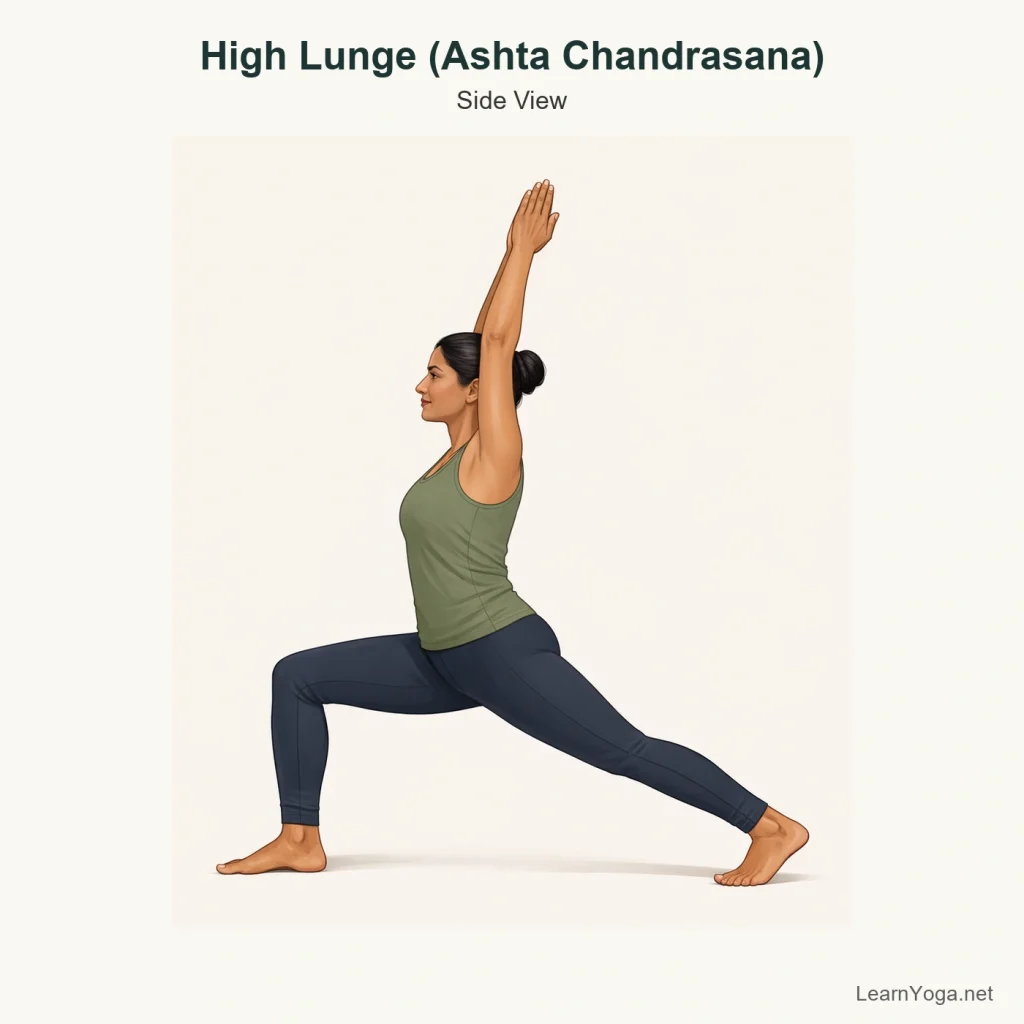
Side view of High Lunge with front knee bent, back heel lifted and arms reaching overhead.

High Lunge

Ashta Chandrasana

High Lunge is a strong standing pose that builds heat through the legs while asking for balance, length in the hip flexors and steadiness through the trunk.

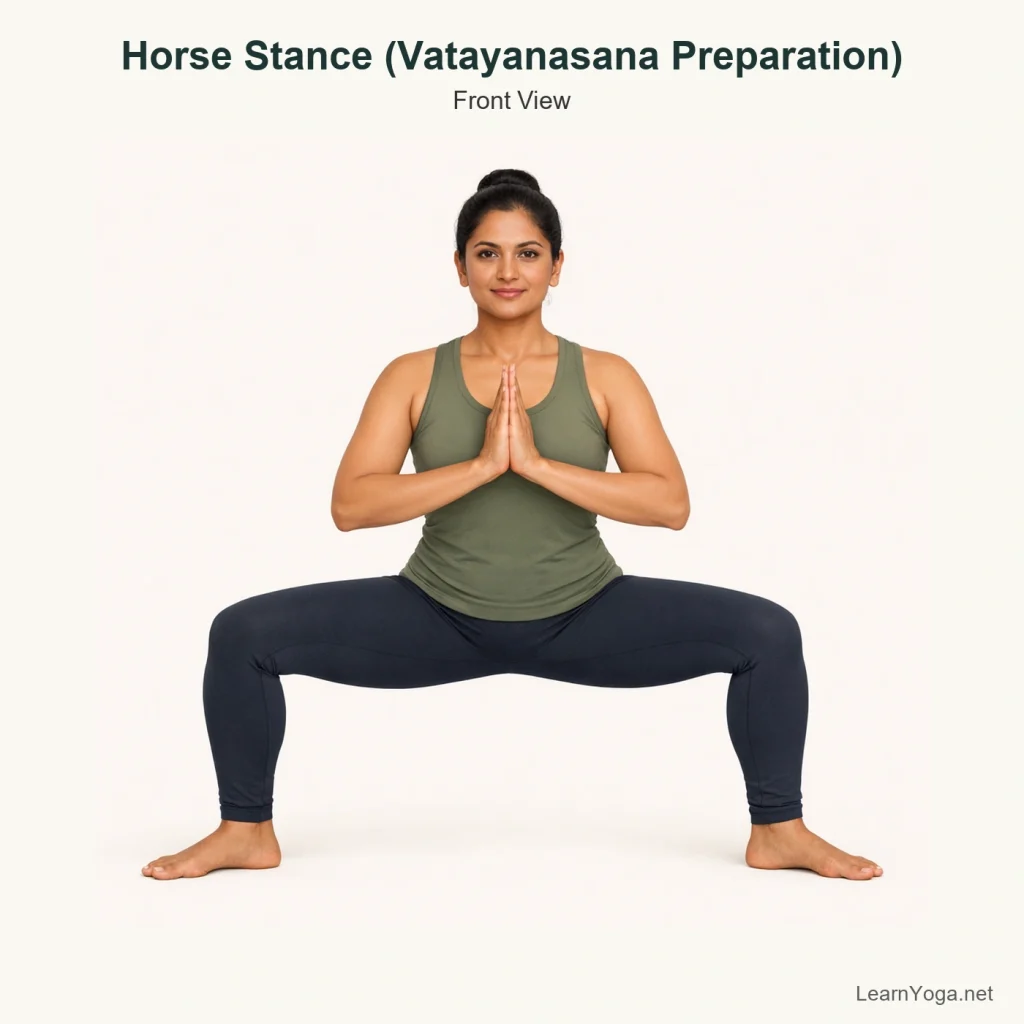
Person practising Horse Stance with a wide stance, toes turned out, knees bent and torso upright.

Horse Stance

Vatayanasana Preparation

Horse Stance is a wide standing squat with the toes turned out and the knees bending over the feet. It is a simple way to work the legs, wake up the hips and practise staying upright while the lower body does the work.

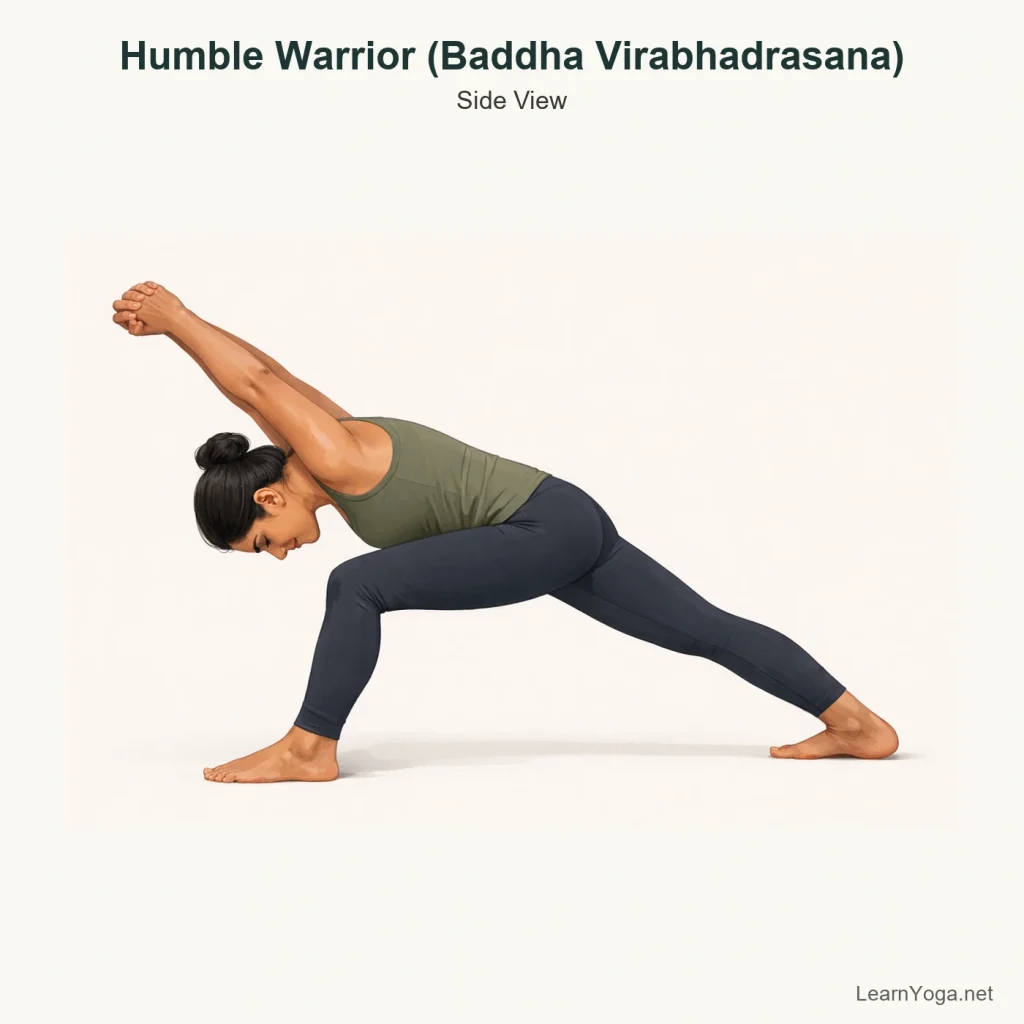
Person practising Humble Warrior in side view with hands bound behind the back and torso folded over the front leg.

Humble Warrior

Baddha Virabhadrasana

Humble Warrior combines a Warrior I base with a bound shoulder opening and a forward fold over the front leg. It asks for steady feet, active legs and enough shoulder range to clasp the hands comfortably, so it is usually more manageable when entered gradually.

Person practising supported Headstand with forearms grounded and legs extended vertically.

Headstand

Sirsasana

Headstand is a full inversion that asks for shoulder support, trunk control and careful balance. It is usually safer to build it gradually than to kick into it.

Person balancing in Handstand with straight arms and legs stacked over the shoulders.

Handstand

Adho Mukha Vrksasana

Handstand is a strong, balance-heavy inversion that asks for organised shoulders, active hands and a steady centre. For many people it is best approached progressively, often first with wall support.

Person practising Half Moon Pose with one hand reaching down and the top leg lifted parallel to the floor.

Half Moon Pose

Ardha Chandrasana

Half Moon Pose is a standing balance with one leg grounded and the other reaching long behind. It asks for ankle stability, hip control and a clear sense of length through the whole body more than a high lifted leg.

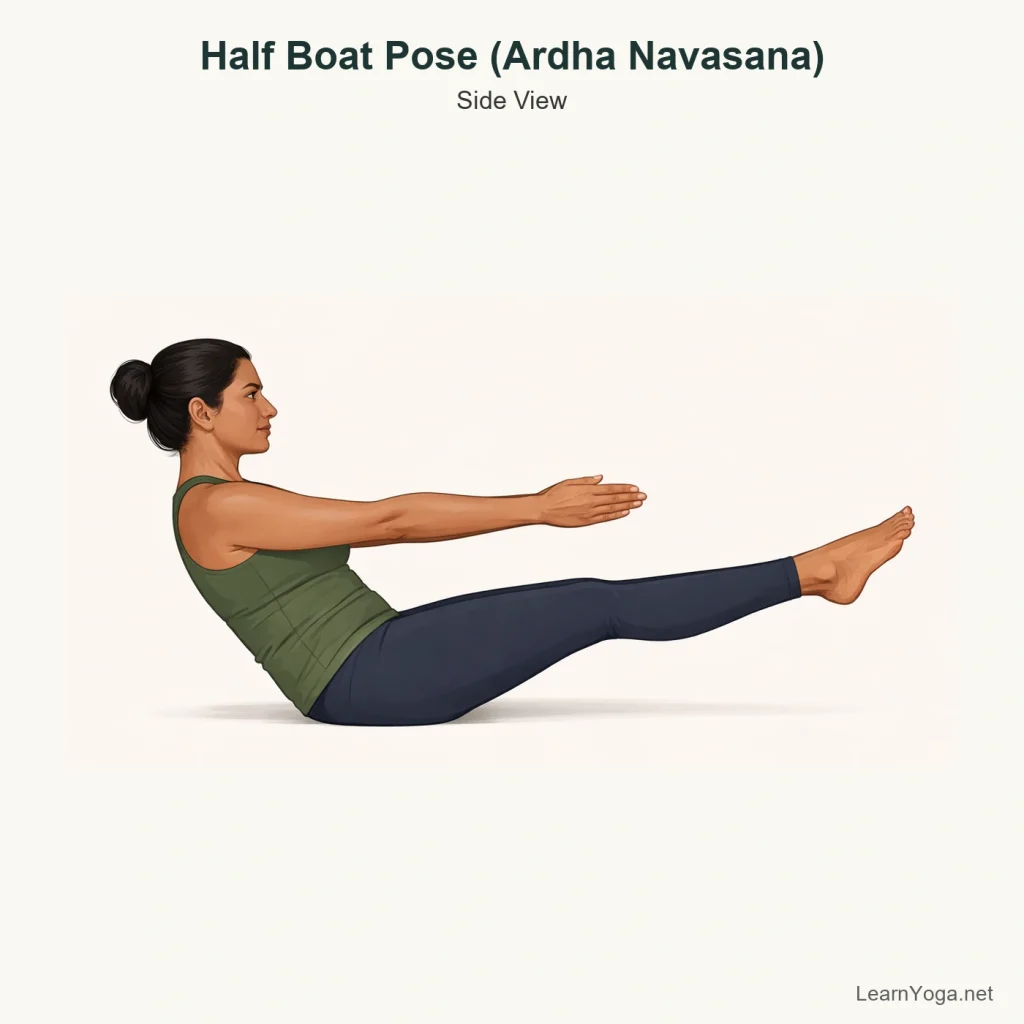
Side view of Half Boat Pose with bent knees, torso reclined and shins lifted parallel to the floor.

Half Boat Pose

Ardha Navasana

Half Boat Pose is a compact core posture that asks you to balance on the back of the sitting bones while the legs and torso hover. The shape is less about lowering as far as possible and more about keeping the front body engaged without hard gripping in the neck or lower back.

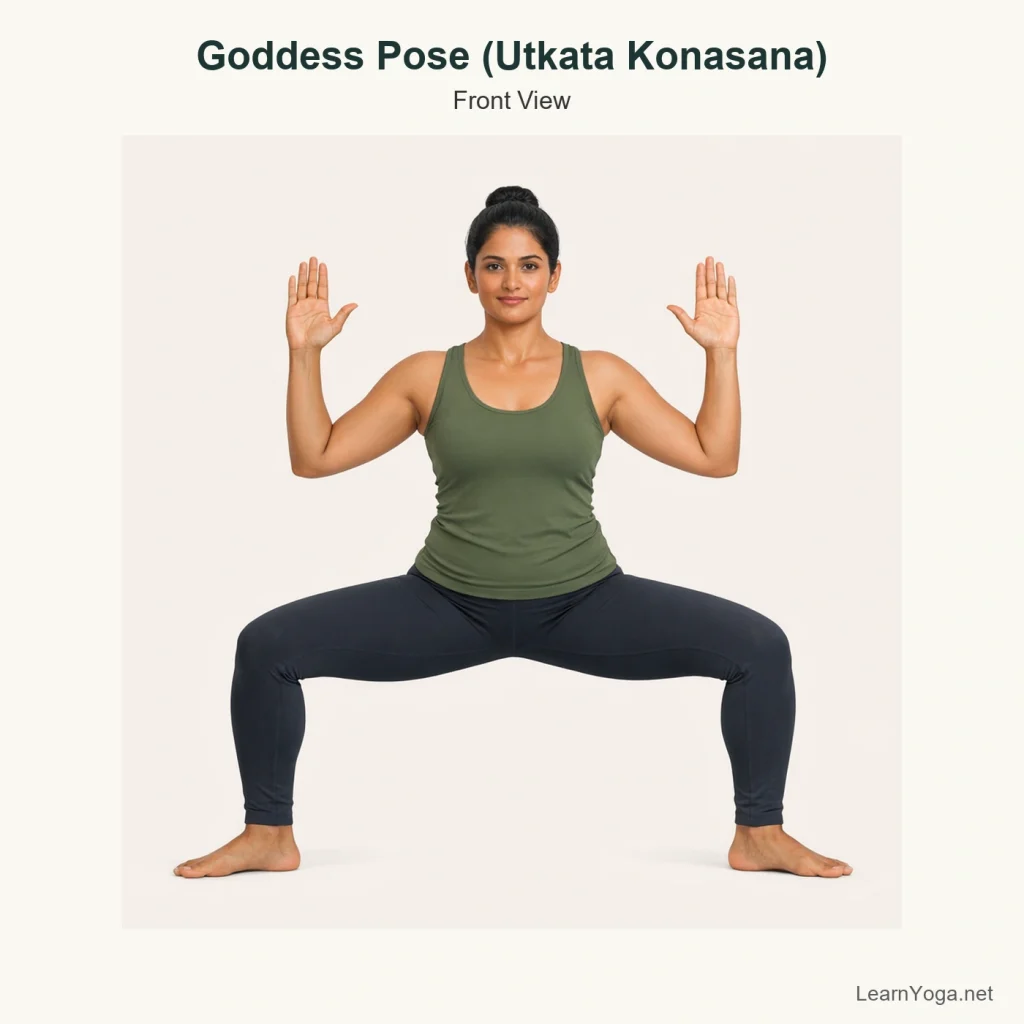
Person practising Goddess Pose in a wide stance with knees bent outward and torso upright

Goddess Pose

Utkata Konasana

Goddess Pose is a wide-legged standing squat with the feet turned out and the knees bending over the toes. It strengthens the legs, asks the hips to open in a workable range, and helps you practise staying upright while the lower body does more of the effort.

Yogi balancing in Grasshopper Pose with one thigh hooked on the upper arm and the other leg extended to the side.

Grasshopper Pose

Parsva Bhuja Dandasana

Grasshopper Pose is an advanced twisting arm balance that combines a deep standing twist, hamstring length and strong support through the hands, shoulders and centre.

Continue learning

Learn how pose order changes a complete session in How Yoga Sequencing Works. If you are learning a particular pose, use the Pose Progression Explorer to find preparation and possible next steps.