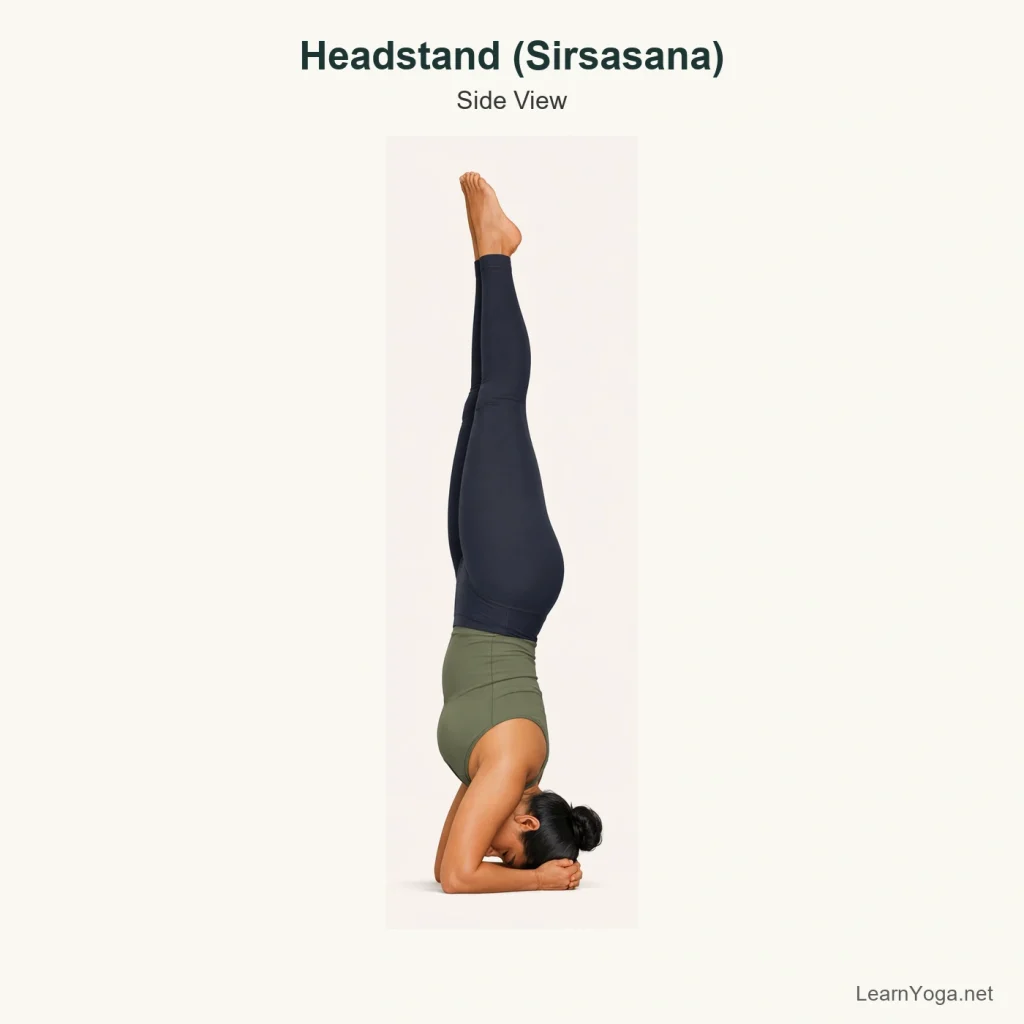
Headstand is a full inversion that asks for shoulder support, trunk control and careful balance. It is usually safer to build it gradually than to kick into it.
Headstand can look like a neck pose, but in a well-organised version much of the work is in the forearms, shoulders and centre of the body. The shape asks for patience. A smaller, steadier version is often more useful than trying to get both legs up quickly.
How to do Headstand
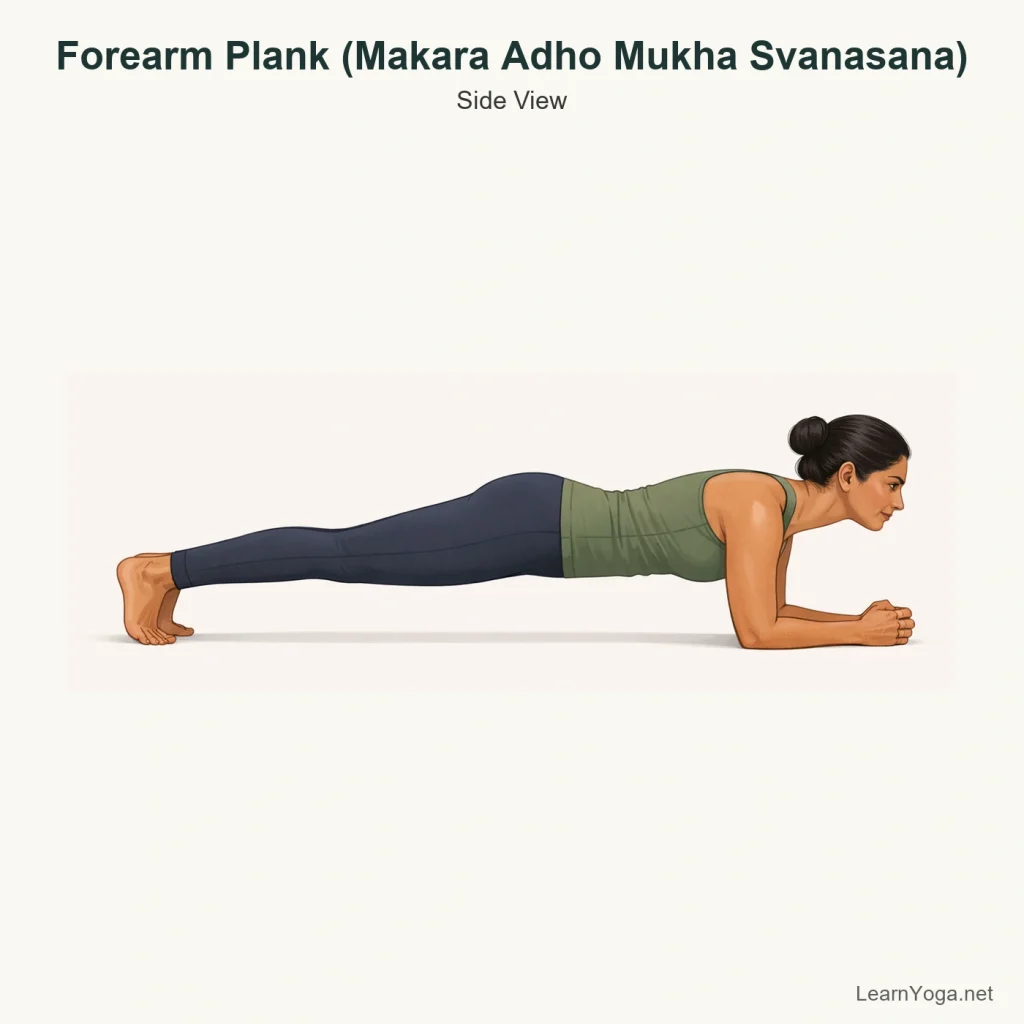
Start kneeling. Interlace your fingers and place your forearms on the floor with elbows about shoulder-width apart.
Set the back of your head lightly into your hands so the crown of the head rests on the mat. Keep the hands cupping the head rather than gripping hard.
Press the forearms down firmly and lift the shoulders away from the ears so the neck does not sink.
Tuck the toes and straighten the legs into a short Dolphin-like shape. Walk the feet in until the hips stack more over the shoulders.
Stay here if this is enough today, or bend one knee and then the other toward the chest without jumping.
Draw the lower belly gently in and keep pressing the floor away. Lift both knees in with control, balancing in a compact tuck first.
If the tuck feels steady, slowly extend the hips and legs upward. Reach through the balls of the feet or keep the knees softly bent while you find the line.
Take 3 to 5 calm breaths. Keep more weight in the forearms than you might expect, and keep the back of the neck long.
To come down, bend the knees back into a tuck, lower one foot and then the other to the floor with control, and rest in Child's Pose for a few breaths.
Yogita's tip
If you feel heavy on the head, press the forearms down more strongly and lift the tops of the shoulders up. That usually gives the neck more space straight away.
Benefits
Builds shoulder and upper-back support in an inverted position.
Strengthens the trunk muscles that help you control the lift and descent.
Gives balance practice that depends on small, precise adjustments rather than big movements.
Can improve your sense of body position in space.
Encourages steady attention because rushing usually makes the pose harder.
Common mistakes
Kicking up with momentum instead of lifting with control.
Letting the elbows slide wide, which makes the base less stable.
Dumping too much weight into the head and neck.
Arching the lower back and sending the ribs forward once the legs lift.
Trying to straighten the legs too early before the tuck is steady.
Holding the breath while balancing.
Make it work for you
Tuck Headstand at the Wall
Set up with your hands a short distance from a wall. Lift into a compact tuck with the back lightly facing the wall, and keep the knees bent while you organise the shoulders and breath.
One-Knee Lift Practice
From the setup, walk the feet in and draw one knee toward the chest, then lower it and switch sides. This builds the lift without taking both feet off the floor for long.
Forearm Base Hold
Stay with the forearm and head placement, lift the knees and walk the feet in as far as comfortable, then hold for 3 to 5 breaths without trying to balance.
Alternatives
Dolphin Pose
Use Dolphin to build the same forearm press and shoulder lift without loading the head in a full inversion.
Use this if you are still learning the shoulder action or if full inversion feels too strong today.
Legs Up the Wall
Lie on your back with the legs up the wall and let the spine and neck stay neutral.
Use this if you want an inverted shape without balancing or bearing weight through the head and forearms.
Forearm Stand Preparation
Practise the forearm base and shoulder work without placing the head down.
Use this if neck pressure is the main issue and you still want inversion preparation.
Common variations
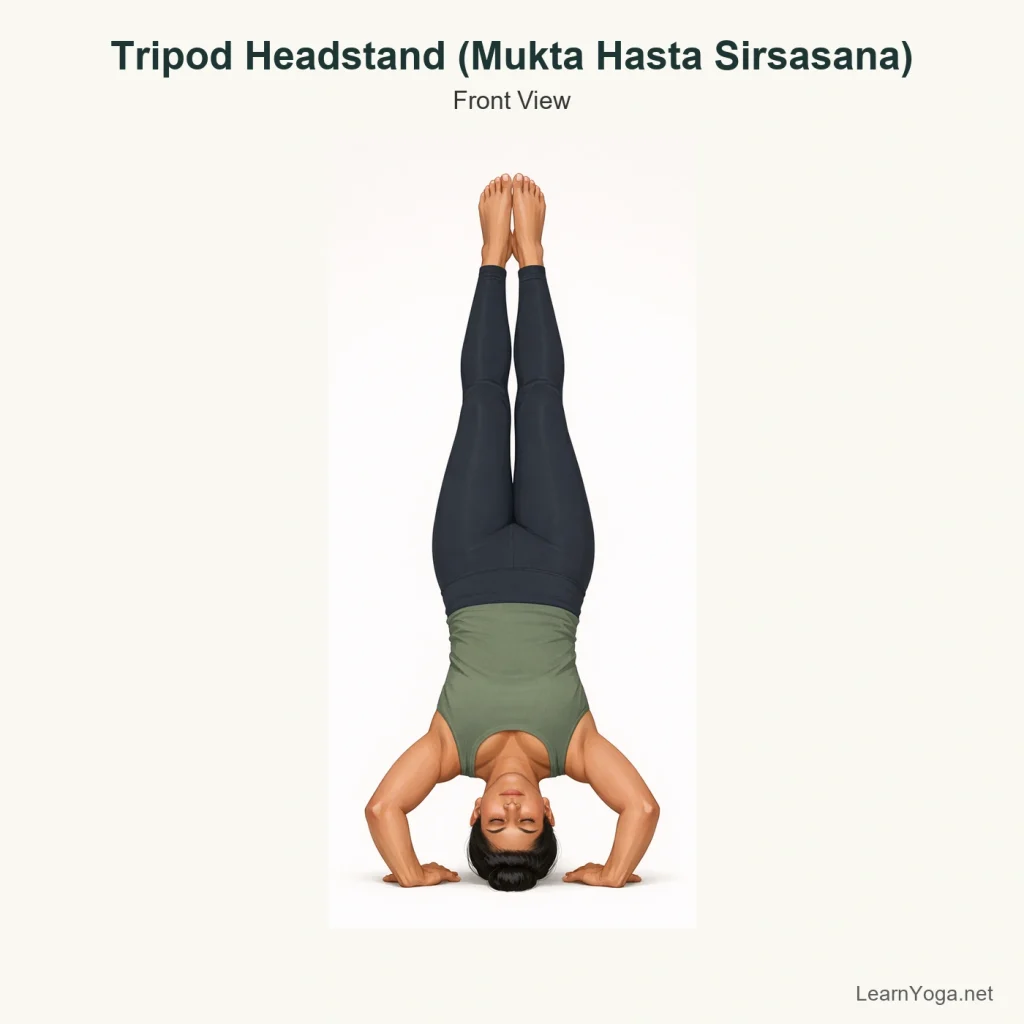
Tripod Headstand
A version with the hands on the floor and the head making a triangular base. It changes the load pattern and generally asks more of the arms and balance.
Supported Headstand at the Wall
Practised with a wall nearby so you can work on the lift and line with less fear of tipping.
Tuck Headstand
A compact version with bent knees close to the chest. Often more stable for learning than taking the legs straight up immediately.
Safety and contraindications
When to avoid or get individual guidance
Avoid this pose if you currently have neck pain, a recent head or shoulder injury, or cannot bear weight comfortably through the forearms.
Skip it if pressure upside down tends to feel unmanageable for you, or if you are tempted to kick up hard to get there.
Headstand places meaningful load through the shoulders, forearms and neck area, so set the base carefully and move slowly.
Do not turn the head while in the pose. Keep the gaze steady and come down before looking around.
If the elbows keep sliding, stop and reset rather than pushing through a wobbly base.
A wall can reduce the fear of tipping, but avoid crashing into it with momentum.
Come down if you notice sharp neck pain, strong pressure building in the head, or shoulder pain that keeps returning even with wall support. Work with individual guidance before trying Headstand again.
Accessibility and limited mobility
This pose is not essential. If getting down to the floor or bearing weight through the forearms is difficult, choose Legs Up the Wall or Supported Bridge instead.
Older adults or anyone with reduced balance confidence may find wall-based alternatives more workable than free balancing.
If neck range feels limited or turning the head is uncomfortable, avoid this pose and choose an inversion that keeps the head fully supported on the floor or wall.
Easier options
Use these related poses when you want a more accessible way to practise a similar movement or prepare for this pose.
How much weight should be on my head in Headstand?
Usually less than people think. The forearms should press down strongly and the shoulders should lift so the neck does not take the whole load. If you feel jammed into the crown of the head, come down and rebuild the base.
Is it better to learn Headstand at the wall?
For many people, yes. A wall can make the practice calmer and reduce the urge to kick. It is still worth moving up in a tucked shape with control rather than throwing the legs back to the wall.
Why can't I lift both feet without jumping?
Often the hips are not yet far enough over the shoulders, or the centre of the body is not organised enough to hold a tuck. Walk the feet in more, keep pressing the forearms down, and practise lifting one knee at a time.
Should my legs be completely straight once I am up?
Not necessarily at first. A slight bend in the knees can help you keep the ribs from pushing forward and can make the balance easier to find. Straight legs can come later if that suits your body.
What should I do right after coming down?
Lower slowly, then rest for a few breaths in Child's Pose. Give the breath time to settle before lifting the head quickly or moving into another strong pose.
Reviewed for yoga instruction
Yogita
Certified Yoga Instructor with 5+ years of Teaching and Consistent Practice