Explore by goal

Yoga Poses for Strength

Build strength through yoga poses that ask your muscles to support, stabilise and control your body. Browse poses for the core, legs, arms and upper body, and choose variations that suit your current level of practice.

Build a practice around this goal

The poses below share this goal classification, but a useful practice still needs an appropriate order, level and pace. Use the pose guides for modifications and safety notes, or let the Practice Builder arrange a complete sequence.

Build a practice Browse routines

Side view of Wild Thing with one hand grounded, chest turning upward and the top foot stepped behind the body.

Wild Thing

Camatkarasana

Wild Thing is a one-handed backbend with a turning action through the chest and pelvis. It asks for shoulder stability, wrist tolerance and enough control in the feet and core to keep the shape spacious rather than thrown together.

Side view of Warrior III with the body reaching forward and back in one long line while balancing on one leg.

Warrior III

Virabhadrasana III

Warrior III is a standing balance where the body reaches into one long line from heel to head. It asks the standing foot, hip and core to organise clearly while the back leg stays active.

Side view of Wheel Pose with hands and feet on the floor, arms and legs supporting an arched back.

Wheel Pose

Urdhva Dhanurasana

Wheel Pose is a strong full backbend done from the floor. It asks for shoulder opening, leg drive, spinal extension and wrist tolerance, so it usually works best after preparation and with a lower option available.

Person practising Warrior I with front knee bent, back heel grounded and arms reaching overhead.

Warrior I

Virabhadrasana I

Warrior I is a standing lunge with the back heel grounded and the arms reaching up. It asks for steadiness through the legs while the chest lifts and the spine lengthens, and it often works best with a slightly shorter stance than people expect.

Person practising Warrior II with the front knee bent, back leg straight and arms extended wide at shoulder height.

Warrior II

Virabhadrasana II

Warrior II is a wide standing pose with one knee bent, one leg straight and the arms reaching out to the sides. It builds steadiness in the legs and helps you practise keeping the chest broad without hardening the lower back.

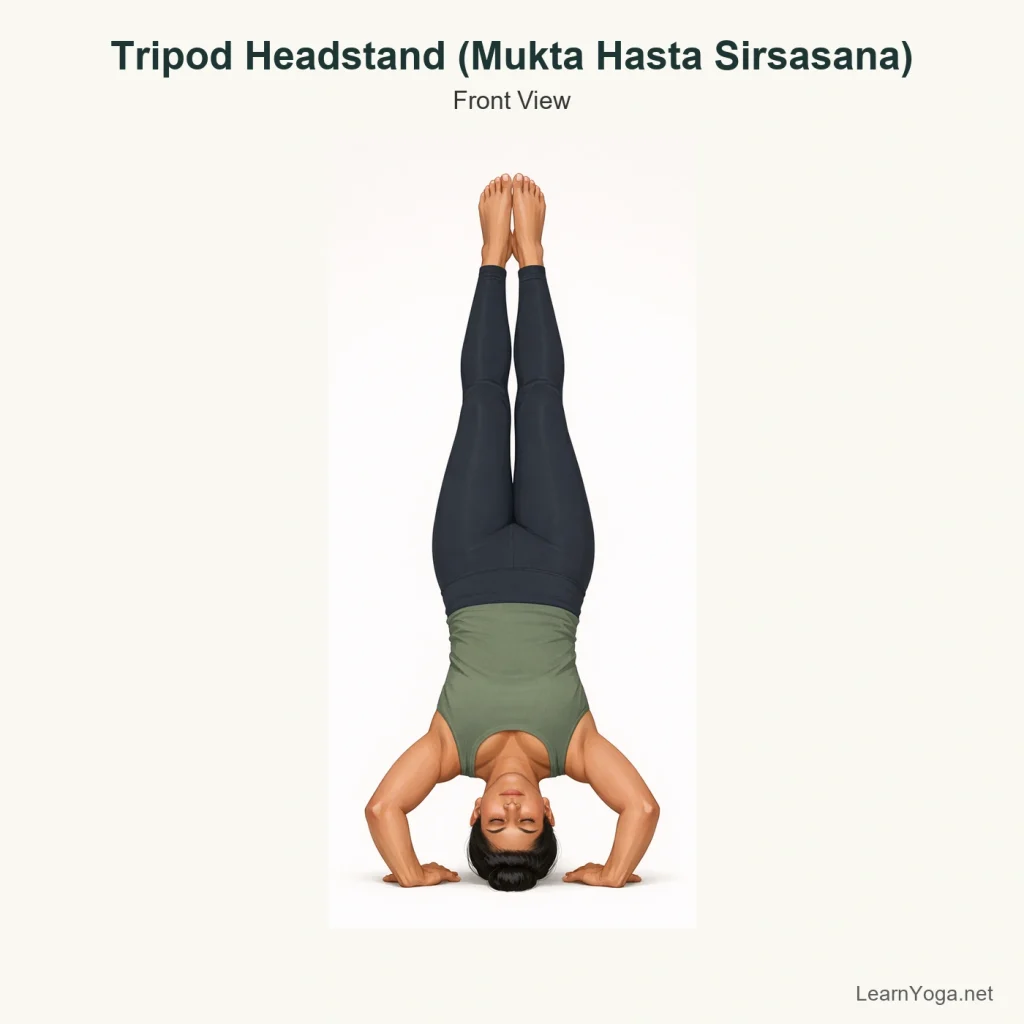
Person practising Tripod Headstand with hands and head forming a stable base and knees tucked in.

Tripod Headstand

Mukta Hasta Sirsasana

Tripod Headstand is a compact inversion where the head and hands make a three-point base. It asks for shoulder support, wrist tolerance, balance and clear control through the centre of the body rather than a hard kick upward.

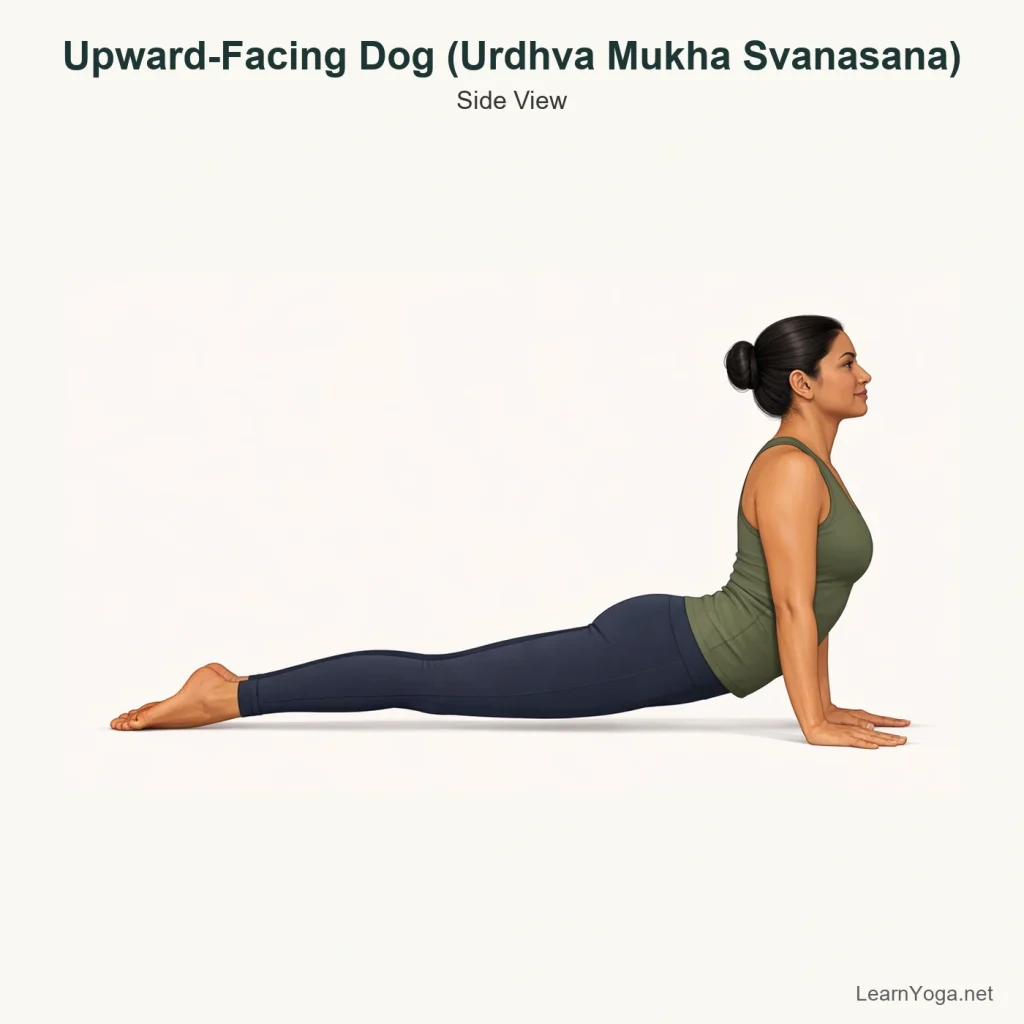
Side view of Upward-Facing Dog with straight arms, open chest and thighs lifted from the mat.

Upward-Facing Dog

Urdhva Mukha Svanasana

Upward-Facing Dog is a strong backbend done from the floor with straight arms, a broad chest and the thighs lifted away from the mat. It asks the legs, hands and spine to work together rather than dropping the weight into the lower back.

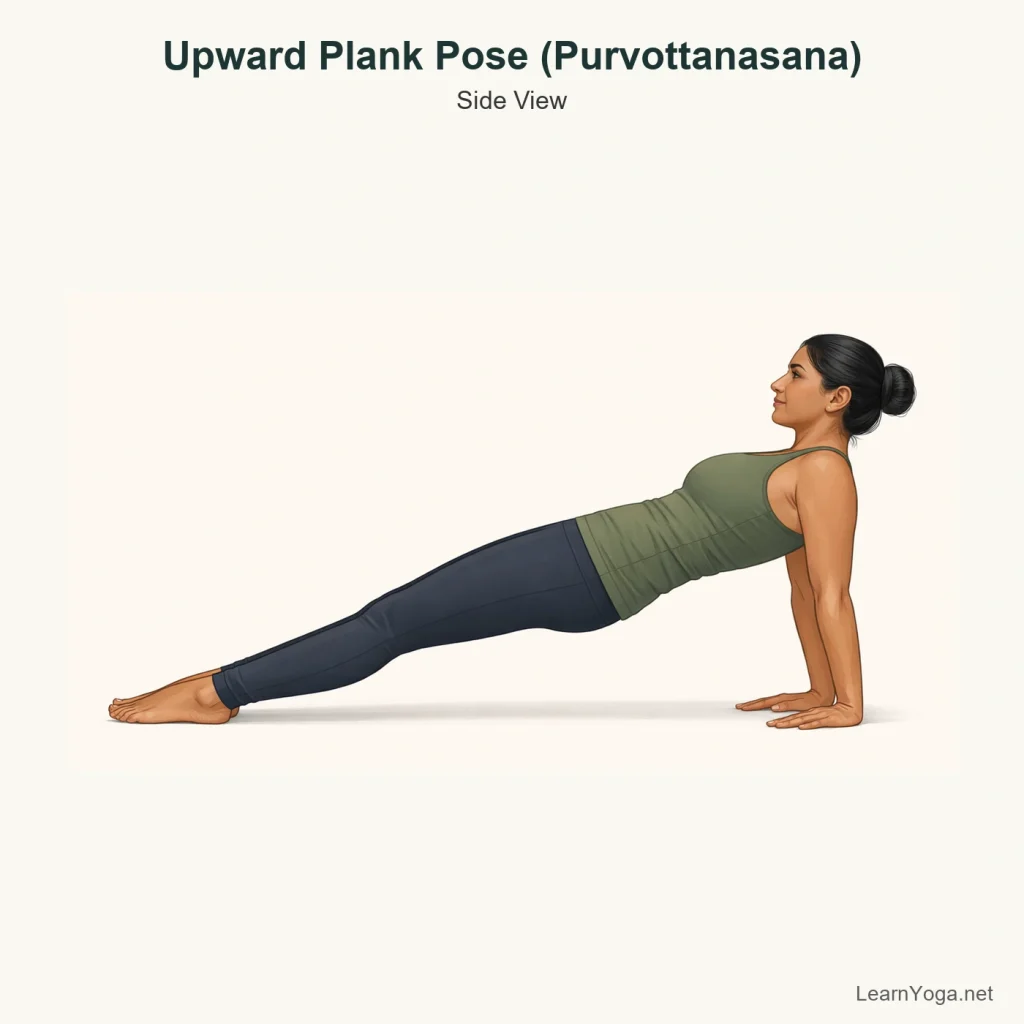
Side view of Upward Plank Pose with straight legs, lifted hips and hands placed behind the body.

Upward Plank Pose

Purvottanasana

Upward Plank Pose is a strong front-body opening done from the floor. It asks the shoulders, wrists, legs and back body to work together as you press the chest up and lengthen through the whole front line of the body.

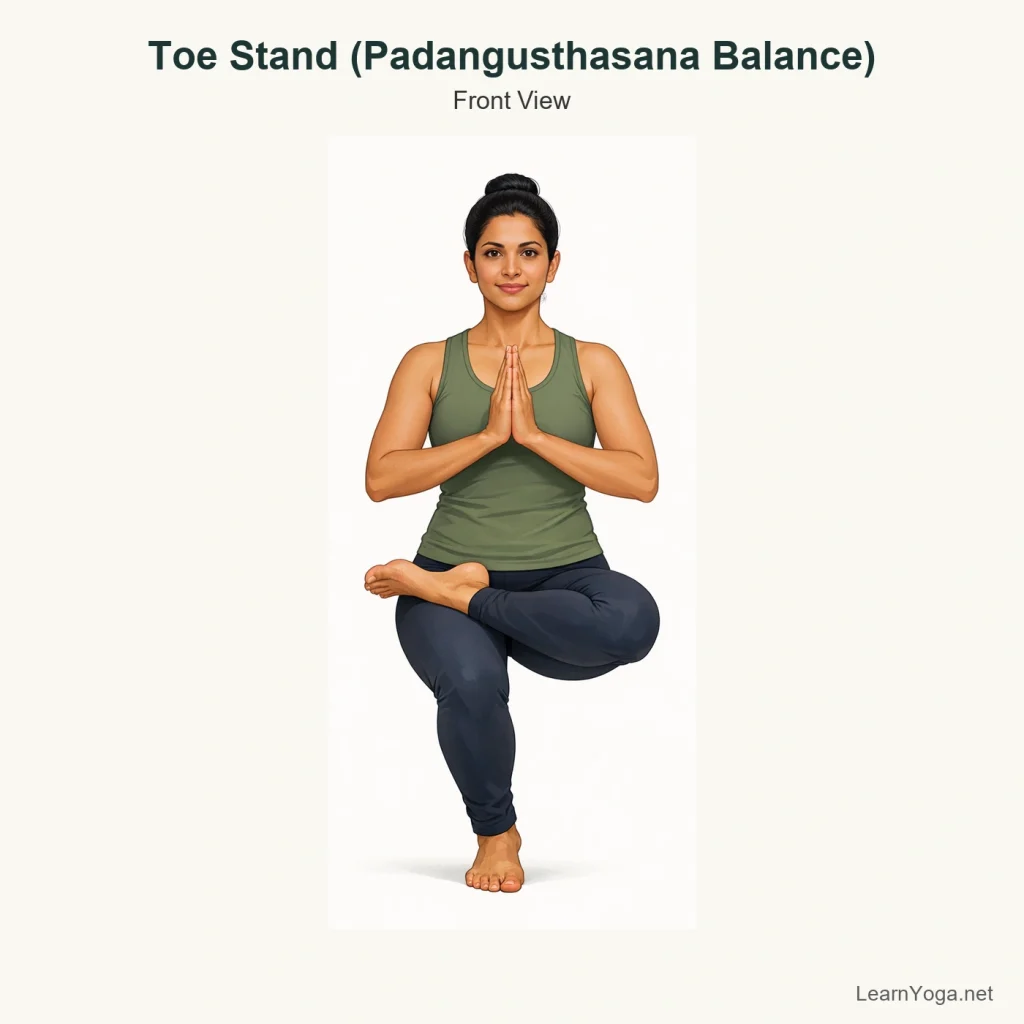
Person practising Toe Stand in a balanced figure-four squat on the ball of one foot, front view.

Toe Stand

Padangusthasana Balance

Toe Stand is a compact one-leg balance done from a figure-four setup. It asks for ankle stability, control through the standing leg and enough hip mobility to lower without collapsing into the knee.

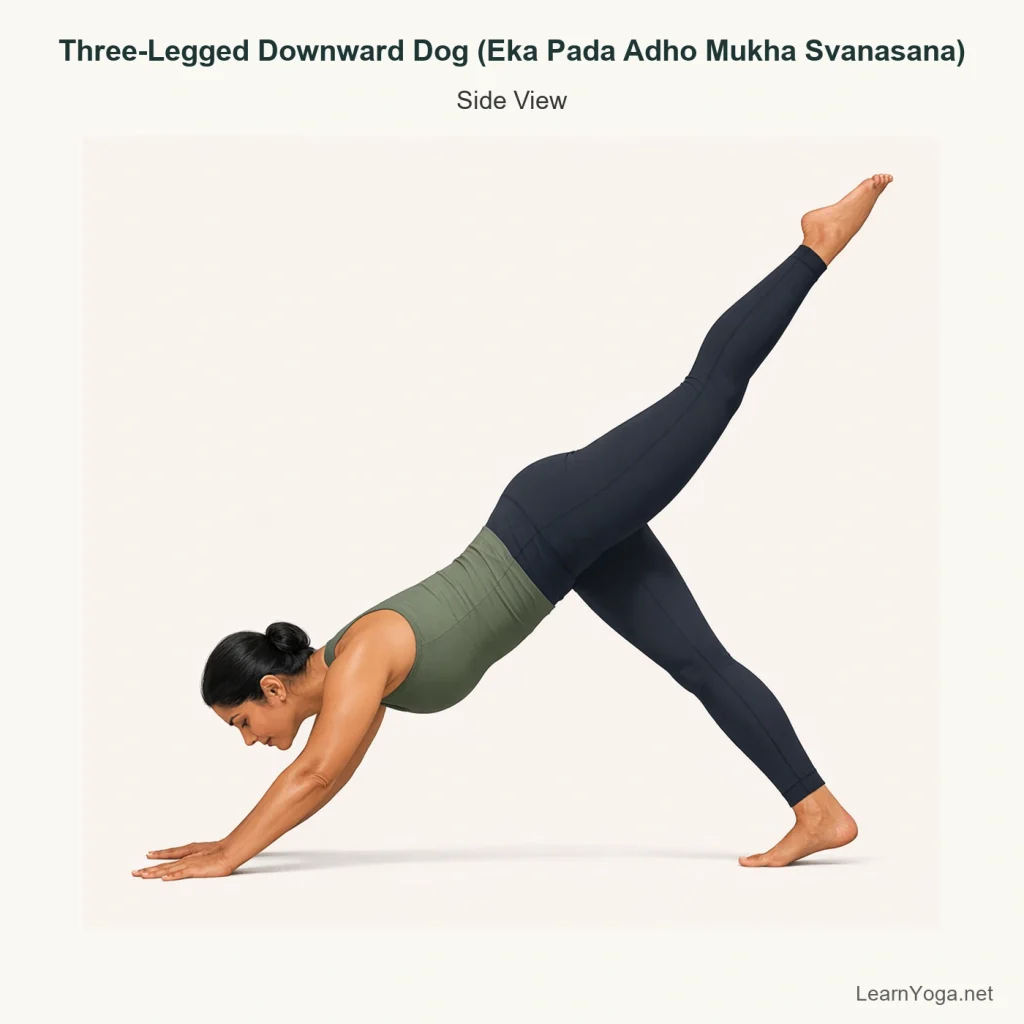
Side view of Three-Legged Downward Dog with one leg lifted behind and both hands grounded evenly.

Three-Legged Downward Dog

Eka Pada Adho Mukha Svanasana

Three-Legged Downward Dog builds on Downward-Facing Dog by asking one leg to lift without losing length through the sides of the waist, shoulders and standing leg. It can be a useful way to wake up the back body and hips, but the pose usually feels better when the lifted leg is not the main priority.

Continue learning

Learn how pose order changes a complete session in How Yoga Sequencing Works. If you are learning a particular pose, use the Pose Progression Explorer to find preparation and possible next steps.