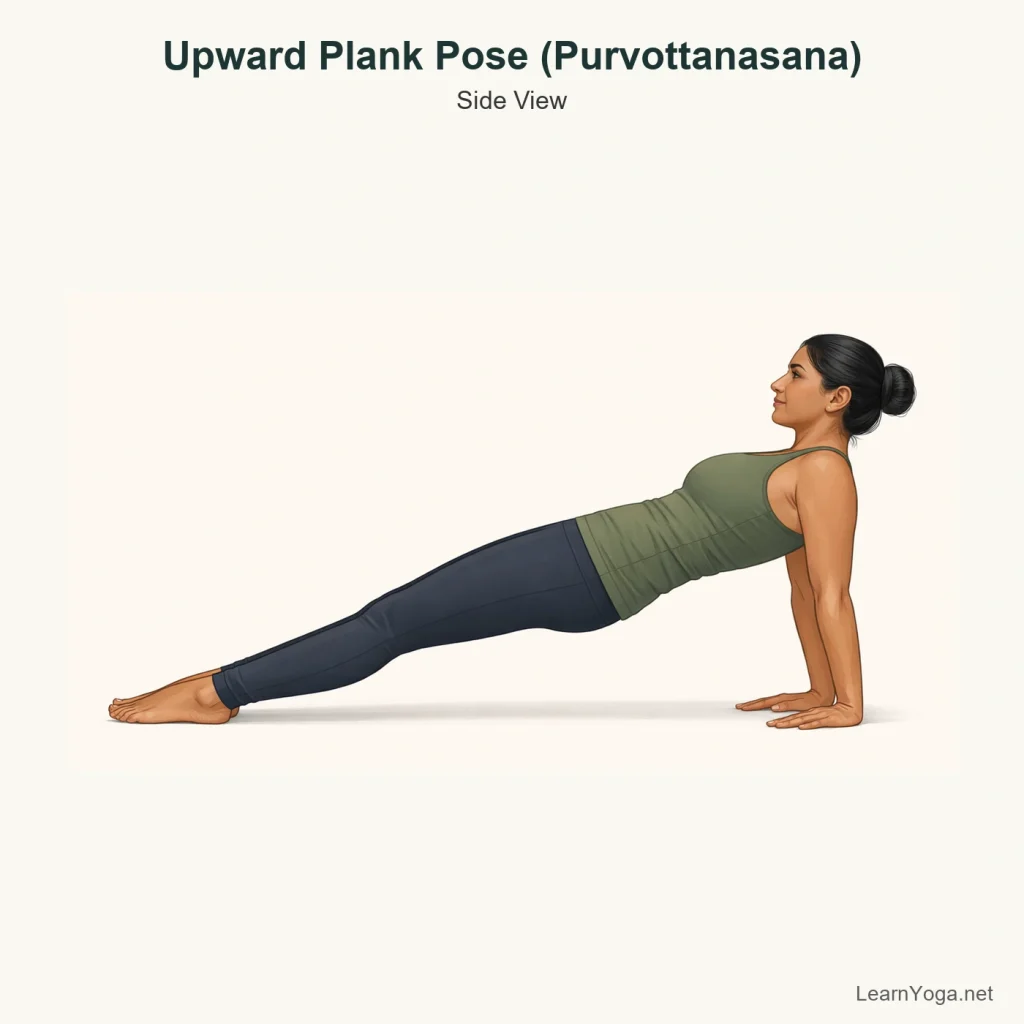
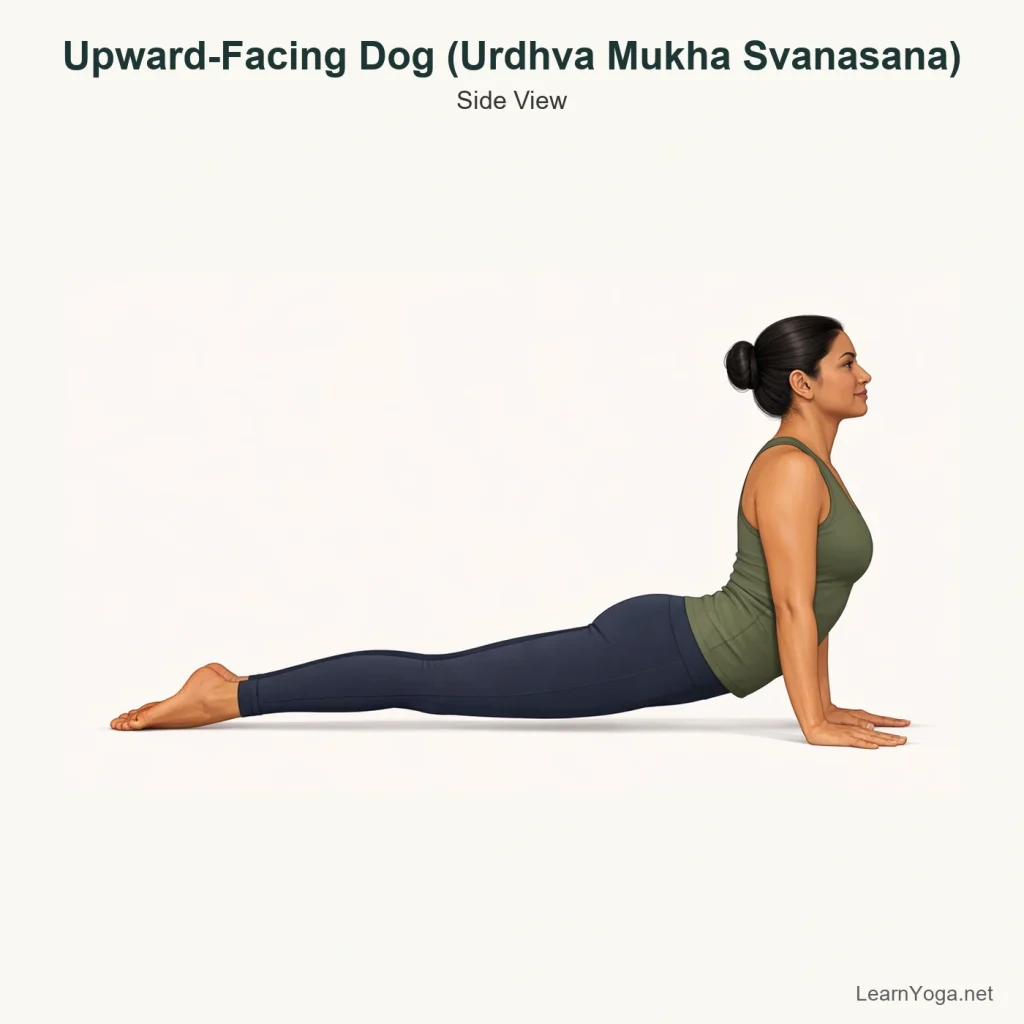
Upward Plank Pose is a strong front-body opening done from the floor. It asks the shoulders, wrists, legs and back body to work together as you press the chest up and lengthen through the whole front line of the body.
Upward Plank can feel spacious when the lift comes from clear hand and foot pressure rather than from pushing the lower back forward. The shape looks straightforward, but shoulder position makes a big difference. Some bodies will prefer bent knees or Reverse Tabletop instead, and that is a sensible choice rather than a lesser one.
How to do Upward Plank Pose
Sit with your legs extended in front of you in Staff Pose.
Place your hands on the floor a little behind your hips, fingers pointing toward your feet or slightly out if that is more comfortable for your wrists.
Press firmly through your palms and broaden across the collarbones.
Point or lightly flex the feet, depending on what helps you press evenly through the base of the toes and the heels.
On an inhale, lift your hips and chest. Let the legs stay active and strong.
Draw the shoulder heads back without letting them collapse forward. Think of lifting the breastbone toward the ceiling.
Keep the back of the neck long. You can look up, forward, or slightly back only if the neck stays easy.
Stay for 2 to 5 steady breaths.
To come down, exhale and lower your seat back to the floor with control.
Yogita's tip
If the pose feels jammed in the shoulders, check whether your hands are too close to your hips. Moving them a few inches farther back often gives the chest room to lift without forcing the neck or lower back.
Benefits
Strengthens the arms, shoulders and back body in a clear weight-bearing shape.
Opens the chest and front of the shoulders, which can be useful after a lot of sitting or rounded-posture work.
Builds awareness of shoulder extension and steady support through the hands.
Engages the legs and glutes so the whole body works as one line rather than sagging through the middle.
Common mistakes
Placing the hands so close to the hips that the shoulders crowd forward.
Dropping the pelvis and hanging in the lower back instead of lifting from the chest and legs.
Locking the head back quickly and creating compression in the neck.
Letting the feet roll out so the legs stop helping.
Trying to force straight legs when bent knees would give a cleaner lift.
Make it work for you
Bent-knee Upward Plank
Keep your knees softly bent as you lift. This shortens the lever and can make it easier to organise the chest and shoulders.
Hands Turned Slightly Out
If turning the fingers toward the feet strains your wrists, angle the hands slightly outward and keep pressing evenly through the whole palm.
Alternatives
Reverse Tabletop
Set the feet on the floor with knees bent and lift the hips from there.
Use this if straight legs make the pose feel heavy or if you need less load through the shoulders and hamstrings.
Supported Bridge Pose
Lie on your back, bend your knees, and rest the pelvis on a block or support.
Use this if weight-bearing through the wrists is not comfortable but you still want a gentler front-body opening.
Common variations
Reverse Tabletop
A bent-knee version with the feet on the floor. It reduces the lever length and often makes the shoulder opening more manageable.
One-Leg Lift Upward Plank
From a steady Upward Plank, one leg lifts a little while the pelvis stays level. This adds balance and more demand through the standing leg and shoulders.
Pointed-Foot Upward Plank
The tops of the feet and toes stay active as the legs lengthen strongly forward. Some practitioners find this helps create a longer line through the body.
Safety and contraindications
When to avoid or get individual guidance
Recent or irritated wrist or shoulder injury may make this pose unsuitable.
Skip the full pose if bearing weight through straight arms causes pain.
Use care with neck sensitivity and keep the gaze forward instead of dropping the head back.
This pose puts meaningful load into wrist extension and shoulder extension, so adjust the hand position or choose Reverse Tabletop if those areas feel pinched.
Lift the hips only as high as you can while keeping the chest open and the neck comfortable.
If the lower back feels compressed, come down slightly and press more firmly through the legs and hands.
Come out of Upward Plank right away for sharp or pinching pain in the wrists, shoulders, neck, or low back, or when weight on the hands leaves lingering strain afterward. Choose Reverse Tabletop or get individual guidance before trying the full pose again.
Accessibility and limited mobility
This pose can be awkward if getting up and down from the floor is difficult. Reverse Tabletop or Supported Bridge may be more practical.
Older adults or anyone with limited shoulder extension may do better with bent knees and a shorter hold.
If straightening the legs pulls the pelvis down, keep the knees bent rather than forcing the full shape.
Easier options
Use these related poses when you want a more accessible way to practise a similar movement or prepare for this pose.
Not always. That hand position is common, but some wrists and shoulders tolerate a slight turn outward better. The useful test is whether you can press evenly through the hands and keep the chest broad without strain.
Why do my hips stay low when I try to lift?
Usually the issue is not just strength. Often the hands are too close, the feet are not pressing well, or the chest is not lifting enough. Try moving the hands a little farther back or bending the knees first so you can organise the shape more clearly.
Should I drop my head all the way back?
No. The neck does not need to be thrown back for the pose to count. Keep the back of the neck long and choose a gaze that feels steady. Looking slightly up or forward is completely fine.
Is Reverse Tabletop the same pose?
It is a close variation, but not exactly the same shape. Reverse Tabletop keeps the knees bent, which reduces the demand on the shoulders, hamstrings and core. For many people it is the more useful starting point.
Reviewed for yoga instruction
Yogita
Certified Yoga Instructor with 5+ years of Teaching and Consistent Practice