Wild Thing is a one-handed backbend with a turning action through the chest and pelvis. It asks for shoulder stability, wrist tolerance and enough control in the feet and core to keep the shape spacious rather than thrown together.
Wild Thing often appears as a playful transition, but it is easier to manage when you treat it as a clear, organised pose. The supporting hand and shoulder need to feel firm, while the chest rotates open and the lifted side of the waist stays long. You do not need the biggest backbend here. For many bodies, a smaller arc with steady breath feels much better than pushing for height.
How to do Wild Thing
Begin in Side Plank with your right hand on the floor and the outer edge of your right foot grounded.
Bend your top knee and place the left foot on the floor behind you, keeping some weight in the standing leg rather than dropping all at once.
Turn your chest upward and let the pelvis lift as the left arm reaches overhead or back.
Press the right hand down firmly and keep a gentle lift through the underside of the right waist so the shoulder does not collapse toward the ear.
Spread the front of the chest and let the head follow only as much as your neck feels comfortable. You can keep your gaze forward, sideways or up.
Take 2 to 5 smooth breaths, especially using the inhale to create more space across the chest.
To come out, lower the hips slightly, turn the chest back toward the floor and step carefully back through Side Plank or Downward-Facing Dog before changing sides.
Yogita's tip
If the pose feels jammed in the supporting shoulder, check where your grounded foot landed. Stepping that foot a little farther back usually gives the chest more room to turn and stops the whole shape from sitting on the wrist.
Benefits
Builds strength and awareness in the supporting shoulder, arm and wrist.
Opens across the chest and front body while the legs and core help organise the backbend.
Practises balance during a turning transition, which can make side-facing weight-bearing shapes feel more coordinated.
Encourages hip extension through the grounded leg and a broader reach through the upper body.
Common mistakes
Dropping heavily into the supporting shoulder instead of pressing the floor away.
Placing the back foot too close to the hand, which can crowd the lower back and shoulder.
Throwing the head back before the chest has lifted.
Letting the hips sag low so the pose becomes a twist with very little support from the legs.
Holding the breath while trying to lift higher.
Make it work for you
Lower Wild Thing
From Side Plank, place the top foot behind you but keep the hips lower and the reaching arm on your hip or reaching up instead of overhead. This reduces the depth of the backbend.
Wild Thing with Toes Tucked in Side Plank Start
Set up in a more stable Side Plank with the lower foot firmly active before stepping the top foot back. Move into the pose slowly and pause as soon as the shoulder feels organised.
Alternatives
Reverse Tabletop
Sit with knees bent and feet on the floor, place your hands behind you and lift the hips. This gives a chest-opening backbend with weight shared between both hands and both feet.
Use this if one-handed weight-bearing on the wrist or shoulder feels too demanding.
Bridge Pose
Lie on your back with knees bent and feet grounded, then lift your hips and chest. Keep the neck neutral and press evenly through both feet.
Use this if you want a backbend without loading the wrist.
Side Plank
Stay in Side Plank and work on pressing the floor away, stacking the shoulder and keeping the waist lifted.
Use this if the transition into the backbend is the part that feels unstable.
Common variations
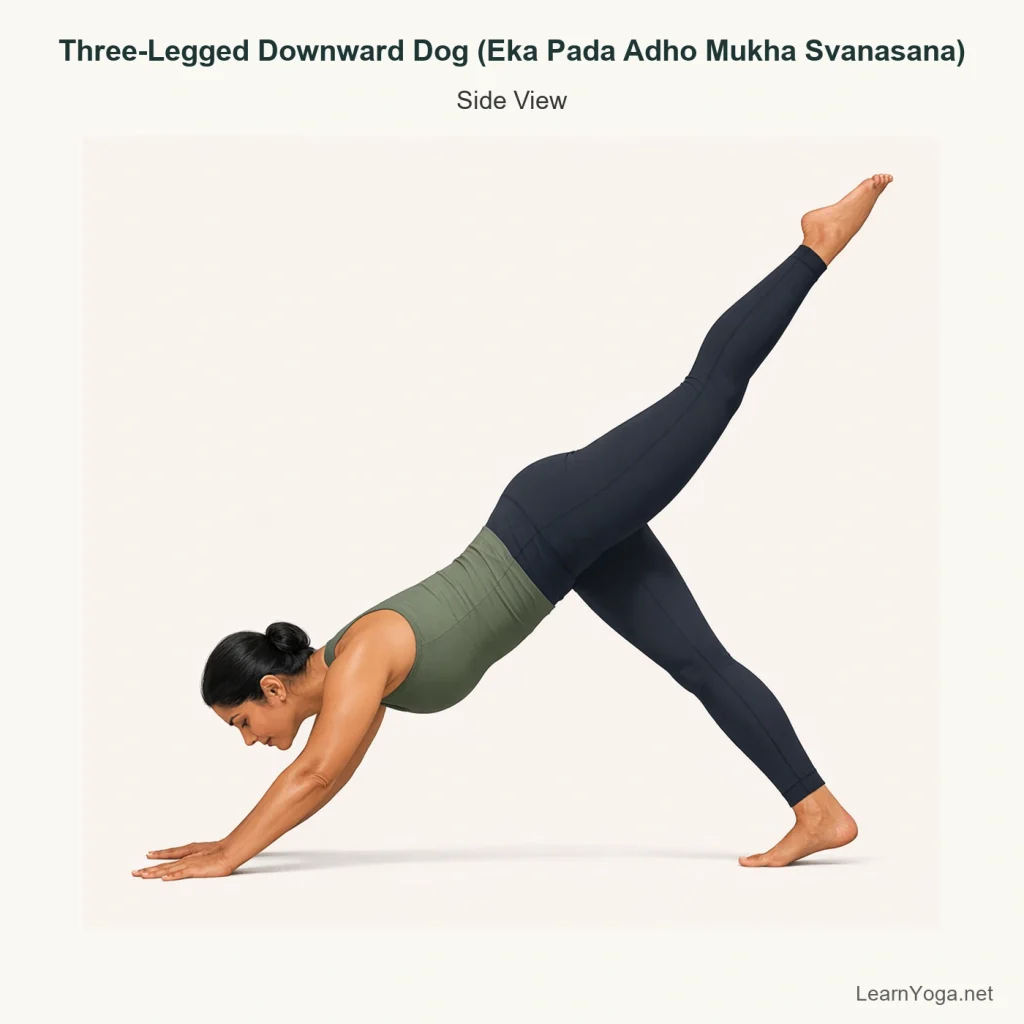
Wild Thing from Three-Legged Downward Dog
A flowing entry where the lifted leg bends and steps behind the body before the chest turns open. This version asks for more coordination during the transition.
Wild Thing with Arm Overhead
The top arm reaches in a long arc overhead rather than back toward the floor, which can make the side body feel longer and the neck easier to organise.
Wild Thing with Supported Head Position
The chest opens but the gaze stays forward or slightly down instead of dropping the head back. This is often more comfortable for the neck.
Safety and contraindications
When to avoid or get individual guidance
Recent or current wrist, shoulder or neck irritation may make this pose unsuitable.
Skip the pose if backbends or turning weight onto one hand feel unstable or painful.
Move into the pose gradually rather than flipping the foot behind you quickly.
Keep the supporting hand actively pressing down so the shoulder does not sink.
If your neck feels compressed, keep the head more neutral and focus on lifting the chest instead.
Choose Bridge Pose or Reverse Tabletop if weight-bearing on one wrist or shoulder is not comfortable today.
If Wild Thing repeatedly causes sharp pain in the wrist, shoulder, neck or lower back, or you feel as though the supporting arm may give way, stop and get individual guidance before trying again.
Accessibility and limited mobility
Getting into and out of Wild Thing can be the hardest part. If floor transitions are difficult, choose Bridge Pose or Reverse Tabletop instead.
Older adults or anyone with limited shoulder range may prefer to keep the top hand on the hip and take a smaller turn through the chest.
If balance feels uncertain, practise near a wall so you can orient yourself in space more easily, even if you do not touch the wall.
Easier options
Use these related poses when you want a more accessible way to practise a similar movement or prepare for this pose.
Do I have to flip into Wild Thing from Downward-Facing Dog?
No. A slower entry from Side Plank is often easier to organise. You can place the foot behind you carefully, pause, and build the pose step by step instead of treating it like a momentum move.
Where should the stepped-back foot go?
Usually slightly behind you and far enough away that the chest has room to open. If the foot lands too close to the supporting hand, the shoulder and lower back often feel cramped. A little farther back usually gives a steadier base.
What if my wrist does not like this pose?
Come out early and choose another shape. Reverse Tabletop or Bridge Pose can give a similar front-body opening with less demand on one wrist. You can also stay with Side Plank to work on shoulder support without adding the backbend.
Should I drop my head back?
Only if the neck feels easy. The pose does not depend on that. Many people do better keeping the gaze forward or slightly up while focusing on lifting the chest and pressing the floor away.
Why does Wild Thing feel unstable even though I can do Side Plank?
The challenge is not only arm strength. The stepped-back foot changes your balance and the pose adds a turning backbend. Try entering more slowly, keep the hips active, and use just 1 or 2 breaths at first rather than holding for long.
Reviewed for yoga instruction
Yogita
Certified Yoga Instructor with 5+ years of Teaching and Consistent Practice