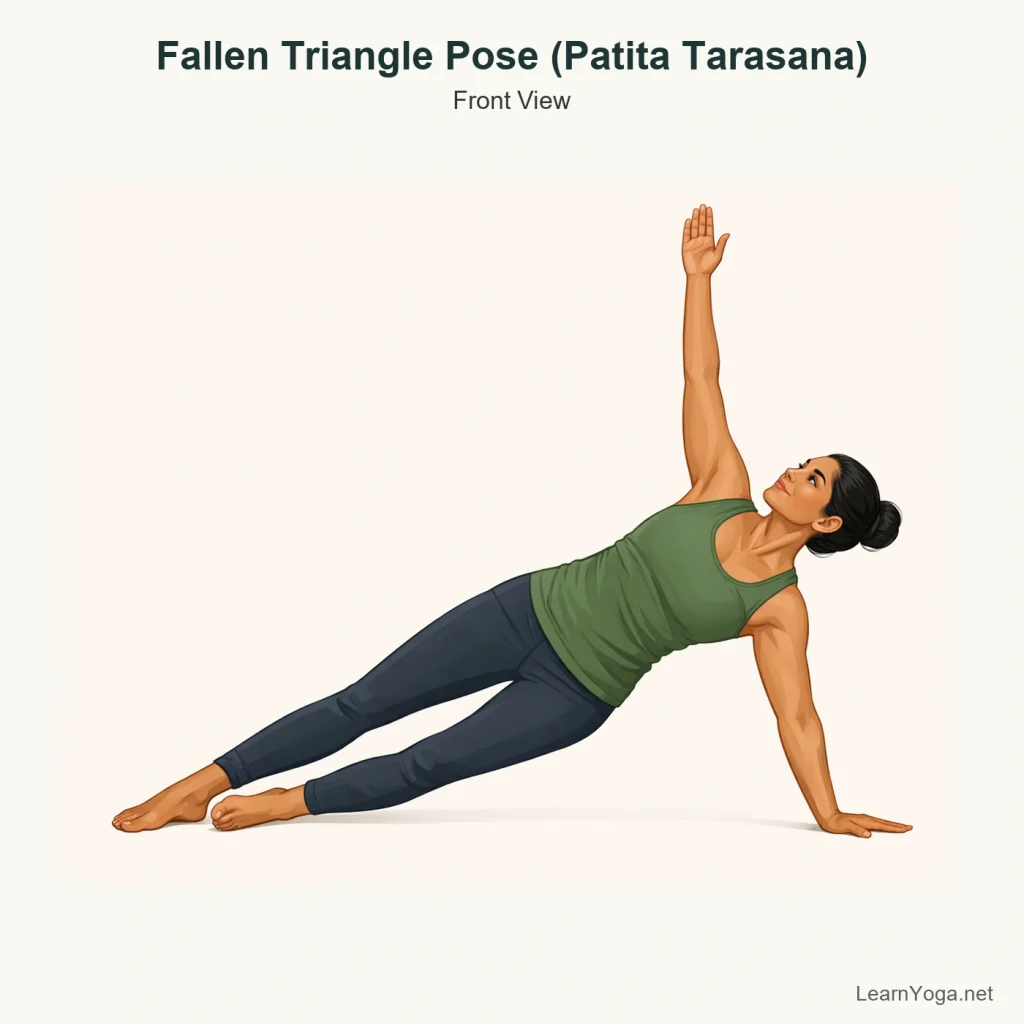
Side Plank is a one-arm balancing pose that builds shoulder stability, side-body strength and clear whole-body organisation. It asks you to support yourself with one hand and one foot while keeping the chest open and the hips lifted.
This pose is often taught as a variation from Plank, but it is easier to understand if you build it from the ground up. The supporting hand, shoulder, ribs, pelvis and feet all need to work together. You do not need the body to form one perfect line. A smaller version with the lower knee down is still Side Plank and is often the more useful place to learn the shape.
How to do Side Plank
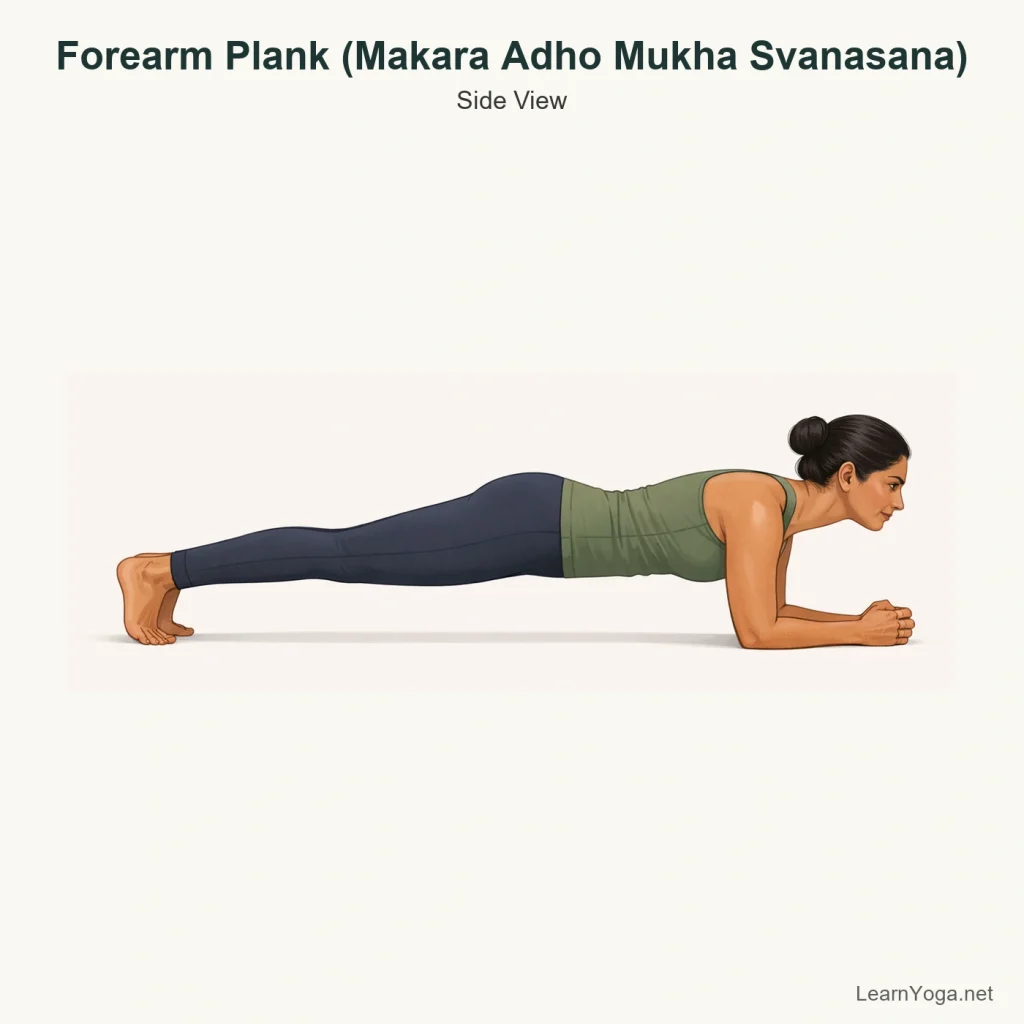
Start in Plank Pose with your shoulders over your wrists and your legs active.
Bring your feet together, then shift a little weight into your right hand without letting the chest drop.
Roll onto the outer edge of your right foot and stack your left foot on top, or place the left foot slightly in front if that feels steadier.
Turn your chest to the left and lift your left arm toward the ceiling.
Press the floor firmly away with the right hand so the right shoulder does not sink into the ear.
Lift the underside waist and hips as though you are making space between the floor and your ribs.
Keep both legs strong and reach through the heels.
Look forward, to the side, or up at the top hand depending on what feels comfortable for your neck and balance.
Stay for 3 to 6 breaths, keeping the breath smooth rather than holding it.
Return to Plank on an exhale and repeat on the second side.
Yogita's tip
If the pose feels much heavier in the wrist than in the side body, check your lower ribs. When they sag toward the floor, the shoulder takes more load. A small lift through the underside waist usually makes the whole shape feel lighter.
Benefits
Builds strength in the supporting shoulder, arm and wrist.
Trains the side waist and deep core muscles to help keep the trunk organised against gravity.
Improves balance and spatial awareness because the body is supported on a narrow base.
Encourages active legs and clearer connection from feet through pelvis and chest.
Can prepare you for other one-arm balances and side-facing transitions.
Common mistakes
Letting the supporting shoulder collapse toward the ear.
Dropping the underside waist so the pose hangs in the lower shoulder.
Placing the supporting hand too far in front of the shoulder.
Holding the breath while trying to stay up.
Forcing the gaze upward even when the neck feels strained.
Trying to stack the feet before the hips and chest are organised.
Make it work for you
Lower knee down
From Plank, lower the bottom knee to the mat behind or slightly under the hip, then turn into Side Plank. Keep the top leg long and the pelvis lifting away from the floor.
Staggered feet
Instead of stacking the feet, place the top foot on the floor in front of the bottom foot. This gives a wider base and usually makes balance easier.
Forearm variation
Come onto the lower forearm with the elbow under the shoulder if full wrist extension is not comfortable. Press down through the forearm and lift the underside ribs away from the floor.
Alternatives
Kneeling Side Plank
Set the lower knee down and keep the top leg extended. Lift the hips and reach the top arm up.
Use this when full Side Plank feels too heavy for the shoulder, wrist or balance.
Forearm Side Plank at the wall
Place your lower forearm on a wall at shoulder height, step the feet out to the side, and lean into a side-body line without taking full body weight into the wrist.
Use this if getting weight onto one hand on the floor is not practical yet.
Plank Pose
Stay in a strong Plank with even weight through both hands and both feet.
Use this if rotating onto one hand makes the shoulder feel unstable.
Common variations
Knee-down Side Plank
The lower knee stays on the floor to reduce load while keeping the side-body action clear.
Forearm Side Plank
The lower forearm replaces the hand, reducing wrist extension demand.
Star Side Plank
The top leg lifts away from the bottom leg, increasing balance and hip work.
Safety and contraindications
When to avoid or get individual guidance
Recent or aggravated wrist, shoulder or elbow pain may make this pose unsuitable today.
Skip the full version if bearing weight on one arm causes sharp pain or a feeling of instability.
This pose places moderate load on the supporting wrist and shoulder.
Spread the fingers and press through the whole hand rather than collapsing into the heel of the palm.
If the neck feels tense, keep your gaze forward or down instead of turning upward.
Choose the knee-down or forearm version if you cannot keep the shoulder broad and steady.
Pause Side Plank for sharp pain in the wrist, elbow, or shoulder, or any sense that the supporting shoulder is giving way under the load. Choose the knee-down or forearm variation, and get individual guidance before returning to the full version.
Accessibility and limited mobility
If getting down to the floor is difficult, practise a wall-based side-leaning version with the forearm on the wall.
A staggered-foot setup is often more manageable than stacked feet for older adults or anyone who feels unsteady.
If full wrist extension is limited, try the forearm variation instead of forcing the hand-down version.
You do not need to look up. Keeping the gaze forward or down can make the pose more accessible for the neck and balance.
Easier options
Use these related poses when you want a more accessible way to practise a similar movement or prepare for this pose.
No. Stacked feet make the balance narrower, but they are not required. If you feel wobbly, place the top foot slightly in front of the bottom foot. That wider base often helps you lift the hips and organise the trunk more clearly.
Why does my supporting wrist get tired so quickly?
Often too much weight is dropping into the heel of the hand or the shoulder is sinking. Spread the fingers, press through the finger pads, and push the floor away so the shoulder stays broad. If that still feels too intense, try the forearm version or put the lower knee down.
Should I look up at my top hand?
Only if that feels easy in your neck and does not disturb your balance. Looking forward or slightly down is completely fine. The pose does not become better just because the gaze is higher.
What should I do if my hips keep dropping?
Use the knee-down version first and think about lifting the underside waist rather than just throwing the top hip upward. Press strongly through the lower hand, keep the legs active, and exhale as you lift. A shorter hold with better shape is usually more useful than a long hold while sagging.
Reviewed for yoga instruction
Yogita
Certified Yoga Instructor with 5+ years of Teaching and Consistent Practice